Pearl Initial Necklace: An Expert Guide to Grades & Anatomy
Discover the technical anatomy of a pearl initial necklace. Learn about Akoya vs. Freshwater grades, chain gauges, and clasp durability in our expert guide.

The Architecture of Personalization: Beyond the Aesthetic
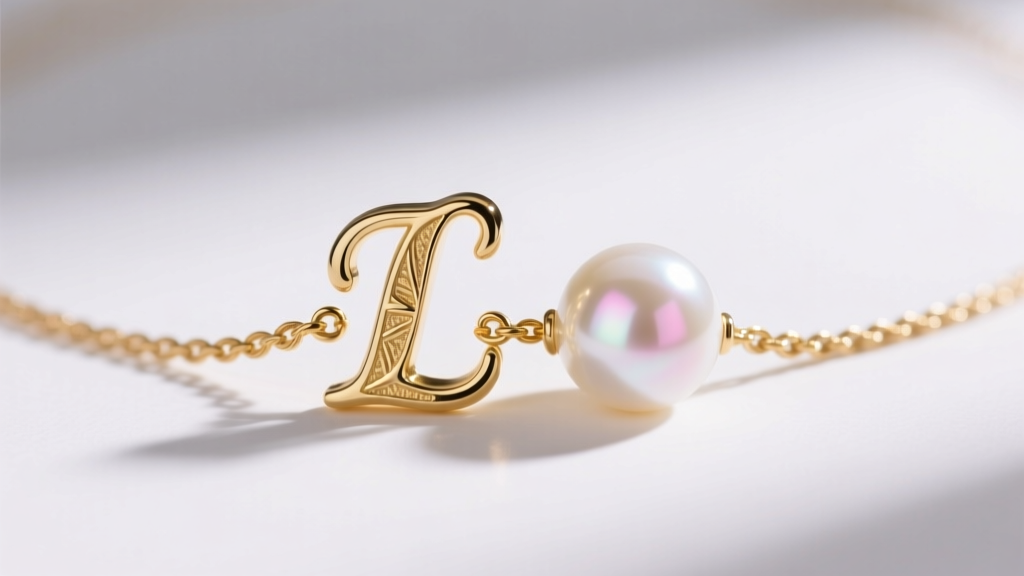
When evaluating a pearl initial necklace, most consumers focus entirely on the typography of the letter and the general size of the pearl. However, as a structural and gemological artifact, this specific type of pendant requires a rigorous assessment of material integrity, nacre quality, and mechanical assembly. A poorly constructed initial necklace will suffer from pearl detachment, chain snapping, or rapid metal oxidation within months of daily wear. This expert deep dive dissects the technical specifications that separate fine jewelry from disposable fashion accessories, providing a definitive framework for evaluating craftsmanship, gemological grading, and metallurgical standards.
Pearl Selection: Nacre Thickness and Luster Grading
The pearl is the focal point of the necklace, yet it is also the most vulnerable component. In high-end pearl initial necklaces, the pearl is typically a perfectly round, white or cream Akoya or high-grade Freshwater cultured pearl, ranging from 6.0mm to 8.5mm in diameter. The critical metric for longevity and optical performance is nacre thickness and crystalline alignment, which dictates the pearl's luster.
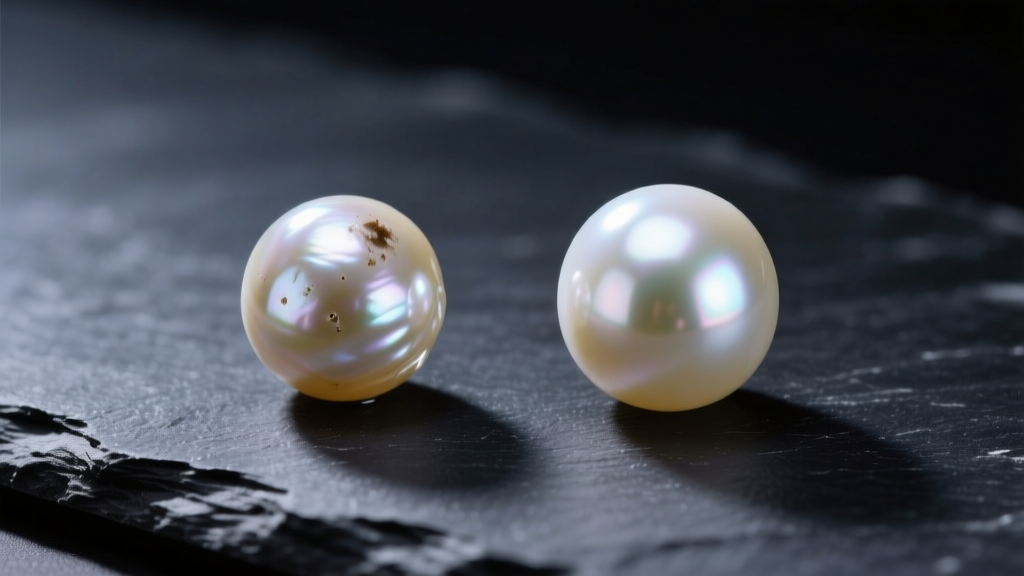
According to the Gemological Institute of America (GIA), luster is the most important value factor in pearl grading. High-luster pearls exhibit sharp, mirror-like reflections due to dense, tightly packed aragonite platelets in the nacre. Conversely, chalky pearls with thin nacre will quickly degrade, peel, or lose their orient when exposed to the acidic pH of human skin and environmental pollutants.
Akoya vs. Freshwater: A Technical Comparison
While Akoya pearls are bead-nucleated and prized for their perfectly spherical shapes and mirror-like luster, modern Edison and high-grade Freshwater pearls are solid nacre. Solid nacre Freshwater pearls offer superior structural durability (they cannot 'peel' like thin-nacre Akoyas), but achieving a perfectly round shape with high luster in Freshwater cultivation yields a much lower success rate, driving up the cost of AAA-grade specimens.
| Metric | AAA Grade (Fine Jewelry) | AA+ Grade (Mid-Tier) | A Grade (Commercial) |
|---|---|---|---|
| Nacre Thickness | >0.4mm (Akoya) / Solid (FW) | 0.25mm - 0.4mm | <0.25mm (Prone to peeling) |
| Surface Blemishes | 95%+ Clean, no deep pits | 80% Clean, minor spotting | Heavy blemishing, dull spots |
| Luster Quality | Excellent, sharp reflections | Good, slightly blurred edges | Poor, chalky appearance |
| Shape Tolerance | Perfectly Round (0.1mm variance) | Near-Round | Off-Round / Oval |
Metallurgy of the Initial Pendant: Casting and Finishing
The initial charm itself is typically manufactured via lost-wax casting or die-striking. For delicate, serif-font initials, die-striking is vastly superior. Die-struck metal is compressed under immense pressure, aligning the grain structure of the gold or silver and resulting in a denser, harder, and more scratch-resistant pendant. Cast initials, while capable of more complex 3D geometries, are inherently more porous and brittle, making thin serifs prone to snapping under tension.
Gold Vermeil vs. Solid 14k: Wearability and Oxidation
Many commercial pearl initial necklaces utilize gold vermeil to maintain accessible price points. The Federal Trade Commission (FTC) mandates that true vermeil must consist of a sterling silver base coated with at least 2.5 microns of 10k, 14k, or 18k gold. However, in high-friction areas like the bail (the loop connecting the pendant to the chain), 2.5 microns will wear away within 6 to 12 months of daily use, exposing the silver to sulfur and causing rapid blackening. For a permanent, heirloom-quality piece, solid 14k gold (58.5% pure gold alloyed with silver and copper for tensile strength) is the mandatory standard.
Chain Mechanics: Gauge, Links, and Tensile Strength
The chain supporting the initial and pearl must balance delicate aesthetics with mechanical resilience. A standard pearl initial necklace weighs between 1.5 and 3.0 grams. While this seems light, dynamic movement creates kinetic shock loads that can snap undersized links.
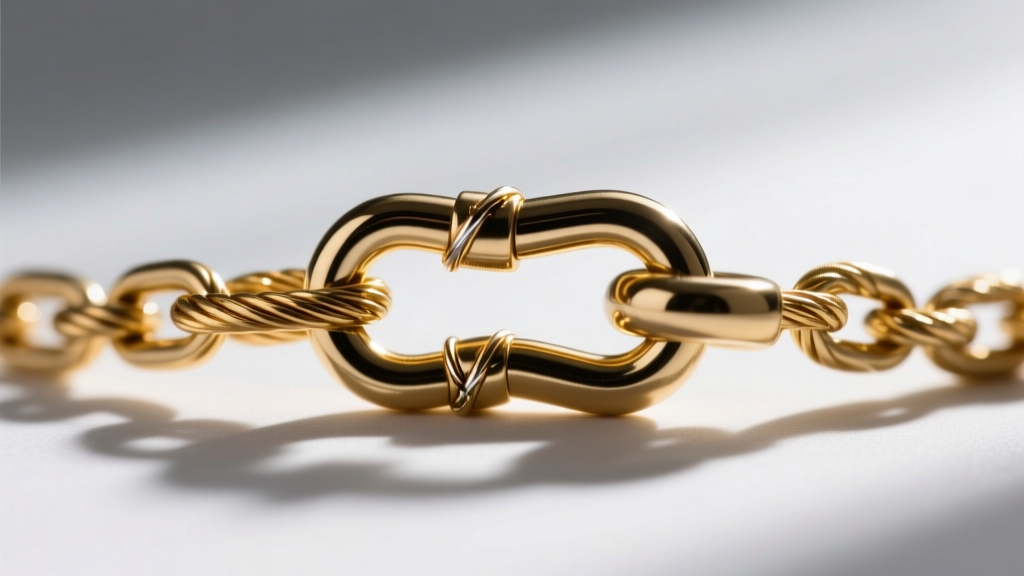
- Cable Chain (0.9mm - 1.2mm gauge): The industry standard for this style. At 1.2mm, a solid 14k gold cable chain offers approximately 12 lbs of tensile strength, more than sufficient for daily wear while maintaining a fine, elegant profile.
- Rolo Chain (1.0mm gauge): Features alternating, uniform round links. Rolo chains are highly resistant to kinking and tangling, making them an excellent choice for wearers who experience frequent chain snarls.
- Box Chain (0.8mm - 1.0mm): While visually striking, box chains under 1.0mm are notoriously susceptible to permanent stretching and denting if pulled. They are not recommended for heavy pendants.
The Weakest Link: Clasp Engineering and Bail Design
Hardware failure accounts for the vast majority of lost pendants. Spring-ring clasps, common on budget jewelry, utilize a tiny internal steel spring that frequently fails or loses tension. A high-quality pearl initial necklace must utilize a solid gold lobster clasp (minimum 5mm in length) equipped with a heavy-duty internal steel spring and a reinforced lever. Furthermore, the jump rings connecting the clasp to the chain and the bail to the pendant must be laser-welded or soldered closed. Unsoldered, open jump rings will inevitably warp and separate when the necklace catches on clothing.
The bail design is equally critical. If the pearl is integrated directly into the initial (e.g., forming the dot of a lowercase 'i' or 'j'), it is typically secured via a metal peg and adhesive. Cheap manufacturers use cyanoacrylate (super glue), which becomes brittle and degrades upon contact with water and skin oils. Expert jewelers use a two-part, slow-curing marine-grade epoxy, combined with a micro-textured metal peg to create a mechanical and chemical bond capable of withstanding years of thermal expansion and contraction.
Expert Maintenance: Preserving Nacre and Metal Integrity
Maintaining a pearl initial necklace requires strict adherence to chemical boundaries. Pearls are composed of calcium carbonate, which dissolves rapidly in the presence of acids. Perfumes, lotions, and human sweat contain acidic compounds that will etch the pearl's surface, destroying its luster permanently. The Jewelers of America strictly advises the 'last on, first off' rule for all pearl jewelry. Furthermore, ultrasonic cleaners—while excellent for diamond and gold chains—will violently shake a pearl off its peg and fracture the nacre layers. Cleaning should be restricted to a damp, lint-free microfiber cloth, wiping both the gold initial and the pearl after every wear to neutralize acidic residues and preserve the structural integrity of the piece.


