Soccer Necklace Safety: Troubleshooting Breakage & Rules
Troubleshoot common soccer necklace problems, from chain breakage and sweat corrosion to navigating strict IFAB jewelry rules for players.


The Beautiful Game and the Jewelry Dilemma
The soccer necklace has evolved from a simple piece of fan merchandise into a staple of athletic expression. From elite professionals wearing diamond tennis chains during closed training sessions to youth players sporting team crests and positional pendants, the desire to wear meaningful jewelry on the pitch is undeniable. However, the reality of the soccer field is unforgiving. High-impact collisions, relentless friction, and highly acidic sweat create a hostile environment for traditional jewelry.
As of 2026, the intersection of sports safety regulations and material science has forced players, parents, and coaches to rethink how and when these accessories are worn. Whether you are dealing with a referee demanding the removal of a beloved pendant, a chain that keeps snapping at the clasp, or mysterious skin irritation, troubleshooting your soccer necklace requires a deep understanding of both league mandates and metallurgical realities. This guide provides actionable, expert-level solutions to the most common problems associated with athletic jewelry.
Navigating the Referee's Whistle: IFAB Law 4 Explained
The most frequent 'problem' with a soccer necklace isn't mechanical; it is regulatory. The International Football Association Board (IFAB) dictates the global Laws of the Game, and IFAB Law 4 (The Players' Equipment) is notoriously strict regarding jewelry. The law explicitly states that all items of jewelry, including necklaces, rings, bracelets, and earrings, are forbidden and must be removed.
The 'Tape It' Myth
For decades, a pervasive myth in amateur and youth leagues has been that taping over a necklace makes it legal. This is fundamentally false. IFAB clarifies that using tape to cover jewelry is strictly prohibited. The rationale is twofold: first, sweat and friction cause athletic tape to peel within minutes, exposing the hard metal underneath; second, even if covered, a solid metal pendant resting on the sternum poses a severe blunt force trauma risk during a chest trap or a collision with another player. If you are playing in an officiated match, the only troubleshooting step for a referee's ban is complete removal. Save the necklace for the locker room, the bus ride, or off-pitch wear.
Material Failures: Why Your Chain Snaps and Tarnishes
If you are wearing your soccer necklace during unsanctioned training, pickup games, or casual juggling sessions, you have likely experienced chain degradation. Human sweat is a complex chemical cocktail with a pH ranging from 4.5 to 7.0, containing lactic acid, urea, ammonia, and sodium chloride. This environment is highly corrosive to standard jewelry metals.
The Sterling Silver Trap
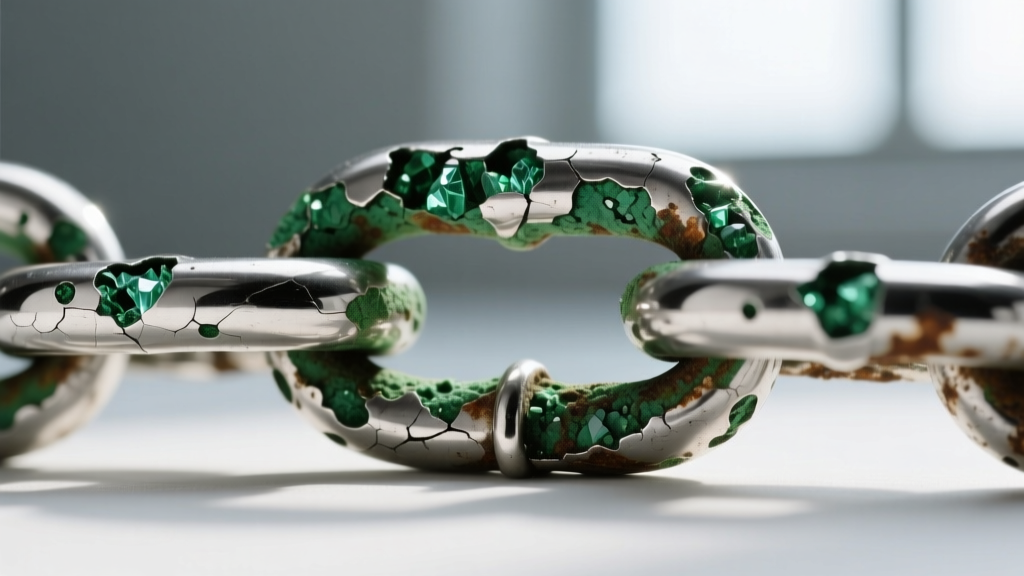
Many premium soccer necklaces are crafted from Sterling Silver (925). While beautiful, sterling silver is an alloy containing 92.5% silver and 7.5% copper. When exposed to the chlorides and sulfur compounds in heavy athletic sweat, the copper rapidly oxidizes. This results in the dreaded 'green neck' phenomenon and, more critically, structural pitting. A pitted 1.2mm silver chain link loses up to 40% of its tensile strength, making it highly prone to snapping when caught on a jersey collar.
The Stainless Steel Illusion
Surgical stainless steel (316L) is often marketed as 'sweat-proof.' While it resists tarnish better than silver, 316L steel is still susceptible to crevice corrosion. If sweat and dead skin cells accumulate in the microscopic gaps of a curb chain link, the localized depletion of oxygen breaks down the steel's passive chromium oxide layer, leading to sudden, catastrophic link failure.
The 2026 Material Solution: Grade 23 Titanium
To permanently troubleshoot sweat corrosion and chain breakage, upgrade your chain to Grade 23 Titanium (Ti-6Al-4V ELI). Originally developed for aerospace and medical implants, this specific alloy is entirely immune to sweat-induced corrosion, hypoallergenic, and boasts a tensile strength that dwarfs steel at a fraction of the weight. A 1.5mm Grade 23 titanium cable chain can withstand over 150 lbs of tensile force, ensuring it will never snap during a standard training session.
Comparing Chain Materials for Athletic Use
| Material | Sweat Resistance | Tensile Strength | Weight Profile | Best Use Case |
|---|---|---|---|---|
| Sterling Silver (925) | Poor (Oxidizes) | Low | Heavy | Off-pitch / Fan wear only |
| 316L Stainless Steel | Moderate (Pitting risk) | Medium | Heavy | Casual training (requires rinsing) |
| Niobium | Excellent | Medium | Medium | Hypoallergenic training alternative |
| Grade 23 Titanium | Flawless | Very High | Ultra-Light | Elite training / Daily athletic wear |
Troubleshooting the Strangulation Hazard: Breakaway Clasps
The most dangerous failure mode of any necklace worn during sports is not the chain breaking, but the chain *failing* to break. Standard lobster clasps and spring rings are designed to stay securely fastened. If a standard soccer necklace catches on an opponent's cleat, a goalpost, or a training bib, the resulting tension can cause severe cervical spine injuries or degloving of the ear and neck tissue.
Retrofitting for Safety
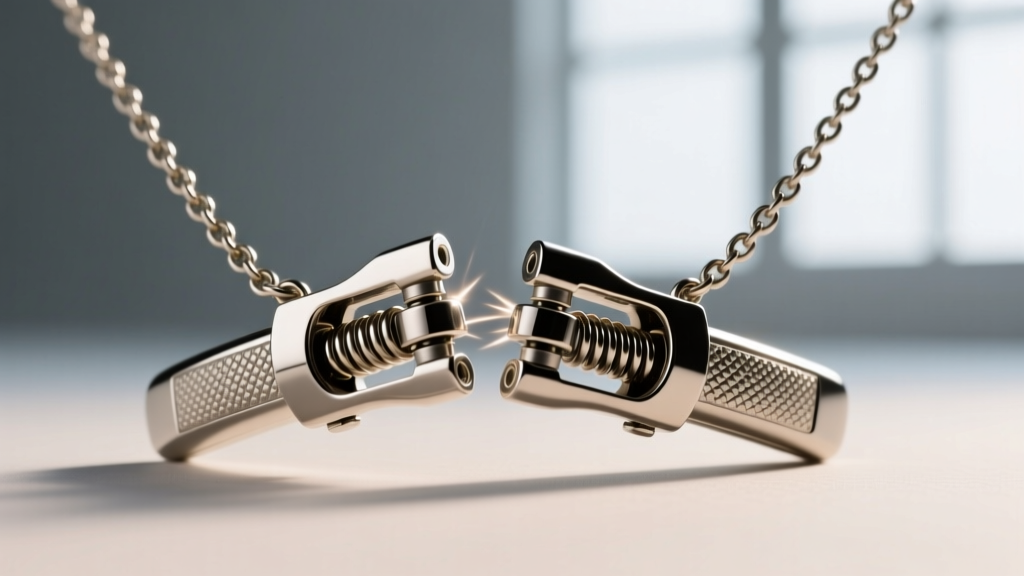
To solve this, athletic jewelry must be retrofitted with a magnetic breakaway clasp. These specialized clasps utilize neodymium magnets calibrated to release at exactly 3 to 5 pounds of lateral tension. By integrating a breakaway clasp into the posterior (back) of the necklace chain, you ensure that any sudden snag will result in the necklace safely dropping to the turf rather than pulling the player to the ground. When shopping for a soccer necklace intended for active wear, always inspect the clasp mechanism; if it requires a fingernail to pry open, it is fundamentally unsafe for the pitch.
Pendant Weight and Blunt Force Trauma
The pendant itself is often an overlooked hazard. Many soccer-themed pendants—such as solid brass soccer balls, heavy enamel team crests, or thick metal positional letters—weigh between 15 and 30 grams. While this feels negligible when standing still, the physics of a sprinting athlete changes the equation. During a sudden stop, a slide tackle, or a chest trap, a heavy metal pendant resting on the sternum acts as a localized projectile. According to sports safety guidelines referenced by organizations like the National Athletic Trainers' Association, hard, heavy objects on the torso can exacerbate sternal bruising or cause localized rib fractures upon impact.
The 5-Gram Rule
For any necklace worn during active soccer training, the pendant should strictly adhere to the 5-gram rule. Opt for hollow-core polycarbonate pendants, laser-etched titanium dog tags, or woven paracord designs with minimal metal hardware. If your current soccer necklace features a heavy solid-metal pendant, the best troubleshooting step is to remove the pendant and thread the chain with a lightweight, flexible silicone bead or simply wear the bare titanium chain.
Quick Troubleshooting Checklist for Players and Parents
- Problem: Referee issues a yellow card or demands removal.
Solution: Never argue the 'tape rule.' Remove the necklace entirely and store it in a secure locker. Law 4 is non-negotiable in sanctioned play. - Problem: Chain links are turning green and leaving marks on the skin.
Solution: The chain contains copper or nickel. Discard it for athletic use and replace it with a Grade 23 Titanium or pure Niobium chain. - Problem: The clasp constantly catches on jersey collars.
Solution: Replace the lobster clasp with a flush-mounted magnetic breakaway clasp to eliminate snag points. - Problem: The pendant bruises the chest during ball control.
Solution: Swap the heavy metal pendant for a lightweight silicone alternative, or tuck the entire necklace under a compression base layer to immobilize it against the skin.
Final Whistle
A soccer necklace is a powerful symbol of team pride, personal milestones, and love for the game. However, treating it like standard fashion jewelry is a recipe for broken chains, skin irritation, and regulatory penalties. By understanding the strict boundaries of IFAB Law 4, upgrading to sweat-immune titanium alloys, and prioritizing breakaway safety mechanisms, you can ensure your jewelry survives the beautiful game without compromising your safety on the pitch.


