How to Choose the Perfect Cabochon Necklace: A Buyer's Guide
Discover how to choose the perfect cabochon necklace. Learn about gemstone cuts, bezel settings, and chain pairings in our expert buyer's guide.

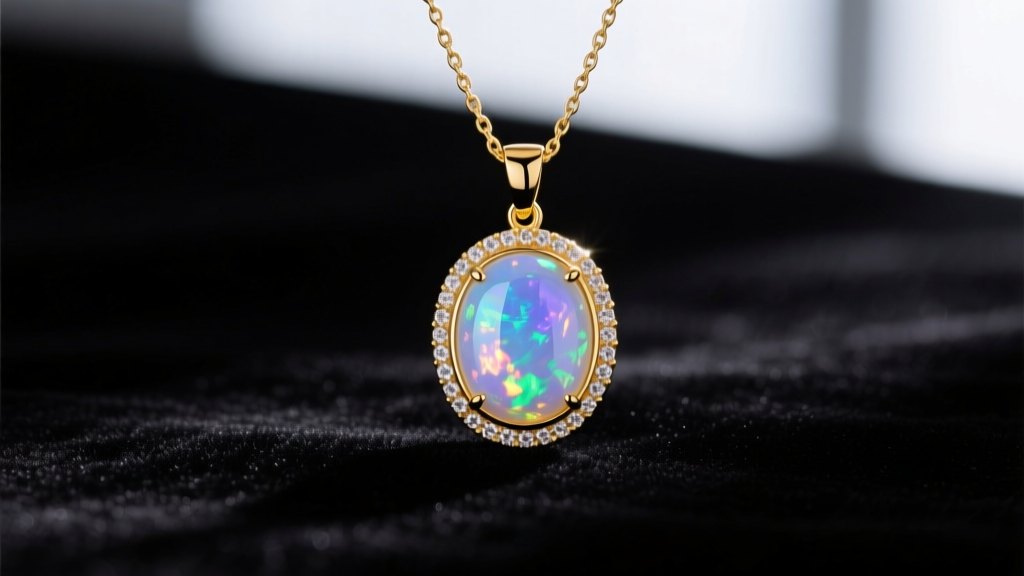
What Defines a True Cabochon Cut?
The term "cabochon" derives from the Middle French word caboche, meaning head. Unlike faceted gemstones that rely on precise geometric angles to reflect light, a cabochon is shaped and polished into a smooth, rounded, and unfaceted dome. According to the Gemological Institute of America (GIA), the cabochon cut is the oldest method of gemstone finishing, dating back to antiquity before the invention of modern faceting laps.
When shopping for a cabochon necklace, you are not just buying a piece of jewelry; you are investing in a tactile, vintage-inspired aesthetic that highlights a stone's internal character rather than its brilliance. Cabochons are specifically utilized for opaque gems, highly included stones, and materials that display unique optical phenomena that would be completely lost if the stone were faceted.
The Best Gemstones for Cabochon Necklaces
Not every gemstone performs well as a cabochon. Transparent stones like diamonds or clean aquamarines require faceting to achieve their signature sparkle. The ideal cabochon necklace features stones that possess specific optical traits or opacity. Below is a breakdown of the top performers and their required dome geometries.
| Gemstone | Optical Phenomenon | Ideal Dome Shape | Mohs Hardness |
|---|---|---|---|
| Opal | Play-of-Color | High, symmetrical dome | 5.5 - 6.5 |
| Moonstone | Adularescence | Shallow, wide dome | 6.0 - 6.5 |
| Star Sapphire | Asterism | Steep, centered dome | 9.0 |
| Turquoise | Opaque Matrix | Medium, uniform dome | 5.0 - 6.0 |
| Lapis Lazuli | Pyrite Flecks | Low to medium dome | 5.0 - 5.5 |
Understanding the relationship between the stone's optical phenomenon and its dome height is critical. For example, a star sapphire requires a steep, high dome to ensure the six-rayed star remains perfectly centered on the apex of the stone. Conversely, a moonstone requires a shallower, wider dome to allow the billowy adularescence to spread across the entire surface of the gem.
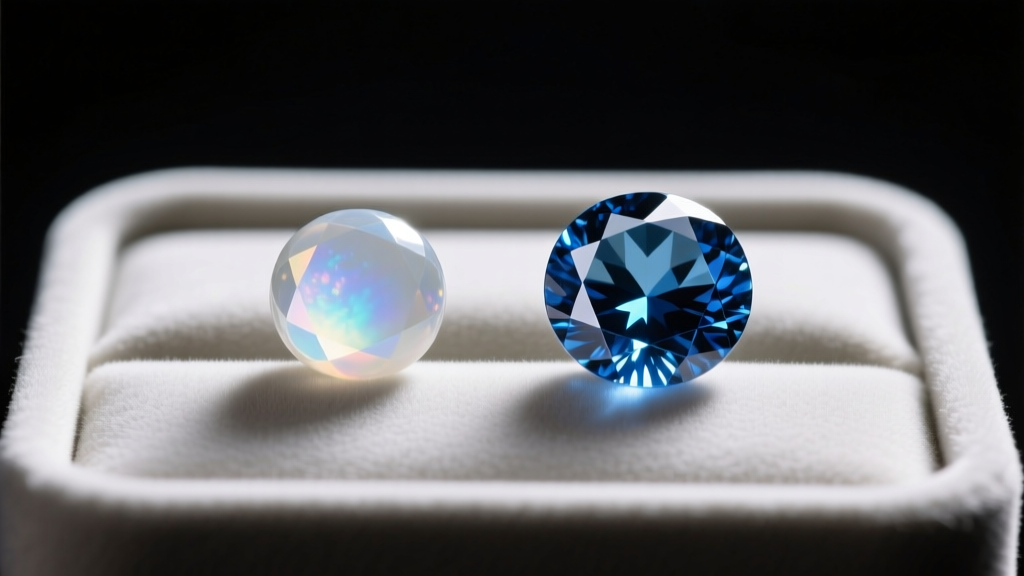
Evaluating Cabochon Quality: The Symmetry and Dome Rules
When inspecting a cabochon necklace in person or evaluating high-resolution images online, you must look past the color and scrutinize the cut quality. A poorly cut cabochon will look lopsided, lifeless, or be prone to damage during setting.
1. The Outline and Symmetry Test
The most common shapes for cabochons are oval and round. To test an oval cabochon's symmetry, look at it straight down from the top. The outline should be a perfect ellipse, not an egg shape (wider at one end). Jewelers often use the "bullet test"—if the stone looks like the profile of a bullet rather than a smooth dome, the symmetry is flawed. Furthermore, the stone should not wobble when placed face-down on a flat glass surface.
2. Dome Proportions and the "Bullseye" Flaw
The apex of the dome should be perfectly centered. A common manufacturing flaw in lower-quality cabochon necklaces is the "bullseye" or flat-spot effect. This occurs when the lapidary grinds the top of the stone too flat, creating a distinct, flat plateau surrounded by a curved slope. This flat spot disrupts the flow of light and ruins the visual continuity of phenomena like chatoyancy (the cat's eye effect). Always ensure the curve from the girdle to the apex is continuous and unbroken.
3. Girdle Thickness
The girdle is the outer edge of the cabochon where the setting will grip the stone. For delicate stones like opal or turquoise, the girdle should be roughly 0.5mm to 1.0mm thick. If the girdle is too thin (knife-edged), it will chip when the jeweler pushes the metal bezel over it. If it is too thick (over 2mm), it creates a bulky, unrefined profile and makes securing the stone incredibly difficult without leaving gaps.
Setting Styles: Why Bezel is King for Cabochons
The setting of your cabochon necklace dictates both its security and its aesthetic. Because cabochons lack the sharp, faceted edges and culets that prongs rely on for grip, traditional prong settings are highly discouraged for this cut.
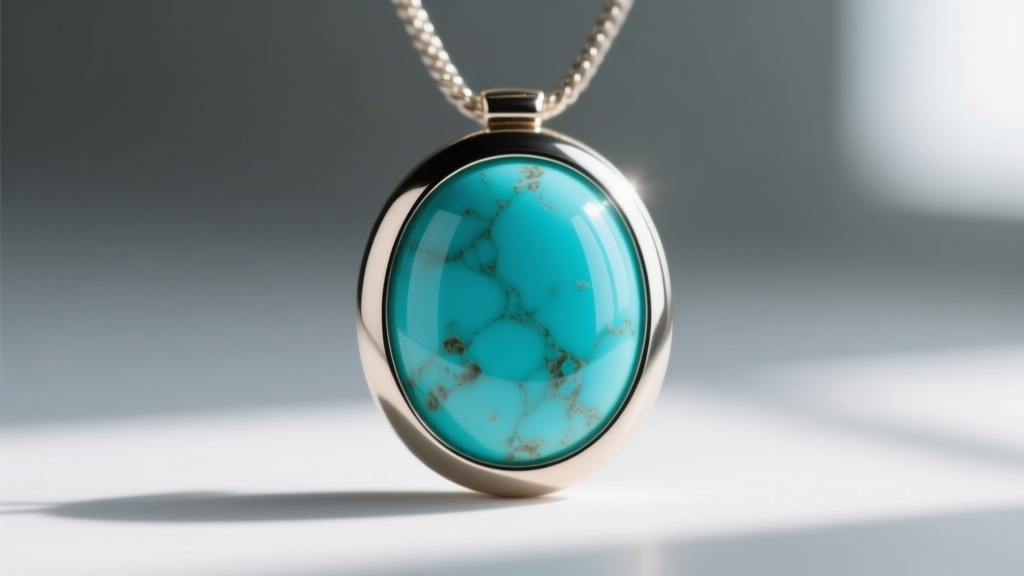
Full Bezel vs. Half-Bezel
The full bezel is the undisputed champion of cabochon settings. A continuous rim of metal (usually 14k or 18k gold, or platinum) is burnished tightly around the entire girdle of the stone. This not only secures the smooth edges but also protects fragile girdles from chipping against daily wear. According to historical jewelry archives at Lang Antiques University, the bezel setting has been the standard for cabochons since the Roman era due to its superior protective qualities.
A half-bezel uses two metal walls on opposite sides of the stone, leaving the other two sides exposed. While this allows more light to enter transparent or semi-transparent cabochons (like chrysoprase or jade), it offers significantly less protection and requires a perfectly calibrated girdle thickness to prevent the stone from popping out under pressure.
The Danger of Glue-In Settings
Many mass-produced, budget-friendly cabochon necklaces rely on epoxy glue rather than metal tension to hold the stone in a shallow cup setting. Avoid these at all costs. Glue degrades over time, reacts to perfumes and lotions, and will inevitably fail, resulting in the loss of your gemstone. Always verify that the pendant features a mechanically secured bezel.
Chain Selection: Weight and Length Pairings
A cabochon pendant is typically heavier and denser than a faceted stone of the same millimeter dimensions because no material has been cut away from the pavilion (the bottom of the stone). Therefore, pairing it with the correct chain is vital for both comfort and structural integrity.
- Small Cabochons (8mm - 12mm): Pair with a 1.0mm to 1.5mm cable or box chain. A delicate 18-inch length works best to keep the lightweight stone resting near the collarbone.
- Medium Cabochons (15mm - 25mm): Require a 2.0mm to 2.5mm chain. Wheat, rope, or Figaro chains provide the necessary tensile strength to support the pendant's weight without snapping. A 20-inch length allows the pendant to sit comfortably on the chest.
- Large Statement Cabochons (30mm+): Demand heavy chains, typically 3.0mm to 5.0mm Cuban links or thick rope chains. These should be worn at 22 to 24 inches to prevent the heavy stone from pulling uncomfortably on the back of the neck.
Always check the bail (the loop connecting the pendant to the chain). The inner diameter of the bail must be at least 1.5 times larger than the thickness of your chosen chain to prevent excessive friction and metal wear.
Real-World Pricing and Red Flags to Avoid
As of 2026, the market for cabochon necklaces varies wildly based on material origin and treatment. Here is what you should expect to pay for high-quality, untreated stones in standard sterling silver or 14k gold settings:
- Sleeping Beauty Turquoise (15x20mm): $150 - $400 (Highly valued for its lack of matrix and pure sky-blue color).
- Australian Black Opal (10x14mm): $800 - $3,500+ (Pricing scales exponentially with the brightness and coverage of the play-of-color).
- Lapis Lazuli (20x30mm): $120 - $350 (Look for deep Afghan blue with even, sparse pyrite flecks and zero white calcite veining).
Red Flags: Be highly suspicious of cabochon necklaces sold as "turquoise" that feature stark white veining and uniform, overly bright blue coloring; this is almost always dyed howlite or magnesite. Similarly, if a star sapphire cabochon features a star that is unnaturally sharp, bright, and perfectly aligned regardless of the lighting angle, it is likely a synthetic, diffusion-treated stone rather than a natural gem. Always request a certificate of authenticity or a gemological report for any cabochon necklace priced over $500.


