How to Clean and Care for Your Black Diamond Gold Necklace
Learn expert methods to clean, maintain, and protect your black diamond gold necklace from dullness, prong damage, and gold tarnish.


The Allure and Vulnerability of Black Diamond Jewelry
A black diamond gold necklace is a striking statement piece that blends the deep, mysterious opacity of carbonado diamonds with the warm, reflective luster of gold. However, the very characteristics that make black diamonds so visually captivating also dictate a highly specific approach to care and maintenance. Unlike traditional white diamonds, which are valued for their clarity and lack of inclusions, black diamonds owe their rich color to a dense network of microscopic fractures and mineral inclusions, primarily graphite and pyrite. While they still register as a 10 on the Mohs hardness scale, this heavily included internal structure makes them significantly more brittle and susceptible to chipping or internal fracturing if subjected to harsh mechanical cleaning methods.
When paired with gold—whether it is 14k, 18k, yellow, white, or rose—the maintenance routine must address two entirely different material profiles simultaneously. You are not just cleaning a gemstone; you are preserving a complex metallurgical alloy. Neglecting the specific needs of either the stone or the setting can lead to irreversible dullness, weakened prongs, and eventual stone loss. According to the Gemological Institute of America (GIA), understanding the unique physical properties of your specific gemstone is the first and most critical step in establishing a safe, long-term care regimen.
Understanding Your Gold Alloy: 14k vs. 18k vs. White Gold
Before applying any cleaning solution to your black diamond gold necklace, you must identify the karat and type of gold used in the chain and setting. Pure 24k gold is rarely used in diamond settings because it is too soft to securely hold a gemstone. Instead, jewelers use gold alloys, and the specific alloy metals dictate how the piece will react to chemicals, sweat, and cleaning agents.
- 18k Gold (75% Pure Gold): Highly prized for its rich color, 18k gold is softer and more prone to micro-scratches and prong wear. It requires gentler polishing and more frequent professional prong checks.
- 14k Gold (58.3% Pure Gold): More durable and resistant to deformation, making it an excellent choice for everyday wear. However, the higher percentage of alloy metals (like copper, zinc, or nickel) makes it slightly more susceptible to tarnishing when exposed to sulfur or chlorine.
- White Gold: White gold is actually a yellow gold alloy mixed with white metals (like palladium or nickel) and plated with rhodium to achieve a bright, silvery finish. Harsh chemicals and aggressive brushing will strip the rhodium plating, revealing the yellowish undertone beneath and requiring a costly re-plating process.
Daily Wear Risks: What Damages Black Diamonds and Gold?
The most common cause of damage to a black diamond gold necklace is not a single catastrophic event, but rather the slow accumulation of environmental hazards and cosmetic products. Because black diamonds are opaque, they do not refract light the way white diamonds do. Instead, their beauty relies on a highly polished, mirror-like surface finish (the table and crown facets). When sebum, lotions, and hairspray accumulate on this surface, the stone quickly takes on a dull, grayish, or oily appearance.
Furthermore, chlorine is the ultimate enemy of gold alloys. Exposure to chlorinated pool water or harsh household bleach can cause a chemical reaction known as "stress corrosion cracking" in the alloy metals. This specifically attacks the solder joints and the delicate prongs holding your black diamond, making them brittle and prone to snapping without warning. The American Gem Society (AGS) strongly advises removing all gold jewelry before entering hot tubs, swimming pools, or using household cleaning chemicals.
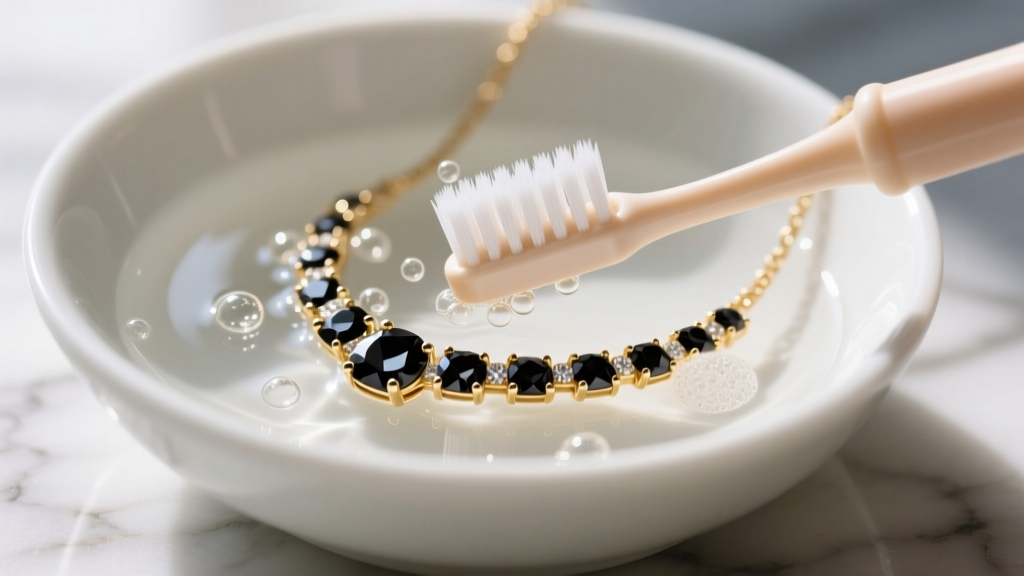
Step-by-Step Cleaning Protocol for Black Diamond Gold Necklaces
To restore the deep black luster of the stone and the bright shine of the gold setting, follow this manual, non-abrasive cleaning protocol. This method is safe for all gold karats and respects the brittle nature of treated and natural carbonado diamonds.
Step 1: The Safe Soak
Fill a small, non-metallic bowl with lukewarm distilled water. Avoid tap water, as the trace minerals and chlorine can leave microscopic water spots on the gold. Add three to four drops of a mild, pH-neutral, ammonia-free dish soap (such as original Dawn). Submerge your necklace and let it soak for 15 to 20 minutes. This loosens hardened cosmetic buildup and sebum without requiring aggressive scrubbing.
Step 2: Targeted Agitation
Remove the necklace from the soak. Using a brand-new, ultra-soft baby toothbrush, gently brush the black diamond and the gold setting. Pay special attention to the pavilion (the underside of the diamond) and the gallery where the prongs meet the stone, as this is where dead skin cells and lotion accumulate. Use light, sweeping motions rather than harsh, circular scrubbing, which can micro-scratch softer 18k gold settings.
Step 3: The Rinse and Dry
Rinse the necklace thoroughly under a gentle stream of lukewarm distilled water. Ensure the drain is securely plugged or use a mesh strainer to prevent accidental loss. Pat the piece dry with a clean, lint-free microfiber cloth. Do not air-dry, as evaporation will leave mineral deposits on the gold chain, dulling its finish.
Cleaning Methods to Strictly Avoid
Many commercial jewelry cleaning methods that are perfectly safe for white diamonds will destroy a black diamond. Because black diamonds are heavily fractured and often treated with irradiation or heat to enhance their color, they cannot withstand extreme thermal shock or high-frequency vibrations.
| Cleaning Method | Risk Level for Black Diamonds | Risk Level for Gold Settings | Expert Verdict |
|---|---|---|---|
| Ultrasonic Cleaners | EXTREME | Low | Avoid. High-frequency vibrations will exploit microscopic fractures, shattering the stone. |
| Steam Cleaners | HIGH | Low | Avoid. Sudden thermal shock can cause internal stress fractures in carbonado diamonds. |
| Chemical Dip Cleaners | MODERATE | HIGH | Avoid. Harsh acids and ammonia will strip white gold rhodium and pit 14k gold alloys. |
| Manual Soapy Soak | SAFE | SAFE | Recommended. The only 100% safe method for home maintenance of this specific combination. |
Prong Maintenance and Professional Inspections
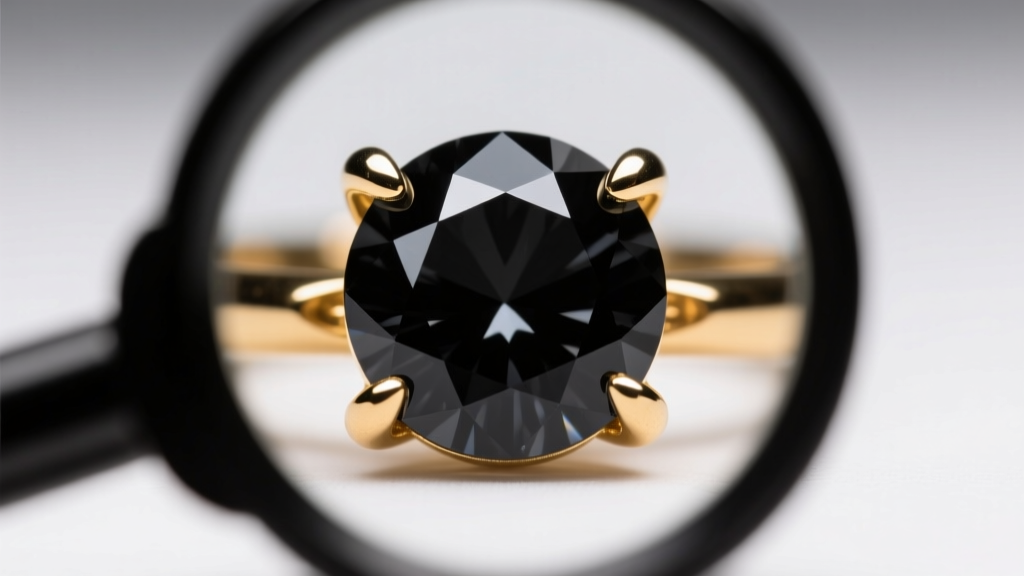
Even with meticulous home cleaning, a black diamond gold necklace requires professional oversight. The opaque nature of the stone means that if a prong is slightly bent or worn thin, it is incredibly difficult for the untrained eye to notice against the dark backdrop of the diamond. You should take your necklace to a certified bench jeweler at least once a year for a "prong and shank" inspection.
The jeweler will use a 10x triplet loupe to check for prong lift, metal fatigue at the chain clasp, and gallery wear. If your necklace features an 18k gold setting, annual inspections are non-negotiable, as the higher purity gold wears down faster against clothing and skin friction. If you own a white gold setting, this annual visit is also the ideal time to request a rhodium re-plating to maintain the stark, high-contrast aesthetic against the black diamond.
Proper Storage to Prevent Micro-Scratches
How you store your necklace when it is not being worn is just as important as how you clean it. While a black diamond is incredibly hard and will not be scratched by other gemstones, it acts as a highly effective abrasive. If you toss your black diamond gold necklace into a communal jewelry box, the diamond will easily scratch the gold chain, as well as any silver, platinum, or softer gemstones (like pearls or opals) it comes into contact with.
Always store your necklace individually in a soft, anti-tarnish flannel pouch or a dedicated fabric-lined compartment. Before placing it in the pouch, ensure the clasp is fastened to prevent the chain from tangling, which can cause stress and kinking in delicate gold links like box or serpentine chains. By combining gentle manual cleaning, strict avoidance of ultrasonic machines, and diligent professional inspections, your black diamond gold necklace will retain its bold, gothic elegance and structural integrity for a lifetime.


