Hot Pink Necklace Guide: Enamel, Resin and Gemstone Material Science
Discover the material science behind a vibrant hot pink necklace. We compare vitreous enamel, epoxy resin, and rubellite for durability and color.

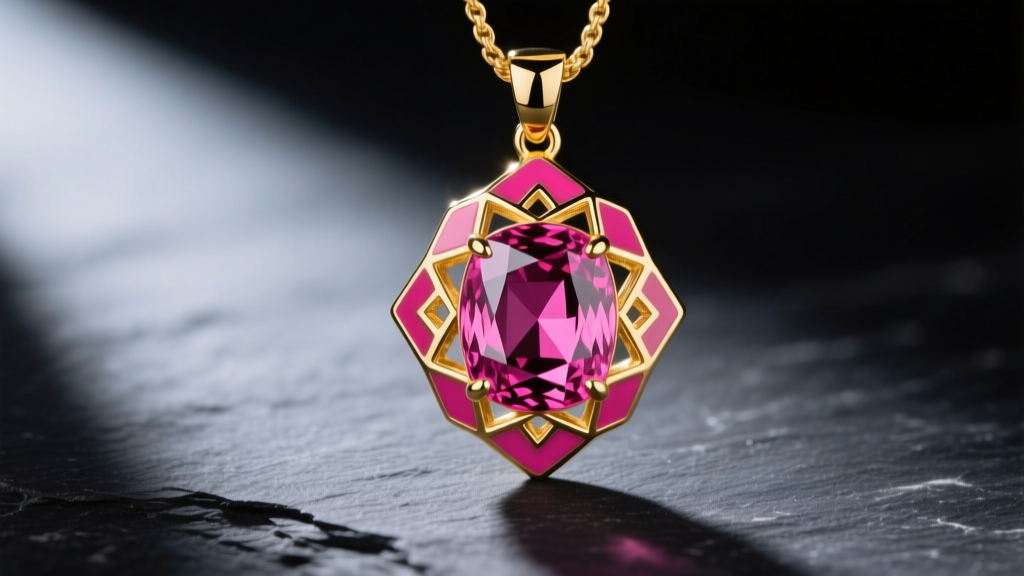
The Challenge of True Hot Pink in Jewelry Design
Achieving a genuine, unadulterated hot pink necklace requires navigating the complex intersection of color theory, material science, and metallurgy. In colorimetry, "hot pink" typically aligns with Pantone 219 C or Hex #FF69B4—a highly saturated, medium-light tone that sits between magenta and fuchsia. While fast-fashion brands achieve this hue using cheap acrylic paints or dyed plastics, fine jewelry demands permanence. The challenge lies in the fact that the organic and inorganic pigments required to produce this specific neon wavelength are inherently susceptible to photodegradation, thermal shock, and chemical breakdown.
In this technical deep dive, we examine the three primary material pathways jewelers use to create a high-end hot pink necklace: vitreous enamel, stabilized epoxy resins, and rare gemstones like rubellite. Understanding the failure modes and structural limitations of each medium is essential for both collectors and bench jewelers.
Vitreous Enamel: The Gold Standard for Opaque Neon
Vitreous enamel remains the most historically significant and durable method for achieving a solid, opaque hot pink in fine jewelry. Unlike paint, enamel is essentially powdered glass (a borosilicate frit) fused to a metal substrate at extreme temperatures. To achieve a vibrant hot pink, enamelists rely on specific metallic oxides—primarily manganese and cobalt—suspended within a lead-free flux.
The Firing Process and Thermal Shock
Creating a hot pink enamel pendant requires firing the piece in a kiln at precisely 1400°F to 1500°F (760°C to 815°C). At this threshold, the glass particles melt and flow, bonding chemically with the underlying metal, usually 18k or 22k gold due to their high melting points and low thermal expansion rates. The primary failure mode here is crazing—a network of fine cracks that occurs if the coefficient of thermal expansion (CTE) between the gold and the enamel is mismatched, or if the piece is cooled too rapidly (thermal shock).
To add depth to the neon pink, master jewelers utilize the guilloché technique, where the gold base is engine-turned with geometric patterns before applying translucent pink enamel. The light refracts through the glass and bounces off the engraved metal, creating a luminous, three-dimensional hot pink effect that paint simply cannot replicate. For more on historical and modern enameling techniques, the Britannica guide to enamelwork provides an excellent foundational overview.
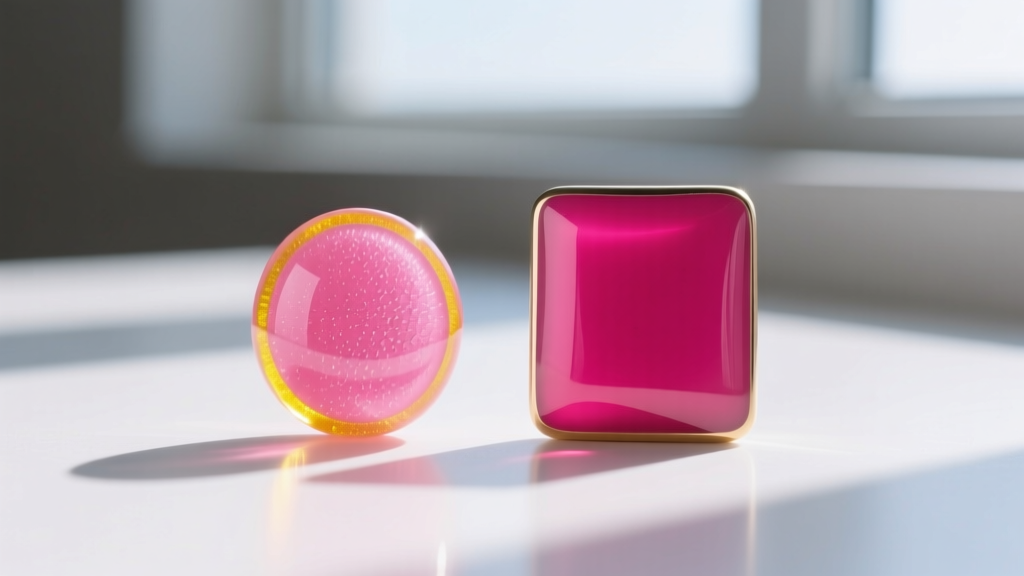
Epoxy and Polyurethane Resins: The Modern Alternative
For contemporary, avant-garde jewelry designs that require thick, domed cabochons or complex geometric molds, jewelers often turn to high-grade epoxy or polyurethane resins. Resin allows for a perfect, uniform hot pink coloration using concentrated organic dyes. However, from a material science perspective, resin presents significant long-term stability challenges.
Combating UV Photodegradation
The greatest enemy of a hot pink resin necklace is ultraviolet (UV) light. The organic pigments used to create neon pink are highly prone to photodegradation. When exposed to sunlight, the molecular bonds of the dye break down, leading to a phenomenon known as "yellowing" or "fading," where the vibrant hot pink shifts into a muddy, desolate salmon or orange hue over 12 to 24 months.
To combat this, expert resin casters incorporate Hindered Amine Light Stabilizers (HALS) and UV absorbers (like benzotriazoles) into the resin matrix before curing. While HALS cannot prevent fading indefinitely, they scavenge the free radicals generated by UV exposure, extending the lifespan of the hot pink pigment by up to 500%. Furthermore, epoxy resins typically possess a Mohs hardness of only 2.5 to 3.0, making them highly susceptible to micro-scratches from daily wear, which dulls the optical clarity and light return of the neon color.
Gemstone Alternatives: Rubellite and Pink Tourmaline
When clients demand a hot pink necklace forged entirely from natural, crystalline materials, the conversation inevitably turns to Rubellite, the most highly prized and saturated variety of pink-to-red tourmaline. Unlike standard pink tourmaline, which can appear washed out in incandescent light, true rubellite maintains its intense, neon-pink saturation under all light sources.
Optical Properties and Inclusions
Rubellite boasts a refractive index of 1.62 to 1.64 and strong pleochroism, meaning it displays different color intensities depending on the viewing angle. Bench jewelers must orient the rough crystal precisely during the lapidary process to maximize the hot pink face-up color while minimizing any brownish or orange secondary hues. According to the Gemological Institute of America (GIA), rubellite is frequently heavily included with liquid-filled tubes and trichites. While these inclusions can compromise structural integrity, they are accepted as proof of natural origin. A clean, vivid hot pink rubellite over 3 carats is exceptionally rare and commands premium pricing, often exceeding $800 to $1,200 per carat.
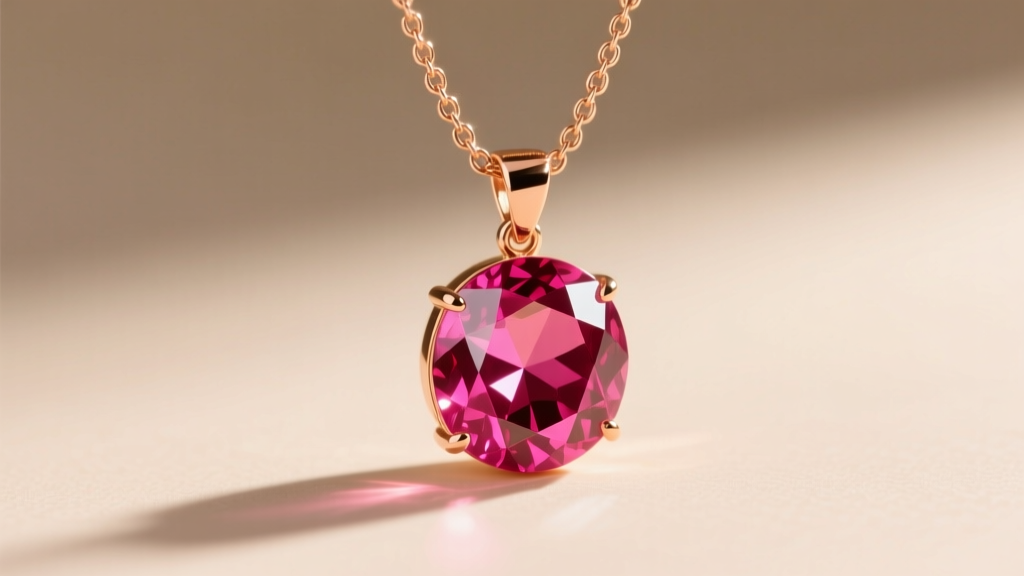
Comparative Material Matrix
To assist in specifying the right medium for a custom hot pink necklace commission, refer to the technical comparison below:
| Material | Mohs Hardness | UV Stability | Price Range (Per Carat/Unit) | Primary Failure Mode |
|---|---|---|---|---|
| Vitreous Enamel | 5.0 - 6.0 | Excellent (Inorganic) | $400 - $1,500 (Finished Piece) | Crazing / Thermal Shock |
| Epoxy Resin (HALS) | 2.5 - 3.0 | Moderate (Degrades) | $50 - $200 (Finished Piece) | Micro-scratches / Yellowing |
| Rubellite Tourmaline | 7.0 - 7.5 | Perfect (Crystalline) | $400 - $1,200+ (Per Carat) | Chipping along inclusions |
Chain Metallurgy and Clasp Mechanics for Statement Pieces
The structural integrity of a hot pink necklace is not solely dependent on the focal material; the chain and clasp engineering are equally critical. Heavy vitreous enamel pendants or large rubellite cabochons exert significant tensile stress on the connecting links.
- Chain Selection: A standard 14k gold cable chain (1.0mm) has a tensile yield point of roughly 4 to 6 pounds. For heavy enamel pieces, a 1.5mm to 2.0mm Rolo or Figaro chain is mandatory, offering yield strengths exceeding 15 pounds. The rounded, interlocking links of a Rolo chain distribute weight more evenly than flat links, preventing localized metal fatigue.
- Clasp Mechanics: Spring ring clasps are entirely unsuitable for heavy statement necklaces due to their weak internal coil springs and small soldered joints. A forged lobster clasp, specifically one with a stainless steel internal spring encased in 14k or 18k gold, is the industry standard for securing high-value hot pink pendants.
- Plating Thickness: If utilizing silver chains to complement the pink hue, ensure the rhodium plating is at least 0.75 to 1.0 microns thick. Standard "flash" plating (0.1 microns) will wear off within weeks, exposing the silver to sulfur in the air, which causes tarnish that visually muddies the brightness of the adjacent hot pink elements.
Care, Maintenance, and Failure Modes
Preserving the neon intensity of a hot pink necklace requires strict adherence to material-specific care protocols. Vitreous enamel must never be subjected to ultrasonic cleaners; the high-frequency acoustic cavitation can easily shatter the glass matrix or cause it to delaminate from the gold substrate. Instead, clean enamel with a soft microfiber cloth and a mild, non-ammoniated soap solution.
Resin pieces should be stored in dark, climate-controlled environments when not in use to slow the inevitable UV degradation process. Avoid exposing resin to alcohol-based perfumes or hand sanitizers, as these solvents will chemically soften the epoxy surface, leaving permanent cloudy smudges. Finally, while rubellite is durable enough for daily wear, its inherent internal tension and liquid inclusions make it vulnerable to sharp impacts. Always remove gemstone necklaces before engaging in high-impact physical activities.
Final Verdict for Collectors and Jewelers
Designing or purchasing a hot pink necklace is an exercise in balancing aesthetic vibrancy with material longevity. For heirloom-quality pieces that will retain their neon brilliance for generations, vitreous enamel over 18k gold remains the undisputed champion, offering unmatched optical depth and UV permanence. For those seeking the raw, natural beauty of crystalline structures, a well-cut rubellite provides a breathtaking, albeit expensive, alternative. By understanding the underlying chemistry, thermal dynamics, and structural engineering of these materials, you can confidently select or craft a hot pink masterpiece that defies the fleeting nature of fashion trends.


