The 2026 Peony Necklace Value Guide: Budget to Luxury
Discover true peony necklace value in 2026. Compare jade, silver, and resin prices, learn carving grades, and avoid overpaying for floral pendants.

The Anatomy of a Peony Necklace: What Drives the Price?
The peony, widely revered as the "king of flowers" in East Asian cultures, symbolizes wealth, honor, and romance. In the 2026 jewelry market, the peony necklace remains a highly sought-after motif, bridging the gap between traditional heritage pieces and modern floral aesthetics. However, the market is heavily saturated with varying quality levels, making it incredibly easy for consumers to overpay for mass-produced items disguised as artisan craftsmanship. Whether you are looking at a hand-carved jadeite pendant or a cast sterling silver piece, understanding the true value of a peony necklace requires a deep dive into material grades, carving techniques, and structural integrity. This guide strips away the marketing fluff to provide a rigorous budget and value assessment for buyers at every price point.
Material Breakdown: Jade, Silver, and Alternative Carvings
The base material of the pendant dictates the baseline value, but the treatment and origin of that material create massive price disparities. A peony necklace is only as valuable as the integrity of its medium.
Jadeite vs. Nephrite: The High-End Market
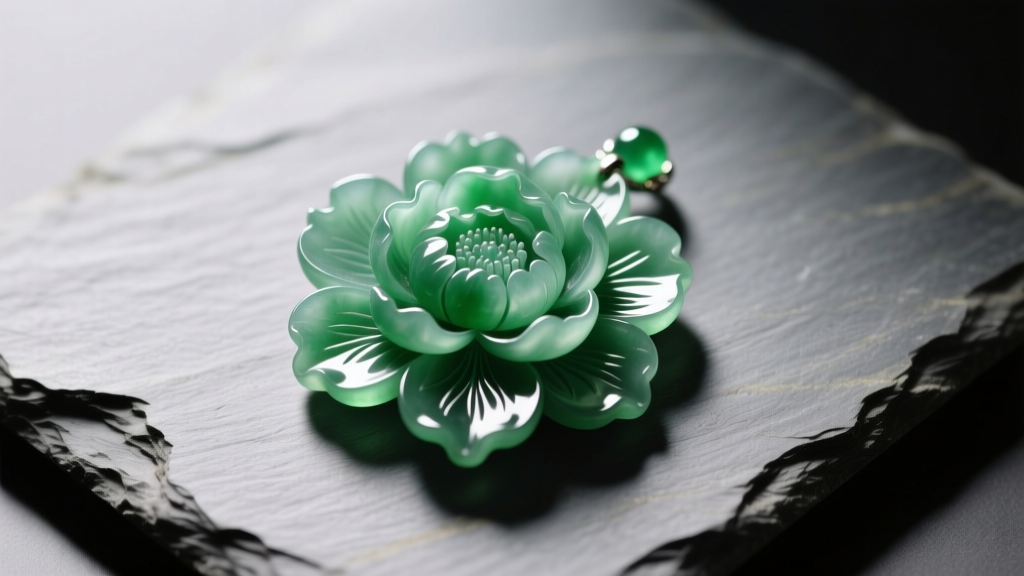
When evaluating a jade peony necklace, you must first distinguish between jadeite (hard jade) and nephrite (soft jade, such as Hetian jade). According to the Gemological Institute of America (GIA), these are two entirely different minerals with distinct value metrics. High-quality Type A (untreated) Burmese jadeite with a translucent "imperial green" hue commands luxury prices, often exceeding $5,000 for a well-carved pendant alone. Conversely, nephrite peony pendants, prized for their creamy "mutton fat" white or deep spinach green tones, offer a more accessible entry point into genuine jade, typically ranging from $300 to $1,500 depending on the stone's translucency and lack of inclusions. Buyers must be highly wary of Type B (bleached and polymer-impregnated) and Type C (dyed) jade, which are frequently sold at Type A prices to uneducated consumers.
Sterling Silver & Gold Vermeil: The Mid-Tier Sweet Spot
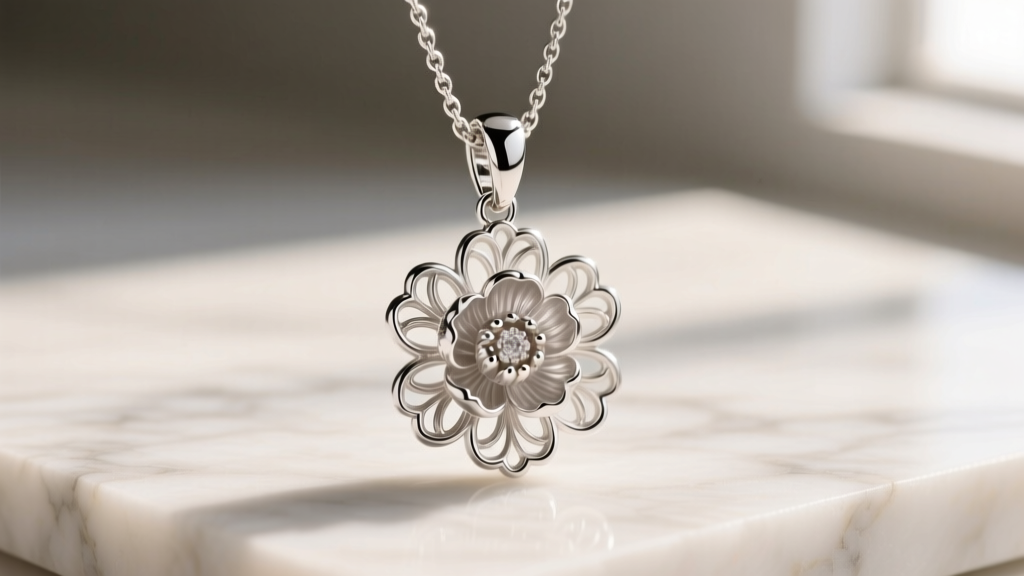
For metal peony necklaces, 925 sterling silver is the industry standard. The value here is driven by the casting method and the finishing. Hand-finished, lost-wax cast silver peonies with deep relief and oxidized detailing retain higher value than die-struck, flat-stamped alternatives. If you are looking at gold vermeil, the 2026 FTC guidelines mandate a minimum of 2.5 microns of gold plating over sterling silver. Many budget brands use "flash plating" (less than 0.5 microns), which will wear off the high-friction petals within months, severely degrading the necklace's long-term value.
Resin, Bone, and Brass: Budget Options
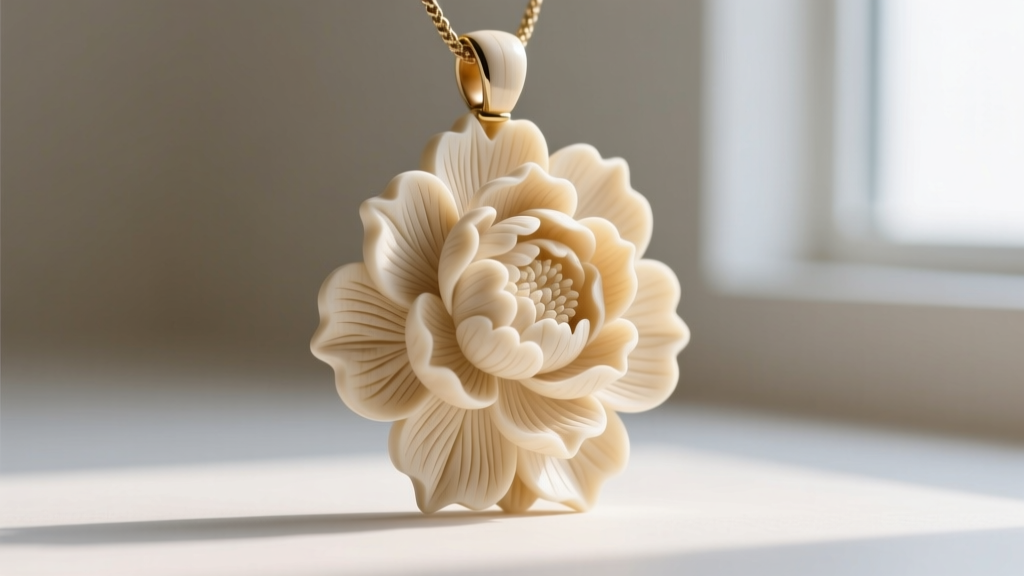
Budget-friendly peony necklaces often utilize carved bone, horn, or high-density resin. Hand-carved bone and horn offer excellent value in the $40 to $120 range, provided the artisan uses ethical sourcing and traditional undercutting techniques. Resin, while durable and capable of mimicking the translucency of jade or the luster of enamel, holds virtually no intrinsic resale value and should be priced strictly as fashion jewelry (under $50).
2026 Price Matrix: What You Should Actually Pay
To help you benchmark your next purchase, we have compiled a comprehensive pricing matrix based on current 2026 market data from estate jewelers and direct-to-consumer artisan platforms. Use this table to immediately identify if a retailer is marking up their peony necklaces beyond reasonable margins.
| Material Tier | Typical Price Range (2026) | Key Value Drivers | Expected Chain Quality |
|---|---|---|---|
| Type A Jadeite (Fine) | $2,500 - $10,000+ | Color saturation, translucency, master-level undercut carving | 18k Gold or Platinum, 1.5mm+ Box Chain |
| Hetian Nephrite | $300 - $1,500 | Stone purity, creamy texture, smooth polish | 925 Silver or 14k Gold, 1.2mm Cable/Box |
| 925 Sterling Silver | $85 - $250 | Lost-wax casting, rhodium plating, hand-set enamel | 925 Silver, 1.0mm - 1.5mm Wheat Chain |
| Gold Vermeil (Heavy) | $150 - $400 | Minimum 2.5 micron gold thickness, solid silver core | Gold Vermeil, 1.2mm+ Cable Chain |
| Hand-Carved Bone/Horn | $40 - $120 | Artisan detail, ethical sourcing, natural grain usage | Cotton cord, leather, or base metal chain |
| Resin / Enamel Alloy | $20 - $60 | Brand name, design aesthetics, color vibrancy | Brass or alloy, thin cable chain |
Evaluating Craftsmanship: Carving Depth and Chain Quality
A common failure mode in budget peony necklaces is the structural disconnect between the pendant and the chain. A heavy, solid jade or silver peony pendant requires a chain with adequate tensile strength. Furthermore, the carving technique itself is a primary indicator of value.
- Undercutting Technique: In high-value jade and bone carvings, look for "undercutting." This is where the artisan carves beneath the top layer of petals to create deep, three-dimensional shadows. If the peony looks flat or stamped, it is likely machine-milled or molded, drastically reducing its value.
- Petal Symmetry vs. Organic Flow: While machine-made pendants offer perfect, rigid symmetry, high-value artisan carvings often feature a slight, organic asymmetry that follows the natural grain of the bone or the color banding of the jade. This bespoke adaptation to the material justifies a premium price.
- Chain Gauge and Clasp: A genuine stone peony pendant can weigh between 10 and 25 grams. A chain thinner than 1.0mm is a liability and will eventually snap. Insist on a 1.2mm to 2.0mm box, wheat, or rope chain. Additionally, ensure the clasp is a sturdy lobster claw; spring-ring clasps are a hallmark of cheap manufacturing and fail under the weight of stone pendants.
- Bail Construction: The bail (the loop connecting the pendant to the chain) should be solid and smoothly polished. Rough edges inside the bail will act like a saw, slowly cutting through your chain over time.
Red Flags: How to Avoid Overpaying
The floral jewelry market is rife with deceptive practices. When assessing the budget and value of a peony necklace, keep your guard up against these common retail traps.
First, beware of the term "new jade" or "Chinese jade." These are unregulated trade names often used to sell dyed serpentine, aventurine, or even green glass at jade prices. As outlined in the GIA Jade Quality Factors database, only jadeite and nephrite can legally and ethically be sold as "jade" in most regulated markets without heavy qualifiers. Second, watch out for "antiqued" resin. Some manufacturers cast resin in silicone molds taken from genuine antique bone carvings, then apply a dark wash to mimic age and patina. If the piece feels unusually light or warm to the touch, it is likely resin, not stone or bone.
"When buying carved floral motifs, always run your fingernail gently along the crevices between the petals. If it catches on a seam line, you are looking at a molded piece, not a hand-carved one. Hand-carved crevices will feel smooth and continuous." — Senior Appraiser, Estate Jewelry Division.
Final Verdict: Maximizing Your Investment
The value of a peony necklace in 2026 is not dictated solely by the carat weight of a gemstone, but by the intersection of material integrity and artisan craftsmanship. If you are operating on a strict budget under $100, bypass the temptation of fake "jade" or flash-plated metals. Instead, invest in a high-quality, hand-carved bone or horn pendant on a durable leather cord, or a solid 925 sterling silver cast piece from a reputable maker. For those in the $500 to $2,000 range, untreated Hetian nephrite offers the best balance of cultural significance, durability, and long-term value retention. Always demand full material disclosure from the seller, aligning with the FTC Jewelry Guides, and remember that true value lies in the depth of the carving and the strength of the chain. By applying these rigorous assessment metrics, you can confidently acquire a peony necklace that is both a beautiful wearable art piece and a sound financial decision.


