How to Pick a Necklace: The Ultimate Neckline & Chain Guide
Learn how to pick a necklace that flatters your neckline and suits your lifestyle. Expert tips on chain types, metal grades, and clasp durability.

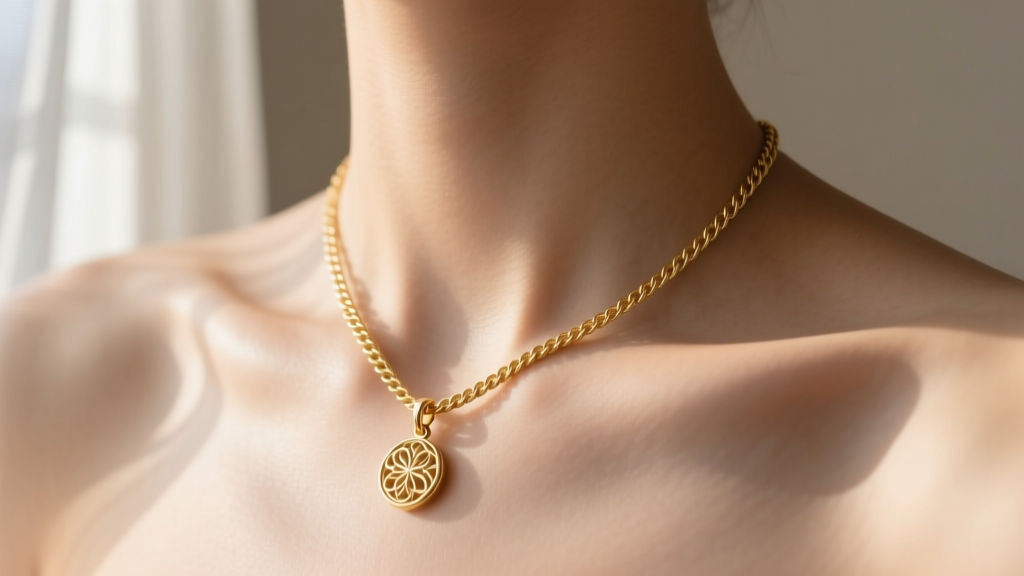
Learning how to pick a necklace that perfectly balances your wardrobe, neckline, and daily lifestyle requires looking far beyond the display case. While most buying guides focus solely on aesthetics, a truly durable and flattering piece demands an understanding of metallurgy, structural mechanics, and proportion. In 2026, with the market flooded with advanced PVD coatings and ultra-thin vermeil, knowing the exact specifications of your jewelry is the only way to avoid buyer's remorse. This guide breaks down the exact chain gauges, metal grades, and clasp mechanisms you need to look for when making your next purchase.
The Anatomy of a Chain: Where Necklaces Actually Fail
Before evaluating the pendant, you must scrutinize the chain. The most common point of failure in any necklace is not the chain itself, but the jump ring—the small circular wire that connects the chain to the clasp.
- Unsoldered Jump Rings: Standard on 80% of commercial jewelry. These have a tiny slit where the wire was cut. Under tension (like getting snagged on a sweater), a 20-gauge (0.8mm) unsoldered jump ring will pull apart, dropping your pendant.
- Soldered Jump Rings: The slit is fused shut with laser or torch soldering. Always look for soldered jump rings on the pendant bail and the clasp attachment point if the piece is over $150.
- Chain Gauge Thickness: For lightweight pendants (under 5 grams), a 0.9mm to 1.2mm chain is ideal. For standalone statement chains, never go below 2.5mm. Anything thinner in a rope or figaro style will stretch and permanently deform under its own weight over time.
How to Pick a Necklace Length for Your Neckline
The interaction between your collarbone structure, the garment's neckline, and the chain length dictates the visual weight of your outfit. According to styling frameworks from the Jewelers of America, the goal is to create parallel lines or complementary angles, never intersecting clashes. Use the data table below as your definitive reference when shopping.
| Garment Neckline | Ideal Chain Length | Recommended Chain Style | Visual Effect |
|---|---|---|---|
| V-Neck | 18" to 22" (Princess/Matinee) | Y-Chain or Pendant on Cable | Elongates the neck; follows the garment's natural plunge. |
| Crew Neck | 14" (Choker) or 24"+ (Opera) | Chunky Curb or Layered Delicate | Sits entirely above or entirely below the fabric line to avoid tangling. |
| Scoop Neck | 16" to 18" (Collarbone) | Box Chain or Herringbone | Fills the negative space perfectly without touching the fabric hem. |
| Boat Neck | 20" to 24" (Matinee) | Long Pendant or Lariat | Creates a vertical line that breaks up the wide horizontal shoulder line. |
| Strapless | 14" to 16" (Choker/Collar) | Wide Collar or Layered Chokers | Frames the bare collarbone and draws attention upward to the face. |
Metal Grades: Avoiding the Tarnish Trap
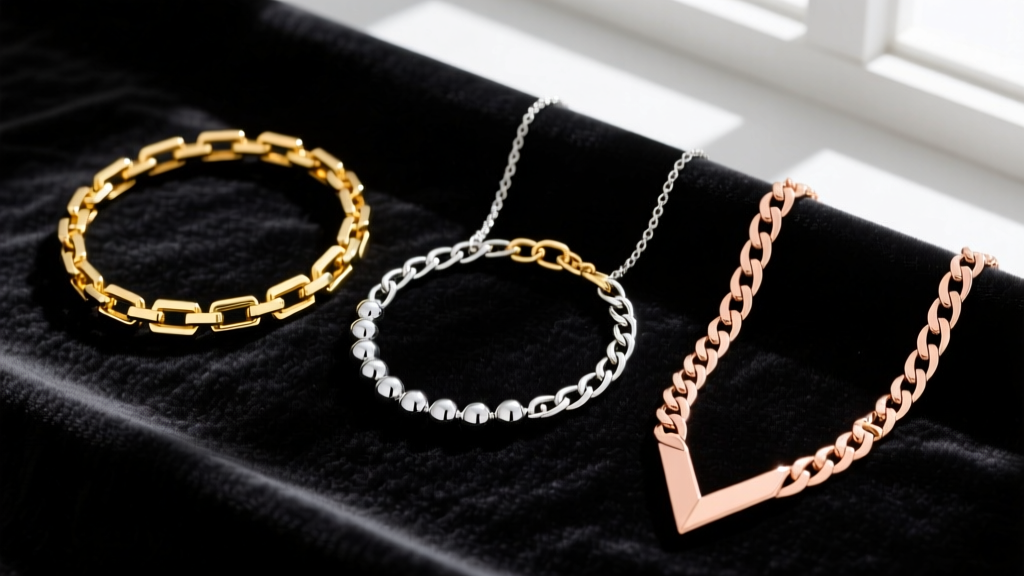
When deciding how to pick a necklace for daily wear, understanding metal composition is non-negotiable. The term "hypoallergenic" is largely unregulated, so you must look for specific alloy grades. The Gemological Institute of America (GIA) provides strict guidelines on gold purity, but the base metals used in plating are where consumers get tricked.
The Vermeil vs. Gold-Filled Debate
If you are buying gold-toned jewelry that isn't solid, you will encounter these two terms. They are not interchangeable:
- Gold Vermeil: By FTC standards, this must be a sterling silver (925) base plated with at least 2.5 microns of 10k, 14k, or 18k gold. It is excellent for sensitive skin but will eventually wear through to the silver on high-friction areas (like the back of the neck) after 2-3 years of daily wear.
- Gold-Filled: This involves mechanically bonding a thick layer of gold (at least 5% of the total weight) to a brass or copper core using heat and pressure. It is vastly more durable than vermeil and can last decades, but the brass core can cause green skin oxidation if the outer layer is ever scratched through.
- PVD Coated Stainless Steel (316L): The standard for modern, budget-friendly waterproof jewelry. Physical Vapor Deposition (PVD) binds titanium nitride to surgical steel. It will not tarnish or turn your skin green, but it cannot be polished if scratched, and the gold color has a slightly cooler, less buttery tone than real gold.
Clasp Mechanics: The Hidden Weak Point
A chain is only as strong as its clasp. When inspecting a necklace in-store or reviewing macro photos online, identify the clasp type immediately.
Spring Ring Clasps: These are the small, perfectly circular clasps with a tiny lever. They rely on a microscopic internal spring. They are the most common and the most prone to failure. The internal spring routinely snaps, or the lever gets stuck open. Avoid these on any chain thicker than 1.5mm or any pendant over 10 grams.
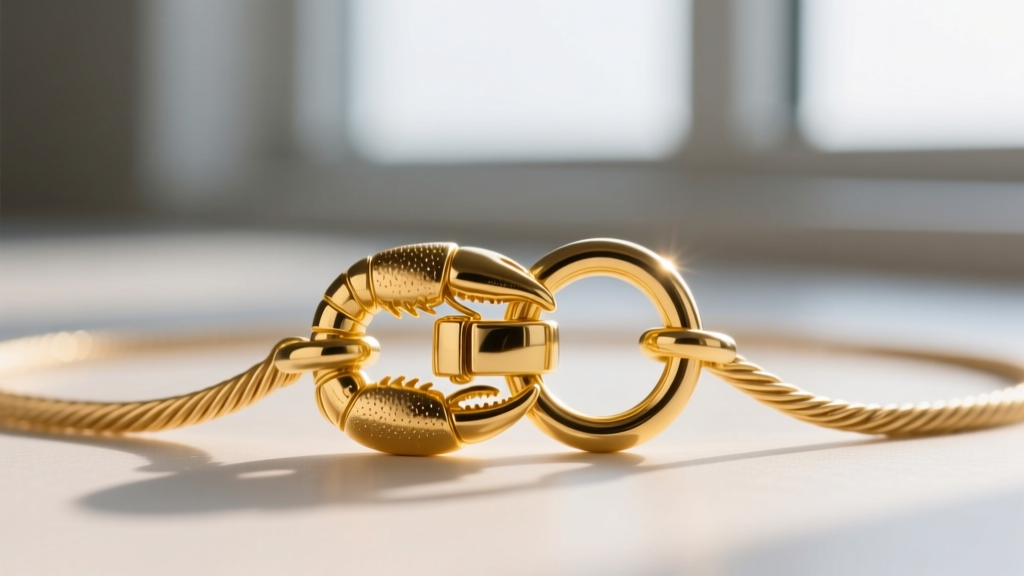
Lobster Clasps: Shaped like a lobster claw, these feature a thicker, more robust internal spring mechanism and a wider opening. They are the industry standard for mid-weight chains. However, ensure the swivel joint at the base rotates freely; if it snags, it will twist and weaken the chain.
Box Clasps with Safety Figures: Found on heavy tennis necklaces or thick Cuban links. A tongue compresses and clicks into a box, secured by a hinged wire "safety figure-8". Never buy a heavy chain with a box clasp that lacks the secondary safety wire.
Troubleshooting Common Necklace Failures
Even high-end pieces suffer from mechanical wear. Here is how to diagnose and prevent the three most common issues:
1. The "Herringbone Kink"
Herringbone and snake chains are composed of tightly interlocking flat links. If bent sharply, the metal undergoes "work hardening," becoming brittle and permanently kinked. Prevention: Never sleep in a herringbone chain. Fix: Lay the chain flat on a hard surface, place a piece of parchment paper over it, and gently roll a smooth glass rolling pin over the kink to flatten the links back into alignment.
2. Bail Friction and Chain Snapping
If your pendant bail (the loop the chain slides through) has a rough interior edge, it will act like a microscopic file against your chain. Over six months, it will saw right through a 1mm gold chain. Fix: Take a piece of fine jewelry polishing cloth or a cotton swab with a tiny amount of metal polish, and buff the inside of the pendant bail until it is glass-smooth.
3. Clasp Sliding to the Front
This happens when the clasp is heavier than the chain and pendant combined, causing gravity to pull the clasp down to your collarbone. Fix: Add a small, decorative 2mm silicone stopper bead or a tiny gold "counterweight" bead directly opposite the clasp to balance the center of gravity.
Expert Takeaway: When you pick a necklace, you are investing in a mechanical system as much as an aesthetic one. Prioritize soldered jump rings, match the chain gauge to the pendant weight, and choose your metal based on your willingness to maintain it. A well-chosen 14k solid gold 1.2mm cable chain will outlive a 3mm gold-plated brass rope chain every single time.


