Sterling Silver Bead Necklace: Material Properties & Comparisons
Compare sterling silver bead necklace materials, alloys, and finishes. Expert guide on 925 silver vs. alternatives, stringing gauges, and care.

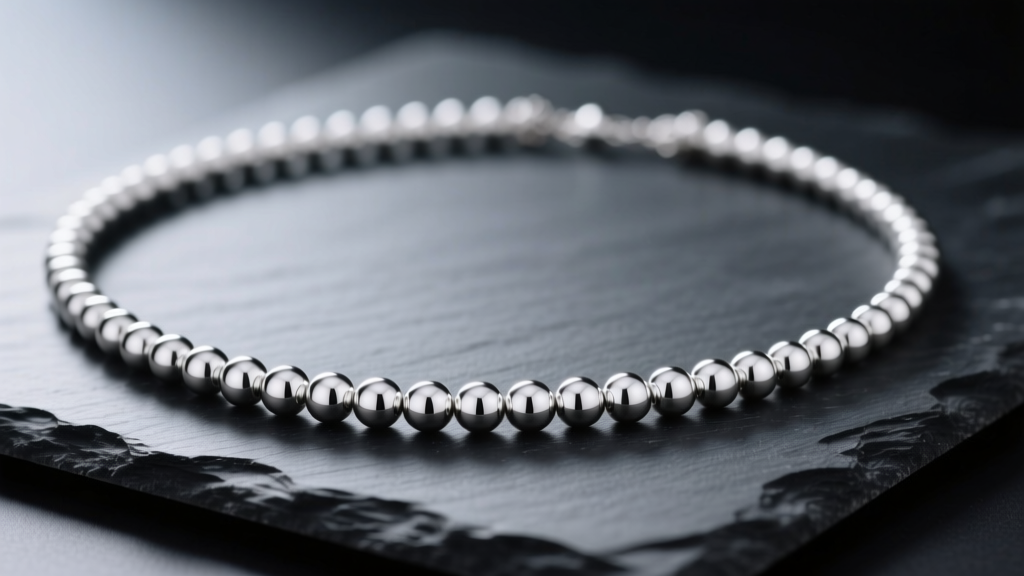
A sterling silver bead necklace is a cornerstone of versatile jewelry design, offering a luminous, metallic alternative to gemstones while maintaining a timeless aesthetic. However, not all silver beads are created equal. The longevity, drape, and tarnish-resistance of these necklaces depend heavily on the specific metallurgical composition, surface treatments, and stringing materials used in their construction.
In this comprehensive material guide, we dissect the properties of 925 sterling silver, compare it against modern alternatives, and provide actionable engineering insights for selecting, stringing, and maintaining high-quality silver bead jewelry.
The Metallurgy of 925 Sterling Silver Beads
Pure silver (999 fine silver) possesses a Mohs hardness of just 2.5, making it far too malleable for durable jewelry. If strung into a bead necklace, pure silver would quickly dent, scratch, and deform under the tension of the stringing wire. To solve this, the jewelry industry relies on the sterling standard.
According to the Federal Trade Commission (FTC) Jewelry Guides, an item can only be legally marked as 'sterling' if it contains at least 92.5% pure silver. The remaining 7.5% is traditionally composed of copper. This copper alloy increases the hardness to a Mohs 3-4, providing the structural integrity needed for seamless and faceted silver beads to maintain their shape over decades of wear.
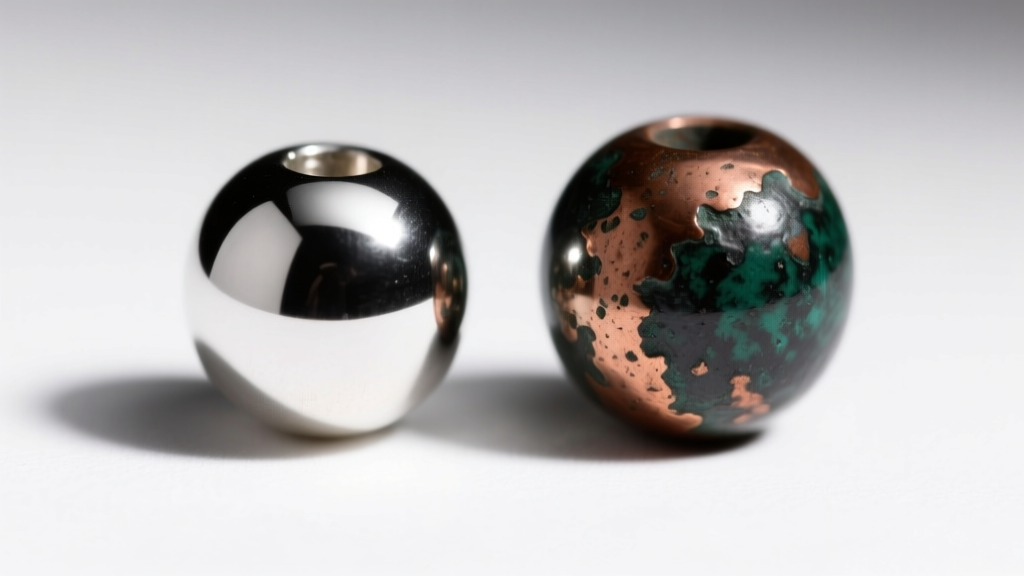
However, this copper addition introduces a chemical vulnerability: tarnish. Copper reacts with atmospheric sulfur and moisture to form copper sulfide, which manifests as the dark, dull patina commonly seen on neglected silver jewelry. Understanding this reaction is critical when comparing sterling silver to other bead materials.
Material Showdown: Sterling Silver vs. Common Alternatives
When sourcing or designing a beaded necklace, jewelers must weigh the pros and cons of 925 silver against other popular metallic bead materials. Below is a technical comparison based on an 18-inch strand of 4mm round beads.
| Material | Tarnish Resistance | Relative Weight | Avg. Price Range | Skin Sensitivity Risk |
|---|---|---|---|---|
| 925 Sterling Silver | Low (Requires maintenance) | Heavy (10.5 g/cm³) | $45 - $120 | Low (unless copper allergy) |
| 316L Stainless Steel | Very High | Medium (8.0 g/cm³) | $15 - $35 | Low (Hypoallergenic) |
| 14k Gold-Filled Brass | Medium (Wears over time) | Medium (8.5 g/cm³) | $80 - $180 | Medium (If brass core exposes) |
| Anodized Aluminum | High (Oxide layer) | Very Light (2.7 g/cm³) | $10 - $25 | Very Low |
While 316L stainless steel offers superior tarnish resistance and a lower price point, it lacks the distinct, warm luminosity and high intrinsic value of sterling silver. Furthermore, stainless steel beads are notoriously difficult to drill, often resulting in slightly irregular hole sizes compared to the precision-drilled holes of cast or stamped sterling beads.
Surface Treatments and Upgrades
To mitigate the tarnishing issue inherent in the copper alloy, manufacturers apply various surface treatments to sterling silver beads. The Gemological Institute of America (GIA) notes that these treatments drastically alter the maintenance requirements of the final necklace.
Rhodium Plating vs. Bare 925
Rhodium, a platinum-group metal, is frequently electroplated onto sterling silver beads to create a bright, white, and highly tarnish-resistant barrier. A rhodium-plated sterling silver bead necklace will remain brilliant for years without polishing. However, the plating is microscopic (usually 0.75 to 1.0 microns thick). Once it wears away from friction against the skin or clothing, the underlying silver is exposed and will tarnish rapidly. Bare 925 silver, while requiring more frequent polishing, does not suffer from this 'wear-through' failure mode.
Argentium Silver: The Germanium Advantage
For those seeking a premium upgrade, Argentium silver replaces a portion of the copper alloy with germanium. When exposed to oxygen, the germanium forms a transparent, self-healing germanium oxide layer on the surface of the beads. This layer effectively blocks sulfur from reaching the silver, making an Argentium sterling silver bead necklace up to seven times more tarnish-resistant than traditional 925 silver, without the need for rhodium plating.
Sizing, Gauges, and Threading Considerations
The structural integrity of a silver bead necklace relies not just on the beads themselves, but on the internal armature—the stringing material. The relationship between the bead hole diameter and the stringing gauge is a frequent point of failure in poorly constructed jewelry.
Bead Hole Tolerances
Standard 4mm to 6mm sterling silver round beads typically feature drilled holes ranging from 0.8mm to 1.2mm in diameter. Seamless drawn silver beads may have slightly smaller tolerances (0.7mm), whereas cast beads can have wider, more irregular holes (up to 1.5mm).
Stringing Material Selection
- 49-Strand Micro-Wire (0.015-inch / 0.38mm): Made of stainless steel and nylon-coated, this is the industry standard for heavy silver bead necklaces. It provides excellent drape and high tensile strength (approx. 20 lbs). However, if bent sharply, it will kink permanently.
- Size F or G Silk Cord: Traditional and luxurious, silk knots between each silver bead prevent them from grinding against one another. This is critical for oxidized or textured silver beads, where friction would prematurely wear away the dark patina. Silk, however, is susceptible to degradation from sweat and UV exposure, requiring restringing every 3-5 years.
- Nylon Monofilament: A cost-effective alternative to silk, but it becomes brittle over time and is prone to catastrophic snapping without warning.
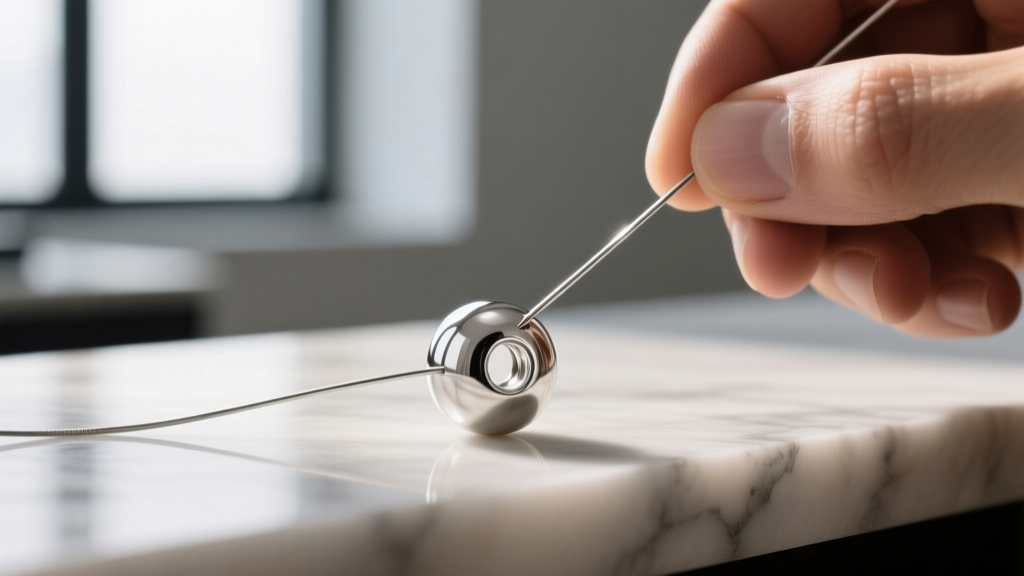
Expert Tip: Never string heavy sterling silver beads (8mm or larger) on standard nylon thread. The density of silver (10.5 g/cm³) means an 18-inch strand of 8mm beads can weigh over 40 grams. This constant gravitational pull will stretch nylon and cause premature failure at the clasp crimp.
Care, Maintenance, and Failure Modes
Understanding how a sterling silver bead necklace fails allows owners to implement proactive maintenance routines. The most common failure modes extend beyond simple tarnish.
The Crimp Bead Failure
The weakest point of any wire-strung bead necklace is the crimp bead securing the clasp. If a standard base-metal crimp is used on a sterling silver necklace, galvanic corrosion can occur where the two dissimilar metals meet in the presence of moisture (sweat). Always use solid 925 sterling silver or 14k gold-filled crimp tubes to ensure uniform electrochemical stability.
Chemical Tarnish Accelerators
Silver sulfide formation is accelerated by specific environmental factors. To preserve the finish of your necklace, remove it before exposure to:
- Chlorine: Found in swimming pools and household cleaners. Chlorine can cause irreversible pitting and white, crusty corrosion on sterling silver.
- Vulcanized Rubber: Latex and rubber bands emit sulfur gases that will instantly blacken silver beads upon contact.
- Wool and Certain Silk Dyes: The organic sulfur compounds in raw wool and acidic dyes can trigger rapid localized tarnishing.
Proper Polishing Techniques
When polishing a sterling silver bead necklace, avoid abrasive silver dips or liquid tarnish removers. These chemicals strip the copper from the surface layer, leaving behind a porous, microscopic layer of pure silver that is highly susceptible to future scratching. Instead, use a microfiber cloth impregnated with jeweler's rouge for a gentle, mechanical polish that preserves the bead's structural integrity.
By understanding the metallurgical realities, stringing mechanics, and environmental vulnerabilities of 925 silver, collectors and jewelers can ensure their sterling silver bead necklaces remain pristine, structurally sound, and visually striking for generations.


