How to Style and Measure a Sixteen Inch Necklace Perfectly
Learn exactly how a sixteen inch necklace fits, master at-home measuring techniques, and explore expert styling tips for necklines.

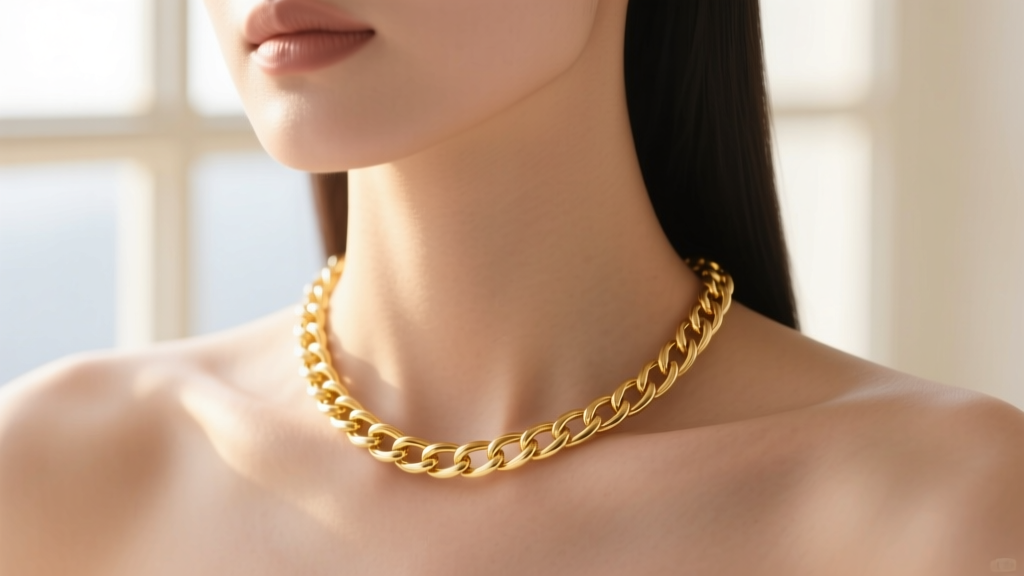
When building a foundational jewelry collection, the sixteen inch necklace is arguably the most versatile, yet frequently misunderstood, length you can own. Often described as a "choker-adjacent" or "collarbone" length, a 16-inch chain sits higher on the décolletage than the standard 18-inch princess length. For beginners, navigating the exact fit, choosing the right gauge, and pairing it with the correct necklines can be daunting. This comprehensive guide breaks down the exact mathematics of a 16-inch drop, how to measure your neck for a flawless fit, and the structural details you need to know before making a purchase.
The Anatomy of Fit: Neck Size vs. Necklace Length
The most common mistake beginners make is assuming a 16-inch necklace will look identical on everyone. In reality, the visual drape of a chain is entirely dictated by the wearer's neck circumference. According to standard jewelry sizing metrics, the average adult female neck measures between 13 and 14.5 inches, while the average male neck ranges from 15 to 18 inches. Therefore, a 16-inch chain will act as a comfortable collarbone piece on a smaller neck, but will function as a tight choker—or fail to clasp entirely—on a larger neck.
To understand how a sixteen inch necklace will behave on your specific frame, refer to the drape chart below. This data assumes a standard chain without a heavy pendant pulling the metal upward.
| Neck Circumference | Remaining Drape | Visual Fit on Body | Recommended Usage |
|---|---|---|---|
| 12.0 inches | 4.0 inches | Rests on upper collarbone | Ideal for layering with 18" and 20" chains |
| 13.0 inches | 3.0 inches | Base of neck / High collarbone | Perfect standalone delicate chain |
| 14.0 inches | 2.0 inches | Snug collarbone / Loose choker | Best with V-necks and open collars |
| 15.0 inches | 1.0 inch | Tight choker | Requires an extender chain for comfort |
| 16.0+ inches | 0.0 inches | Will not clasp comfortably | Size up to 18" or use a 2"+ extender |
How to Measure for a 16-Inch Chain at Home
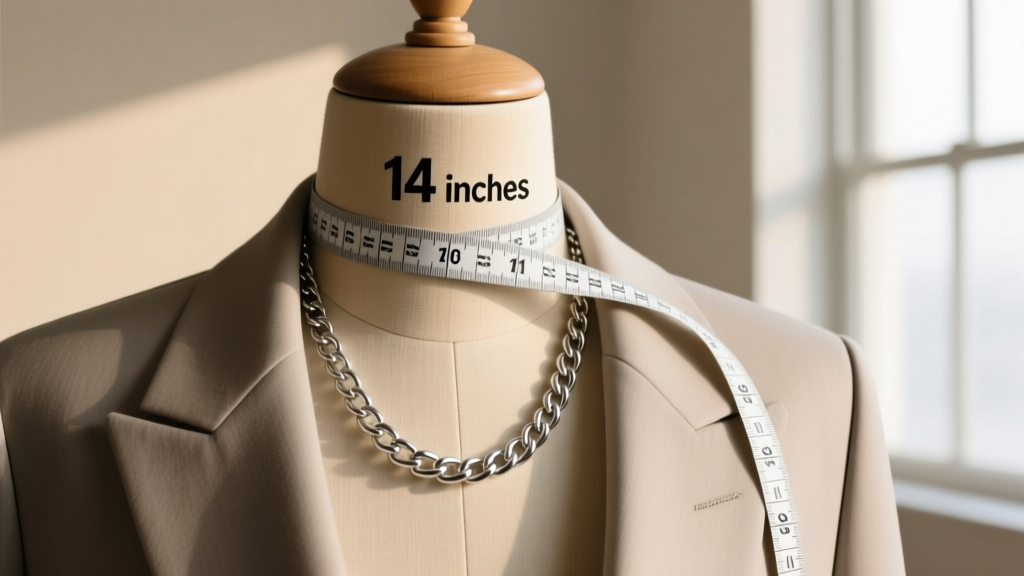
Before purchasing a sixteen inch necklace, you must verify your exact neck circumference. Do not use a standard metal tailor's tape measure, as it is too rigid to contour accurately to the base of your throat. Instead, use the string method:
- Cut a piece of non-stretch string, dental floss, or a thin ribbon approximately 20 inches long.
- Wrap it around your neck at the exact height where you want the chain to sit (usually just above the collarbone).
- Mark the point where the string overlaps with a pen or by holding it tightly between your fingers.
- Lay the string flat against a standard ruler to determine your exact neck circumference.
- Add a minimum of 2 inches to this measurement to ensure the chain does not restrict your breathing or swallow when you move your head.
If your final measurement lands exactly on 14 inches, a 16-inch chain will leave you with 2 inches of total drape (1 inch of drop on each side of the neck), which is the sweet spot for a classic collarbone fit.
The "Clasp Migration" Phenomenon
One of the most frustrating issues unique to shorter chains is clasp migration. Because a 16-inch chain has a smaller diameter, the weight distribution is easily thrown off. If your necklace features a heavy lobster clasp at the back and a lightweight chain, the center of gravity will shift. Throughout the day, the heavy clasp will slide around to the front of your neck, resting awkwardly next to your pendant.
How to Fix Clasp Migration
- Opt for a Spring Ring Clasp: Spring rings are significantly lighter than lobster clasps and are less likely to pull the back of a delicate 16-inch chain downward.
- Use a Counterweight: Many high-end jewelers solder a small metal "tag" or jump ring directly opposite the clasp to act as a counterbalance.
- Choose a Heavier Pendant: A pendant that weighs at least three times as much as the clasp will anchor the front of the necklace, keeping the clasp secured at the nape of your neck.
Best Necklines and Occasions for a 16-Inch Length
The sixteen inch necklace thrives in specific sartorial environments. Because it sits high on the chest, it is designed to fill negative space rather than drape over fabric. According to Blue Nile's necklace education guide, shorter chains are best utilized to frame the face and draw the eye upward.
- The Crew Neck T-Shirt: A 16-inch chain will rest exactly on the ribbed collar of a standard crew neck. For a modern look, choose a 1.5mm rope chain in yellow gold to contrast against a white or grey cotton tee.
- The Open Button-Down: Worn against the bare skin inside an unbuttoned collar, a 16-inch chain provides a subtle, sophisticated accent without getting lost in the folds of the shirt.
- The V-Neck Sweater: The chain will mirror the upper geometry of the V-neck, creating a cohesive, layered visual effect that elongates the neck.
- Boatnecks and Off-the-Shoulder: Avoid 16-inch chains with wide boatnecks. The horizontal line of the neckline will clash with the short, curved line of the chain, making the neck appear wider.

Material and Gauge Considerations for Shorter Chains
When shopping for a 16-inch chain, the gauge (thickness) and material are critical to both comfort and durability. A chain that is too thick at this length will feel like a rigid collar, while a chain that is too thin may snap under the friction of daily neck movement.
Ideal Gauge Sizes
For a 16-inch drop, the ideal width ranges between 1.0mm and 2.5mm. A 1.2mm box chain is virtually indestructible at this thickness and provides a brilliant, reflective surface for pendants. Conversely, a 4mm or 5mm Cuban link at 16 inches will sit stiffly and may pull neck hair. For comprehensive data on metal durability and chain weaves, the Gemological Institute of America (GIA) offers extensive resources on how different alloys withstand daily friction.
Material Warnings: The Snake Chain
Expert Warning: Avoid snake chains for 16-inch lengths if you plan to sleep in them or wear them during high-activity days. Because a 16-inch chain sits closer to the neck, it is more susceptible to bending and kinking when you toss and turn or look down sharply. A kinked snake chain compromises its structural integrity and is nearly impossible to repair.
Furthermore, because a 16-inch chain rests near the pulse points and hairline, it is exposed to higher concentrations of skin oils, sweat, and hair products. If you are buying sterling silver (925), ensure it is heavily rhodium-plated to prevent rapid tarnishing. For an everyday 16-inch piece that you never take off, solid 14k or 18k gold is the superior investment.
The Pendant Multiplier Effect
Finally, beginners must account for the "pendant multiplier." When you slide a heavy or oversized pendant onto a 16-inch chain, the weight pulls the front of the chain downward. However, the back of the chain is pulled upward against the nape of the neck. A 16-inch chain with a heavy 2-inch pendant will effectively fit and feel like a 14.5-inch chain.
To combat this, always look for a 16-inch chain that includes a 2-inch extender chain at the clasp. This simple addition gives you a 16-to-18 inch adjustable range, accommodating daily fluctuations in neck swelling, the thickness of winter turtlenecks, and the upward pull of your favorite pendants. By understanding these micro-adjustments, your sixteen inch necklace will remain a comfortable, perfectly proportioned staple in your wardrobe for years to come.


