How to Clean, Store, and Fix a Fish Bone Necklace
Learn expert techniques to clean, store, and untangle your fish bone necklace. Discover how to fix kinks and preserve organic bone.

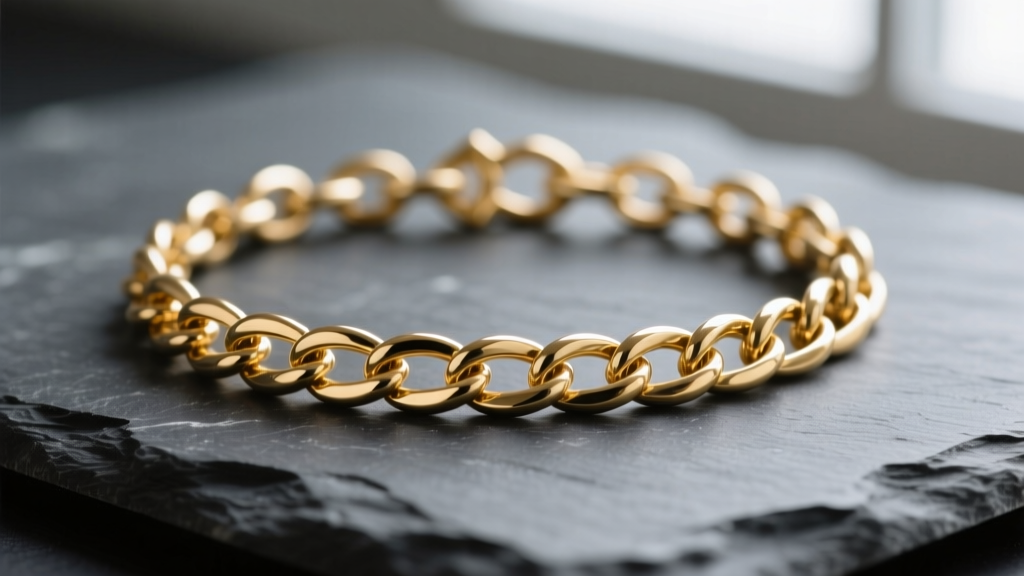
The Tale of Two Necklaces: Metal Chains vs. Organic Pendants
When jewelry enthusiasts refer to a 'fish bone necklace,' they are typically describing one of two vastly different items. The first is the metal fish bone chain (often used interchangeably with the herringbone chain), a flat, articulated, and highly reflective woven metal necklace. The second is the organic fish bone pendant, a literal carved bone, wood, or resin pendant shaped like a fish skeleton, popular in coastal, bohemian, and surf-inspired jewelry. Because these two styles are composed of entirely different materials, their care, maintenance, and cleaning protocols are worlds apart. In this comprehensive 2026 guide, we break down the exact metallurgical and organic care steps required to keep both styles in pristine condition.
The Anatomy of a Metal Fish Bone Chain
To properly care for a metal fish bone chain, you must understand its structural vulnerabilities. Unlike cable or curb chains, which feature interlocking round or oval links, a fish bone chain is constructed from short, flat, parallel links that are slanted in a V-shaped pattern. This creates a seamless, liquid-like drape that sits flat against the collarbone.
However, this articulated flat-weave lacks a central structural wire. Most commercial fish bone chains (ranging from 3mm to 12mm in width) feature hollow or semi-solid links to maintain a lightweight, comfortable drape. This hollow construction makes the chain notoriously susceptible to kinking, crushing, and permanent creasing if bent against the natural 'grain' of the link lay. Furthermore, the tight, flat weave traps skin oils, lotions, and environmental dust between the micro-links, leading to a dull, grayish appearance over time if not cleaned correctly.
How to Clean Metal Fish Bone Chains
Because the links lie so tightly together, aggressive scrubbing can lift the micro-links and cause snags. Never use a stiff-bristled brush or an ultrasonic cleaner on a hollow or oxidized fish bone chain. Ultrasonic waves can easily shatter hollow links or strip intentional antiquing from the crevices.
The Safe Cleaning Protocol
- Prepare a Surfactant Bath: Mix three drops of a mild, phosphate-free dish soap (like Dawn) into a bowl of lukewarm distilled water. Avoid hot water, which can weaken the solder points on older vintage chains.
- Soak Briefly: Submerge the necklace for exactly 3 to 5 minutes. This loosens sebum and cosmetic buildup trapped between the flat links.
- Brush with the Grain: Using an ultra-soft baby toothbrush, gently brush the chain. Critical rule: Always brush in the direction that the links naturally lay flat. Brushing against the grain will lift the edges of the links, creating a rough texture that snags on clothing.
- Rinse and Pat Dry: Rinse thoroughly under lukewarm running water. Lay the chain flat on a lint-free microfiber towel and gently pat it dry. Never hang it to dry, as the weight of the water can pull the chain into a V-shape, stressing the links.
| Cleaning Agent | Metal Fish Bone Chain | Organic Bone Pendant | Notes & Warnings |
|---|---|---|---|
| Mild Dish Soap & Water | Safe | Safe (Damp Only) | Best for routine degreasing. |
| Ultrasonic Cleaners | Dangerous | Dangerous | Shatters hollow metal links; fractures porous bone. |
| Ammonia-Based Cleaners | Risky | Destructive | Causes stress corrosion cracking in rose/copper alloys. |
| Isopropyl Alcohol | Safe | Destructive | Dehydrates organic bone, causing micro-cracking. |
| Food-Grade Mineral Oil | Not Needed | Highly Recommended | Rehydrates and preserves carved bone pendants. |
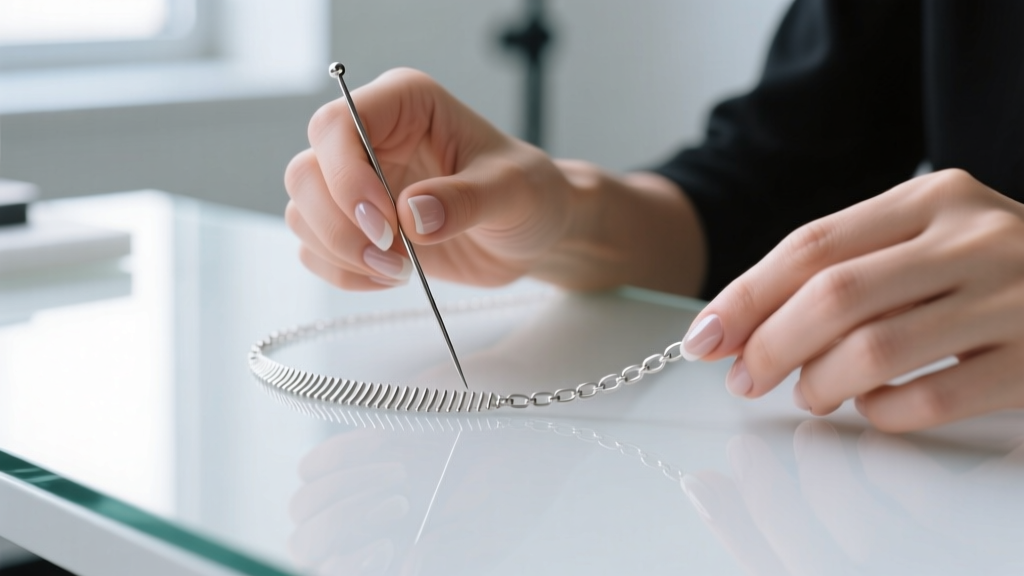
The 'Pin and Glass' Method: Fixing Kinks
A kink in a fish bone chain is not necessarily a death sentence, but it requires immediate, precise intervention. If left alone, the folded links will eventually work-harden and snap. According to master jewelers, the most effective DIY repair is the 'Pin and Glass' method.
Step-by-Step Kink Removal
- Secure a Flat Surface: Place a piece of clean, flat glass or a polished granite slab on your desk. You need a surface with zero give.
- Isolate the Kink: Lay the chain perfectly flat. Identify the exact point where the links have folded over one another.
- Use a T-Pin or Sewing Needle: Take a fine steel T-pin (or a blunt sewing needle). Place the tip of the pin directly into the crease of the kink.
- Massage, Don't Pry: Gently press down and stroke outward, following the natural direction of the link lay. You are essentially trying to coax the folded links back into their horizontal alignment. Never use pliers, as the serrated jaws will permanently gouge the soft gold or silver.
- Burnish the Area: Once the kink is flattened, use a smooth agate burnisher or the back of a metal spoon to gently rub the repaired area, realigning the surface tension of the metal.
For severe creases where the metal has actually work-hardened and cracked, you must take the piece to a professional jeweler for laser welding or link replacement.
Caring for Organic Carved Fish Bone Pendants
If your fish bone necklace features a literal pendant carved from organic bone (often sourced from ethically harvested fish or livestock bone as a byproduct of the food industry), the rules of chemistry change entirely. Bone is primarily composed of calcium phosphate and collagen, giving it a Mohs hardness of around 5.0. This makes it softer than quartz dust and highly susceptible to scratching and chemical degradation.
Hydration and Cleaning
Organic bone is porous. It absorbs skin acids, perfumes, and environmental pollutants, which can cause it to yellow or become brittle over time. Never soak an organic bone pendant in water or alcohol, as this strips the natural collagen matrix, leading to micro-fractures.
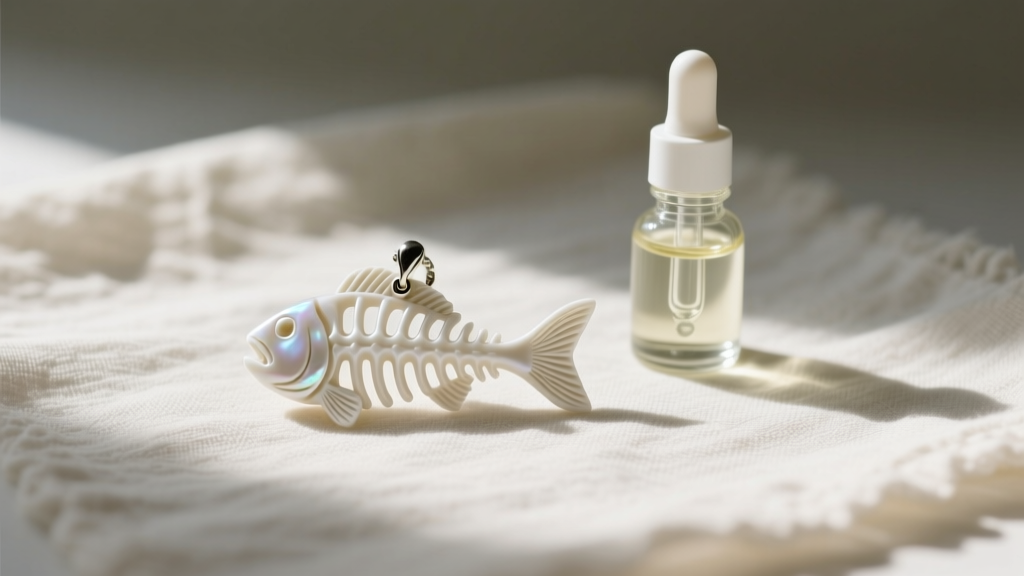
To clean an organic fish bone pendant, simply wipe it down with a slightly damp microfiber cloth after wear. Once a month, or when the bone begins to look chalky and dry, apply a single drop of food-grade mineral oil or jojoba oil to a cotton swab. Rub the oil gently into the porous surface of the bone, let it sit for ten minutes, and buff off the excess with a dry cloth. This rehydrates the material and restores its natural, lustrous sheen. As noted by the Gemological Institute of America (GIA), organic gems and materials require specialized, non-chemical handling to preserve their structural integrity over decades.
Storage Rules to Prevent Future Damage
How you store your fish bone necklace is just as critical as how you clean it. Improper storage is the leading cause of kinks in metal chains and surface scratches on organic pendants.
Metal Chain Storage
Never hang a metal fish bone chain on a jewelry tree or hook. Gravity will pull the heavy, flat chain into a sharp V-shape at the clasp, placing immense stress on the top links and eventually causing a kink or a break. Instead, always store the chain flat. Coil it loosely in a circular shape inside an anti-tarnish flannel pouch or a ziplock bag with the air pressed out to prevent silver sulfide tarnishing.
Organic Pendant Storage
Because carved bone is relatively soft, it should never be tossed into a jewelry box alongside harder gemstones like diamonds, sapphires, or even quartz crystals. Store your organic fish bone pendant in a separate soft cotton pouch, away from direct sunlight and extreme heat, which can warp the collagen structure and cause irreversible splitting.
Expert Insight: 'The longevity of a fish bone chain relies entirely on how it is handled during the act of putting it on and taking it off. Always lay it flat against your collarbone before fastening the clasp to ensure the links are resting in their natural grain, rather than twisting the chain behind your neck.' — Jewelers of America Care Guidelines
Final Thoughts on Necklace Maintenance
Whether you are maintaining the liquid-metal drape of a 14k gold fish bone chain or preserving the coastal charm of a carved organic bone pendant, understanding the material science behind your jewelry is the key to its longevity. By avoiding ultrasonic cleaners, mastering the T-pin kink removal technique, and utilizing proper flat-storage methods, your fish bone necklace will remain a flawless, eye-catching staple in your collection for years to come.


