The Engineering of Word Necklaces: Metals, Gauges & Typography
Discover the technical engineering behind custom word necklaces. Learn about metal gauges, casting methods, typography, and chain pairings for durability.

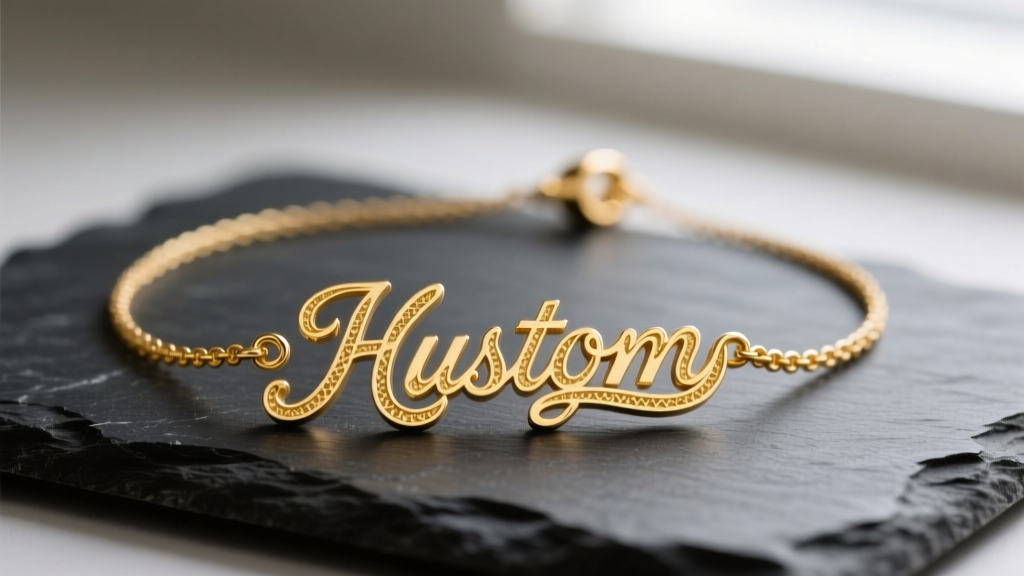
The Anatomy of a Word Necklace: Beyond the Font
When most consumers shop for custom word necklaces, they focus almost exclusively on the font, the name, and the overall aesthetic. However, from a master jeweler's perspective, a word necklace is a complex exercise in structural metallurgy and mechanical engineering. Unlike a solid cast pendant, a word necklace features negative space, thin bridging connections, and varying weight distributions. If the structural integrity is compromised during the manufacturing phase, the piece will warp, snap, or prematurely wear through its chain. Understanding the technical specifications of how these pieces are fabricated is essential for both designers and informed collectors.
Die-Striking vs. CAD Casting vs. Laser Cutting
The manufacturing method dictates the durability and design limitations of the final piece. There are three primary techniques used in modern jewelry fabrication for nameplates and script pendants:
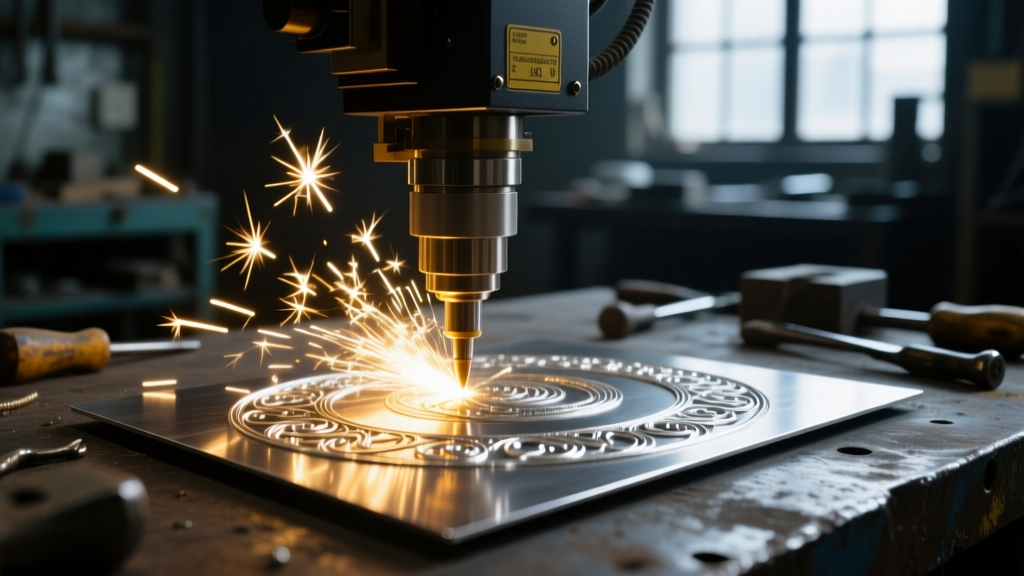
- Fiber Laser Cutting: The industry standard for custom script word necklaces. A high-wattage fiber laser (typically 1000W to 2000W) cuts directly from a rolled sheet of precious metal. This method yields incredibly precise edges with a minimal kerf width (the material removed by the laser), allowing for intricate, continuous cursive scripts. The metal retains its work-hardened state from the rolling mill, making it highly resistant to bending.
- CAD and Investment Casting: Best suited for block letters or 3D beveled designs. A 3D resin model is printed, encased in investment plaster, and burned out before molten metal is injected via centrifugal force. The primary risk here is porosity—tiny air bubbles trapped in thin sections of the letters, which creates microscopic weak points.
- Die-Striking: Used for mass-produced, standard-font nameplates. A massive hydraulic press forces a steel die into a sheet of metal. This process compresses the grain structure of the metal, resulting in a piece that is exceptionally dense and durable, though limited to pre-existing font dies.
Metallurgy and Gauge: Why Thickness Dictates Longevity
The longevity of word necklaces is directly tied to the Vickers Hardness (HV) of the chosen alloy and the gauge (thickness) of the metal sheet or cast. Sterling silver (925) is notoriously soft, with a Vickers hardness of roughly 60-70 HV in its annealed state. When cut into a thin, sprawling five-letter word necklace, silver is highly prone to warping under minor torsional stress.
Conversely, 14k yellow gold offers a superior balance of malleability and strength, typically measuring around 130 HV. For platinum word necklaces, the density of the metal (21.45 g/cm³) becomes a structural liability; a large platinum script pendant can easily exceed 10 grams, placing immense sheer stress on the bail and chain.
Metal Thickness & Durability Matrix
| Gauge | Millimeter (mm) | Best Use Case | Structural Notes |
|---|---|---|---|
| 20 Gauge | 0.81 mm | Delicate, short names (3-4 letters) | High risk of warping during polishing; requires a reinforced baseline. |
| 18 Gauge | 1.02 mm | Standard custom script necklaces | Industry standard; balances lightweight comfort with adequate rigidity. |
| 16 Gauge | 1.29 mm | Heavy block letters, bar pendants | Highly durable; requires heavy-duty chains to support the increased mass. |
| 14 Gauge | 1.45 mm | Statement pieces, die-struck plates | Extremely rigid; laser cutting requires multiple passes or higher wattage. |
For a comprehensive breakdown of precious metal properties and work-hardening techniques, the technical archives at Ganoksin remain the definitive resource for bench jewelers and manufacturing engineers.
Structural Weak Points: Bail Mechanics and Chain Pairings
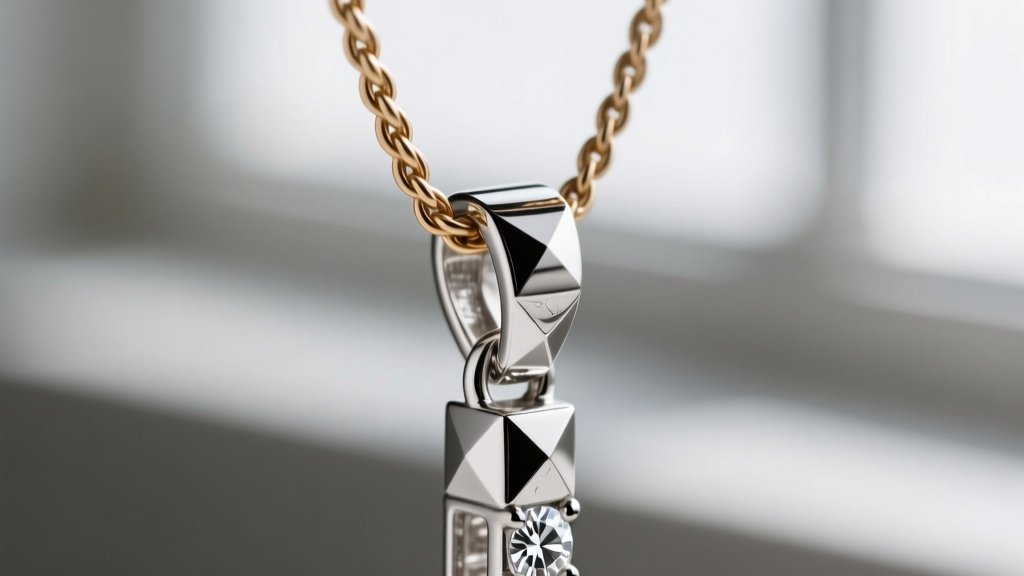
The most common failure point in word necklaces is not the pendant itself, but the connection to the chain. The bail—the loop that connects the pendant to the chain—experiences continuous friction. If a heavy 14k gold word necklace is paired with a lightweight chain, the bail will act as a saw, eventually cutting through the chain links.
The Hidden Bail vs. Integrated Jump Ring
Many modern script necklaces utilize an "integrated jump ring," where the loop is laser-cut directly from the same sheet of metal as the word. While aesthetically seamless, this creates a localized stress riser. If the integrated ring is not at least 1.5mm wide, it will fatigue and snap. A superior engineering solution is the soldered hidden bail, where a separate, cast or die-struck bail is laser-welded to the back of the pendant, distributing the weight across a wider surface area.
Chain Tensile Strength Requirements
Pairing the correct chain is a matter of physics. According to tensile testing data often referenced by Jewellers Academy, a standard 1.0mm box chain has a break point of roughly 12 to 15 pounds of force. A solid 18-gauge, five-letter 14k gold word necklace can weigh between 4 and 7 grams. While the static weight is low, the dynamic force generated when the wearer moves, catches the pendant on clothing, or experiences sudden deceleration can easily exceed 15 pounds of force. Therefore, experts recommend pairing heavy word pendants with braided structures like a 1.5mm wheat chain or a 1.2mm rope chain, which offer vastly superior tensile strength due to their interlocking link geometry.
Typography as Engineering: Kerning and Structural Integrity
In digital design, kerning refers to the spacing between letters. In the physical engineering of word necklaces, kerning is a matter of structural survival. When designing a cursive script for laser cutting or casting, the "bridges" (the connecting lines between letters) must be meticulously calculated.
If the bridges are too thin (under 0.8mm), they will melt or warp during the final polishing stage, where high-speed muslin wheels generate significant friction and heat. Furthermore, the baseline of a cursive word necklace—the continuous line that runs beneath the letters—acts as the primary load-bearing beam. A fragmented baseline, where letters only connect at the top loops, will result in a pendant that folds in on itself when subjected to pressure. Master CAD designers ensure that the baseline is a continuous, unbroken vector path at least 1.2mm thick to maintain horizontal rigidity.
The Problem with Serifs in Casting
When utilizing investment casting for block-letter word necklaces, serif fonts (like Times New Roman) present a severe metallurgical challenge. The thin, tapering serifs at the edges of the letters cool too rapidly as the molten metal enters the mold cavity. This results in "incomplete fill," leaving the tips of the letters rounded or entirely missing. To circumvent this, structural jewelers opt for slab serifs or clean sans-serif typography, ensuring uniform metal flow and consistent cooling rates throughout the casting tree.
Expert Maintenance and Ultrasonic Cleaning Protocols
Maintaining the structural integrity of word necklaces requires specific cleaning protocols. Because of the intricate negative spaces and tight corners between letters, dirt, lotions, and dead skin cells accumulate rapidly, accelerating localized corrosion, particularly in sterling silver and lower-karat gold alloys.
While ultrasonic cleaners are highly effective at dislodging debris from these tight kerning gaps, they must be used with caution. If a word necklace has been laser-welded or features micro-pave diamond accents integrated into the letters, the high-frequency cavitation bubbles generated by the ultrasonic waves can shake loose poorly set stones or exacerbate microscopic fractures in cast metal. For everyday maintenance, a gentle soak in a mild, phosphate-free alkaline jewelry solution, followed by agitation with a soft-bristled endodontic brush, is the safest method to preserve both the finish and the structural bridges of your custom piece.


