How to Clean Your CD Necklace Gold Pendant Safely
Learn how to safely clean and store your CD necklace gold pendant. Expert tips on removing tarnish without damaging delicate plating or acrylic bases.

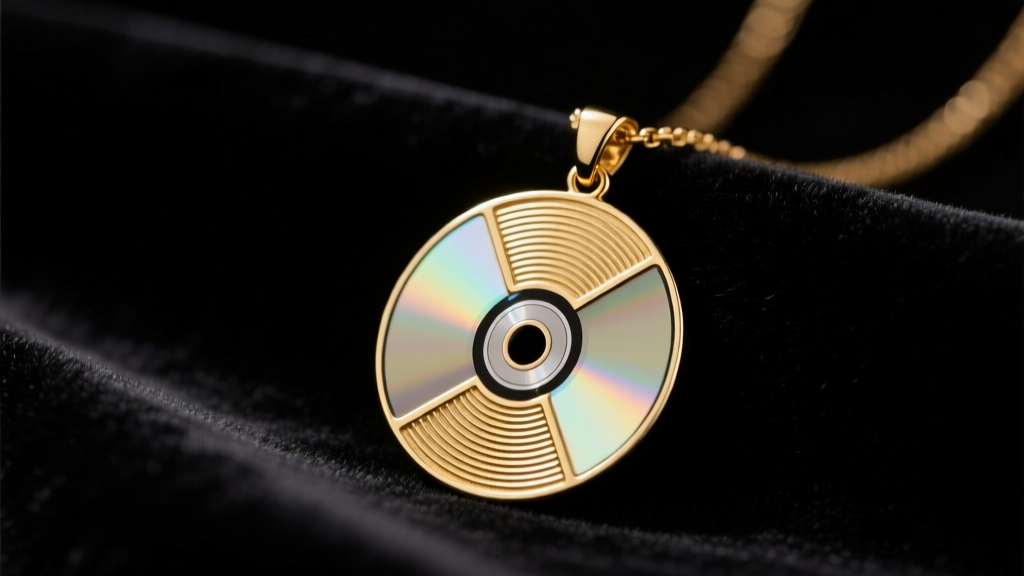
Whether you are wearing a vintage designer CD logo piece or an upcycled Y2K compact disc pendant, maintaining the lustrous finish of a cd necklace gold accessory requires specialized care. As the archival jewelry and Y2K revival trends continue to dominate the fashion landscape in 2026, these unique statement pieces have become highly sought-after collector items. However, the intersection of delicate gold plating and non-traditional base materials—such as polycarbonate, acrylic, or mixed-metal alloys—makes them exceptionally vulnerable to standard jewelry cleaning methods. Using the wrong chemicals or tools can instantly strip the gold finish, cloud the mirrored surface, or cause irreversible delamination.
In this comprehensive care guide, we break down the exact chemistry, tools, and techniques required to clean, maintain, and store your gold CD pendant necklace without compromising its structural integrity or historical value.
The Anatomy of a Gold CD Pendant
Before applying any cleaning solution, it is critical to identify the exact construction of your cd necklace gold piece. These pendants generally fall into two categories, each with distinct vulnerabilities:
1. Vintage Designer CD Pendants
Iconic pieces, such as vintage Christian Dior CD logo necklaces, are typically crafted from a brass or pewter base that has been heavily electroplated with gold. Over decades of wear, the gold layer (often ranging from 0.5 to 2.5 microns in thickness) can wear thin, exposing the base metal. If the base metal is exposed to moisture, it can oxidize, leading to a greenish-black tarnish that bleeds through the gold layer.
2. Upcycled Y2K Compact Disc Pendants
Modern and indie-crafted CD necklaces are often cut from actual polycarbonate compact discs and finished with gold leaf, metallic acrylic paints, or delicate vacuum-deposited gold coatings. Polycarbonate is highly sensitive to alkaline solutions and alcohol-based cleaners, which can cause the plastic to craze (develop micro-cracks) or melt the adhesive binding the gold finish to the disc.
The Daily Maintenance Routine
Prevention is always more effective than restoration. According to the Jewelers of America, the natural oils, sweat, and environmental pollutants your skin produces daily are the primary catalysts for gold plating degradation.
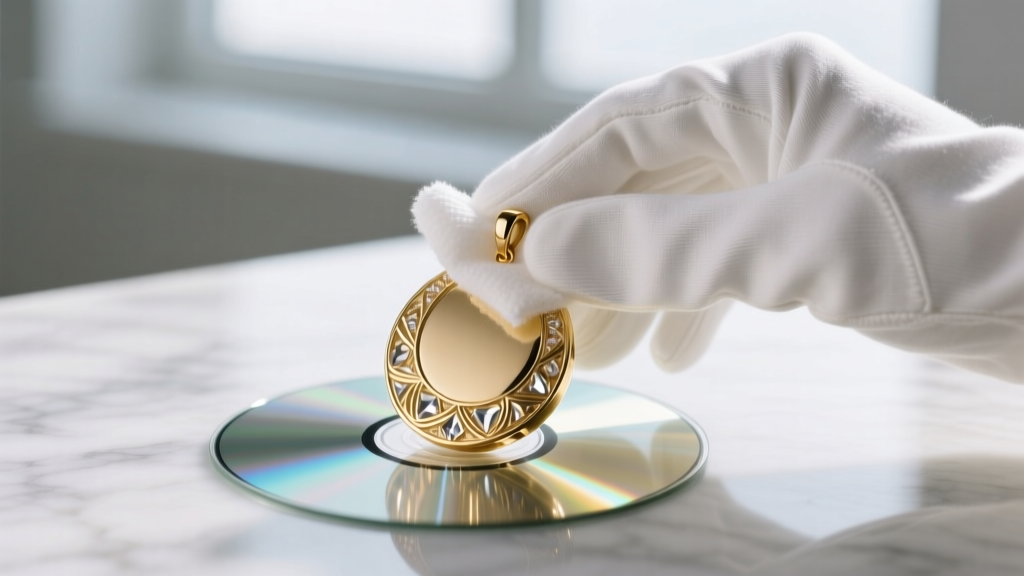
- The 'Last On, First Off' Rule: Always put your CD necklace on after applying perfumes, hairsprays, and lotions. Alcohol and volatile organic compounds (VOCs) in cosmetics can dissolve the protective topcoats on gold-plated jewelry.
- Microfiber Wiping: Keep a clean, untreated microfiber cloth (specifically designed for optics or jewelry) nearby. Gently wipe the pendant after every wear to remove lactic acid and sebum before they can etch into the gold layer.
- Avoid Sulfur Exposure: Sulfur is the enemy of gold alloys. Remove your necklace before eating sulfur-rich foods (like hard-boiled eggs) or visiting hot springs, as sulfur causes rapid tarnishing of the copper alloys mixed into the gold plating.
Deep Cleaning: Step-by-Step Guide
When your cd necklace gold pendant accumulates stubborn grime or loses its shine, it requires a deep clean. Never use ultrasonic cleaners; the high-frequency cavitation (typically 20-40 kHz) will shatter polycarbonate bases and strip delicate gold plating from brass.
Step 1: Prepare a pH-Neutral Solution
Mix a few drops of pH-neutral, phosphate-free dish soap (pH 7.0) into a bowl of distilled water. Do not use tap water, as the chlorine and calcium carbonate in municipal water supplies will leave microscopic mineral deposits on the mirrored surface of the CD, creating a permanent cloudy appearance.
Step 2: The Brief Soak
Submerge the pendant in the solution for no more than 60 to 90 seconds. Prolonged exposure to water can seep into the micro-crevices where the pendant bail meets the CD, potentially rusting the internal steel jump rings or dissolving adhesives.
Step 3: Gentle Agitation
Using a baby toothbrush with extra-soft bristles (0.1mm diameter), gently sweep the surface in a single direction. Do not scrub in circles, as trapped dust particles can act as an abrasive, scratching the soft gold layer.
Step 4: The Distilled Rinse and Dry
Rinse the pendant under a slow stream of distilled water. Immediately pat it dry with a lint-free microfiber cloth. Never allow a gold-plated CD pendant to air dry, as water evaporation will leave behind spotting that is nearly impossible to remove without professional polishing.
What to Avoid: The Enemies of Gold Plating
Many traditional home remedies for cleaning solid gold jewelry are highly destructive to gold-plated and mixed-material CD pendants. Refer to the table below to understand how common cleaning agents interact with your necklace.
| Cleaning Agent | pH Level | Effect on Gold Plating | Effect on CD Base / Adhesives |
|---|---|---|---|
| Ultrasonic Cleaner | N/A | Strips plating via cavitation | Shatters polycarbonate instantly |
| Baking Soda Paste | 8.3 (Alkaline) | Causes severe micro-abrasions | Dulls mirrored acrylic surfaces |
| Ammonia / Glass Cleaner | 11.0 (Highly Alkaline) | Dissolves gold-copper alloys | Melts adhesives and clouds plastic |
| Toothpaste | 7.5 - 8.5 | Hydrated silica scratches gold | Leaves permanent hazing on CD |
| pH-Neutral Dish Soap | 7.0 (Neutral) | Safe for all gold layers | Safe for polycarbonate and metal |
For more in-depth information on how different chemicals interact with precious metals, the Gemological Institute of America (GIA) provides extensive resources on the metallurgical properties of gold and the dangers of harsh chemical cleaners on plated surfaces.
Proper Storage for Longevity
How you store your cd necklace gold piece when it is not being worn is just as important as how you clean it. Gold plating is highly susceptible to galvanic corrosion and atmospheric tarnishing, especially in environments with fluctuating humidity.
Climate Control and Anti-Tarnish Technology
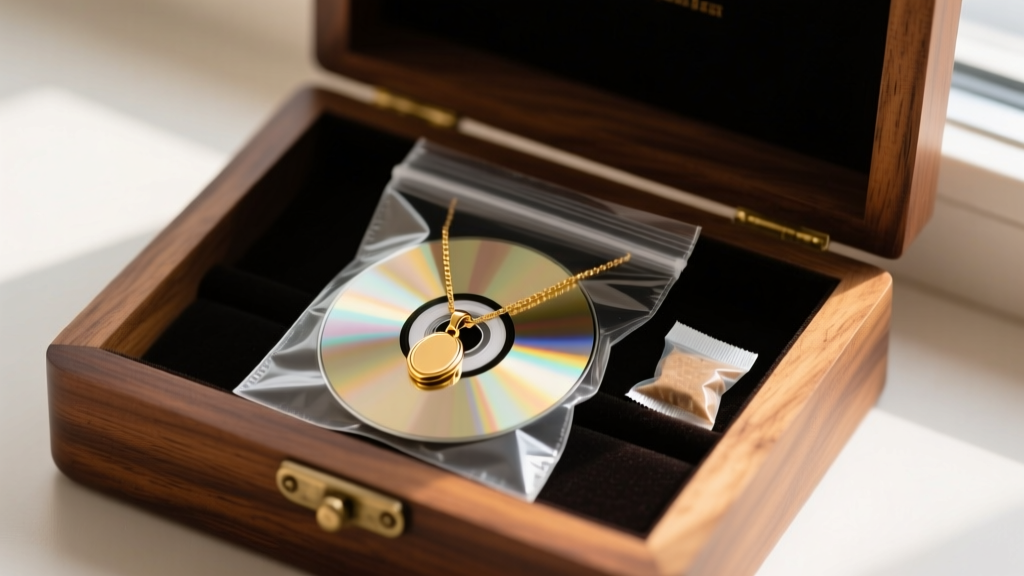
Store your necklace in a sealed, airtight polyethylene bag equipped with an anti-tarnish strip (such as 3M Pacific Silvercloth tabs). These strips absorb hydrogen sulfide and sulfur dioxide from the air inside the bag, preventing the copper alloys in the gold plating from oxidizing. Additionally, include a small silica gel desiccant packet to maintain the relative humidity inside the bag below 40%. High humidity accelerates the oxidation process and can cause the base metal to 'bleed' through the gold plating.
Isolation from Other Jewelry
Never toss your CD necklace into a communal jewelry box. The gold plating on these pendants is incredibly soft (measuring around 2.5 on the Mohs hardness scale). Contact with harder gemstones, diamond tennis bracelets, or even other metal chains will result in deep scratches that cannot be buffed out without removing the gold layer entirely.
When to Seek Professional Re-Plating
If your vintage CD necklace gold finish has worn away to reveal the dark brass or pewter underneath, no amount of cleaning will restore it. At this stage, the piece requires professional electroplating. A master jeweler will first polish the base metal, apply a barrier layer (often a palladium or nickel strike to prevent the base metal from migrating into the new gold layer), and then apply a heavy gold electroplate of at least 2.5 microns. This restoration process not only brings the piece back to its original glory but also provides a much thicker, more durable gold layer than the original factory finish, ensuring your archival necklace survives for decades to come.


