How to Clean and Care for Your Chicago Cubs Necklace
Learn how to safely clean, polish, and store your Chicago Cubs necklace. Expert tips for enamel, plated, and sterling silver fan jewelry.

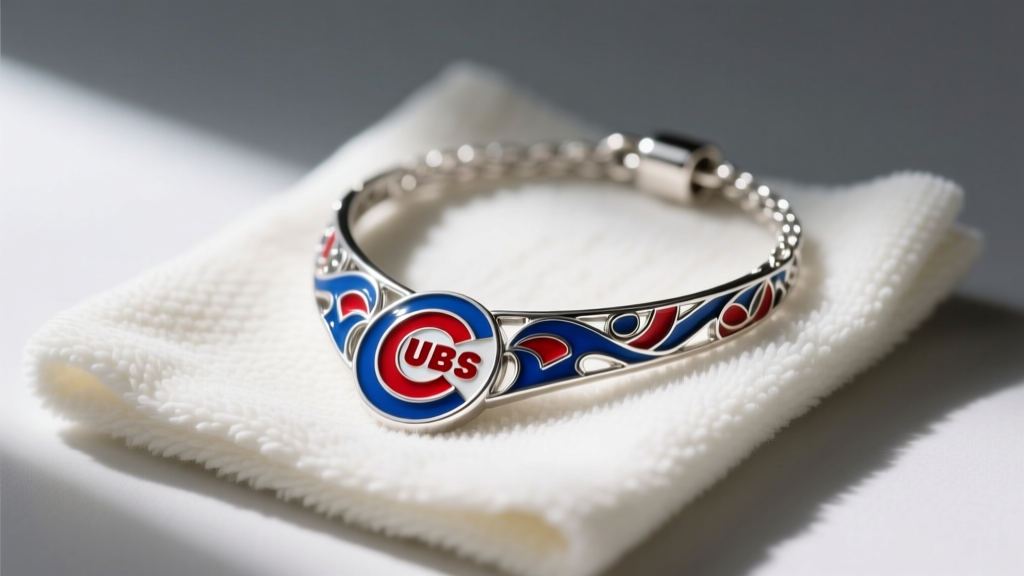
The Unique Challenge of Sports Memorabilia Jewelry
Sports memorabilia jewelry bridges the gap between die-hard fandom and everyday fashion. A Chicago Cubs necklace is more than just an accessory; it is a tangible expression of loyalty to the North Siders. However, fan gear jewelry presents a unique set of metallurgical and structural challenges that standard fine jewelry does not. Unlike a plain gold chain or a simple diamond solitaire, licensed sports pendants frequently incorporate vibrant enamel paints, mixed base metals, and intricate logo crevices that trap sweat, sunscreen, and environmental grime.
According to the Gemological Institute of America (GIA), jewelry featuring painted enamel or epoxy resin fills requires specialized care, as harsh chemicals and ultrasonic vibrations can easily fracture the glass-like enamel or dissolve the adhesive binding the logo fills to the metal base. Whether you own a budget-friendly zinc alloy pendant from the Wrigley Field gift shop or a high-end .925 sterling silver Cubs necklace from a licensed jeweler, understanding the specific material composition is the first step toward preserving your piece for decades.
Identifying Your Necklace Material
Before applying any cleaning solution, you must accurately identify the base metal and the type of logo fill used on your pendant. Using the wrong cleaning agent can strip gold plating or cloud transparent enamel. Review the table below to identify your necklace type and its corresponding care requirements.
| Material Composition | Common Price Range | Tarnish Risk | Recommended Cleaning Method |
|---|---|---|---|
| Zinc Alloy with Hard Enamel | $15 - $35 | Moderate (Oxidation) | Mild dish soap and microfiber cloth |
| Gold-Plated Brass | $30 - $75 | High (Plating wear) | Damp cloth only; no abrasive brushing |
| .925 Sterling Silver w/ Enamel | $80 - $250+ | High (Silver sulfide) | Silver polishing cloth; avoid liquid dips |
Step-by-Step Cleaning for Enamel and Plated Fan Gear
The vast majority of stadium-purchased Chicago Cubs necklaces are crafted from zinc alloy or brass and feature hard or soft enamel fills in iconic navy blue and cardinal red. These pieces are highly susceptible to the acids found in human sweat, which can cause the base metal to oxidize and the plating to pit over time.
The Safe Soap Soak Method
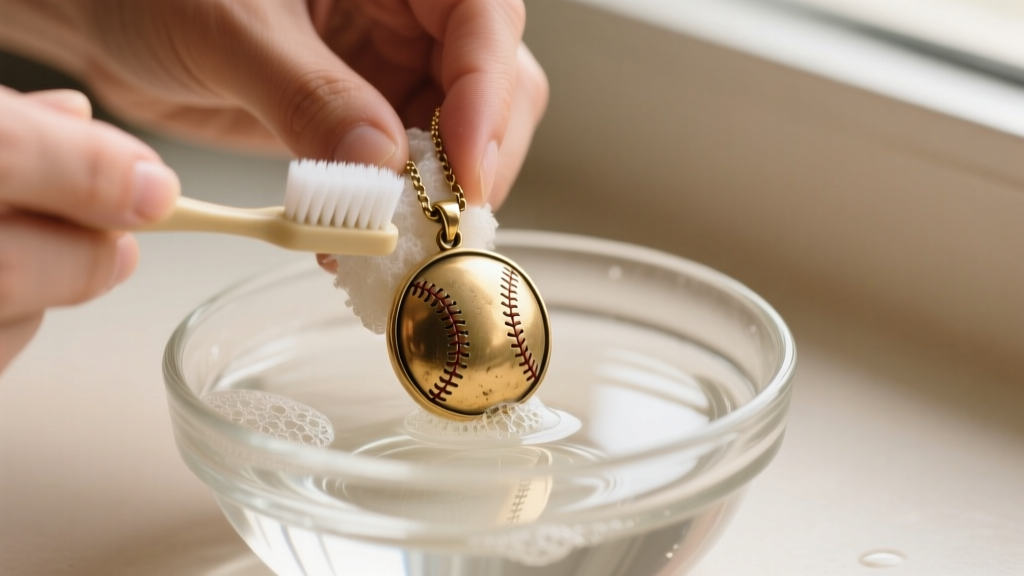
For routine cleaning of enamel and plated pendants, avoid commercial jewelry dips entirely. Instead, create a gentle cleaning bath using lukewarm distilled water and a few drops of phosphate-free dish soap (such as Dawn). Submerge the pendant for no more than three to five minutes. This brief soak loosens sebum and lotion buildup without compromising the enamel bond.
After soaking, use an extra-soft baby toothbrush to gently agitate the crevices around the Cubs logo. Never use a standard firm-bristled toothbrush, as the abrasive nylon can leave micro-scratches on the metal plating and dull the high-gloss finish of the enamel. Rinse thoroughly under a gentle stream of distilled water and immediately pat dry with a lint-free microfiber cloth. Air-drying is strictly discouraged, as water spots will permanently etch into unsealed base metals.
The Danger of Ultrasonic Cleaners
Never place an enameled Chicago Cubs necklace in an ultrasonic jewelry cleaner. The high-frequency sound waves create microscopic cavitation bubbles that implode against the surface of the jewelry. While this is excellent for shaking dirt out of diamond settings, it will violently shatter brittle enamel fills and strip thin gold or rhodium flash plating right off the brass base.
Caring for High-End Sterling Silver Cubs Pendants
Licensed fine jewelers occasionally release premium Chicago Cubs collections crafted from solid .925 sterling silver. Silver is a highly reactive metal that readily bonds with sulfur in the air and on the skin to form silver sulfide, the black compound we recognize as tarnish.
When polishing a sterling silver Cubs pendant, you must navigate the contrast between the bright silver and the colored logo fills. According to Jewelers of America, liquid silver dips (thiourea-based solutions) are highly effective at removing tarnish but are notoriously aggressive. If a liquid dip seeps into the microscopic seams between the silver and the enamel paint, it can cause the paint to lift, bubble, or discolor.
The safest approach is to use a treated silver polishing cloth, such as those manufactured by Connoisseurs or Sunshine. Gently rub the exposed silver areas using straight, back-and-forth motions rather than circular ones, which can highlight micro-scratches. Carefully fold the edge of the cloth to reach tight corners around the interlocking 'C' and 'U'B' letters, ensuring you do not aggressively rub the colored enamel sections, which can wear down the paint over time.
Proper Storage to Prevent Tarnish and Scratches
How you store your necklace when you are not cheering at Wrigley Field is just as critical as how you clean it. Environmental humidity is the primary catalyst for both metal oxidation and enamel degradation.
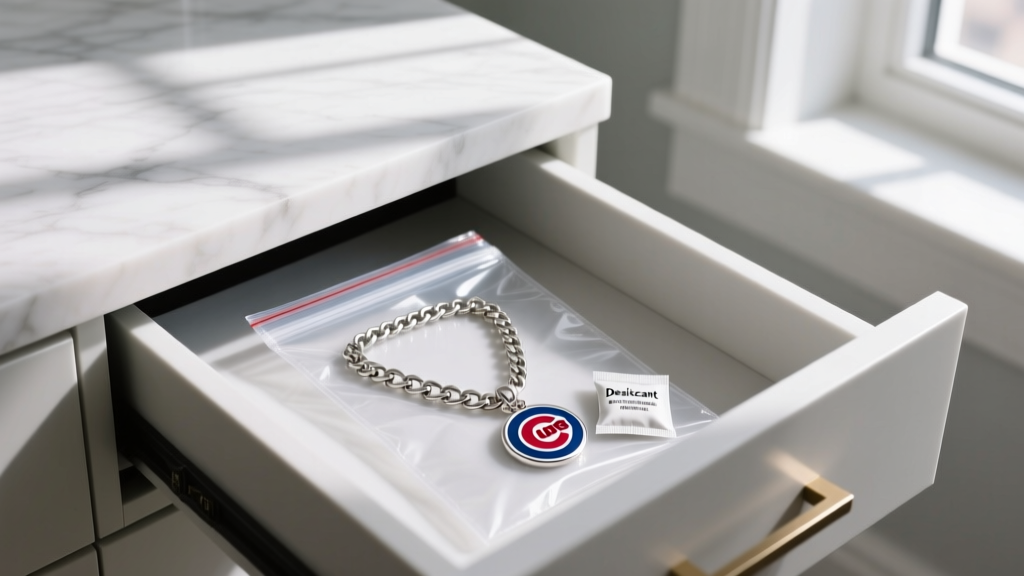
"The bathroom is the absolute worst place to store any jewelry, let alone pieces with painted enamel fills. The rapid fluctuations in heat and humidity from daily showers will accelerate tarnishing and weaken jewelry adhesives." — Master Bench Jeweler
To properly store your Chicago Cubs necklace, place it inside an airtight, anti-tarnish polyethylene ziplock bag. Include a small 3M Anti-Tarnish Strip and a desiccant silica gel packet inside the bag to absorb ambient moisture and neutralize sulfur gases. Ensure the chain is fully extended or gently coiled to prevent kinking, and keep the pendant isolated from harder gemstones or other metal jewelry that could scratch the enamel surface. Enamel ranks around a 3.5 to 4 on the Mohs hardness scale, making it highly vulnerable to scratching from steel clasps or diamond accents.
Troubleshooting Common Issues
The Dreaded "Green Neck" Phenomenon
If your Chicago Cubs necklace leaves a green or black ring around your neck, do not panic; this is not an allergic reaction or a sign of toxic metals. It is a simple chemical reaction. Base metals like copper and brass (which are often used as the core alloy in plated fan gear) react with the salts, acids, and lotions on your skin to create copper chloride or copper sulfate, which manifests as a green residue.
The Fix: To remove the stain from your skin, simply wash the area with warm soap and water or use a cotton pad soaked in rubbing alcohol. To prevent the necklace from causing this in the future, apply a thin, even coat of clear jewelry sealant or clear nail polish to the back of the pendant where it rests against your chest. Allow it to cure for 24 hours before wearing. You will need to reapply this barrier every few months as it wears away from friction.
Chipped or Faded Enamel
Over years of wear, the navy blue or red enamel on your pendant may chip or fade due to UV exposure and physical impacts. Unfortunately, true vitreous enamel cannot be touched up at home, and cold enamel (epoxy resin) repairs require professional color-matching. If your piece holds deep sentimental value, take it to a local bench jeweler who specializes in enamel restoration. They can carefully remove the degraded epoxy and refill the logo crevices with a color-matched, UV-cured jewelry resin, sealing it with a protective clear coat to restore the pendant to its original game-day glory.


