How to Clean Your Chicos Necklace: Expert Care Tips
Learn how to safely clean and store your Chicos necklace. Expert tips on preserving fashion jewelry plating, resin stones, and enamel details.

Understanding the Anatomy of a Chicos Necklace
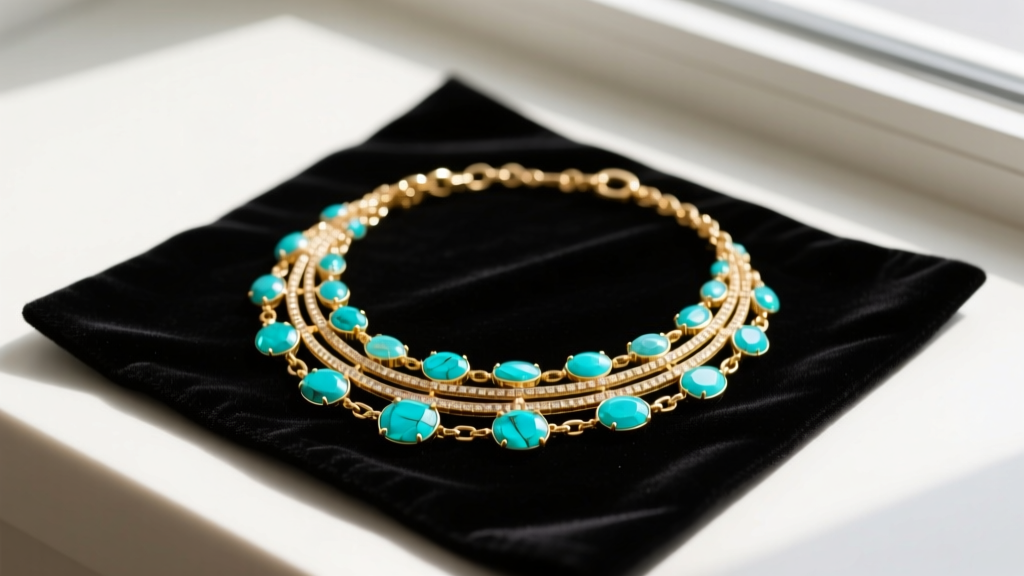
Chico's is renowned for its bold, statement-making fashion jewelry that anchors countless wardrobes. However, caring for a Chicos necklace requires a fundamentally different approach than caring for fine jewelry. Unlike solid 14k gold or platinum pieces, Chico's designs rely on a complex material matrix. The foundation is typically a base metal—often brass, pewter, or a zinc alloy—which is then electroplated with a gold-tone or silver-tone finish. According to the Federal Trade Commission (FTC) Jewelry Guides, fashion jewelry plating is often classified as 'flash plating,' meaning the layer of precious metal is measured in mere microns. Over this delicate plating, artisans set synthetic or semi-synthetic gemstones like acrylic, lucite, resin, foiled-back glass, and vitreous enamel. Understanding this specific anatomy is the critical first step in preserving your piece, as the adhesives and materials used are highly sensitive to traditional jewelry cleaning methods.
The Dangers of Conventional Jewelry Cleaners
The most common way collectors ruin their favorite Chico's statement pieces is by treating them like fine jewelry. The chemical and mechanical processes used to clean solid gold or diamonds will actively destroy fashion jewelry. Here is what you must absolutely avoid:
- Ultrasonic Cleaners: The high-frequency cavitation bubbles generated by ultrasonic machines will shatter acrylic stones, crack resin, and violently shake loose the water-soluble cyanoacrylate adhesives holding glass cabochons in place.
- Alcohol and Ammonia: Alcohol-based solutions and glass cleaners will cause resin and acrylic to cloud, develop micro-fractures, and permanently lose their luster. Ammonia will strip the thin gold-tone electroplating directly off the brass base, leaving you with a dull, mottled surface.
- Commercial Silver Dips: These liquids contain thiourea, a highly corrosive chemical that will pit base metals and permanently stain porous enamel details. The Gemological Institute of America (GIA) explicitly warns against using harsh chemical dips on any porous or treated gem materials, which includes the resins and enamels prevalent in Chico's designs.
- Toothpaste and Baking Soda: These are highly abrasive. While they might polish solid silver, they will act like sandpaper on gold-tone plating, scratching through the micron-thin finish to expose the base metal beneath.
The 3-Step Dry and Damp Cleaning Protocol
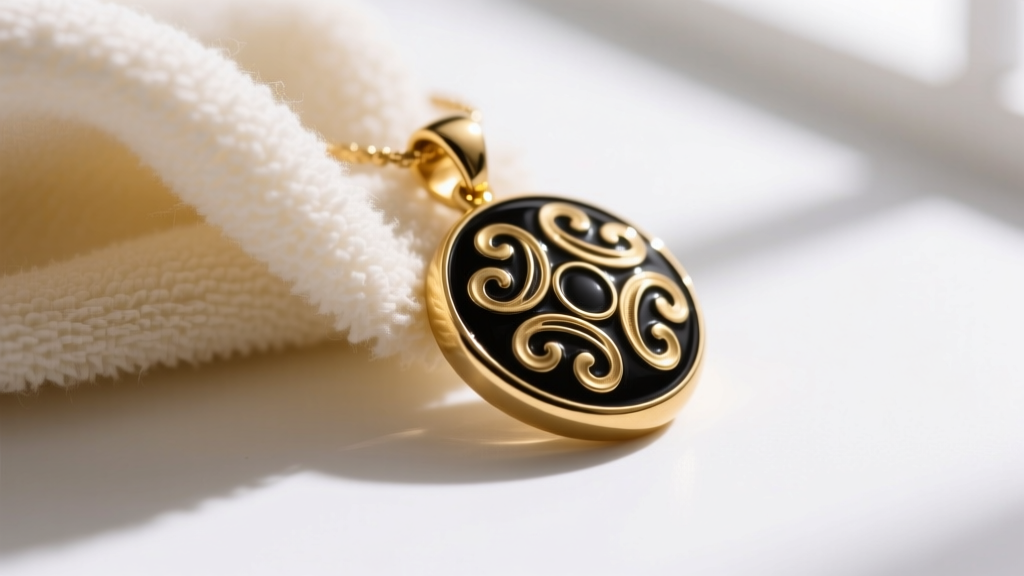
To safely clean your Chicos necklace without compromising the plating or the stone adhesives, follow this meticulous, low-moisture protocol. This method removes skin oils, cosmetic residue, and environmental dust without risking chemical degradation.
Step 1: Dry Dusting and Debris Removal
Before introducing any moisture, remove loose particulate matter. Use a clean, soft-bristled makeup brush (like a fluffy eyeshadow blending brush) to gently sweep dust out of the intricate crevices, bead strands, and pendant settings. This prevents abrasive dirt from being ground into the plating during the wiping stage.
Step 2: The Damp Microfiber Wipe
Mix a solution of distilled water and a single drop of pH-neutral dish soap (such as Dawn Platinum) in a small bowl. Distilled water is crucial, as tap water contains chlorine and hard minerals that can leave spotting on base metals. Dip a high-density microfiber cloth into the solution and wring it out until it is barely damp—not wet. Gently wipe the metal chains and the surface of the stones. Never submerge the necklace, and avoid pressing hard on foiled-back glass stones, as moisture seeping behind the glass will cause the foil to oxidize and turn black.
Step 3: Immediate Drying
Moisture is the enemy of base metal plating. Immediately after wiping, use a dry, lint-free cotton cloth to buff the piece completely dry. Ensure no dampness remains in the clasp mechanisms or jump rings, as trapped water will cause rapid oxidation and rusting of the internal steel springs.
Material-Specific Troubleshooting Chart
Even with careful maintenance, fashion jewelry interacts with the environment and human skin chemistry. Below is a diagnostic framework for addressing common issues specific to the materials found in Chico's necklaces.
| Problem | Underlying Cause | Actionable Solution |
|---|---|---|
| Cloudy or Hazy Resin/Acrylic Stones | Exposure to alcohol, hand sanitizer, or UV degradation causing micro-fractures in the plastic polymer. | Apply a tiny amount of plastic polish (like Novus No. 2) with a Q-tip. Buff gently. Do not use on enamel. |
| Green Discoloration on Skin | Copper content in the brass base metal reacting with the acidity and salts in your sweat, creating copper chloride. | Clean the necklace thoroughly. Apply a thin coat of clear, hypoallergenic nail polish to the back of the pendant to create a moisture barrier. |
| Loose or Rattling Stones | Adhesive breakdown due to heat, humidity, or mechanical shock. | Secure the stone using G-S Hypo Cement. Avoid super glue (cyanoacrylate), which 'frosts' glass and resin with a permanent white haze. |
| Flaking or Peeling Gold-Tone Plating | Wear-through from friction, or chemical stripping from perfumes and lotions. | Unfortunately, flash plating cannot be reversed at home. Take it to a specialized jeweler for re-electroplating, or retire the piece. |
Proper Storage to Prevent Tarnish and Scratches
How you store your Chicos necklace when it is not being worn dictates its lifespan just as much as how you clean it. Base metals are highly susceptible to oxidation and sulfidation. When the copper or silver in the base alloy reacts with sulfur compounds in the air, it creates a dark, tarnished film.
Never store fashion jewelry in PVC plastic bags or original cardboard shipping boxes. PVC off-gasses corrosive chemicals that will pit and discolor metal plating, while cardboard contains sulfur compounds that accelerate tarnishing.
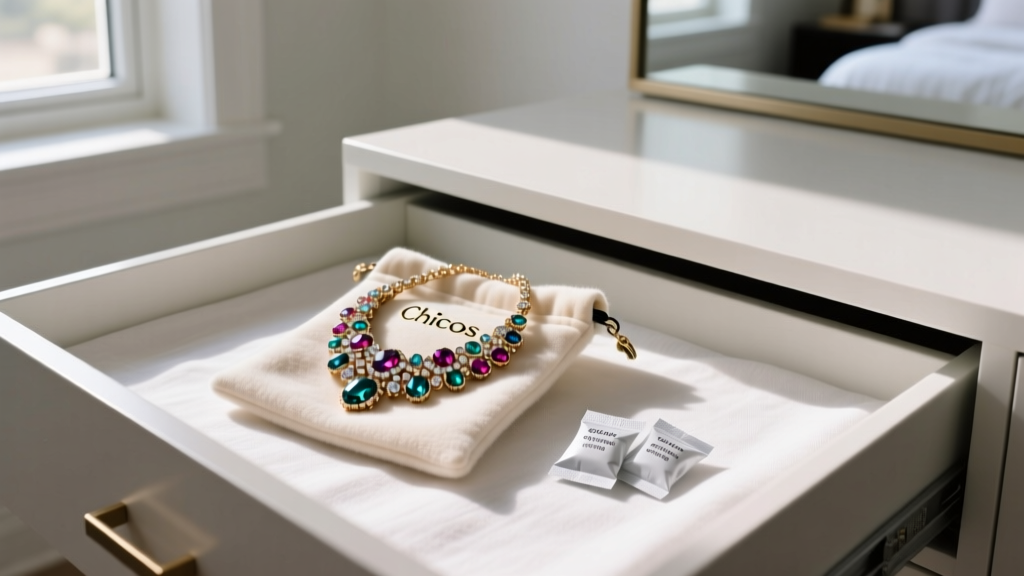
For optimal preservation, store each necklace individually in a breathable, anti-tarnish flannel pouch. Place a 3M Anti-Tarnish Strip inside the pouch; these strips contain zinc carbonate, which acts as a sacrificial metal, absorbing corrosive gases before they can reach your jewelry. If you live in a high-humidity environment, add a small, jewelry-safe silica gel desiccant packet to the storage container to keep the relative humidity below 40%, effectively halting the electrochemical reactions that cause rust and oxidation.
When to Repair vs. Retire Your Piece
Fashion jewelry is designed for seasonal impact rather than generational longevity. However, minor repairs can extend the life of a beloved Chico's statement piece. If a multi-strand beaded section breaks, do not attempt to restring it with standard cotton thread, which will rot over time. Instead, use a braided beading wire like Soft Flex (.014 or .019 diameter) with crimp beads and a jeweler's crimping tool to ensure structural integrity. If the gold-tone plating has completely worn away on a high-friction area like the clasp or the back of a pendant, and the underlying brass is causing skin irritation, it is often more cost-effective to retire the piece rather than pay for professional electroplating, which can exceed the original retail value of the necklace. By understanding the specific material science behind your jewelry, you can make informed decisions that keep your collection looking vibrant and pristine.


