How to Clean a Chunky Gold Necklace Women Love Wearing
Learn expert cleaning and maintenance tips to keep your favorite chunky gold necklace shining. Discover safe solutions for 14k and 18k solid gold.

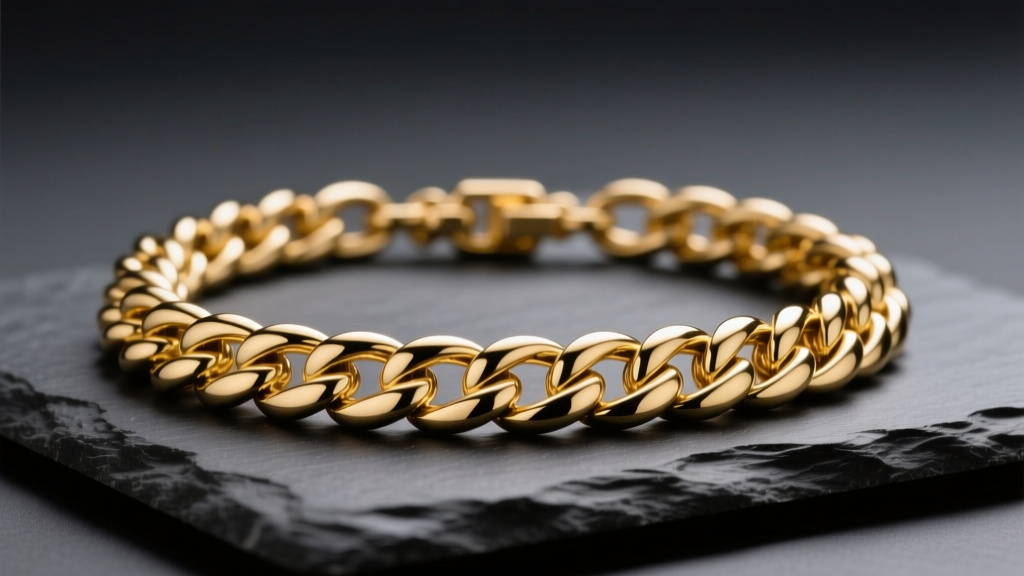
When investing in a statement piece like a chunky gold necklace, women often focus heavily on the karat weight, link style, and gram price. However, the high surface area and intricate crevices of heavy chains demand a specialized care routine. A thick Cuban, Figaro, or Paperclip chain is not just a fashion accessory; it is a significant metallurgical investment. Because these chains sit flush against the skin and feature complex interlocking links, they are highly susceptible to trapping sebum, environmental pollutants, and cosmetic residues. According to the Gemological Institute of America (GIA), improper cleaning methods can permanently alter the surface finish of gold alloys, leading to micro-scratches and accelerated tarnishing. This comprehensive guide details the exact protocols required to maintain the structural integrity and high-shine finish of heavy gold chains.
The Metallurgy of Heavy Chains: 14k vs. 18k Gold
Before applying any cleaning solution, you must identify the karat purity of your chain. Pure 24k gold is entirely resistant to tarnish, but it is far too soft (approximately 25-30 on the Vickers hardness scale) to be fashioned into heavy, load-bearing links. Therefore, jewelers alloy gold with metals like copper, silver, and zinc.
- 14k Gold (58.3% Pure Gold): With a Vickers hardness of roughly 120-140 HV, 14k gold is highly durable and resistant to deformation. However, the higher copper and zinc content makes it slightly more reactive to sulfur and oxygen, meaning it can develop a dark patina over years of wear.
- 18k Gold (75% Pure Gold): Softer and richer in color (around 90-110 HV), 18k gold is less prone to chemical tarnishing but highly susceptible to physical micro-scratches. The friction of heavy links rubbing against each other will naturally create a “satin” patina over time.
Understanding this distinction is critical. Aggressive polishing compounds that safely restore a 14k chain will strip away microscopic layers of an 18k chain, prematurely wearing down the solder joints and link thickness.
The Anatomy of Grime: Where Dirt Hides in Thick Links
The structural design of popular chunky chains creates natural traps for debris. In a Cuban link chain, the flat, interlocking surfaces create microscopic channels where dead skin cells and lotions accumulate. Rope chains, with their twisted, helical geometry, are notoriously difficult to clean because grime becomes impacted deep within the spirals. Furthermore, everyday cosmetics—specifically self-tanners containing DHA (dihydroxyacetone) and sulfur-based acne treatments—can cause rapid, localized discoloration on the alloy metals present in 10k and 14k gold.
The Professional Cleaning Protocol
Forget harsh commercial jewelry dips, which often contain ammonia or thiourea derivatives that can degrade the structural integrity of gold alloys over time. The safest, most effective method for deep-cleaning heavy chains relies on gentle surfactants and mechanical agitation.
Step 1: The Distilled Water Soak
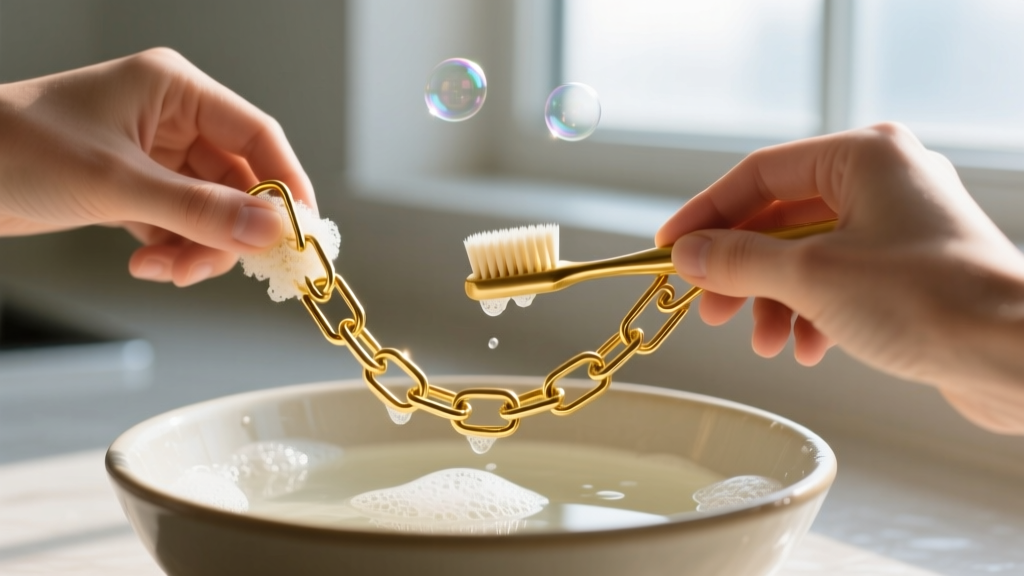
Fill a glass or ceramic bowl with one cup of lukewarm distilled water. Avoid tap water, as the dissolved minerals and chlorine can leave hard water spots and react with the copper alloys. Add exactly three drops of a phosphate-free, mild dish soap (such as original blue Dawn). Submerge the necklace and allow it to soak for 15 to 20 minutes. This softens impacted sebum and cosmetic waxes without attacking the metal.
Step 2: Agitation and Brushing
Remove the chain from the solution. Using an extra-soft baby toothbrush (never a medium or hard-bristled brush, which will inflict micro-scratches), gently brush the links. Hold the brush at a 45-degree angle and use short, flicking motions to dislodge debris from the crevices. For Rope or Franco chains, brush in the direction of the twist to avoid snagging the bristles.
Step 3: Drying and Polishing
Rinse the chain thoroughly under lukewarm distilled water. Pat it dry with a clean, lint-free microfiber cloth. Never use paper towels or tissue paper; they are manufactured from wood pulp and contain abrasive fibers that will dull a high-polish 18k gold finish. For an extra shine, use a treated jeweler’s polishing cloth, but restrict this to once a month to prevent over-polishing.
Chemical Hazards: What Destroys Gold Alloys
The most common cause of catastrophic failure in heavy gold chains is exposure to chlorine. Whether from swimming pools, hot tubs, or household bleach, chlorine reacts with the copper and silver alloys in 14k and 18k gold to form gold chloride. This triggers a phenomenon known as stress corrosion cracking. The Federal Trade Commission (FTC) notes that alloy vulnerabilities are a primary factor in jewelry degradation. This chemical attack is most severe at the solder joints—the weakest points of the chain where the links are closed or where the clasp is attached. A chain exposed to heavy chlorine can literally snap under its own weight within weeks.
The Ultrasonic Cleaner Trap
Many consumers purchase ultrasonic cleaners, assuming the high-frequency sound waves offer a superior clean. While ultrasonics are excellent for diamond solitaires, they are highly dangerous for chunky gold chains. The process of cavitation—where microscopic bubbles implode against the metal surface—can shake loose poorly soldered links. More importantly, many modern chunky chains are “hollow” or electroformed to reduce cost and weight. Ultrasonic waves can cause the thin gold shells of hollow links to dent, crack, or completely collapse inward. Always stick to manual soaking and brushing for heavy chains.
Clasp Maintenance and Tension Stress
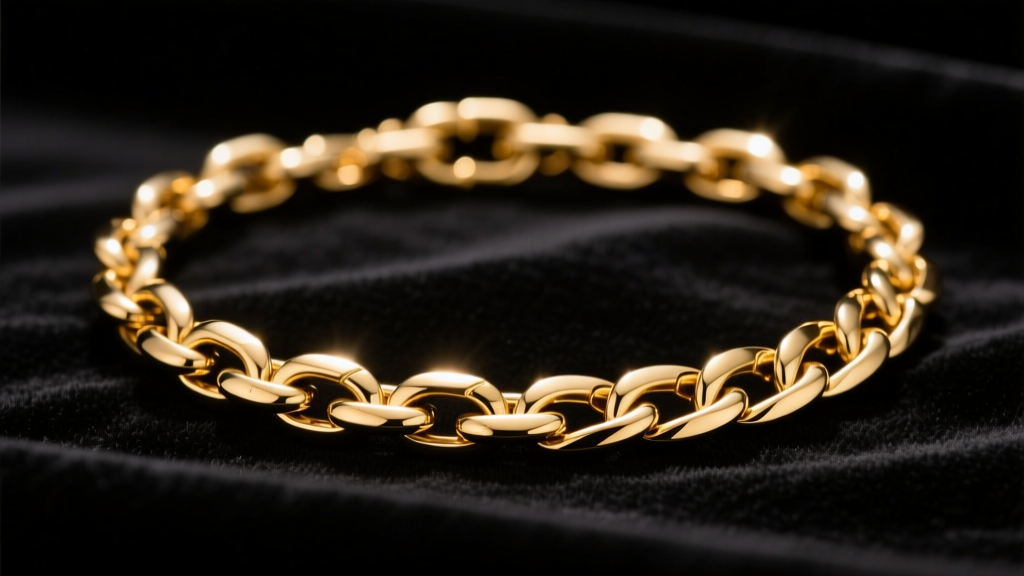
A heavy chain exerts significant kinetic force on its clasp. A 50-gram Cuban link necklace places continuous tension on a standard lobster clasp. Over time, skin cells and lotion infiltrate the tiny spring mechanism inside the clasp lever, causing it to stick or fail to close completely. To maintain the clasp, use a wooden toothpick to gently clear debris from the hinge and lever gap. If the chain features a box clasp with a safety latch, apply a microscopic drop of synthetic watch oil to the hinge pin once a year to ensure smooth operation, wiping away any excess immediately.
Proper Storage to Prevent Kinking
Storing a chunky chain incorrectly can lead to permanent kinking, especially in softer 18k alloys or flexible chains like the Omega or Herringbone. Never toss a heavy chain into a jewelry box where it can tangle with other pieces. Instead, hang the necklace on a padded velvet hook, or lay it perfectly flat in a dedicated drawer. To prevent environmental tarnishing, place a 3M anti-tarnish strip inside the storage compartment. These strips absorb sulfur compounds and hydrogen sulfide from the ambient air, protecting the copper alloys in your chain for up to six months.
Maintenance Schedule and Compatibility Chart
Consistency is the key to preserving the luster and structural integrity of your gold jewelry. Refer to the chart below to establish a safe maintenance routine based on your specific chain type and lifestyle.
| Cleaning Agent / Method | 14k Solid Gold | 18k Solid Gold | Gold Vermeil / Plated |
|---|---|---|---|
| Mild Soap & Distilled Water | Highly Safe (Weekly) | Highly Safe (Weekly) | Safe (Quick Wipe Only) |
| Commercial Jewelry Dips | Use Sparingly | Avoid | Strictly Avoid |
| Ultrasonic Cleaners | Risky for Solder/Hollow | Risky for Solder/Hollow | Strictly Avoid |
| Polishing Cloths | Safe (Monthly) | Safe (Gently, Monthly) | Strictly Avoid |
| Baking Soda Pastes | Strictly Avoid | Strictly Avoid | Strictly Avoid |
By adhering to these metallurgical guidelines and avoiding harsh chemical shortcuts, your statement chain will retain its structural strength and brilliant finish for decades. Proper care transforms a simple accessory into a lasting heirloom, ensuring that the bold aesthetic you invested in remains as striking as the day you first clasped it.


