How to Clean and Maintain a Gold Chainmail Necklace
Learn how to safely clean, polish, and maintain your gold chainmail necklace. Expert tips on weave care, gauge protection, and preventing link distortion.

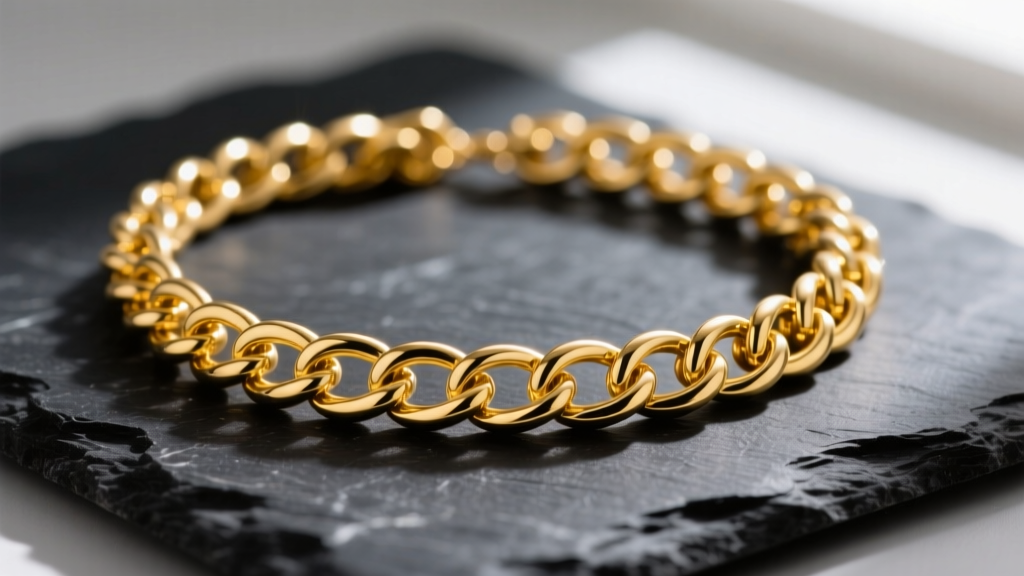
The Engineering and Allure of Gold Chainmail
A gold chainmail necklace is a masterpiece of metallurgical art and structural engineering. Unlike standard cable, box, or curb chains, chainmail (often referred to as maille) consists of hundreds, sometimes thousands, of individually interlocking jump rings. Weaves like Byzantine, Dragonscale, and European 4-in-1 offer unmatched visual depth, a heavy, luxurious drape, and a distinct historical aesthetic. However, this high surface area and intricate friction make them notorious traps for skin oils, lotions, and environmental dust. If you own a gold chainmail necklace, proper maintenance is not just about keeping it shiny; it is about preserving the structural integrity of the wire and preventing catastrophic link failure.
In this comprehensive guide, we will explore the exact metallurgical properties of gold alloys used in chainmail, provide a step-by-step deep cleaning protocol, and offer expert troubleshooting for common structural issues. For foundational gold care principles, we always recommend consulting the Gemological Institute of America (GIA), but chainmail requires specialized techniques due to its unique geometry.
Understanding Metallurgy and Weave Density
Before submerging your jewelry in any solution, you must understand the material you are working with. Chainmail is typically crafted from either 14k or 18k gold, and the karat weight drastically affects how the piece responds to stress and cleaning.
14k vs. 18k Gold in Chainmail
- 14k Gold (58.5% Pure): Alloyed with copper, silver, or zinc, 14k gold offers superior tensile strength. Because chainmail rings bear the dynamic weight of the entire piece, 14k is often preferred by Maille Artisans for its resistance to stretching and deformation.
- 18k Gold (75% Pure): Softer and richer in color, 18k gold is more prone to work-hardening—a phenomenon where repeated bending and friction make the metal brittle over time, eventually causing jump rings to snap without warning.
Wire Gauge and Aspect Ratio (AR)
Most fine gold chainmail utilizes wire between 18-gauge (1.02mm) and 22-gauge (0.64mm). The structural integrity of the weave relies on the Aspect Ratio (AR), which is the inner diameter of the ring divided by the wire thickness. A tight AR (like in a Full Persian weave) creates a dense, stiff fabric that traps debris deep within the core, requiring more aggressive cleaning techniques than a loose, open AR weave like European 4-in-1.
The 4-Step Deep Cleaning Protocol
Standard jewelry dips are entirely unsuitable for chainmail. The harsh chemicals can become trapped between the rings, leading to prolonged skin contact and potential allergic reactions. Follow this safe, methodical approach to restore your necklace.

Step 1: The Surfactant Soak
Fill a glass bowl with warm distilled water. Tap water contains chlorine and hard minerals that can leave microscopic deposits inside the tight tolerances of the jump rings. Add three drops of a pH-neutral, lotion-free dish surfactant (such as original blue Dawn). Submerge the gold chainmail necklace and let it soak for 15 to 20 minutes. This breaks down the lipid bonds of skin oils and sebum trapped in the weave.
Step 2: Targeted Agitation
Remove the necklace and lay it flat on a clean microfiber towel. Using a brand-new, extra-soft baby toothbrush, gently agitate the weave. Crucial: Always brush parallel to the direction of the weave. Scrubbing against the grain of a Byzantine or Dragonscale pattern can catch the bristles on the ring edges, potentially prying open soldered or work-hardened links.
Step 3: The Distilled Rinse
Rinse the piece thoroughly under a gentle stream of warm distilled water. Ensure the water pressure is low enough to prevent tangling but high enough to flush out the suspended dirt from the core of the chain.
Step 4: Advanced Drying Techniques
Never use paper towels or cotton balls to dry chainmail; the fibers will shred and become hopelessly tangled in the jump rings. Instead, wrap the necklace in a lint-free microfiber cloth and gently pat it dry. To remove moisture trapped deep inside the weave, use a can of compressed air (held at least six inches away) or a hair dryer on the 'cool' setting. Trapped moisture mixed with residual skin acids can accelerate the tarnishing of the copper alloys present in 14k gold.
Ultrasonic Cleaners: A Risky Proposition
While ultrasonic cleaners are excellent for solid cast jewelry, they pose specific risks to chainmail. The high-frequency cavitation bubbles can effectively blast dirt out of tight weaves, but the intense vibrations can also cause unsoldered jump rings to rub against one another, accelerating wear at the friction points. Furthermore, if your gold chainmail necklace incorporates any soft gemstones (like opals, turquoise, or emeralds) or features gold-plated base metal rings, the ultrasonic waves will shatter the stones or strip the plating. Stick to the manual soaking method for mixed-material pieces.
Troubleshooting Link Distortion and Clasp Failure
Over time, the weight of a heavy chainmail piece can cause individual rings to distort, shifting from a perfect circle to an oval. This alters the drape of the necklace and creates weak points.
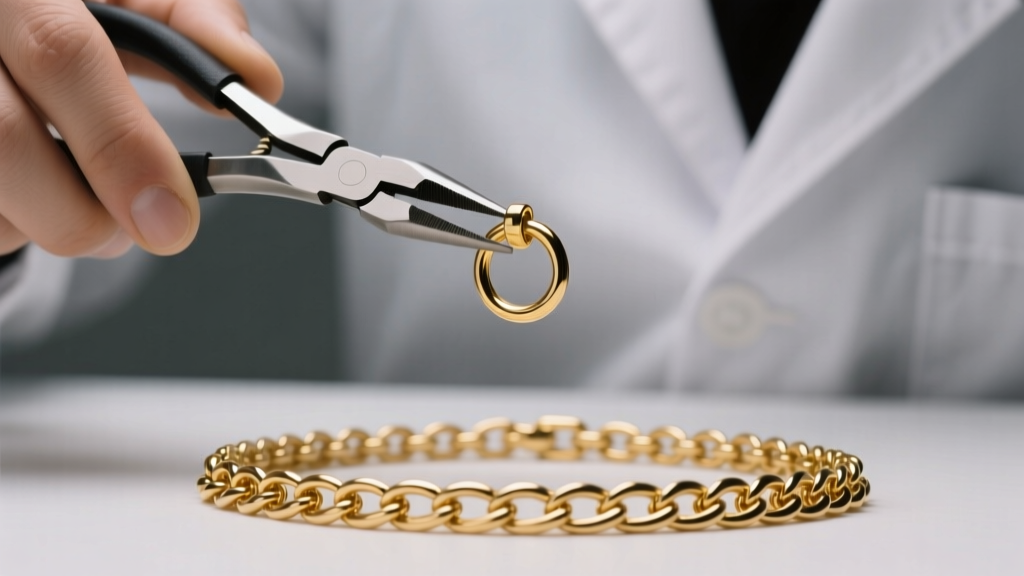
Reshaping Distorted Rings
If you spot an oval-shaped ring, do not use standard steel jewelry pliers, as the hardened steel teeth will permanently gouge and scratch the soft gold. Instead, invest in a pair of nylon-jaw pliers. Gently grip the distorted ring and apply micro-pressures to coax it back into a circular shape. If the ring is severely work-hardened and brittle, it must be cut out with flush cutters and replaced with a new jump ring of the exact same gauge and AR.
Clasp Selection for Heavy Maille
A 20-inch Byzantine chainmail necklace in 14k gold can easily exceed 120 grams. Standard lobster clasps are not rated for this dynamic load and will eventually fail at the lever spring. Upgrade your piece with a heavy-duty stainless steel or 14k gold toggle clasp, which distributes the tensile weight across a solid bar, or a neodymium magnetic clasp equipped with a secondary safety chain.
Weave Maintenance Comparison Chart
Different weaves require different levels of maintenance. Use this chart to understand the specific needs of your gold chainmail necklace.
| Weave Type | Density & AR | Cleaning Difficulty | Snag & Distortion Risk |
|---|---|---|---|
| European 4-in-1 | Low / Open | Easy | Low (Links lay flat) |
| Byzantine | Medium / Folded | Moderate | Medium (Directional folding) |
| Full Persian | High / Tight | Difficult | High (Core traps debris) |
| Dragonscale | Very High / Layered | Very Difficult | High (Dual-ring layers) |
Proper Storage to Prevent Work-Hardening
How you store your gold chainmail necklace is just as important as how you clean it. Never hang a heavy chainmail piece on a standard jewelry tree hook. The concentrated gravitational pull on the top three or four rings will cause them to stretch and oval out over time, leading to irreversible structural damage. Instead, lay the necklace completely flat in a lined jewelry box, or coil it loosely in a circular shape inside a soft velvet pouch. This distributes the weight evenly across all links, preserving the precise Aspect Ratio and ensuring your chainmail remains a wearable heirloom for decades to come.


