Expert Care & Cleaning Guide for Your Italy Country Necklace
Learn expert cleaning and maintenance tips for your Italy country necklace. Protect enamel, prevent silver tarnish, and keep your Italian jewelry shining.

The Material Science Behind Your Italy Country Necklace
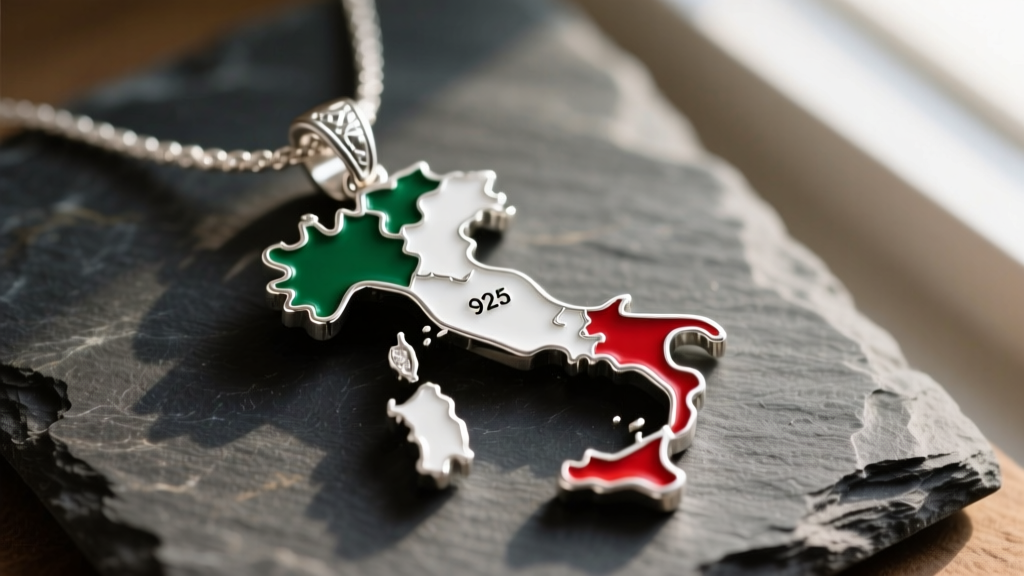
To properly care for an Italy country necklace, you must first understand the metallurgy and materials involved in its craftsmanship. Whether your piece features a precise geographical map outline, the iconic Il Tricolore (green, white, and red flag), or a regional motif like the Sicilian Trinacria, these pendants typically combine precious metals with delicate enamel work. Understanding the chemical properties of these materials is the first step in preventing irreversible damage.
Most high-quality Italian pendants are cast in 925 sterling silver or 14k/18k gold. Sterling silver contains 92.5% pure silver and 7.5% alloy, usually copper. It is this copper that reacts with ambient sulfur and moisture to form silver sulfide, the blackish compound we recognize as tarnish. Furthermore, the vibrant colors of the Italian flag or regional crests are usually achieved through either vitreous enamel (fired glass) or cold enamel (epoxy resin). Vitreous enamel is highly durable but susceptible to thermal shock, while cold enamel sits at roughly 2.5 to 3.0 on the Mohs hardness scale, making it highly vulnerable to micro-scratches from abrasive polishing compounds.
The Professional Cleaning Protocol
When cleaning an Italy country necklace, the goal is to lift oils, dead skin cells, and environmental pollutants without degrading the metal's finish or clouding the enamel. Follow this precise, step-by-step methodology recommended by jewelry conservators.
Step 1: The Distilled Water Bath
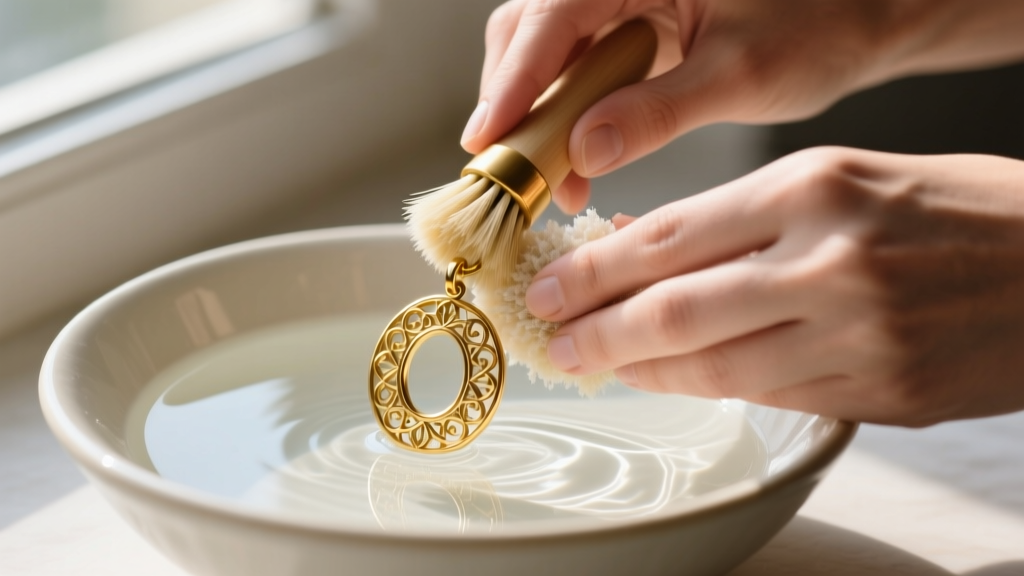
Never use tap water, as the dissolved minerals and chlorine can leave microscopic calcified deposits on the metal and dull the enamel. Fill a small ceramic or glass bowl with lukewarm distilled water. Add exactly three drops of a pH-neutral, phosphate-free dish detergent (such as original Dawn). Avoid soaps with added moisturizers or citrus degreasers, as these can leave a filmy residue or degrade cold enamel over time.
Step 2: Targeted Agitation
Submerge the necklace for no more than three minutes. Using an extra-soft baby toothbrush (look for bristles rated 0.001mm or 'ultra-soft'), gently agitate the crevices of the map outline or pendant bail. Do not scrub the enameled sections; instead, lightly sweep over them. For intricate rope chains or box chains often paired with these pendants, use a cotton swab to gently roll through the links, lifting trapped sebum without pulling the metal.
Step 3: The Rinse and Dry
Rinse the piece under a gentle stream of lukewarm distilled water. Immediately pat it dry with a lint-free microfiber cloth. Do not air dry, as water spots will form on the polished metal surfaces. For hard-to-reach areas near the clasp or jump rings, use a hair dryer on the 'cool' setting to blow out trapped moisture, preventing hidden corrosion.
Critical Warning: Cleaning Methods to Avoid
The most common way collectors and daily wearers ruin an Italy country necklace is by using aggressive, mass-market cleaning shortcuts. According to the Gemological Institute of America (GIA), improper cleaning causes more structural damage to mixed-media jewelry than daily wear itself.
- Ultrasonic Cleaners: These machines use high-frequency sound waves (typically 40kHz) to create cavitation bubbles in a liquid bath. While excellent for plain diamond solitaires, the microscopic shockwaves will shatter cold enamel and cause vitreous enamel to fracture or delaminate from the metal backing.
- Chemical Silver Dips: Liquid tarnish removers rely on thiourea and strong acids to strip silver sulfide. These chemicals will permanently cloud enameled sections, strip intentional oxidation (patina) from map borders, and leave the silver porous and prone to rapid re-tarnishing.
- Polishing Pastes and Dips: Abrasive compounds like jeweler's rouge or baking soda pastes will scratch cold enamel and wear away the microscopic layer of rhodium plating often applied to sterling silver to prevent tarnish.
Maintenance, Storage, and Tarnish Prevention
Proper storage is vastly superior to reactive cleaning. Silver tarnishes when exposed to hydrogen sulfide in the air, a process accelerated by humidity and direct sunlight. To preserve your Italy country necklace, implement the following storage framework.
| Storage Material | Function | Best Use Case |
|---|---|---|
| Pacific Silvercloth | Embedded with fine silver particles that absorb sulfur gases before they reach your jewelry. | Long-term storage of sterling silver map pendants. |
| 3M Anti-Tarnish Strips | Copper-based polymer strips that neutralize airborne pollutants in an enclosed space. | Placing inside jewelry boxes or zip-lock bags. |
| Silica Gel Packets | Desiccants that reduce ambient humidity, slowing the chemical reaction of tarnishing. | Travel pouches and humid climates. |
| Individual Polyethylene Bags | Prevents mechanical scratching and limits air exchange. (Avoid PVC, which emits damaging chlorides). | Daily drawer storage to prevent chain tangling. |
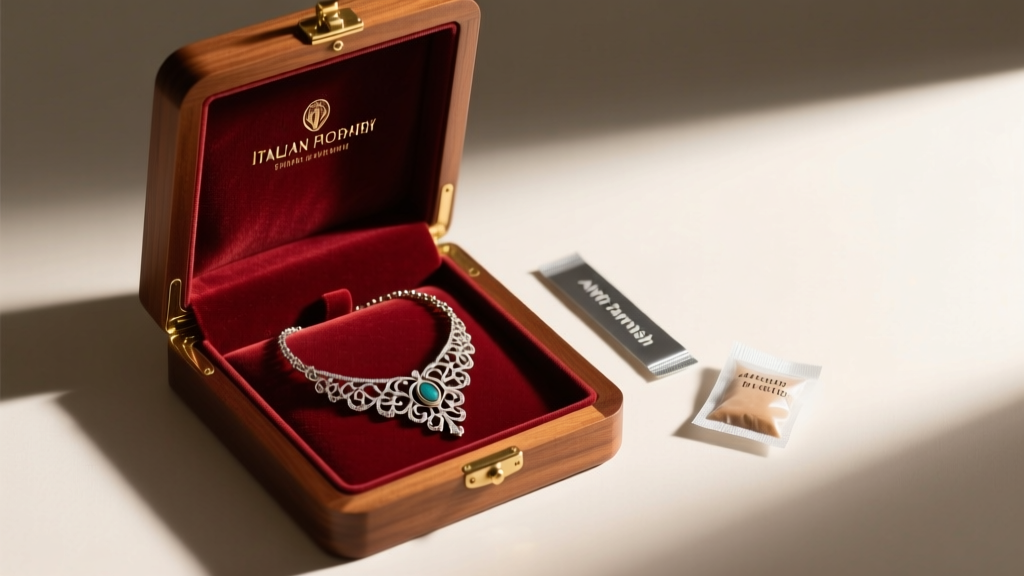
Always store your necklace flat or hung on a dedicated velvet stand to prevent the chain from knotting. Knots in fine 1.0mm or 1.2mm cable chains create stress points that can lead to micro-fractures in the metal links, eventually causing the chain to snap under the weight of the pendant.
Troubleshooting Stubborn Tarnish and Enamel Damage
If your sterling silver Italy country necklace has developed heavy, blackened tarnish that a mild soap bath cannot remove, you must use a chemical-free mechanical approach. The Silver Institute recommends using a high-quality, impregnated silver polishing cloth. These cloths contain microscopic polishing agents and anti-tarnish inhibitors. Fold the cloth and gently pinch the tarnished silver links, pulling the chain through the fabric. Avoid rubbing the cloth directly over the enameled flag or map details to prevent transferring dark silver residue into the color fields.
If you notice the cold enamel on your pendant beginning to chip, yellow, or lift at the edges, stop wearing it immediately. Cold enamel degradation is often caused by prolonged exposure to UV light, cosmetics, or perfumes. While vitreous enamel can sometimes be re-fired by a master jeweler, cold epoxy resin must be carefully milled out and repoured by a professional enamelist. Do not attempt to glue chipped enamel with cyanoacrylate (Super Glue), as it will create a cloudy, irreversible mess that makes professional restoration significantly more expensive.
A Note on Rhodium Plating
Many modern Italian sterling silver necklaces are plated with a microscopic layer of rhodium to provide a bright, white-gold-like finish and total tarnish resistance. Over years of wear, this plating will naturally wear thin, especially on the back of the pendant and the clasp. When you notice the underlying yellowish-grey tone of raw sterling silver showing through, take the piece to a local jeweler for a rhodium re-plating. This electroplating process is relatively inexpensive and will restore the piece to its original factory brilliance, ensuring your tribute to Italy remains as vibrant as the country itself.


