Ultimate Care Guide for Your Jeff Probst Necklace Style
Learn how to clean, condition, and maintain your Jeff Probst necklace. Expert tips for preserving braided leather and carved bone pendants.

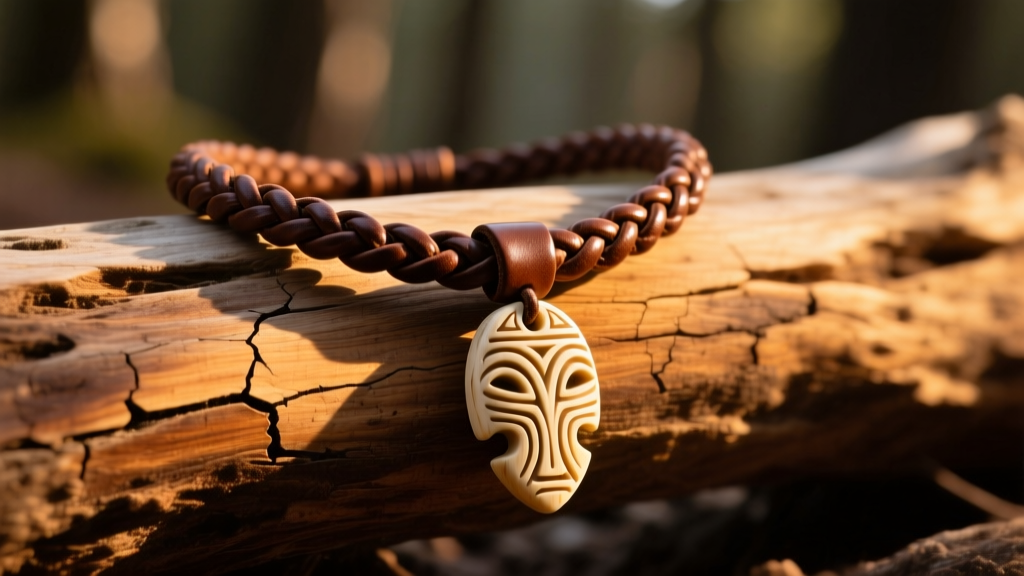
The Anatomy of a Survivor-Style Tribal Necklace
The iconic 'Jeff Probst necklace' style—popularized by the longtime host of Survivor—has become a staple in rugged, outdoor, and tribal-inspired men's fashion. Characterized by a thick, braided leather cord, an adjustable sliding macrame knot, and an organic centerpiece (typically carved bone, wood, shell, or stone), this necklace is designed to look better with age. However, the very elements that give it a weathered, authentic patina—sweat, saltwater, UV exposure, and dirt—are the exact same elements that will eventually destroy it if left unchecked.
To properly maintain a Jeff Probst necklace, you must understand its material composition. The cord is usually a 4mm to 6mm braided cowhide or kangaroo leather, chosen for its high tensile strength. The adjustable closure relies on friction-based square knots, while the pendants are often porous organic materials like calcium-rich bone or dense hardwoods. Each of these materials reacts differently to environmental stressors, requiring a segmented approach to cleaning and preservation.
The Enemy: Sweat, Saltwater, and Sebum
Outdoor enthusiasts and festival-goers who wear tribal necklaces daily expose them to a harsh chemical cocktail. Human sweat has a pH ranging from 4.5 to 7.0 and contains lactic acid, urea, and sodium chloride. When sweat dries on a leather cord, the salt crystallizes. These microscopic salt crystals act like sandpaper, severing the leather's collagen fibers from the inside out every time the cord bends. According to leather conservation experts at Tandy Leather, salt accumulation is the number one cause of premature dry rot in leather jewelry.
Material Degradation Timelines
Understanding how quickly your necklace can degrade helps establish a proper cleaning schedule. Below is a breakdown of untreated material failure rates under heavy outdoor use:
| Material | Primary Threat | Chemical Reaction | Time to Visible Damage |
|---|---|---|---|
| Braided Cowhide | Salt & Sweat | Collagen fiber abrasion via salt crystallization | 3 - 6 Months |
| Carved Bone | Lactic Acid | Calcium phosphate etching and pitting | 4 - 8 Months |
| Coconut Shell | Sebum (Body Oils) | Pore clogging leading to rancid odors | 6 - 12 Months |
| Macrame Knots | Friction & Dirt | Fiber binding and seizing of the sliding mechanism | 2 - 4 Months |
Step-by-Step Cleaning Protocol for Leather Cords
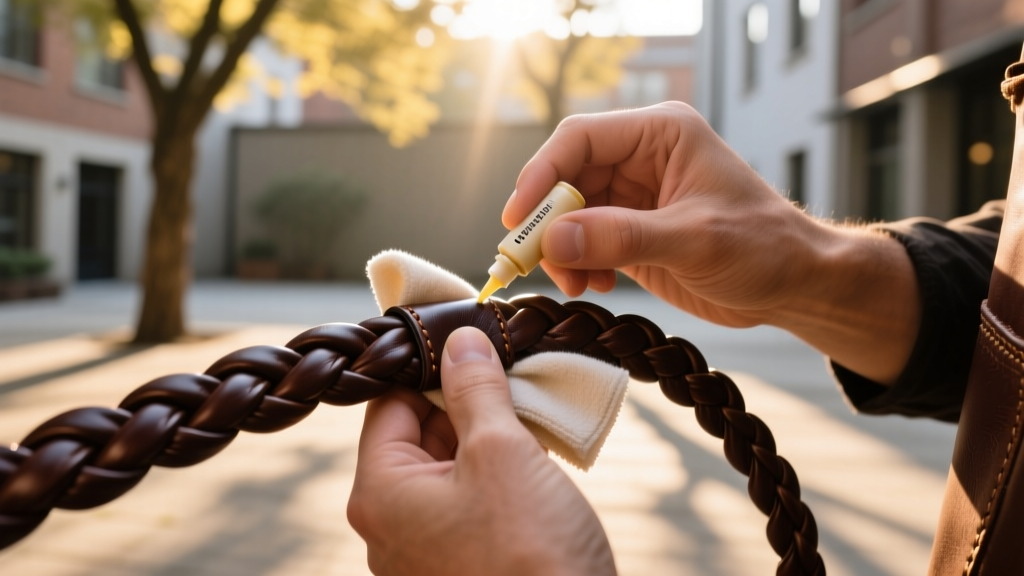
Never submerge a braided leather necklace in water. Submersion strips the hide of its natural tanning oils and causes the braids to swell, warp, and eventually shrink tightly as they dry, which can snap the cord. Instead, follow this dry-and-damp cleaning framework:
- Dry Brushing: Use a soft-bristled horsehair brush to agitate the braids. This dislodges dried sweat crystals, dead skin cells, and environmental dust trapped deep within the leather weave.
- Damp Wipe: Dampen a microfiber cloth with distilled water (never tap water, as chlorine and heavy minerals can stain the hide). Wring it out until it is barely moist, then wipe down the entire length of the cord, paying special attention to the areas that rest against the back of the neck.
- pH-Balanced Cleansing: For heavy grime, apply a small amount of pH-balanced leather cleaner (like Lexol Clean) to the cloth, not directly to the necklace. Work it into the braids using circular motions. Wipe away any residue with a fresh, damp cloth.
- Air Drying: Lay the necklace flat in a shaded, well-ventilated area. Never use a hairdryer or leave it in direct sunlight, as rapid heat extraction will cause the leather to crack.
Restoring Carved Bone, Wood, and Shell Pendants
The centerpiece of a Jeff Probst necklace requires an entirely different chemical approach. Bone and antler are composed primarily of calcium phosphate and collagen, making them highly susceptible to acidic etching from sweat. The Canadian Conservation Institute warns that exposing organic skeletal materials to acidic or highly alkaline cleaners will cause irreversible surface pitting and chalkiness.
The Bone and Shell Cleaning Method
- Surface Cleaning: Use a cotton swab lightly dampened with distilled water to clean the intricate carvings and etchings of the bone pendant. Avoid getting the leather cord wet during this process.
- Stain Removal: If the bone has yellowed unevenly or absorbed dark oils, create a mild paste of baking soda and distilled water. Apply it only to the bone, let it sit for five minutes, and gently brush it away. Baking soda is a mild alkaline that neutralizes acidic sweat residues without damaging the calcium structure.
- Wood and Shell: For hardwood pendants (like ebony or sandalwood) or coconut shell, avoid water entirely. Use a dry, lint-free cloth to buff the surface. If the wood looks ashy or dried out, it requires immediate oiling.
Conditioning and Waterproofing Framework
Cleaning strips away dirt, but it also removes essential moisture. Conditioning is non-negotiable for tribal necklaces. However, choosing the wrong conditioner can ruin the piece. Avoid heavy, animal-based fats like raw mink oil or pure neatsfoot oil for daily-wear necklaces; these can oxidize, turn rancid, and trap heat against your skin, leading to contact dermatitis.
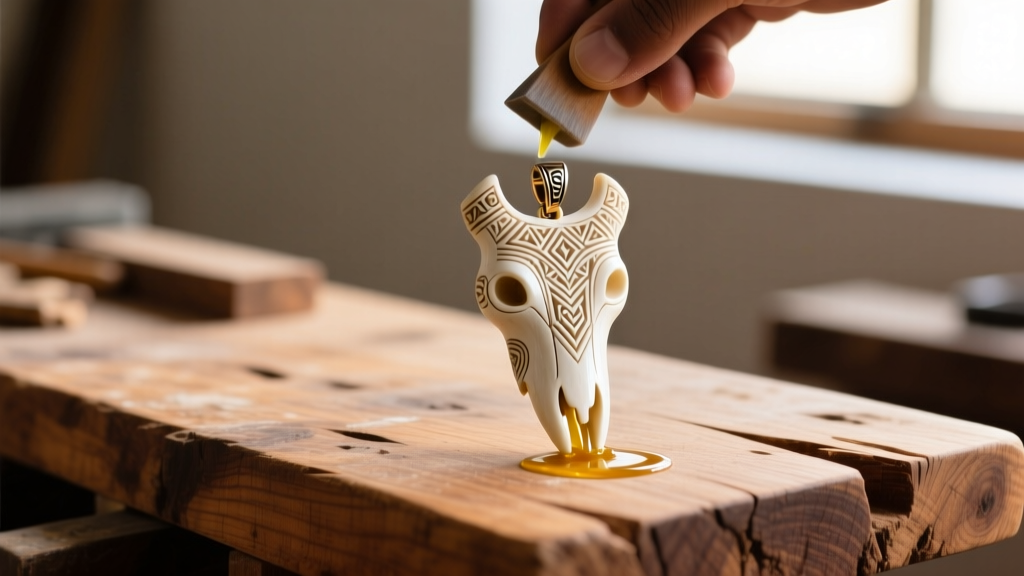
Instead, opt for a synthetic or highly refined leather conditioner containing lanolin or beeswax. Apply a pea-sized amount to your fingertips and massage it deeply into the braided leather. Allow it to penetrate for 15 minutes, then buff off the excess with a clean cloth. For the bone or wood pendant, a single drop of food-grade mineral oil or microcrystalline wax (such as Renaissance Wax) will seal the porous surface against future sweat and saltwater intrusion without altering its natural color.
Maintaining the Adjustable Sliding Knot
The hallmark of the Jeff Probst necklace style is the adjustable sliding macrame knot, which allows the wearer to change the length from a choker to a long pendant. Over time, dirt and salt cause this knot to seize, making it impossible to adjust without fraying the cord.
To restore the sliding mechanism, take a piece of unflavored dental floss and run it back and forth through the tight gaps of the knot to saw away trapped debris. Once the dirt is cleared, rub a small block of pure, unbleached beeswax over the leather tracks where the knot slides. The beeswax acts as a dry lubricant, waterproofing the friction points and allowing the knot to glide smoothly without attracting additional dust or lint.
Troubleshooting Common Necklace Failures
Even with regular maintenance, rugged necklaces can develop specific issues. Here is how to troubleshoot the most common problems:
- The Leather Cord is Stiff and Brittle: This indicates severe dehydration. Mist the cord lightly with distilled water, wait five minutes for the fibers to relax, and then apply a heavy coat of leather conditioner. Repeat this process twice over 48 hours.
- The Bone Pendant Has a Sour Odor: Organic pendants can absorb body oils and develop a rancid smell. Place the pendant (not the leather) in a sealed plastic container with an open box of baking soda or activated charcoal for 72 hours to draw out the odor-causing bacteria.
- Fuzz and Fraying on the Braids: If the leather cord develops a 'fuzzy' halo, the top layer of fibers has been abraded. Take a butane lighter, hold it three inches away from the cord, and quickly pass it back and forth. The brief flash of heat will singe the loose micro-fibers without burning the structural core of the braid.
By treating your tribal necklace not just as an accessory, but as a piece of organic equipment, you ensure it survives the elements. A well-maintained Jeff Probst necklace will develop a rich, dark patina and a soft, supple drape that mass-produced jewelry simply cannot replicate.


