How to Clean Your Kay Unstoppable Love Necklace Safely
Learn expert tips to clean and maintain your Kay Unstoppable Love necklace. Discover safe methods for sterling silver, gold, and diamond pavé settings.

Understanding the Metallurgy and Gemology of Your Necklace
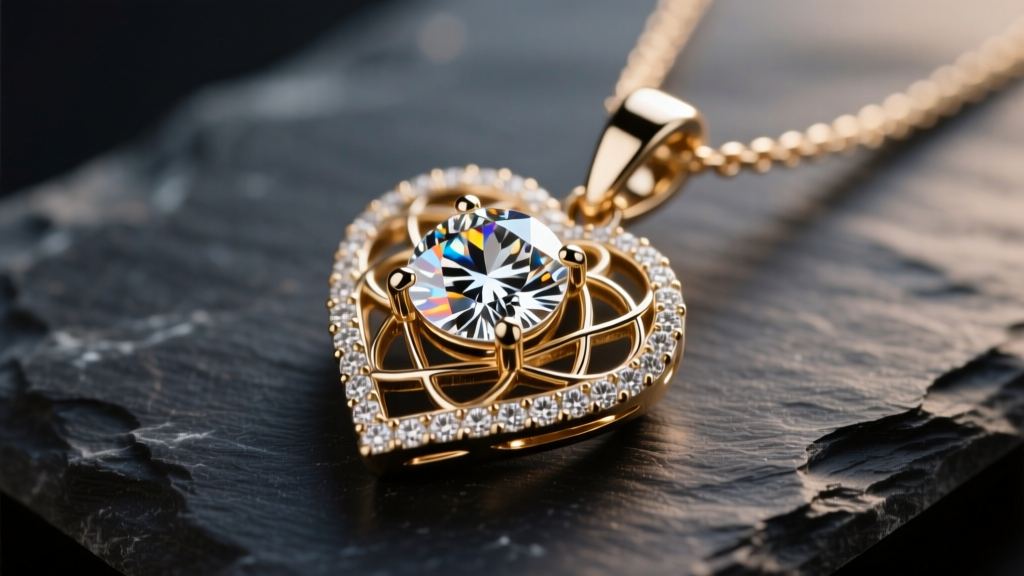
The Kay Unstoppable Love necklace is a popular choice for its sentimental value and brilliant diamond accents. However, maintaining its factory-level brilliance requires a nuanced understanding of its specific material composition. Depending on the exact model you own, your piece is likely crafted from either rhodium-plated sterling silver, 10K gold, or 14K white, yellow, or rose gold. The centerpiece typically features a bezel-set or prong-set diamond, often surrounded by a delicate halo of micro-pavé diamonds.
According to the Gemological Institute of America (GIA), diamonds are incredibly hard (rating a 10 on the Mohs scale), but they possess a high affinity for grease. This means the natural oils from your skin, combined with lotions and cosmetics, will quickly create a film over the diamond's pavilion (the bottom facets), severely reducing its light return and making the stone appear cloudy or yellowish. Furthermore, the precious metal settings are highly susceptible to environmental tarnishing and micro-abrasions if cleaned with improper materials.
The Hidden Dangers of Daily Wear and Common Failure Modes
Before reaching for a cleaning solution, it is vital to understand how your Kay Unstoppable Love necklace degrades over time. Recognizing these failure modes will dictate how you handle the piece during maintenance.
- Micro-Prong Fatigue: If your necklace features a pavé diamond halo, the tiny metal beads holding those melee diamonds in place are incredibly fragile. Catching the chain on a sweater or using a stiff-bristled brush can bend these micro-prongs, leading to lost stones.
- Rhodium Plating Depletion: White gold and sterling silver pieces are plated with rhodium to achieve a bright, mirror-like white finish. Friction from daily wear, combined with harsh chemical cleaners, will strip this plating prematurely, revealing the slightly yellowish base metal beneath.
- Chain Kinking and Tangling: The delicate cable or box chains used in this collection are prone to kinking. Attempting to untangle a kinked chain by pulling can permanently stretch the links or compromise the structural integrity of the clasp.
The Ultimate Step-by-Step Cleaning Protocol
To safely restore the brilliance of your necklace without damaging the settings or stripping the metal finishes, follow this professional-grade, at-home cleaning protocol. Never use ultrasonic cleaners on pavé settings or pieces with moving mechanical parts, as the high-frequency vibrations can easily rattle micro-diamonds loose from their settings.
Step 1: The Lukewarm Distilled Water Soak
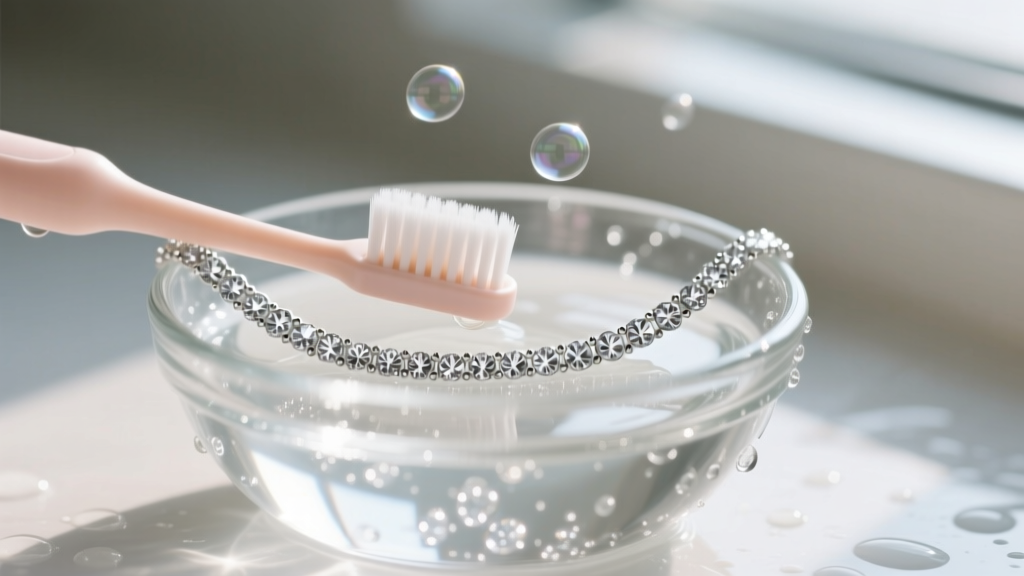
Fill a small glass bowl with lukewarm distilled water. Avoid tap water, as the chlorine and heavy minerals can leave microscopic deposits on the metal and gemstones. Add exactly two to three drops of a mild, lotion-free dishwashing liquid (such as original blue Dawn). Avoid soaps with added moisturizers or citrus degreasers, which can leave a dulling film or react with the metal alloys. Let the necklace soak for 15 to 20 minutes to loosen sebum and cosmetic buildup.
Step 2: Gentle Agitation with an Extra-Soft Brush
Remove the necklace from the solution. Using a brand-new, extra-soft baby toothbrush, gently brush the diamond and the setting. Critical Technique: Do not scrub in a circular motion over the pavé stones. Instead, use light, flicking motions from the center of the stone outward to dislodge dirt trapped beneath the girdle. Pay special attention to the back of the pendant where skin oils accumulate.
Step 3: The Distilled Rinse and Microfiber Dry
Rinse the necklace thoroughly under a gentle stream of lukewarm distilled water to ensure no soap residue remains. Plug the sink drain or use a strainer to prevent catastrophic loss. Pat the piece dry with a clean, lint-free microfiber cloth. Avoid paper towels or tissue paper, as the wood pulp fibers can cause microscopic scratches on high-polish gold and silver surfaces.
Chemical Compatibility and What to Avoid
The American Gem Society (AGS) strongly advises against using household chemicals on fine jewelry. Below is a breakdown of common household substances and their specific destructive effects on your necklace's materials.
| Chemical / Substance | Effect on Precious Metals (Gold/Silver) | Effect on Diamonds & Settings |
|---|---|---|
| Chlorine (Pools/Bleach) | Causes stress corrosion cracking in gold alloys; permanently pits and weakens prongs. | Does not damage the diamond, but compromised prongs will lead to stone loss. |
| Ammonia (Glass Cleaners) | Strips rhodium plating from white gold and sterling silver; dulls rose gold. | Can safely clean diamonds in solid settings, but too harsh for porous accent stones. |
| Hydrogen Peroxide | Accelerates oxidation and severe tarnishing on sterling silver chains. | Safe for diamonds, but can degrade the adhesives used in some composite settings. |
| Hairspray & Perfumes | Creates a sticky, hardened lacquer film that traps dirt and accelerates tarnish. | Coats the diamond pavilion, drastically reducing brilliance and light refraction. |
Advanced Storage and Preservation Tactics
Proper storage is just as critical as the cleaning process itself. When you remove your Kay Unstoppable Love necklace for the evening, do not simply toss it into a crowded jewelry box. The diamonds on your pendant can easily scratch the softer gold or silver chains of neighboring pieces, as diamonds will scratch any material lower than a 10 on the Mohs scale.
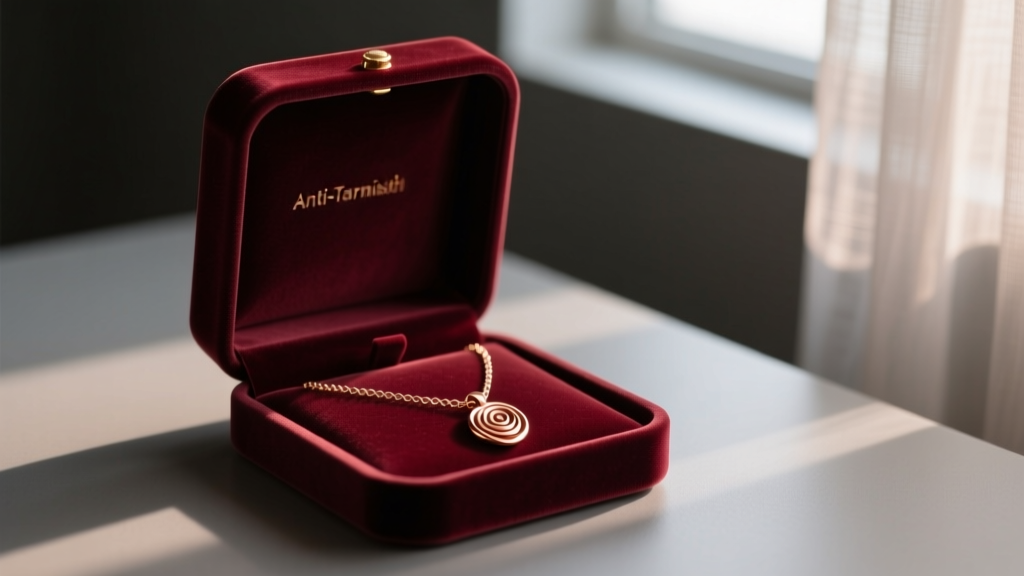
Store the necklace individually in a soft flannel pouch or a dedicated compartment lined with anti-tarnish fabric. For sterling silver variations, consider placing a 3M anti-tarnish strip or a small silica gel desiccant packet inside the storage pouch. These materials actively absorb the atmospheric sulfur and moisture that trigger the chemical reaction causing silver sulfide (tarnish) to form on the metal's surface. Always fasten the clasp before storing to prevent the chain from tangling into complex knots.
When to Seek Professional Jewelry Care
While at-home maintenance is excellent for surface dirt and light tarnish, it cannot replace professional bench work. You should take your necklace to a certified jeweler or a Kay Jewelers service center every 12 to 18 months for a comprehensive inspection and deep clean.
A professional will use a jeweler's loupe to inspect the micro-prongs for signs of lifting or wear that the naked eye cannot detect. If you own a white gold or sterling silver model and notice a yellowish tint developing on the high-friction areas of the pendant bail or chain links, it is time for a rhodium replating. This electroplating process typically costs between $35 and $65 and will restore the piece to its original, brilliant white luster. By combining meticulous at-home cleaning with scheduled professional inspections, your necklace will remain a flawless symbol of your unstoppable love for decades to come.


