How to Clean and Maintain an Expensive Clover Necklace
Learn how to safely clean, store, and maintain an expensive clover necklace. Expert tips for onyx, malachite, and mother-of-pearl motifs.

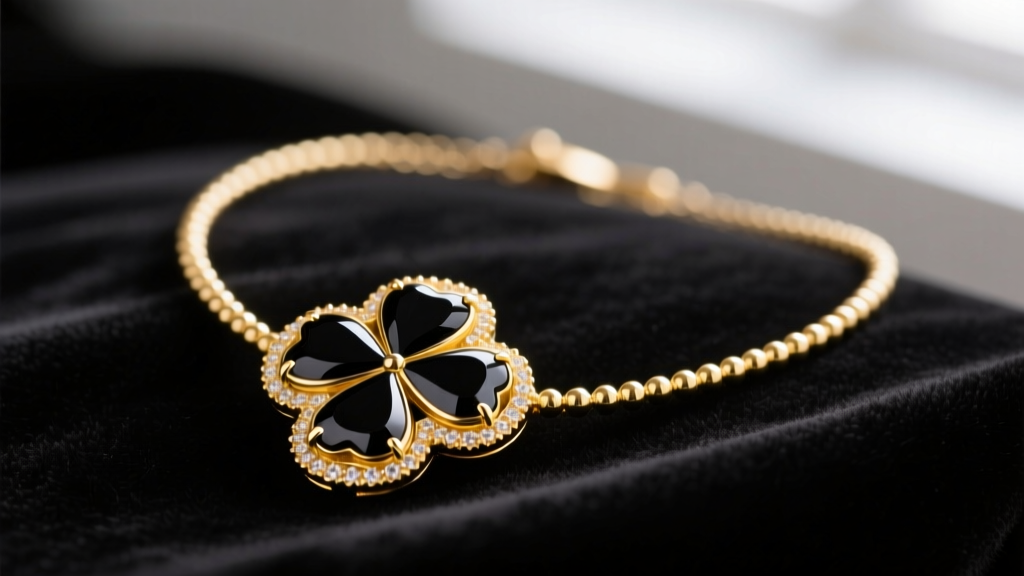
The Anatomy of an Expensive Clover Necklace
An expensive clover necklace is more than just a piece of jewelry; it is a wearable investment and a hallmark of luxury craftsmanship. Whether you own an iconic Van Cleef & Arpels Alhambra piece or a high-end equivalent from another prestigious maison, these necklaces are defined by their intricate motifs, precise stone inlays, and signature beaded gold borders. However, the very design elements that make these pieces so breathtaking also make them uniquely vulnerable to daily wear, cosmetic buildup, and environmental damage.
To properly care for your jewelry, you must first understand its composition. The framework is typically crafted from 18k gold (stamped 750), meaning it contains 75% pure gold alloyed with metals like copper, silver, or zinc for structural integrity. The clover motifs are usually inlaid with hardstones or organic gems such as malachite, onyx, carnelian, or mother-of-pearl. Each of these materials interacts differently with water, chemicals, and friction, requiring a highly tailored approach to maintenance.
The Beaded Border Trap: Where Dirt Hides
The most recognizable feature of a luxury clover necklace is the golden beaded border (often referred to as golden pearls or guilloché edges) that frames the central stone. While visually stunning, these tiny crevices are notorious traps for sebum, dead skin cells, hand lotions, and foundation makeup. Over time, this buildup creates a dull, grayish film that robs the gold of its luster and can even cause skin irritation.
Expert Tip: Never use metal tools, needles, or safety pins to scrape out debris from the beaded edges. 18k gold is relatively soft and will scratch easily. Instead, use a wooden toothpick or a specialized extra-soft baby toothbrush to gently dislodge trapped particles without marring the metal.
Hardstone Vulnerabilities: What You Must Know
The greatest risk when cleaning an expensive clover necklace lies in misunderstanding the Mohs hardness scale and the porosity of the inlaid stones. Standard jewelry cleaning methods that work for diamonds can permanently destroy softer, porous gems.
| Stone Type | Mohs Hardness | Porosity | Primary Threat | Safe Cleaning Agent |
|---|---|---|---|---|
| Malachite | 3.5 - 4.0 | High | Acids, heat, ultrasonic waves | Dry microfiber cloth only |
| Mother-of-Pearl | 2.5 - 4.5 | Very High | Acids, perfumes, chlorine | Damp cloth, mild soap (sparingly) |
| Carnelian | 6.5 - 7.0 | Low | Hard impacts, extreme heat | Mild soap and lukewarm water |
| Black Onyx | 6.5 - 7.0 | Low (Dyed) | Harsh chemicals, prolonged soaking | Mild soap and lukewarm water |
According to the Gemological Institute of America (GIA), organic gems like mother-of-pearl contain calcium carbonate, which is highly reactive to acids. Even mild acidic substances like lemon juice, vinegar, or certain skin pH levels can etch the surface, leaving permanent dull spots. Similarly, malachite is extremely sensitive to heat and sudden temperature changes, which can cause internal fracturing.
Step-by-Step Cleaning Protocols
1. The Routine Wipe-Down (After Every Wear)
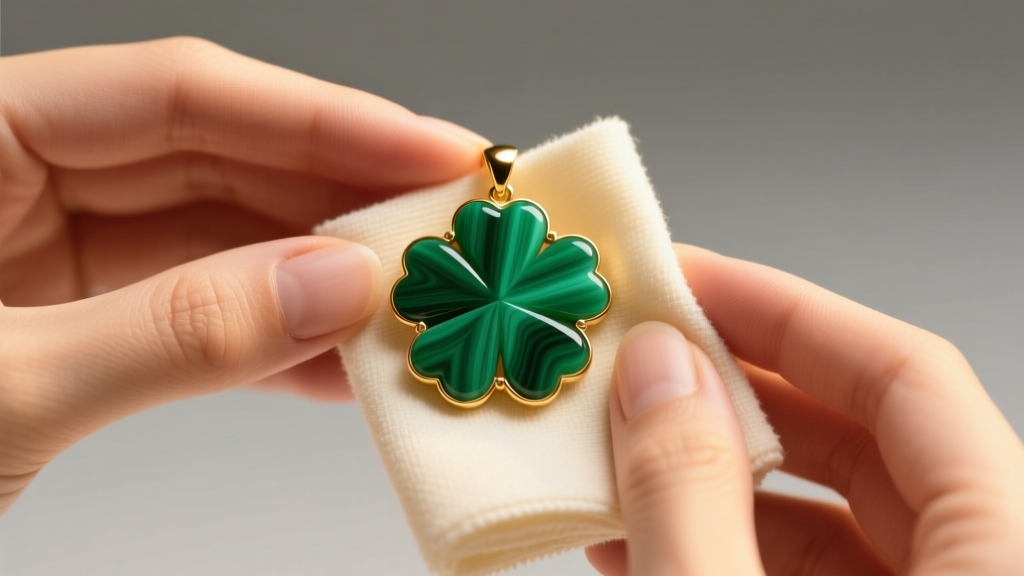
The most effective maintenance is preventative. After removing your necklace, gently wipe the stone and the gold framework with a clean, dry, lint-free microfiber cloth. This removes microscopic layers of sweat and cosmetic oils before they have a chance to harden in the beaded crevices or tarnish the gold alloy.
2. Deep Cleaning the Gold Framework (Monthly)
For a deeper clean, prepare a solution of lukewarm distilled water and a single drop of pH-neutral dish soap. Do not submerge the necklace. Instead, dip an extra-soft baby toothbrush into the solution, tap off the excess moisture, and gently brush only the gold chain, the clasp, and the beaded borders. Avoid brushing the stone directly, especially if it is malachite or mother-of-pearl. Wipe away the suds immediately with a barely damp cloth and dry thoroughly with a hairdryer on the 'cool' setting to prevent water spots.
The Ultrasonic and Steam Cleaner Trap
One of the most common and costly mistakes owners make is taking an expensive clover necklace to a local mall jeweler who immediately places it in an ultrasonic cleaner. Ultrasonic cleaners use high-frequency sound waves to create microscopic bubbles in a liquid solution (a process called cavitation). While excellent for dislodging dirt from diamond prongs, these intense vibrations will shatter porous stones like malachite and cause layered organic materials like mother-of-pearl to delaminate and peel away from the gold backing.
Similarly, steam cleaners introduce intense, localized heat and pressure. As noted in the official Van Cleef & Arpels care guidelines, high jewelry pieces featuring hardstones must never be exposed to steam, as the thermal shock can fracture the stone or compromise the specialized adhesive used to secure the inlay within the gold bezel.
Chain, Clasp, and Rhodium Considerations
The chain and clasp of your necklace require their own specific care. The delicate links of a luxury cable chain can easily kink if stored improperly or caught on clothing. If a kink occurs, lay the chain flat on a glass surface and use two fine sewing needles to gently tease the link back into shape—never pull or yank the chain.
If your clover necklace is crafted from 18k white gold, it is likely plated with rhodium to achieve a bright, silvery-white finish. Aggressive polishing cloths or abrasive jewelry dips will strip this rhodium plating, exposing the slightly yellowish natural white gold beneath. For white gold pieces, use only a soft, untreated microfiber cloth and rely on professional re-plating services every 2 to 3 years to maintain the brilliant white hue.
Proper Storage and Professional Servicing
How you store your necklace is just as critical as how you clean it. Never toss an expensive clover necklace into a communal jewelry box where the gold chain can rest against the stone. Remember that everyday dust contains quartz particles (Mohs 7), which are harder than malachite and mother-of-pearl and will cause micro-scratches if the necklace is jostled.
- Use the Original Pouch: Store the necklace in its original soft flannel pouch or a dedicated anti-tarnish ziplock bag.
- Hang or Lay Flat: If using a jewelry box, lay the pendant flat and ensure the chain is fully extended to prevent knotting.
- Climate Control: Avoid storing the necklace in high-humidity environments like bathrooms, which can degrade the stone adhesives over time.
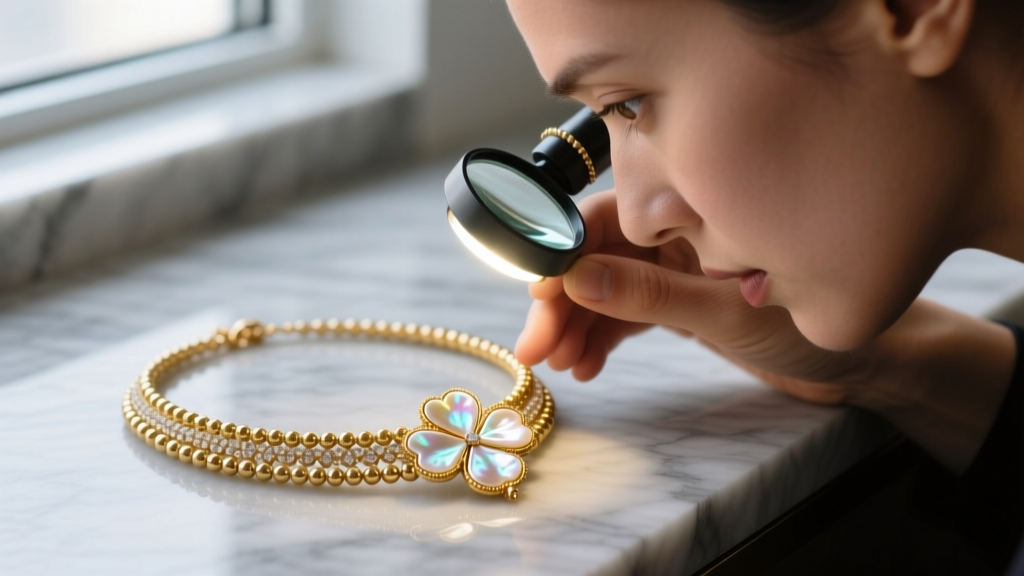
Finally, schedule a professional inspection with a certified boutique or master jeweler every 18 to 24 months. They will use a 10x loupe to inspect the structural integrity of the jump rings, check the tension of the clasp spring, and ensure the stone inlays have not shifted within their gold bezels. By combining mindful daily habits with expert professional oversight, your clover necklace will retain its structural integrity and breathtaking beauty for generations.


