Israel Map Necklace Troubleshooting: Fixing Tarnish, Snags & Warping
Fix common issues with your Israel map necklace. Learn expert troubleshooting for silver tarnish, chain snags, enamel chips, and pendant warping.

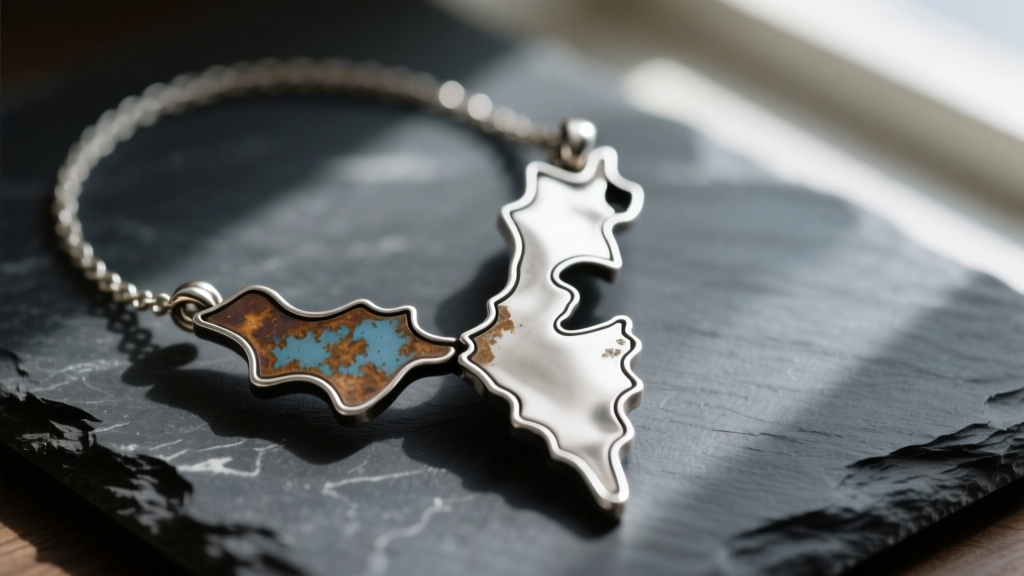
An Israel map necklace is more than just a piece of jewelry; it is a profound wearable connection to heritage, faith, and geography. However, the intricate, laser-cut coastlines and delicate regional borders that make these pendants beautiful also make them uniquely vulnerable to physical damage. As of 2026, advancements in precision laser-cutting allow for incredibly detailed map outlines, but this often means the metal profile is thinner and more fragile than older cast models. If your favorite piece is suffering from tarnish, warping, or chain snags, this comprehensive troubleshooting guide will help you restore it to its original glory.
Diagnosing and Repairing Pendant Warping
Because an Israel map pendant lacks a solid, continuous backing—relying instead on thin strips of metal to connect the Galilee, the coastal plains, and the Negev—it is structurally fragile. Bumping it against a hard surface, catching it on clothing, or sleeping in it can easily cause the metal to buckle or warp.
The Rawhide Mallet Technique
Never attempt to bend a warped 925 sterling silver or brass map pendant back into shape with your fingers or steel pliers. This will stretch the metal, weaken the structural integrity, and cause micro-fractures along the laser-cut edges. Instead, use a jeweler's rawhide mallet and a polished steel bench block.
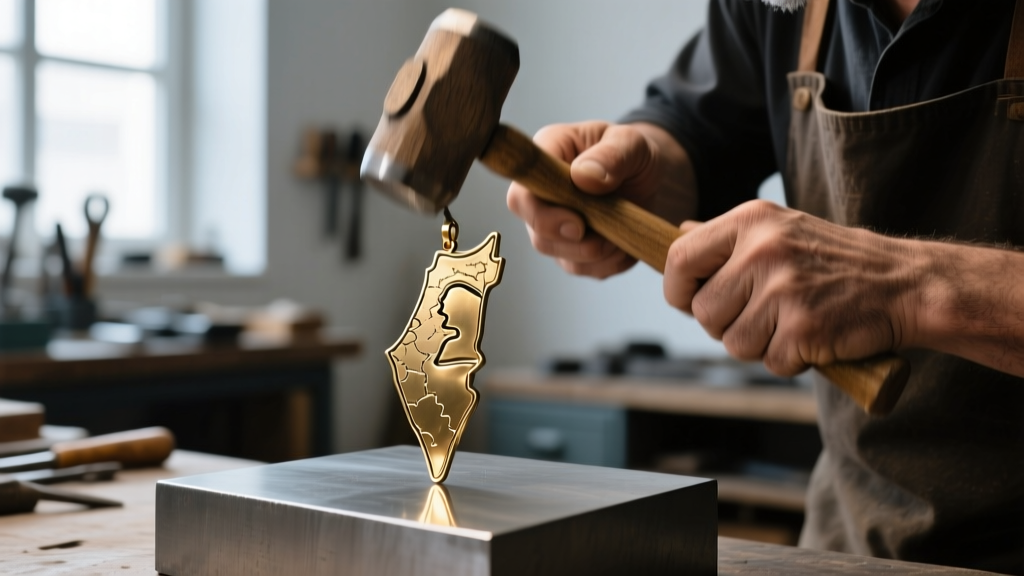
Place the pendant face down on a soft microfiber cloth resting on the steel block. Using the rawhide mallet, tap gently and evenly across the warped areas. The rawhide transfers kinetic force without marring the metal or flattening the intentional 3D bevels of the map's borders. For severe kinks in thin chains attached to the bail, use nylon-jaw pliers to gently coax the metal back into alignment.
The Tarnish Trap: Cleaning Without Stripping Oxidation
Many high-quality Israel map necklaces utilize intentional oxidation (a controlled blackening process) to define topographical features, city markers, and borders. This creates a striking contrast against the polished silver. However, this creates a massive troubleshooting headache when the piece naturally tarnishes from sulfur exposure in the air.
Why Liquid Silver Dips Are Ruining Your Necklace
Commercial liquid silver dips rely on harsh chemicals like thiourea to instantly strip tarnish. While effective on plain silver chains, these dips will completely strip the intentional oxidation from the recessed areas of your map pendant, leaving it looking flat, washed out, and devoid of its geographical detail. The Gemological Institute of America (GIA) strongly advises against using abrasive or chemical dips on textured or oxidized silver.
The Precision Polishing Method
- For the raised, polished areas: Use a treated jeweler's cloth (such as a Sunshine cloth). Fold the cloth to create a firm edge and gently rub only the raised, polished surfaces of the map.
- For intricate coastlines and borders: Wrap a small piece of the polishing cloth around the tip of a wooden toothpick or a cotton swab. Carefully trace the Mediterranean coastline and the Jordan River borders, avoiding the darkened recesses.
- For heavy, uniform tarnish (Non-Oxidized Pieces Only): If your necklace is highly polished with no dark recesses, create a paste of baking soda and a few drops of water. Apply with a soft-bristled baby toothbrush, rinse thoroughly with distilled water, and pat dry with a lint-free cloth.
Chain Snags and Clasp Failures on Delicate Pendants
Map pendants have highly uneven weight distribution. The southern tip (the Negev and Eilat) often acts as a pendulum, creating localized stress on the chain loop and the bail. If your chain keeps snapping or tangling, the issue is almost certainly a mismatch between the chain gauge and the pendant's weight.
| Chain Type | Gauge (Thickness) | Weight Capacity | Verdict for Map Pendants |
|---|---|---|---|
| Delicate Cable | 0.5mm - 0.7mm | Under 3 grams | Avoid: Will easily snap under the pendulum stress of a solid metal map. |
| Standard Box Chain | 0.8mm - 1.0mm | 3 - 8 grams | Ideal: Provides excellent structural support and resists tangling in hair. |
| Rope Chain | 1.2mm+ | 10+ grams | Caution: Can snag on intricate laser-cut map edges if the bail is too wide. |
Upgrading the Bail and Clasp
If the pendant's bail (the loop the chain passes through) is rough or sharp from the laser-cutting process, it will act like a tiny saw, slowly cutting through your chain. Inspect the inside of the bail with a jeweler's loupe. If it feels rough, a professional jeweler can smooth it with a rubberized polishing wheel in seconds. Additionally, upgrade flimsy spring-ring clasps to a 5mm or 6mm lobster clasp to prevent accidental unfastening.
Troubleshooting Enamel Chipping and Color Fading
Many Israel map necklaces feature blue and white enamel accents to represent the national flag or the surrounding bodies of water (the Mediterranean Sea, the Sea of Galilee, and the Dead Sea). Enamel is essentially glass powder fused to metal, making it brittle and susceptible to chipping upon impact.
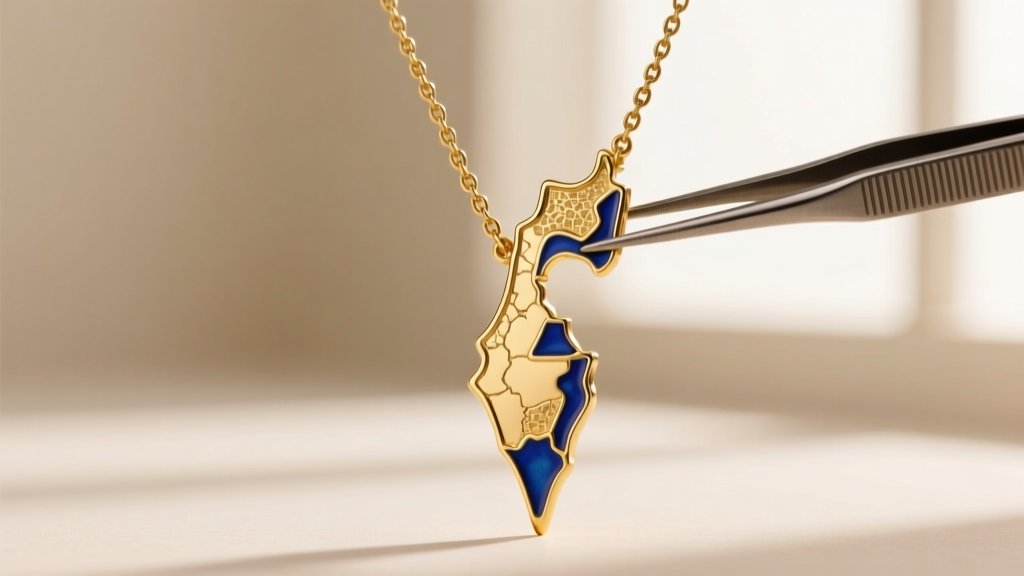
The most common cause of enamel failure in 2026 is the use of ultrasonic jewelry cleaners. The high-frequency sound waves create microscopic cavitation bubbles that can shatter the bond between the enamel and the metal base. According to the Federal Trade Commission's Jewelry Guides, consumers must be wary of improper care instructions that damage specialized finishes. Never put an enameled map necklace in an ultrasonic bath.
How to Stabilize a Chipped Enamel Edge
If a small chip has occurred on the edge of a blue enamel region, you can prevent it from spreading. Clean the area with isopropyl alcohol and let it dry completely. Apply a microscopic drop of clear, hardening nail polish or a specialized jewelry resin (like UV-curing epoxy) over the chip. Use a toothpick to spread it evenly and cure it under a UV lamp or direct sunlight. This seals the edge and prevents moisture from getting under the remaining enamel and causing it to flake off.
Preventative Maintenance Framework
To ensure your Israel map necklace remains a lasting heirloom, adopt this simple maintenance protocol:
- The 'Last On, First Off' Rule: Always put your necklace on after applying perfumes, lotions, and hairsprays. The alcohol and oils in cosmetics can degrade gold vermeil plating (which should be at least 2.5 microns thick) and dull enamel finishes.
- Proper Storage: Never throw the necklace loosely into a jewelry box where the map's points can scratch other pieces or get bent. Store it flat in an anti-tarnish ziplock bag with a silica gel packet to control humidity.
- Shower and Swim Ban: Chlorine in pools and hot tubs is highly corrosive to the copper alloys mixed into 925 sterling silver and 14k gold. It causes rapid, irreversible pitting and discoloration.
By understanding the specific structural vulnerabilities of geographic map jewelry and treating the metals with the precise care they require, your necklace will remain a pristine, wearable symbol of connection for decades to come.