Anatomy of a Necklace 18 Inch Chain: Gauges, Weaves, and Fit Guide
Master the necklace 18 inch chain. Explore technical specs, wire gauges, chain weaves, clasp mechanics, and precise neckline matching in this expert guide.
The Geometry of the 18-Inch Drop
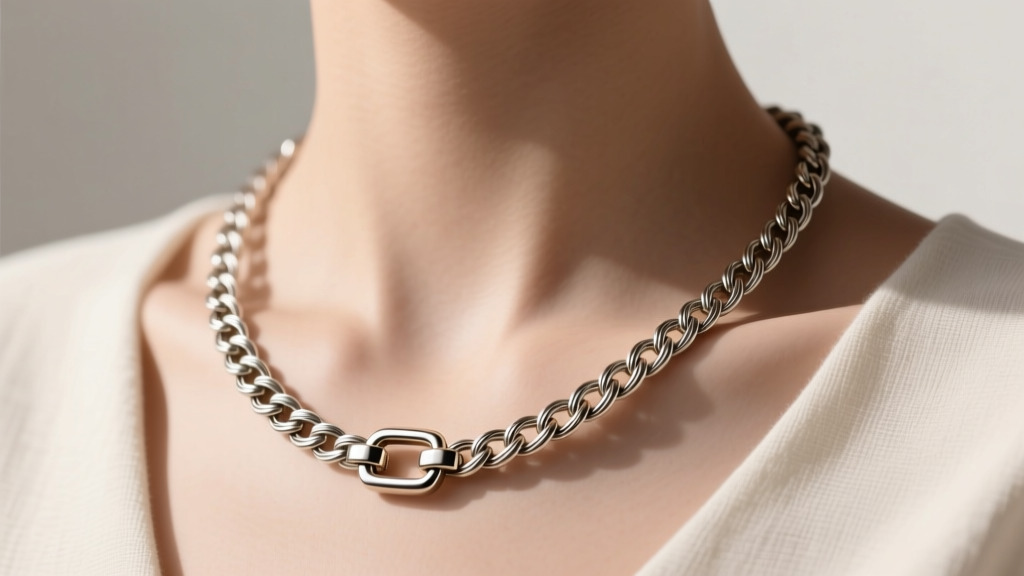
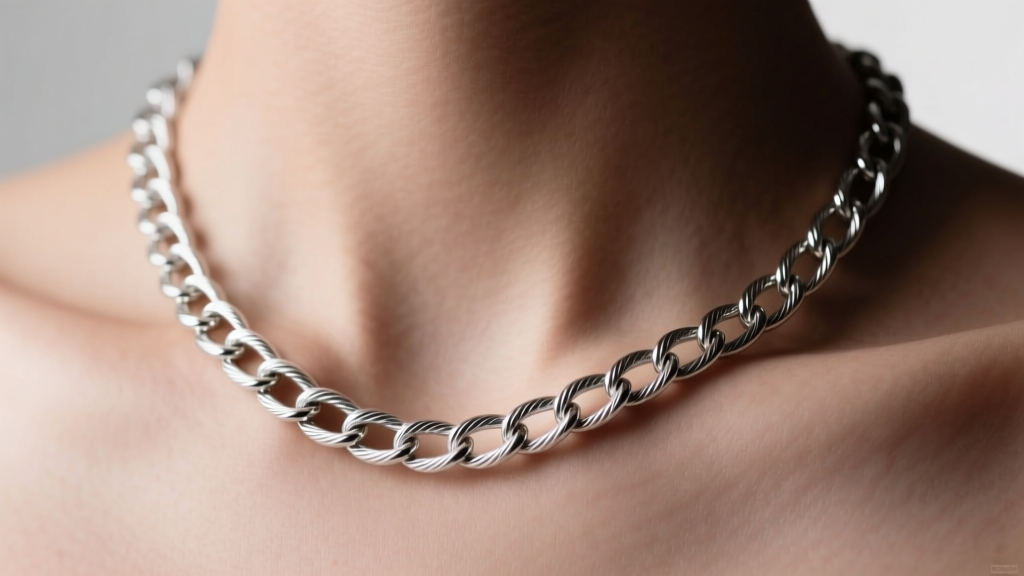
In the jewelry industry, the necklace 18 inch chain is universally classified as the "princess" length. Measured end-to-end from the jump ring to the clasp, an 18-inch chain is engineered to rest precisely on the clavicle (collarbone) for a wearer with a standard 14-inch to 15-inch neck circumference. This specific drop creates a focal point just below the hollow of the throat, making it the most versatile baseline in modern jewelry design. However, treating all 18-inch chains as identical is a critical error. The structural integrity, drape, and longevity of the piece are dictated by a complex interplay of wire gauge, weave topology, and metallurgical composition.
When sourcing or designing an 18-inch chain, one must account for the "nape friction zone." The back of the neck experiences continuous kinetic friction against skin, hair, and clothing. An 18-inch chain sits high enough to be caught in hair ties or collar seams, meaning the tensile strength of the links and the corrosion resistance of the alloy are paramount to preventing catastrophic failure.
Wire Gauge vs. Chain Weave: The Durability Matrix
The wire gauge (measured in millimeters for modern jewelry) determines the cross-sectional thickness of the metal used to form each link. A delicate 0.8mm cable chain might weigh a mere 2 grams, while a 2.5mm Cuban link chain of the same 18-inch length can exceed 25 grams. The weave topology dictates how stress is distributed across these links when subjected to lateral tension.
| Chain Weave | Optimal Gauge (mm) | Tensile Yield Profile | Primary Failure Mode | Average Price Range (925 Silver) |
|---|---|---|---|---|
| Cable | 0.8mm - 1.2mm | Low lateral resistance | Link kinking and micro-fractures | $35 - $65 |
| Rolo | 1.2mm - 1.8mm | High uniform stress distribution | Jump ring separation at clasp | $55 - $110 |
| Figaro | 1.5mm - 2.5mm | Asymmetric tension tolerance | Elongation of the long links | $80 - $160 |
| Box | 1.0mm - 1.5mm | Rigid, low flexibility | Corner crushing and denting | $70 - $130 |
For everyday wear, a 1.2mm to 1.5mm rolo or curb chain offers the optimal balance of drape and tensile strength. Thinner gauges (under 1.0mm) in an 18-inch length are highly susceptible to work hardening—a process where repeated bending makes the sterling silver brittle, eventually leading to a snap without warning.
Metallurgy and Friction Wear
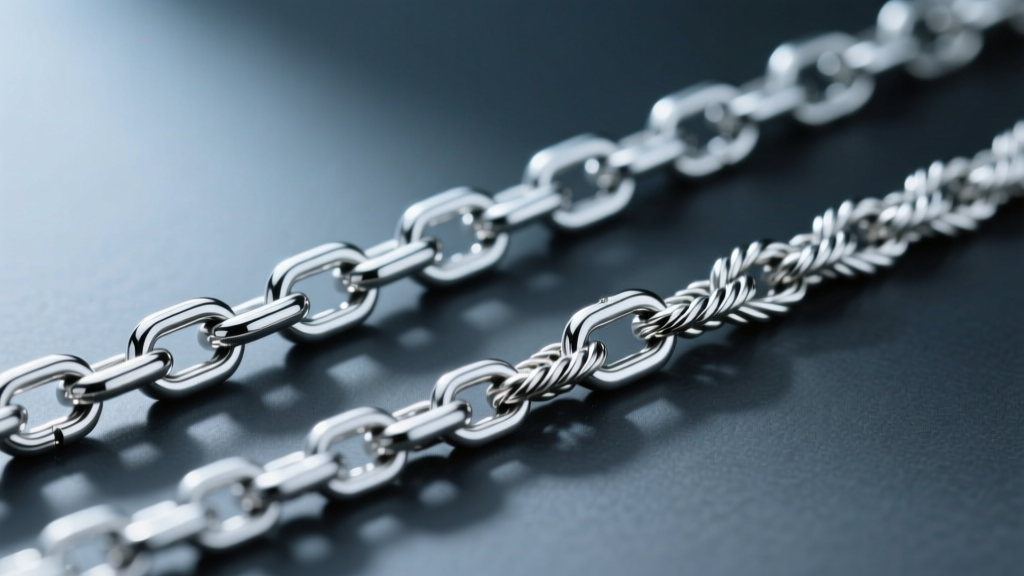
The material composition of your necklace 18 inch chain dictates its lifecycle. Let us examine the three most common alloys used in this specific length category.
925 Sterling Silver and Work Hardening
Sterling silver is an alloy comprising 92.5% pure silver and 7.5% copper. The copper provides necessary structural rigidity, but it also introduces a vulnerability to oxidation and sulfur-induced tarnishing. More critically, sterling silver has a relatively low yield strength. When an 18-inch silver chain is worn daily, the links undergo thousands of micro-flexions. According to metallurgical standards referenced by the GIA Gem Encyclopedia, this continuous flexion causes the copper-silver crystal lattice to lock, resulting in work hardening. To mitigate this, high-end manufacturers anneal their chains post-assembly to relieve internal stresses.
316L Surgical Stainless Steel
For an 18-inch chain that will endure high-friction environments (such as athletic wear or humid climates), 316L stainless steel is the superior technical choice. The addition of 2-3% molybdenum in the 316L alloy drastically increases resistance to pitting and chloride corrosion. An 18-inch 316L steel chain in a 1.5mm gauge possesses a tensile strength exceeding 485 MPa, making it virtually impossible to break under normal human kinetic force. The trade-off is a higher density, resulting in a heavier, stiffer drape compared to silver.
Gold Vermeil and Micron Thickness
Gold vermeil requires a sterling silver base plated with gold. The Federal Trade Commission and international assay offices mandate a minimum gold thickness of 2.0 microns for a piece to be legally classified as vermeil. However, for an 18-inch chain that rests against the collarbone and nape, a 2.0-micron plating will wear through to the silver base within 8 to 14 months of daily wear due to friction and skin acidity. Expert jewelers recommend seeking out "heavy vermeil" with a 2.5 to 3.0-micron gold layer, which extends the lifespan of the plating by approximately 40%.
Clasp Mechanics: Engineering the Weakest Link
An 18-inch chain is only as strong as its closure mechanism. The clasp and its accompanying jump rings represent the primary failure points in the entire assembly.
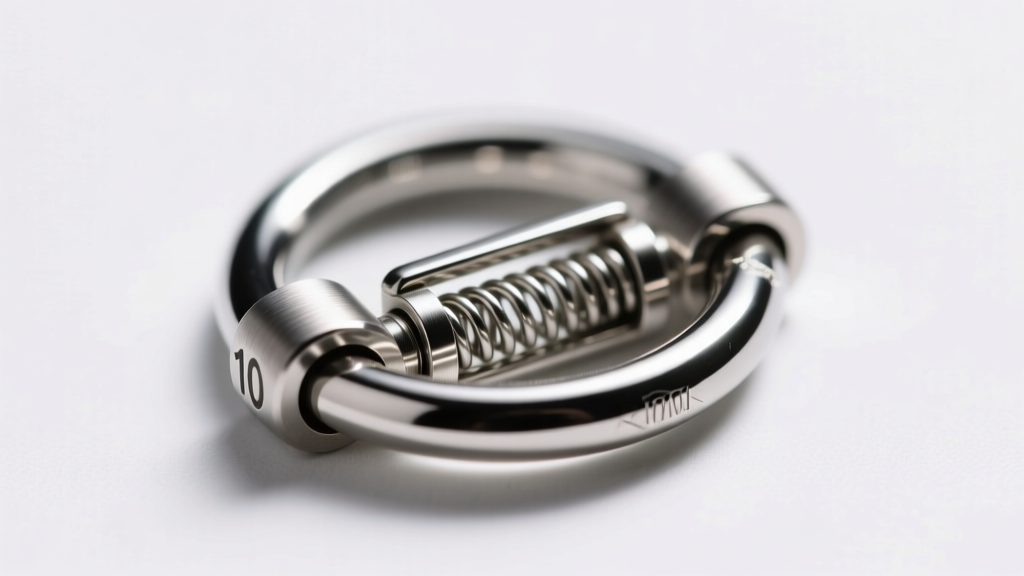
- Spring Ring Clasps: These rely on a tiny internal coil spring. In standard 5mm or 7mm sizes, the spring mechanism is prone to fatigue. After approximately 400 to 600 actuations (opening and closing), the coil loses its tension, resulting in a clasp that fails to close flush. Furthermore, the hollow tubing of a spring ring is easily crushed if the 18-inch chain is snagged.
- Lobster Clasps: A forged lobster clasp utilizes a solid metal lever and a heavier-duty spring. A 10mm or 12mm lobster clasp provides a vastly superior shear strength. When sourcing an 18-inch chain, always verify that the jump ring connecting the lobster clasp to the chain is laser-welded or soldered shut. An unsoldered jump ring will easily pull apart under a mere 3 to 5 pounds of lateral tension.
As detailed in technical manufacturing guides by Rio Grande Jewelry Supplies, the transition from chain to clasp should ideally include a "tag" or an elongated link to prevent the clasp from sliding through the links and causing mechanical abrasion.
Neckline Calibration and Layering Tolerances
The 18-inch drop is mathematically calibrated for specific garment geometries. Because it terminates exactly at the clavicle, it acts as a visual horizon line. Here is how to calibrate your necklace 18 inch chain against standard necklines:
- Crew Neck (High, Round): The 18-inch chain will sit roughly 1 to 1.5 inches below the collar seam. This creates a clean, framed look, provided the pendant (if any) does not exceed 15mm in diameter, which would clutter the tight visual space.
- V-Neck (Moderate Plunge): The 18-inch chain will intersect the upper third of the V-neck opening. To maintain geometric harmony, use a V-shaped pendant or a teardrop gemstone that mimics the angle of the garment.
- Boat Neck (Bateau): This wide, horizontal neckline pairs perfectly with the horizontal line of an 18-inch chain. A 1.5mm to 2.0mm Figaro or Rope chain adds necessary visual weight to balance the exposed shoulders.
Expert Layering Protocol: If you intend to layer the 18-inch chain, you must respect the "2-Inch Delta Rule." To prevent the chains from twisting and abrading one another, the secondary chain must be no shorter than 16 inches (choker length) and the tertiary chain no shorter than 20 inches (matinee length). Mixing an 18-inch chain with a 17.5-inch chain guarantees continuous friction, leading to accelerated wear on the gold plating or silver polishing.
Ultimately, mastering the necklace 18 inch chain requires looking past the aesthetic and understanding the mechanical engineering of the piece. By selecting the correct wire gauge, demanding soldered jump rings, and matching the metallurgy to your specific wear environment, you transform a simple accessory into a highly durable, precision-crafted asset.


