Style Analysis: The Biggest Diamond Necklace Trends Redefining 2026
Discover the biggest diamond necklace trends of 2026. Our style analysis explores high-carat maximalism, architectural settings, and red carpet statements.

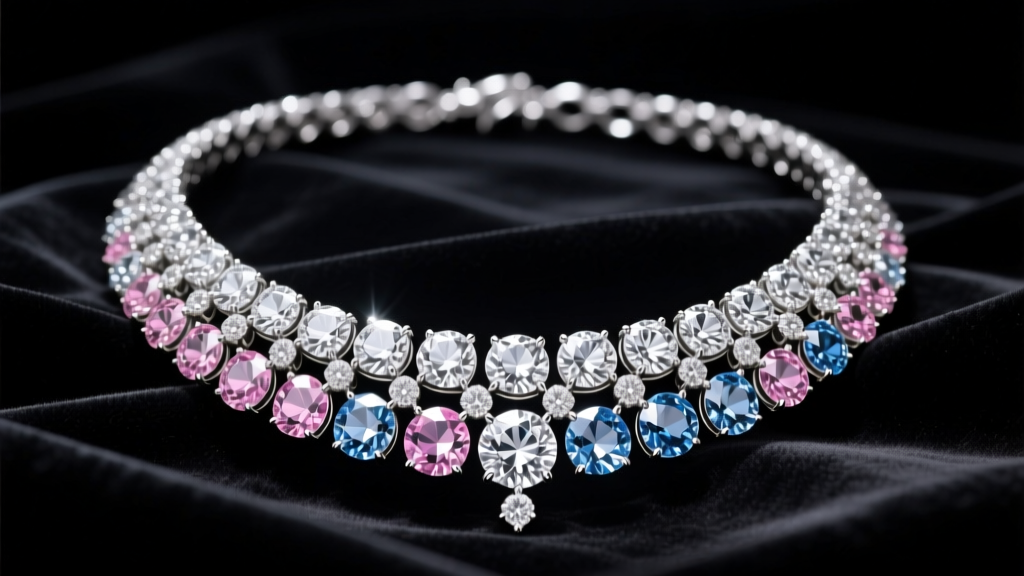
In the upper echelons of high jewelry, the pursuit of scale has always been a marker of prestige. However, as we navigate the style landscape of 2026, the concept of the biggest diamond necklace has evolved far beyond simply stringing together heavy, traditional brilliant-cut stones. Today’s maximalist renaissance is defined by architectural ingenuity, optical illusions of scale, and a profound appreciation for vintage diamond cuts that maximize surface area. For stylists, collectors, and high jewelry enthusiasts, understanding how modern houses engineer these leviathans is crucial to appreciating their true value and aesthetic impact.
The Maximalist Renaissance: Why Bigger is Better in 2026
The post-minimalism era has fully taken hold on global red carpets and in elite private collections. Where the late 2010s favored delicate, barely-there diamond chains, 2026 demands presence. The biggest diamond necklace designs this year are not just accessories; they are wearable sculptures. This shift is driven by a cultural desire for bold, unapologetic self-expression and a renewed fascination with heritage craftsmanship. High jewelry maisons are responding by pushing the boundaries of articulation and gem-setting, creating pieces that drape like liquid metal while supporting dozens of carats of precious stones.
According to the Natural Diamond Council, the demand for rare, large-carat diamonds has surged, but the true trend lies in how these stones are aggregated. Designers are moving away from rigid, symmetrical bibs and embracing asymmetrical, cascading silhouettes that mimic natural formations, such as dripping water or creeping ivy, allowing for a larger overall footprint on the décolletage without the piece feeling like a stiff armor.
Engineering the "Biggest" Look: Carat Weight vs. Visual Spread
A common misconception in high jewelry is that total carat weight (TCW) directly correlates to the physical size of the necklace. In reality, the visual spread—how much surface area a diamond covers when viewed from above—is the true metric of a statement piece. To create the biggest diamond necklace without requiring a prohibitive 200-carat budget, master jewelers rely on specific diamond cuts and setting techniques.
The Power of the Rose Cut and Spread Cuts
Rose cut diamonds, which feature a flat base and a domed, faceted crown, are the secret weapon of high jewelry designers aiming for maximum visual impact. Because they lack a deep pavilion (the bottom half of the stone), a 2-carat rose cut can have the same millimeter diameter as a 4-carat modern brilliant cut. When paved together in a cluster setting, rose cuts create a seamless, sprawling canvas of light that makes a necklace look exponentially larger than its actual carat weight suggests.
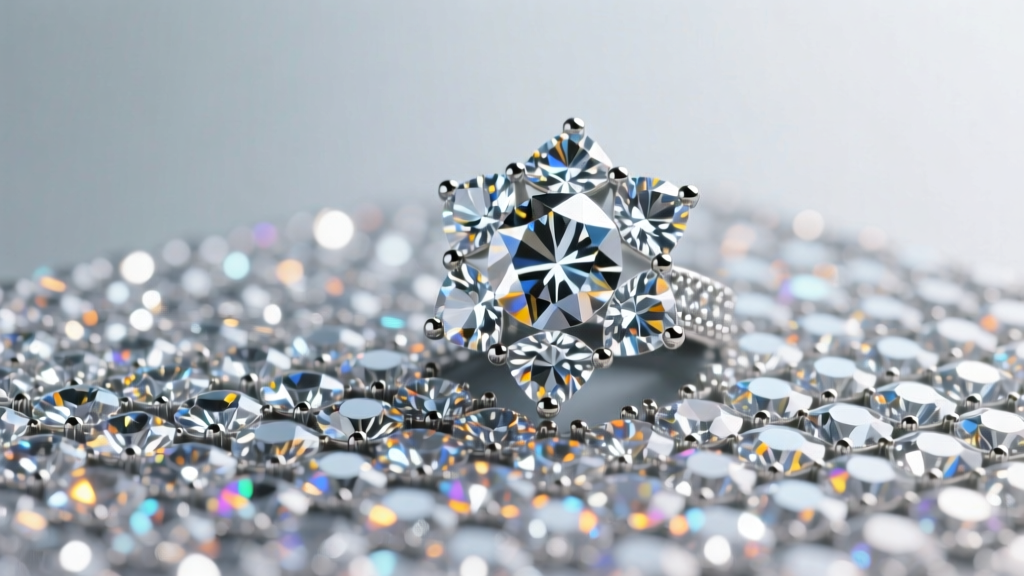
Comparative Diamond Spread Analysis
To understand how different cuts affect the footprint of a high-carat necklace, consider the following data comparing standard brilliant cuts with alternative cuts used in maximalist high jewelry.
| Diamond Cut Profile | Average Depth % | Visual Spread (mm per carat) | Best Application in High Jewelry |
|---|---|---|---|
| Modern Round Brilliant | 59% - 62.5% | ~6.5mm (at 1.00ct) | Focal pendants, high-brilliance accents |
| Rose Cut | 10% - 30% | ~8.5mm (at 1.00ct) | Cluster paving, flexible mesh bibs |
| Old European Cut | 55% - 65% | ~6.4mm (at 1.00ct) | Heritage-inspired statement collars |
| Custom Spread-Cut Brilliant | 45% - 50% | ~7.2mm (at 1.00ct) | Illusion settings, architectural geometric pieces |
As detailed by the Gemological Institute of America (GIA), manipulating the crown angle and table percentage allows cutters to prioritize spread over brilliance. While a shallow spread-cut diamond might sacrifice some internal light return (appearing slightly glassy in low light), it provides the massive surface area required for today's biggest diamond necklace trends.
Structural Metallurgy: Supporting High-Carat Loads
Creating a massive necklace is only half the battle; ensuring it stays intact and sits flush against the collarbone is an exercise in advanced metallurgy. A high-carat diamond bib can easily weigh between 80 and 150 grams. If the underlying armature is poorly engineered, the necklace will sag, twist, or worse, snap under its own weight.
"The true mastery of a high jewelry piece is invisible. The wearer should feel the luxury of the diamonds, not the burden of the engineering required to hold them." — Master Jeweler, Place Vendôme
In 2026, the industry standard for the biggest diamond necklace frameworks is Platinum 950. Unlike 18k white gold, which requires rhodium plating and can suffer from metal fatigue over time, platinum possesses superior tensile strength and durability. Furthermore, platinum's natural white hue enhances the perceived color grade of the diamonds without the need for reflective plating.
To ensure the necklace moves fluidly with the body, houses employ articulated mesh and en tremblant (trembling) settings. By linking hundreds of microscopic platinum hinges, a rigid-looking collar actually behaves like a heavy silk scarf, conforming perfectly to the wearer's anatomy and allowing the diamonds to catch light from multiple micro-angles.
Red Carpet Styling: Necklines and Proportions
Styling a maximalist, high-carat necklace requires a strategic approach to garment selection. The biggest diamond necklace should never compete with the dress; rather, the dress must act as a structural frame for the jewelry.
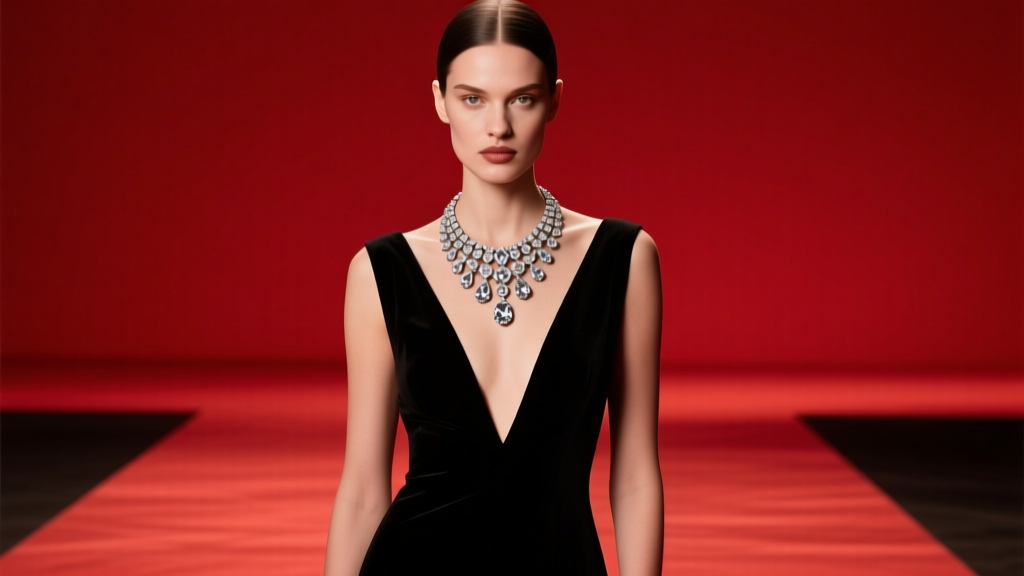
- The Sweetheart Neckline: This is the most forgiving canvas for a massive diamond collar. The curved dip of the sweetheart bodice perfectly mirrors the natural drape of a bib necklace, allowing the lowest point of the diamonds to rest just above the fabric line, creating a seamless transition from skin to stone to silk.
- The Deep Plunge (V-Neck): Ideal for Y-shaped or lariat-style maximalist necklaces. The verticality of the deep V draws the eye downward, elongating the torso. Stylists recommend keeping the diamond pendant suspended at least two inches above the apex of the V-neck to avoid visual clutter.
- The Asymmetrical One-Shoulder: A major trend for 2026. When wearing a one-shoulder gown, opt for an asymmetrical diamond necklace that sweeps across the exposed collarbone and cascades down the bare shoulder, mimicking the dress's architectural imbalance.
- The High Halter: Generally, high necklines clash with big necklaces. However, if the halter is backless and the front is a solid, dark, matte fabric (like midnight blue crepe), a tight, multi-strand diamond choker that sits strictly above the collarbone can create a striking, regal contrast.
Investment Grade: The Provenance of Massive Diamonds
Beyond their aesthetic dominance, the biggest diamond necklace pieces of 2026 are increasingly viewed as alternative asset classes. Collectors are paying close attention to the provenance and chemical makeup of the stones used in these massive creations. Specifically, Type IIa diamonds—which are chemically pure and structurally flawless, lacking nitrogen impurities—are highly sought after. While they represent less than 2% of all gem-quality diamonds, they are frequently the centerpiece stones in high-carat statement necklaces.
When evaluating a high jewelry piece for investment, the brand's archival significance is just as critical as the raw materials. A 50-carat diamond necklace from a historically significant maison, featuring a documented, innovative setting technique unique to that specific year's collection, will consistently outperform a generic high-carat piece at auction. As maximalism continues to define the 2026 jewelry landscape, the intersection of bold visual spread, masterful platinum engineering, and rare provenance will dictate the next generation of high jewelry heirlooms.


