How to Clean and Maintain Your Favorite Match Necklace Set
Learn expert cleaning and maintenance tips to keep your match necklace sets tarnish-free. Discover material-specific care for silver, vermeil, and steel.

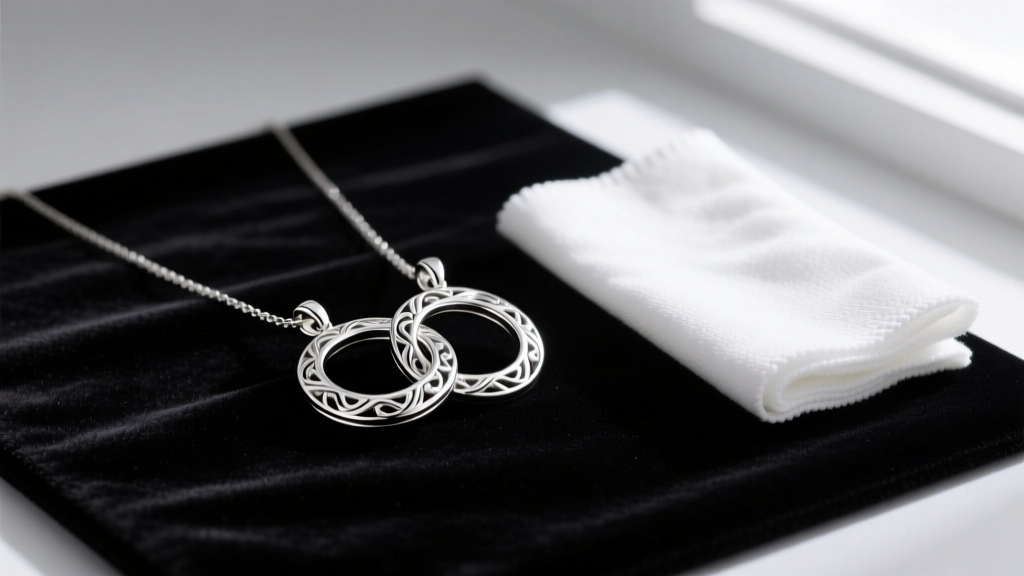
The Hidden Chemistry of Daily Wear
When you invest in a match necklace set—whether it is a pair of interlocking pendants shared with your partner, identical chains for your bridal party, or magnetic halves for a best friend—you are dealing with pieces that carry immense sentimental value. Because of this emotional attachment, match necklaces are often worn 24/7, subjected to continuous exposure to human sebum, atmospheric pollutants, and cosmetic chemicals. By 2026, jewelry conservationists note that daily-worn sentimental pieces degrade up to three times faster than occasional-wear items due to the unbroken cycle of moisture and friction.
The primary enemy of any match necklace is not just dirt, but chemical reactivity. Human sweat has an average pH of 4.5 to 5.5, making it mildly acidic. When this acidity combines with the sulfur compounds present in the air and in certain foods, it accelerates the oxidation process. Understanding the specific metallurgy of your matching set is the first step toward preserving its structural integrity and visual brilliance for decades.
Identifying Your Match Necklace Materials
Before applying any cleaning agent, you must accurately identify the base metal and the plating. Most match necklace sets on the market fall into three distinct categories, each requiring a radically different maintenance protocol.
925 Sterling Silver
Stamped with a "925" hallmark, this alloy consists of 92.5% pure silver and 7.5% copper. The copper provides necessary tensile strength for delicate 1.2mm cable chains, but it is also the catalyst for tarnish. According to the Gemological Institute of America (GIA), the copper in sterling silver reacts with hydrogen sulfide in the air to form silver sulfide (Ag2S), the blackish film that dulls your pendants.
Gold Vermeil vs. Standard Plating
True gold vermeil must meet strict Federal Trade Commission (FTC) guidelines: it requires a sterling silver base coated with at least 2.5 microns of 10k, 14k, or 18k gold. Standard gold-plated match necklaces, however, often use a brass base with a mere 0.5-micron flash of gold. Vermeil can withstand gentle polishing, while standard plating will rub off entirely if subjected to friction.
316L Surgical Stainless Steel
Highly popular for budget-friendly and hypoallergenic match sets, 316L steel contains molybdenum, which drastically increases its resistance to chloride corrosion (such as saltwater and sweat). It is virtually impervious to tarnish but highly susceptible to mechanical grime buildup within the chain links.
The Electrochemical Cleaning Protocol for Silver
If your sterling silver match necklace has developed a heavy, dark layer of silver sulfide, avoid abrasive polishing cloths. Abrasives remove a microscopic layer of silver every time you rub, eventually wearing down the intricate details of interlocking pendants. Instead, use an electrochemical reduction bath that reverses the tarnish without removing any base metal.
- Line a glass or ceramic bowl with aluminum foil, shiny side facing up.
- Place your silver match necklace on the foil, ensuring the metal touches the aluminum.
- Sprinkle two tablespoons of sodium bicarbonate (baking soda) over the jewelry.
- Pour boiling water into the bowl until the necklace is fully submerged.
The heat and the alkaline solution facilitate a galvanic reaction. Because aluminum has a higher oxidation potential than silver, it acts as a sacrificial anode. The sulfur atoms are pulled off the silver sulfide and bond with the aluminum, leaving pure, untarnished silver behind. After three minutes, remove the necklace with wooden tongs, rinse thoroughly in distilled water, and pat dry with a lint-free microfiber cloth. This method is entirely safe for solid silver but will destroy glued-in gemstones or oxidized (intentionally blackened) detailing.
Vermeil and Plated Care: The Surfactant Method
Gold vermeil match necklaces require a delicate touch. The 2.5-micron gold layer is thick enough to last years, but only if protected from micro-abrasions. Never use toothpaste, baking soda pastes, or jewelry dips on vermeil. Toothpaste contains hydrated silica, an abrasive that will scratch the gold and expose the silver beneath.
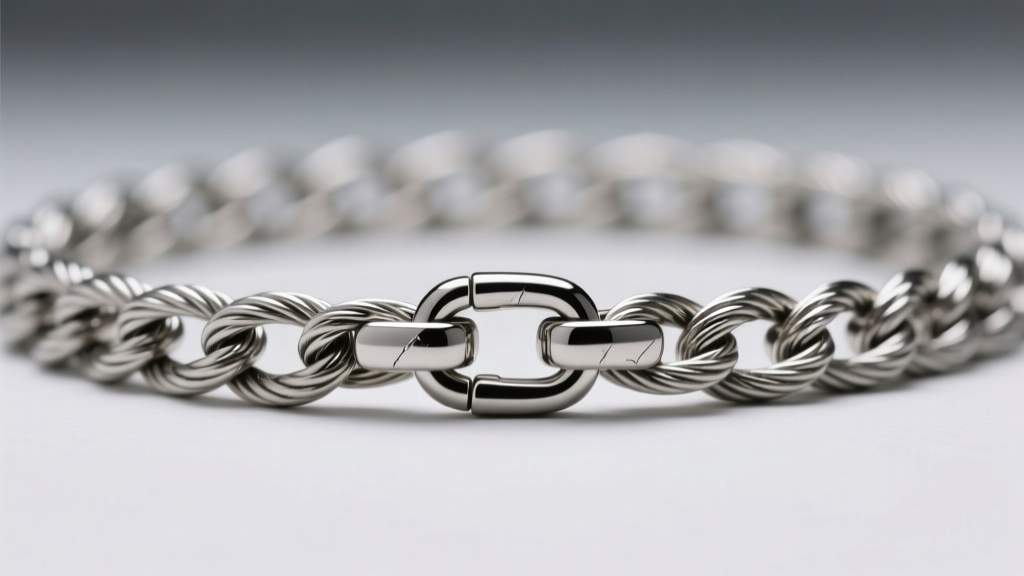
Instead, create a mild surfactant bath. Mix three drops of phosphate-free, lotion-free dish soap into a bowl of lukewarm (not hot) water. Submerge the necklace for five minutes to loosen sebum and cosmetic residue. Gently agitate the water with your fingers—do not use a toothbrush, as even soft bristles can create micro-scratches on high-polish gold. Rinse under a gentle stream of distilled water and lay flat on a towel to air dry.
Stainless Steel Maintenance and Ultrasonic Warnings
316L stainless steel match necklaces are incredibly resilient. To clean them, you can safely use a 70% isopropyl alcohol wipe to dissolve oils and lotions. For deep cleaning the crevices of a complex chain link, an ultrasonic cleaner is highly effective. Ultrasonic cleaners use high-frequency sound waves to create microscopic cavitation bubbles that implode, blasting dirt out of tight spaces.
Critical Warning: Never place a gold vermeil, gold-plated, or gemstone-set match necklace into an ultrasonic cleaner. The cavitation process is violent enough to strip thin gold plating right off the base metal and will easily shake loose any cubic zirconia or opal cabochons that are held in place by jewelry adhesives rather than metal prongs.
Material-Specific Cleaning Matrix
| Material | Safe Cleaning Agents | Agents to Avoid | Common Failure Mode |
|---|---|---|---|
| 925 Sterling Silver | Aluminum foil, baking soda, mild dish soap | Bleach, ammonia, toothpaste | Silver sulfide tarnish, link stretching |
| Gold Vermeil (2.5μm) | Lukewarm water, phosphate-free surfactant | Polishing cloths, ultrasonic cleaners | Gold layer abrasion, base metal exposure |
| 316L Stainless Steel | Isopropyl alcohol, ultrasonic cleaners | Hydrochloric acid, chlorine | Sebum trapping in links, clasp stiffening |
Clasp Mechanics and Chain Lubrication
The most common mechanical failure in a frequently worn match necklace is a sticking clasp. Spring ring clasps, commonly used on lighter 1.0mm to 1.2mm chains, feature a tiny internal tension spring. Over time, dead skin cells, lotion, and dust pack into the microscopic seam of the clasp, causing the lever to stick or fail to close completely. This poses a massive risk of losing the sentimental piece.
To maintain your clasp, clean the seam with a wooden toothpick to dislodge compacted debris. Next, apply a single, microscopic drop of mineral oil to the lever mechanism using a pin. Work the lever back and forth to distribute the oil. Never use WD-40 or standard household lubricants; these contain volatile solvents that evaporate quickly, leaving behind a sticky residue that attracts even more dust and accelerates mechanical failure.
Long-Term Storage Strategies
How you store your match necklace when it is not being worn dictates its lifespan. Leaving silver or vermeil pieces exposed to the air on a bathroom counter guarantees rapid tarnishing due to the high humidity and aerosolized chemicals from hairsprays and perfumes.
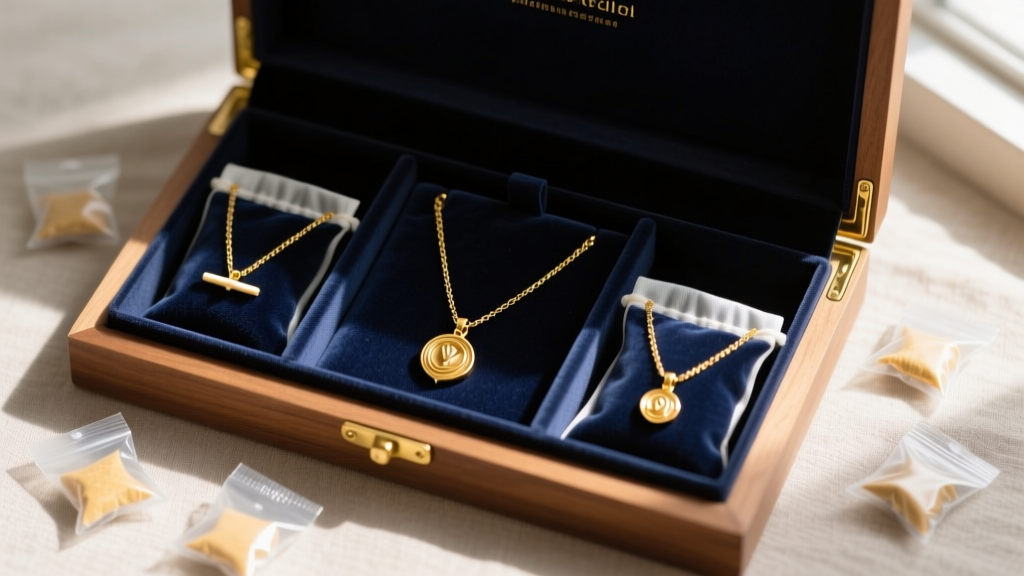
For optimal preservation, store each half of the match necklace in an individual, airtight polyethylene ziplock bag. Squeeze out all excess air before sealing to minimize oxygen exposure. Place a 3M anti-tarnish strip inside each bag; these strips contain specialized resins that absorb and neutralize hydrogen sulfide gas before it can react with the metal. Finally, keep the bags in a dark, climate-controlled drawer, avoiding areas with high humidity fluctuations. By combining material science with disciplined maintenance, your matching set will remain a pristine symbol of your connection for years to come.


