Restoring and Authenticating Your Antique Rose Quartz Necklace
Learn how to authenticate, clean, and restore an antique rose quartz necklace. Expert troubleshooting for foiled backs, fragile bezels, and dyed stones.

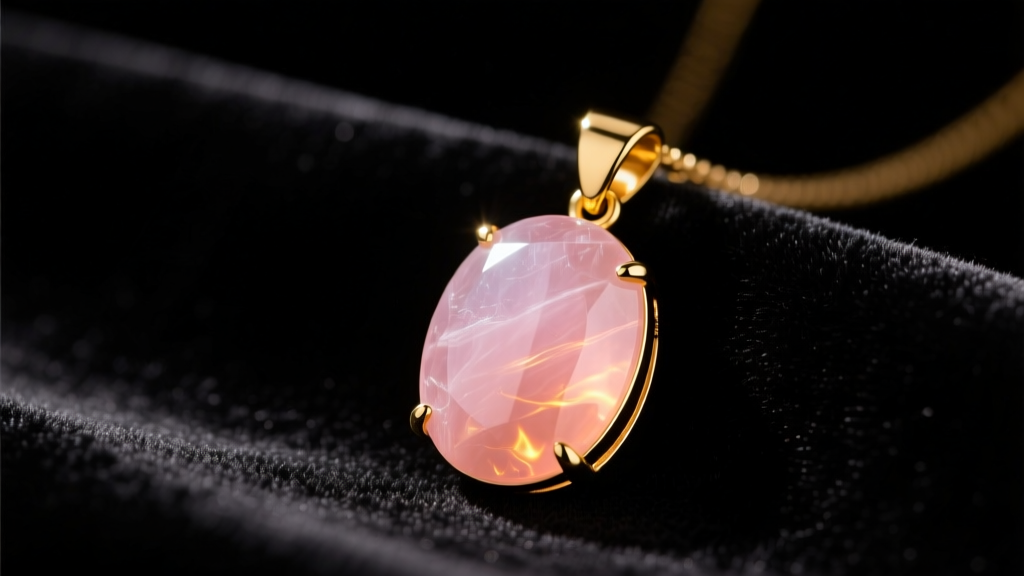
The Allure and the Trap of Antique Rose Quartz
Owning an antique rose quartz necklace is a unique privilege. From the romantic, foil-backed cabochons of the Victorian era to the geometric, carved masterpieces of the Art Deco period, rose quartz has been a staple in fine jewelry for over a century. However, the secondary market is flooded with modern reproductions, dyed imitations, and damaged heirlooms masquerading as pristine antiques. Furthermore, natural rose quartz (Mohs hardness 7) presents specific structural vulnerabilities that require highly specialized troubleshooting. This guide provides a masterclass in authenticating, diagnosing, and restoring antique rose quartz jewelry, ensuring your piece survives for another century.
Authentication Diagnostics: Natural vs. Paste vs. Dyed
The first hurdle in troubleshooting any estate piece is verifying its material integrity. According to the Gemological Institute of America (GIA), natural rose quartz derives its color from microscopic dumortierite fibers or titanium impurities, not from surface treatments. Yet, dyed quartz and pink glass (paste) are common deceivers.
Visual and Tactile Troubleshooting
- The Bubble Test (Paste vs. Quartz): Inspect the stone with a 10x triplet loupe. If you see perfectly spherical air bubbles, you are looking at glass. Natural quartz may contain liquid inclusions, rutile needles, or internal fractures, but never spherical gas bubbles.
- The Temperature Test: Quartz is highly thermally conductive compared to glass. When placed against the cheek or lips, genuine antique quartz will feel distinctly cool and take longer to warm to body temperature than a glass imitation.
- Dye Concentration: Inspect the drill holes of bead necklaces or the deep crevices of carved Art Deco pendants. If you see concentrated pink pigment pooling in the fractures or drill channels, the stone has been artificially dyed—a common practice in mid-century costume jewelry that severely diminishes antique value.

Troubleshooting Antique Setting Failures
The setting of an antique rose quartz necklace often requires more intervention than the stone itself. Different historical eras utilized distinct jewelry-making techniques, each with its own predictable failure modes. Expert restorers must understand these era-specific vulnerabilities to avoid catastrophic damage during repairs.
The Foil-Back Epidemic in Victorian and Edwardian Pieces
Many 19th-century rose quartz cabochons were 'foil-backed.' Jewelers placed a thin layer of silver or gold leaf behind the translucent stone to reflect light and amplify the pink hue. The fatal flaw of this technique is moisture intrusion. Over decades, humidity, perfume, and skin oils seep past the bezel, oxidizing the foil and turning it black or grey. Never soak a foil-backed necklace in water or ultrasonic cleaners.
The Fix: A master jeweler must carefully unseat the bezel using a non-marring wooden pusher, remove the degraded foil, clean the cavity with a dry, soft sable brush, and apply new archival-grade silver leaf sealed with a micro-layer of jeweler's shellac before reseating the stone.
Art Deco Carved Crevices and Grime Accumulation
In the 1920s and 1930s, rose quartz was frequently carved into intricate floral motifs, pagodas, or geometric steps. The deep recesses of these carvings act as magnets for decades of cosmetic buildup, soap scum, and dead skin. Attempting to scrape this out with a metal pick will result in severe scratching, as quartz is harder than 18k gold but softer than steel tools.
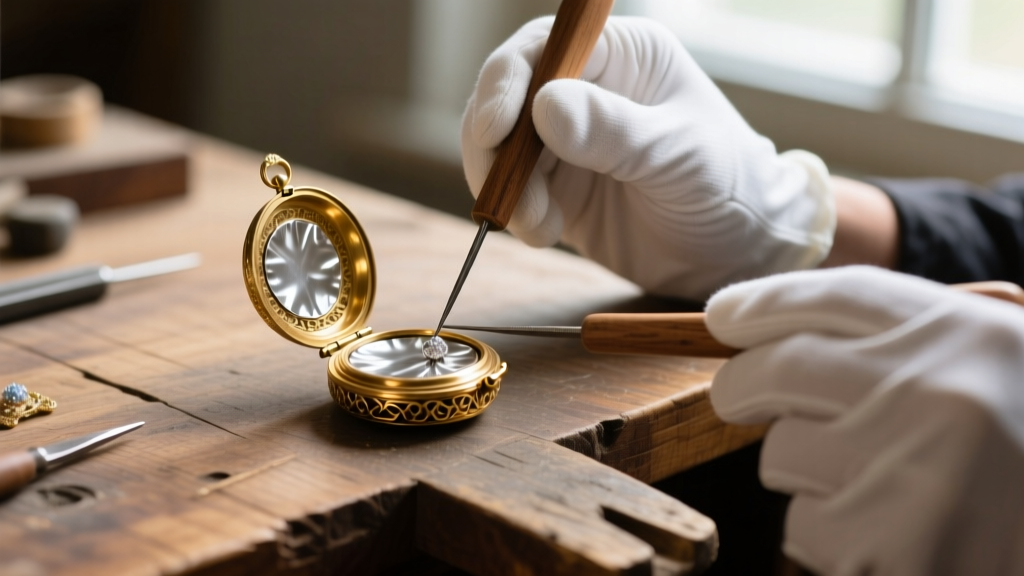
The Cleaning Conundrum: Preserving Patina Without Ruining the Stone
Cleaning an antique rose quartz necklace requires a delicate balance between removing modern grime and preserving the historical patina of the metalwork. Missteps here are the leading cause of irreversible damage to estate jewelry.
Why Ultrasonic and Steam Cleaners are Fatal
Natural rose quartz is notorious for internal fracturing and 'healed' fissures. The high-frequency vibrations of an ultrasonic cleaner can cause these micro-fractures to propagate, literally shattering the stone from the inside out. Furthermore, steam cleaners introduce sudden thermal shock. Quartz is sensitive to rapid temperature changes; a blast of 200°F steam against a cool stone can cause immediate cleavage. Additionally, steam will melt the antique shellac or natural resins used in older bezel settings, causing the stone to fall out.
The Safe Surfactant Protocol
- Mix a solution of distilled water and a single drop of pH-neutral, phosphate-free dish surfactant.
- Submerge the necklace for no more than 3 minutes (skip this entirely if the piece is suspected to be foil-backed or strung on silk).
- Agitate gently using a soft sable makeup brush, never a toothbrush, which can leave micro-abrasions on the quartz or scratch soft 9k/14k antique gold.
- Rinse with distilled water and dry immediately with a lint-free microfiber cloth, using compressed air to blow moisture out of carved crevices and clasp mechanisms.
Structural Repairs: Clasps, Chains, and Restringing
A necklace is only as secure as its weakest link. Antique findings are notoriously fragile, and replacing them with modern components destroys both the historical integrity and the resale value of the piece.
Diagnosing Clasp Failures
Victorian necklaces typically feature a simple 'C-clasp' with a plain pin stem, while early 20th-century pieces may use a barrel clasp or a rudimentary safety catch. A common failure is the bending or snapping of the pin stem due to metal fatigue. Do not solder near the rose quartz. The heat required for traditional torch soldering will transfer through the gold and fracture the quartz via thermal shock. Instead, utilize laser welding, which focuses a microscopic beam of heat to reattach or rebuild the pin stem without raising the ambient temperature of the surrounding setting.
Restringing Antique Bead Necklaces
If your antique rose quartz necklace consists of beads strung on silk, it is a ticking time bomb. Silk degrades, stretches, and rots when exposed to the acidic pH of human sweat. If the beads are heavy, the silk will eventually snap. When restringing, insist that your jeweler uses French wire (also known as gimp) at the clasp connection points. This microscopic coiled wire protects the silk thread from sawing against the metal clasp ring, extending the life of the stringing job by a decade or more.
Troubleshooting Reference Matrix
Use the following diagnostic table to identify the specific issues plaguing your antique rose quartz necklace and determine the appropriate professional intervention.
| Defect / Symptom | Era Most Affected | Diagnostic Sign | Professional Solution |
|---|---|---|---|
| Blackened Foil Backing | Victorian & Edwardian | Grey/black patches or dead spots under the stone | Reseat with new silver leaf & archival shellac |
| Surface Clouding / Haze | All Eras | Opaque, chalky exterior film that won't wipe off | Professional lapidary polish using cerium oxide |
| C-Clasp Pin Failure | Victorian | Bent, missing, or loose pin stem | Laser weld new pin; preserve original C-catch |
| Carved Crevices Packed | Art Deco (1920s-30s) | Dark grime impacted in floral/geometric carvings | Sable brush & mild surfactant; no ultrasonics |
| Bead Necklace Sagging | Mid-Century & Earlier | Visible gaps between beads; stretched thread | Restring on heavy silk with French wire gimp |
Final Thoughts on Preservation
Preserving an antique rose quartz necklace is an exercise in restraint. The urge to polish the gold to a high shine or blast the stone with modern cleaning technology must be resisted. The soft, matte patina of antique gold and the slightly cloudy, romantic translucency of natural rose quartz are the hallmarks of its history. For further reading on identifying historical jewelry periods and their unique construction methods, consult the extensive archives at Lang Antiques. When in doubt, always consult a certified gemologist or a master jeweler who specializes in estate restoration before attempting any DIY repairs on a piece of wearable history.


