Vintage Austrian Crystal Necklace: Value & Budget Guide
Discover how to evaluate a vintage Austrian crystal necklace. Learn pricing tiers, authentication tips, and condition checks for smart buying.

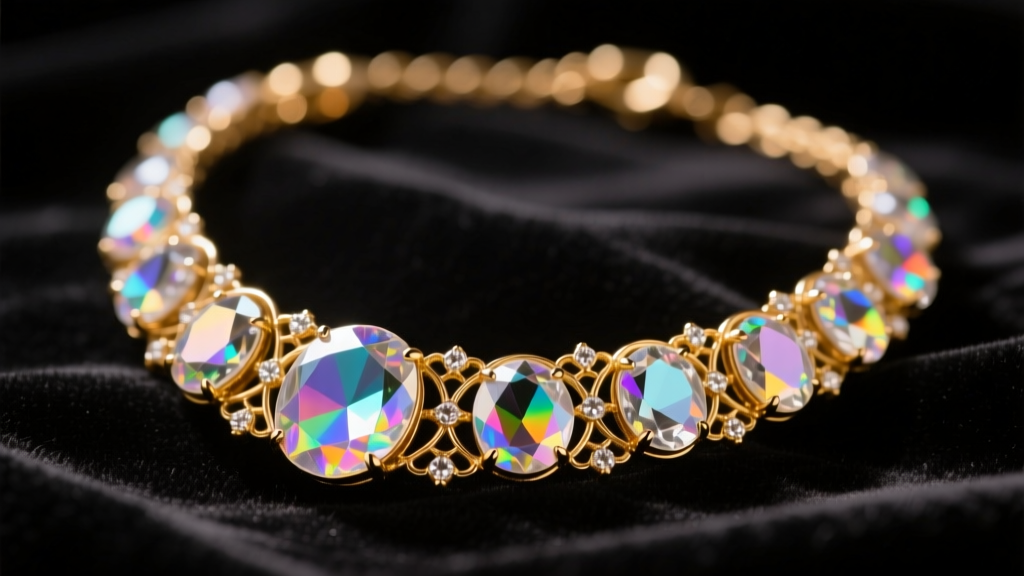
The Economics and Optics of Austrian Crystal
When evaluating a vintage Austrian crystal necklace, buyers are not merely purchasing costume jewelry; they are acquiring a piece of mid-century optical engineering. True Austrian crystal, predominantly originating from the Tyrol region and dominated by the Swarovski company, is fundamentally a high-lead glass. Historically, these stones contained between 24% and 32% lead oxide (PbO). This specific chemical composition is what grants the material its extraordinary weight, acoustic ring, and most importantly, a refractive index of approximately 1.70. By comparison, standard soda-lime glass sits at a mere 1.52. This high refractive index allows the precision machine-cut facets to bend light with a brilliance that rivals natural diamonds, making these necklaces highly coveted in the secondary market.
However, navigating the vintage market requires a rigorous budget and value assessment. Because the term 'Austrian crystal' is occasionally misused by modern mass-market sellers to describe any faceted glass, understanding the specific material grades, historical manufacturing milestones, and common failure modes is essential for any serious collector or budget-conscious buyer looking for genuine estate pieces.
Decoding the Market: Pricing Tiers for Vintage Pieces
The value of a vintage Austrian crystal necklace is rarely determined by the intrinsic melt-value of the materials. Instead, pricing is driven by era, maker attribution, cut complexity, and overall condition. In the current 2026 estate market, pieces generally fall into three distinct investment tiers.
| Tier Classification | Era & Attribution | Typical Budget Range | Value Drivers |
|---|---|---|---|
| Tier 1: Unsigned / Mass Market | 1970s-1990s, unbranded | $35 - $85 | Condition of stones, basic aesthetic appeal, wearable everyday pieces. |
| Tier 2: Mid-Century Designer | 1950s-1960s, e.g., Miriam Haskell, Trifari, Weiss | $150 - $450 | Complex wirework, documented use of premium Swarovski stones, rarity of design. |
| Tier 3: High-End Parures & Signed | 1980s-1990s, early Swan logo, complete sets | $500 - $1,500+ | Full parure (necklace, earrings, bracelet), pristine foil backing, iconic Xilion cuts. |
For buyers on a strict budget, Tier 1 offers exceptional optical beauty, provided you know how to inspect the stones for structural degradation. Collectors seeking long-term value retention should focus their capital on Tier 2 and Tier 3, where the intersection of designer craftsmanship and premium Austrian stones creates a durable resale floor.
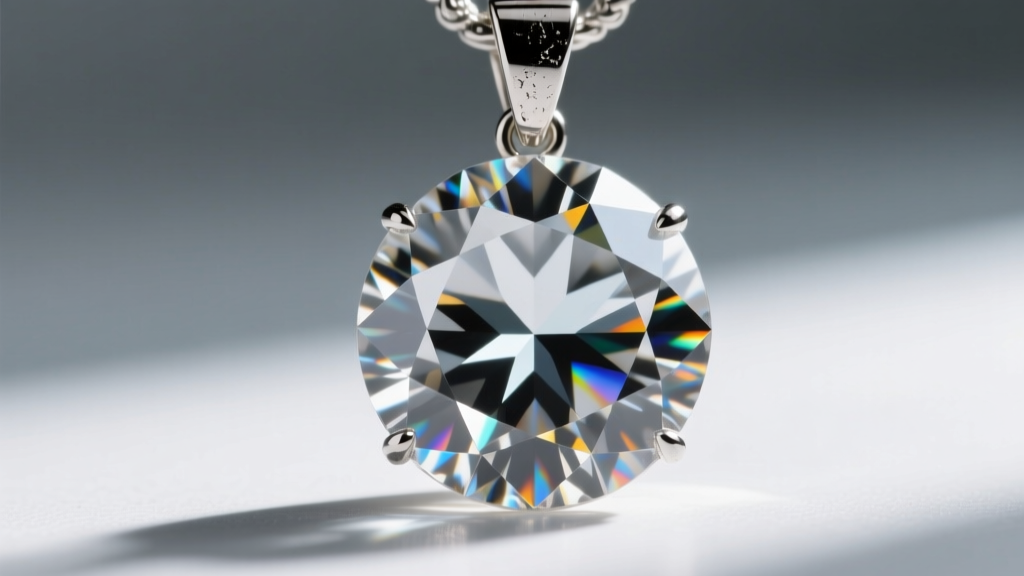
Authentication: Spotting True Tyrolean Cut
Distinguishing genuine vintage Austrian crystal from standard glass or cheaper Bohemian alternatives requires a jeweler's loupe (10x magnification) and an understanding of historical manufacturing techniques. According to gemological standards outlined by the Gemological Institute of America (GIA), glass imitations often reveal spherical gas bubbles or flow lines under magnification. High-grade Austrian crystal, while technically glass, is manufactured in oxygen-controlled environments that virtually eliminate these inclusions.
The most critical authentication metric is the facet junction. Austrian crystals are famous for their precision machine-cutting. When viewing the pavilion (the bottom half of the stone) under a loupe, the facet lines should meet at mathematically perfect points. Cheaper pressed glass or poorly cut stones will exhibit 'flat spots' or misaligned junctions where the facets fail to converge cleanly. Furthermore, the weight is a dead giveaway; a genuine leaded Austrian crystal bib necklace will feel substantially heavier than a similarly sized piece made from modern lead-free crystal or acrylic.
The 1955 Aurora Borealis Milestone
One of the most frequent misrepresentations in the vintage market involves the Aurora Borealis (AB) coating. This iridescent metallic vapor coating was invented in 1955 through a collaboration between Swarovski and Christian Dior. If a seller lists a '1920s Art Deco Austrian Crystal AB Necklace,' it is fundamentally misdated or a modern reproduction. True AB coatings on vintage pieces should show a distinct, oil-slick rainbow reflection, primarily concentrated on the crown (top) of the stone, while older, uncoated stones rely purely on their high lead content for sparkle.
Condition Assessment: Failure Modes and Value Deductions
When negotiating the price of a vintage Austrian crystal necklace, your primary leverage lies in identifying structural and cosmetic failure modes. The most common and devastating issue is the 'sleepy crystal' phenomenon.
A 'sleepy' crystal occurs when moisture breaches the setting and oxidizes the delicate silver or gold foil applied to the back of the stone (the pavilion). This foil is what reflects light back through the crown. Once oxidized, the stone appears cloudy, gray, and lifeless.
A necklace with even two or three sleepy stones in a prominent bib cluster should see a 40% to 60% deduction from its market value, as replacing foiled vintage stones is incredibly difficult without altering the piece's historical integrity. Always inspect the necklace against a bright, direct light source; cloudy stones will immediately reveal their degraded foil backing.
Hardware and Findings: Hidden Cost Factors
The findings (clasps, jump rings, and settings) provide secondary authentication and impact the budget. Pre-1950s pieces often feature trombone clasps or simple barrel clasps, while mid-century pieces frequently utilize fold-over clasps or early spring rings. Inspect the base metal for rhodium plating wear. High-end designers like Weiss or Trifari heavily rhodium-plated their base metals to mimic platinum or white gold. If the rhodium has worn away to reveal brassy or pitted pot metal underneath, factor in a 15% to 20% restoration discount.
Hallmarks and the Swarovski Timeline
For buyers targeting Tier 3 investments, understanding the evolution of the Swarovski hallmark is non-negotiable. The Swarovski Group's historical archives detail these transitions, which are vital for dating unsigned estate pieces:
- Pre-1976: Pieces were often unsigned or featured a block letter 'SWAROVSKI' stamp on the metal clasp, rather than the crystal itself.
- 1976-1988: The Edelweiss flower logo was introduced. Finding a necklace with the original paper Edelweiss tag or a stamped Edelweiss clasp significantly boosts collector value.
- 1988-Present: The iconic Swan logo replaced the Edelweiss. Early swan logos (late 80s/early 90s) are highly sought after by Y2K and maximalist collectors driving the current 2026 market trends.
Investment Framework: What to Buy in 2026
If you are allocating a budget between $100 and $300 for a vintage Austrian crystal necklace, prioritize mid-century unsigned pieces with complex, multi-stone 'waterfall' or 'bib' configurations over simple, single-pendant signed pieces. The market is currently oversaturated with basic 1990s swan-logo solitaires, which keeps their resale value stagnant. Conversely, the intricate gold-tone filigree and multi-stone clusters of the 1960s are experiencing a surge in demand among vintage fashion archivists.
Always carry a 10x jeweler's loupe, a small UV flashlight (to check for modern synthetic glues that fluoresce under UV light, indicating recent, non-original repairs), and a microfiber cloth to wipe away decades of skin oils that can mimic cloudy foil. By focusing on optical precision, structural integrity, and accurate historical dating, you can secure spectacular vintage Austrian crystal necklaces that offer both immense aesthetic value and long-term financial stability.


