The Elisa Necklace Trend: 2026 Style & Layering Guide
Discover the Elisa necklace trend for 2026. Learn how to style, layer, and choose the best coin and medallion pendants for your neckline and wardrobe.

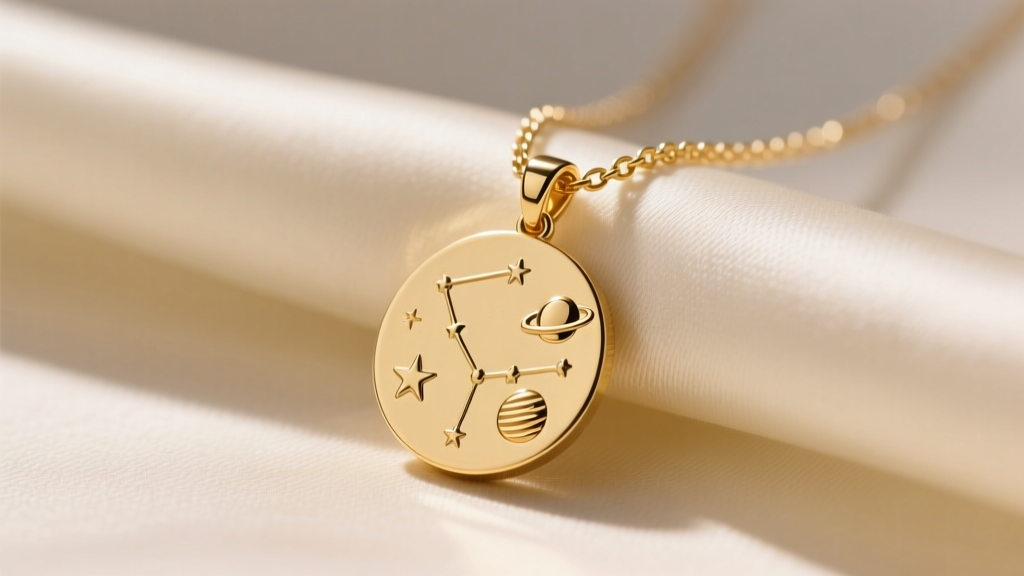
The Elisa necklace has transcended its origins as a signature demi-fine piece to become a definitive jewelry archetype in 2026. Originally popularized by London-based brand Missoma, the 'Elisa' silhouette—characterized by its intricate, talismanic coin pendants and delicate chains—has evolved from a fleeting viral trend into a permanent staple of the modern jewelry wardrobe. But as the market floods with imitations, understanding the precise anatomy, metallurgy, and styling mechanics of a true Elisa-style necklace is essential for making informed investments.
In this comprehensive style and trend analysis, we deconstruct the Elisa necklace phenomenon. From exact gauge specifications and gold vermeil standards to advanced layering frameworks and neckline pairing matrices, this guide provides the actionable intelligence you need to master this enduring aesthetic.
The Anatomy of the Elisa Necklace: What Defines the Style?
While 'Elisa' began as a specific product name, it has effectively become the industry shorthand for a specific category of talismanic coin jewelry. A true Elisa-style necklace is defined by three critical structural elements:
- The Pendant Silhouette: Typically measuring between 18mm and 25mm in diameter, the pendant is a flat or slightly domed medallion. It features deep, high-contrast engravings—most commonly celestial motifs, vintage portraiture, or geometric sunbursts.
- The Bail Construction: High-quality Elisa pendants utilize a soldered jump ring or a hidden integrated bail rather than a simple pinch-bail, ensuring the pendant lays flat against the collarbone without flipping.
- The Chain Gauge: The chain is deliberately delicate but structurally sound, usually a 1.5mm to 2.0mm cable or rolo chain. This specific gauge provides enough tensile strength to support a 3-to-5-gram brass or silver pendant without snapping, while maintaining a refined, feminine profile.
Material Grades and Base Metals: The Vermeil Standard
The longevity of an Elisa necklace is entirely dependent on its metallurgy. The benchmark for this style is 18k gold vermeil. According to guidelines referenced by the Gemological Institute of America (GIA) and enforced by the FTC, true vermeil requires a solid sterling silver (.925) base plated with a minimum of 2.5 microns of gold.
Conversely, fast-fashion alternatives often utilize 'flash plating'—a mere 0.1 to 0.5 microns of gold over a brass or copper base. These pieces will inevitably oxidize and turn the wearer's skin green within three to six months of daily wear due to the porous nature of brass and the microscopic thinness of the gold layer. When shopping for an Elisa necklace, always verify the '925' hallmark and the explicit use of the term 'vermeil' rather than 'gold-plated.'
2026 Trend Report: How the Elisa Silhouette is Evolving
As we navigate 2026, the jewelry landscape is shifting away from the ubiquitous, high-polish yellow gold that dominated the early 2020s. The Elisa necklace is at the forefront of this evolution, adapting to new aesthetic demands while retaining its core talismanic appeal.
The Rise of Mixed Metals and Oxidation
The most significant trend in 2026 is the integration of mixed metals within a single Elisa pendant. Designers are now utilizing oxidized sterling silver bases with 14k or 18k gold accent plating exclusively on the raised engraved motifs. This technique, known as selective plating, dramatically increases the visual depth of the celestial or vintage engravings, giving the piece an instant heirloom quality that polished gold cannot achieve.
Enamel Inlays and Guilloché Revival
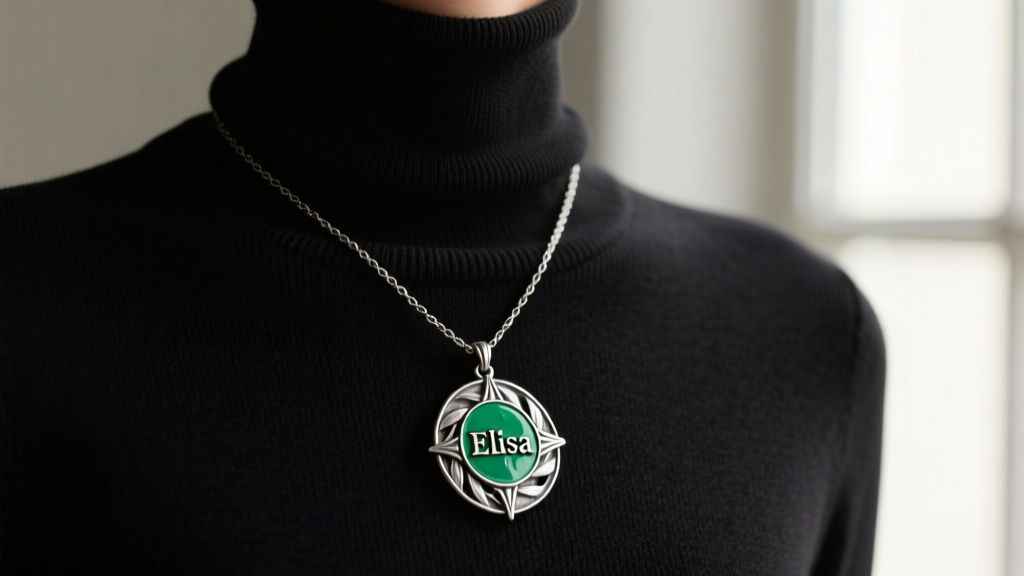
Adding to the mixed-metal movement, high-end demi-fine brands are incorporating cold enamel inlays into the Elisa medallion. Deep burgundy, forest green, and midnight blue enamels are being set into guilloché-patterned silver bases before the final gold plating is applied. As noted in recent trend forecasts by Vogue, this shift toward moodier, highly textured jewelry reflects a broader consumer desire for personalized, emotionally resonant pieces that feel discovered rather than mass-produced.
The Layering Framework: Building Around an Elisa Pendant
The Elisa necklace is rarely worn in isolation. Its medium-sized pendant makes it the perfect 'anchor' piece in a layered stack. However, haphazard layering leads to tangled chains and obscured pendants. To achieve a curated, friction-free stack, you must adhere to a strict length and texture hierarchy.
| Position | Length | Chain Style & Gauge | Purpose in the Stack |
|---|---|---|---|
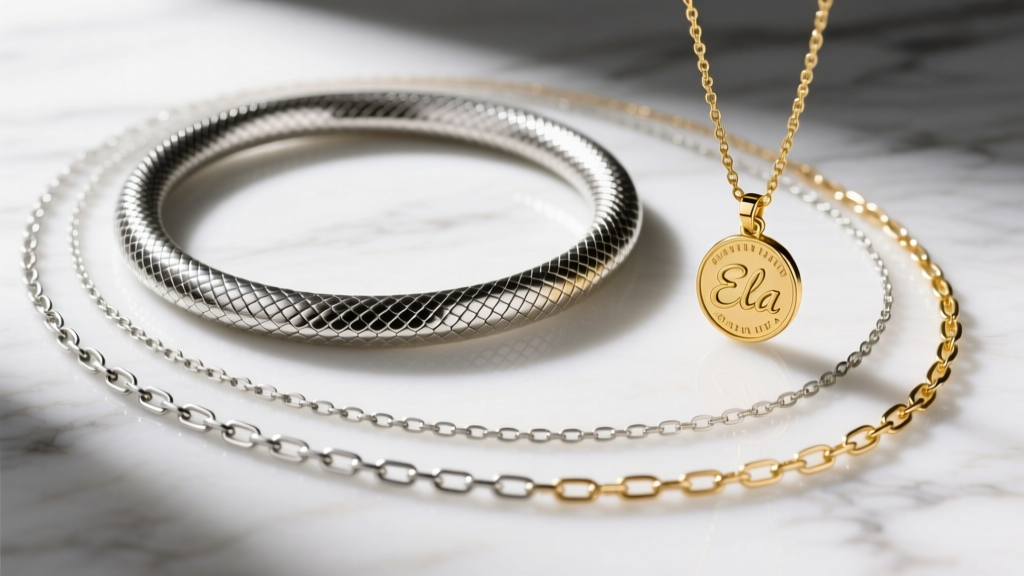
| Base Layer | 14 to 15 inches | 1.0mm Snake or Herringbone | Sits tightly on the collarbone; provides a continuous metallic line without competing with the main pendant. |
| Anchor Layer | 16 to 18 inches | 1.5mm Cable or Rolo | The Elisa pendant itself. The jump in length prevents the pendant from tangling with the base choker. |
| Extension Layer | 20 to 22 inches | 2.5mm Paperclip or Curb | Adds structural weight and modern contrast. The open links of a paperclip chain prevent it from wrapping around the delicate Elisa cable chain. |
Pro-Tip for Tangle Prevention: Never layer two chains of the exact same gauge and link type. The friction between identical links causes them to braid together. Always alternate between a smooth chain (like a snake) and a linked chain (like a cable or paperclip) to minimize friction.
Neckline Pairing Matrix: Where the Elisa Necklace Shines
An 18mm to 25mm Elisa pendant requires strategic neckline pairing to ensure it remains the focal point of your outfit rather than getting lost in fabric folds.
- The Deep V-Neck: Opt for an 18-inch Elisa necklace. The pendant will sit precisely in the negative space of the V, drawing the eye downward and elongating the neck. Avoid lengths shorter than 16 inches here, as they will visually 'cut' the neckline awkwardly.
- The Crew Neck / Turtleneck: This is where the 2026 layering framework excels. Wear your 16-inch Elisa pendant over a fine-gauge ribbed turtleneck, anchored by a 14-inch oxidized silver choker. The dark fabric provides high contrast, making the gold engravings pop.
- The Square Neckline: A 15-to-16-inch Elisa necklace is ideal. The horizontal line of the square neck pairs beautifully with the circular geometry of the coin pendant, provided the pendant sits at least one inch below the fabric line.
- The Button-Down Shirt: Leave the top two buttons undone and wear a 16-inch Elisa necklace. The structured collar frames the delicate chain, offering a perfect balance of menswear tailoring and feminine jewelry.
Investment vs. Fast Fashion: Pricing and Longevity
When analyzing the Elisa necklace market in 2026, consumers are generally faced with three distinct pricing tiers. Understanding what you are actually paying for is crucial for long-term satisfaction.
Tier 1: Fast Fashion ($20 - $45)
These pieces are typically cast from zinc or brass alloys and feature flash gold plating (under 0.5 microns). The engravings are often shallow, stamped by machine rather than cast, resulting in a loss of detail. Longevity: 3 to 6 months of regular wear before the base metal oxidizes and bleeds through.
Tier 2: Demi-Fine / Vermeil ($85 - $160)
This is the sweet spot for the Elisa trend. Brands like Missoma and similar contemporary jewelers utilize recycled sterling silver bases with 2.5 to 3.0 microns of 18k gold. The pendants are cast with high-definition molds, capturing intricate celestial details. Longevity: 2 to 5 years with proper care (avoiding perfumes, chlorine, and storing in anti-tarnish pouches).
Tier 3: Fine Jewelry / Solid Gold ($450 - $900+)
For those seeking a permanent, heirloom-quality talisman, independent fine jewelers are now offering the Elisa silhouette in solid 14k or 18k gold. These pieces feature hand-engraved details and diamond or sapphire accent stones set directly into the medallion. Longevity: Generational. Solid gold will never tarnish and can be polished indefinitely.
Final Verdict: Is the Elisa Necklace a Permanent Staple?
The Elisa necklace has successfully graduated from a micro-trend to a modern classic. Its endurance lies in its versatility; it bridges the gap between the minimalist, barely-there chains of the 2010s and the heavy, maximalist statement pieces of previous decades. By investing in a high-quality vermeil or solid gold iteration, and mastering the art of mixed-metal layering, the Elisa medallion will remain a cornerstone of your jewelry rotation well beyond 2026.


