BG3 Necklace of Elemental Augmentation: Real-World Material Guide
Explore the real-world gemological and metallurgical properties behind the BG3 Necklace of Elemental Augmentation for durable replica crafting.

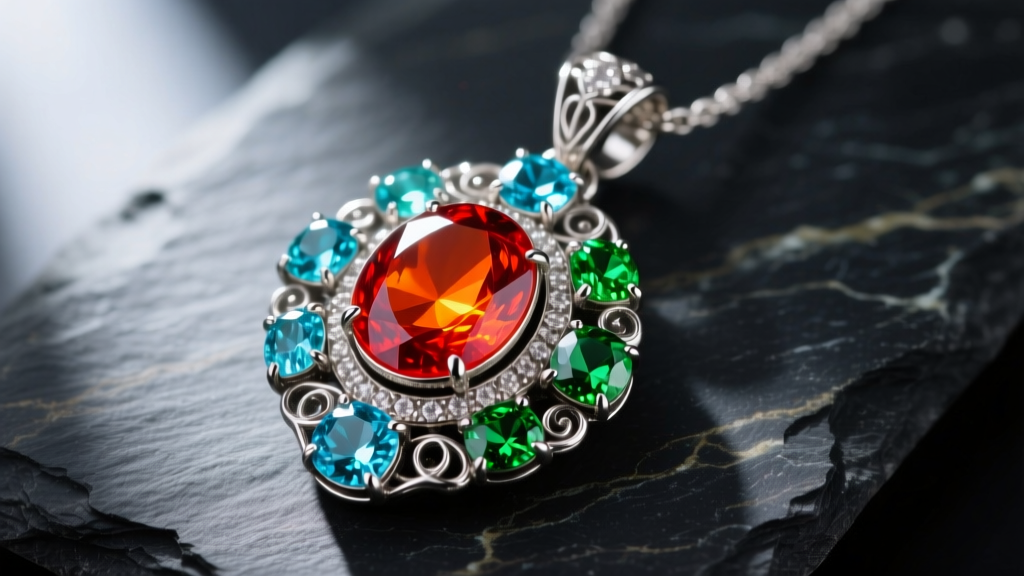
For fans of Baldur's Gate 3, the bg3 necklace of elemental augmentation is a highly coveted in-game relic that amplifies elemental damage. As of 2026, the demand for high-fidelity, wearable replicas of iconic gaming artifacts has pushed custom jewelers to bridge the gap between fantasy design and real-world material science. Translating a magical artifact into a durable, everyday pendant requires a deep understanding of gemological properties, metallurgical compatibility, and structural setting techniques.
This guide deconstructs the 'elemental' aspect of the necklace, analyzing the physical and chemical properties of real-world gemstones that represent fire, water, earth, and air. We will also explore the metallurgy required to bind these disparate materials together without triggering galvanic corrosion or structural failure.
Decoding the Elements: Gemstone Hardness and Cleavage
To recreate the elemental augmentation aesthetic, jewelers typically select four distinct gemstones. However, pairing these stones in a single pendant introduces significant durability challenges due to varying Mohs hardness ratings and crystal cleavage planes.
Fire: Mexican Fire Opal
Representing the fire element, Mexican Fire Opal is prized for its vivid orange-to-red body color and exceptional play-of-color. However, from a gemological standpoint, it is notoriously fragile. With a Mohs hardness of just 5.5 to 6.5 and a high water content (up to 21%), fire opal is highly susceptible to 'crazing'—a network of fine cracks caused by rapid temperature changes or dehydration. It lacks true cleavage but exhibits a conchoidal fracture, meaning a hard knock can chip the stone unpredictably.
Water: Aquamarine
Aquamarine, a variety of the mineral beryl, serves as the water element. It boasts a superior Mohs hardness of 7.5 to 8.0, making it highly resistant to scratching. However, aquamarine possesses distinct basal cleavage. While this cleavage is rarely triggered during normal wear, a sharp impact directly against a prong can cause the stone to split internally. According to the GIA Gem Encyclopedia, aquamarine's specific gravity (2.68-2.74) makes it slightly denser than opal, requiring a balanced bail design to prevent the pendant from hanging askew.
Earth: Moldavite
Moldavite is a rare, forest-green tektite formed by a meteorite impact. It represents the earth element but is technically an amorphous silica glass rather than a crystalline mineral. With a Mohs hardness of 5.5 and a specific gravity of roughly 2.35, moldavite is brittle and heavily included with natural gas bubbles (lechatelierite inclusions). These inclusions create structural weak points, making traditional prong settings highly risky.
Air: Phenacite or Clear Quartz
Clear quartz (Mohs 7) or the rarer phenacite (Mohs 7.5-8) represents the air element. Quartz is piezoelectric and highly stable, making it the most durable and low-maintenance stone in the elemental quartet. Phenacite offers a higher refractive index (1.65-1.67) compared to quartz (1.54-1.55), giving it a superior 'sparkle' that mimics the ethereal nature of wind magic.
| Gemstone | Element | Mohs Hardness | Cleavage / Fracture | Specific Gravity | Recommended Setting |
|---|---|---|---|---|---|
| Fire Opal | Fire | 5.5 - 6.5 | Conchoidal Fracture | 2.00 | Full Bezel |
| Aquamarine | Water | 7.5 - 8.0 | Basal Cleavage | 2.68 - 2.74 | V-Prong or Bezel |
| Moldavite | Earth | 5.5 | Conchoidal (Amorphous) | 2.32 - 2.38 | Rub-over / Bezel |
| Clear Quartz | Air | 7.0 | None / Conchoidal | 2.65 | Prong or Tension |
The Metallurgy of Magic: Chain and Bezel Selection
The structural integrity of the bg3 necklace of elemental augmentation relies heavily on the metals chosen for the chassis. Fantasy replicas often default to 'antiqued silver' or 'bronze' for aesthetic reasons, but real-world wearability demands strict attention to alloy composition.
Sterling Silver (925) vs. Argentium (935)
Standard 925 sterling silver contains 92.5% silver and 7.5% copper. The copper content provides necessary tensile strength but is highly reactive to sulfur and moisture, leading to rapid tarnishing—especially when worn against the skin's acidic mantle. For a piece featuring multiple elemental stones, The London Assay Office notes that Argentium silver (935 or 960) is vastly superior. Argentium replaces some of the copper with germanium, creating a transparent, self-healing oxide layer that virtually eliminates tarnish and reduces the need for abrasive polishing that could scratch softer stones like fire opal.
Grade 5 Titanium (Ti-6Al-4V)
For the chain and structural jump rings, Grade 5 Titanium is the ultimate modern choice. Composed of 90% titanium, 6% aluminum, and 4% vanadium, this aerospace-grade alloy offers a tensile strength of roughly 900 MPa—nearly four times that of sterling silver. It is entirely hypoallergenic, immune to galvanic corrosion, and lightweight, preventing neck fatigue when supporting a heavy, multi-gem pendant.
Elemental Synergy: Preventing Galvanic Corrosion
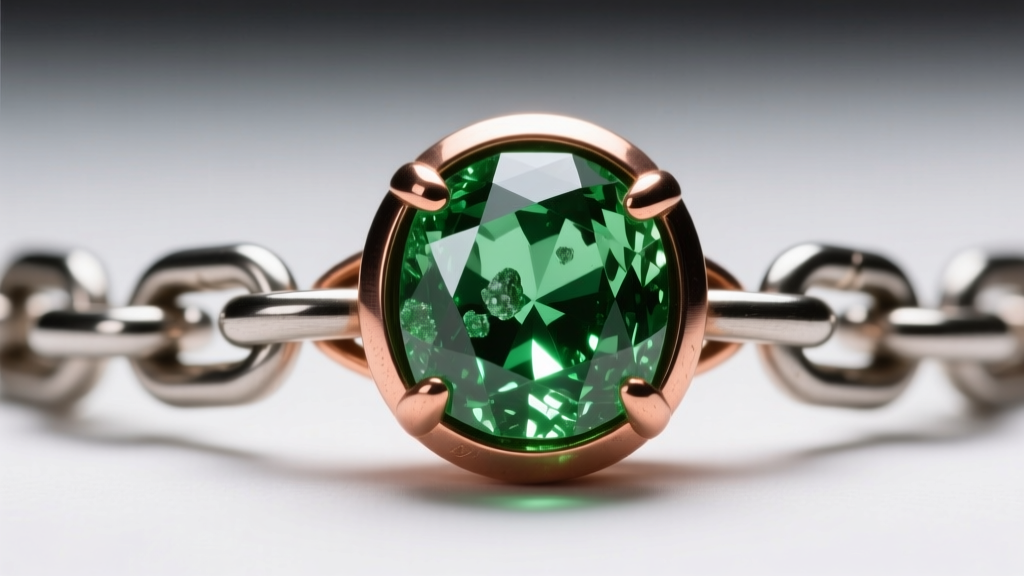
A critical mistake in multi-material jewelry design is ignoring the galvanic series. If a custom jeweler uses copper bezels for the 'earth' moldavite and connects them directly to a sterling silver chain, they create a bimetallic couple.
When two dissimilar metals are in electrical contact and exposed to an electrolyte (such as human sweat or high humidity), an electrochemical reaction occurs. The more anodic metal will corrode sacrificially to protect the cathodic metal.
Copper has a standard electrode potential of -0.34V, while silver is -0.80V. In the presence of sweat, the copper will act as the anode and rapidly oxidize, leaving a green residue on the skin and structurally compromising the bezel holding the moldavite. To engineer a genuine bg3 necklace of elemental augmentation that survives daily wear, jewelers must isolate dissimilar metals. This is achieved by using UV-cured optical resin or non-conductive enamel barriers between copper accents and silver structural components, or by standardizing the entire piece in Argentium silver with selective chemical patinas (like liver of sulfur) to create the illusion of mixed metals without the electrochemical risk.
Sourcing Authentic Elemental Stones: Treated vs. Natural
The 'augmentation' aspect of the necklace implies raw, unfiltered power, which translates to a preference for natural, untreated gemstones. However, the commercial gem market is saturated with treated stones that compromise long-term stability.
- Irradiated Topaz: Often sold as 'air' or 'water' stones, blue topaz is almost universally colorless topaz that has been irradiated and heat-treated. While stable, it lacks the natural inclusions that prove terrestrial origin.
- Dyed Quartz: 'Fire' quartz is frequently agate or clear quartz injected with dye. Over time, UV exposure from sunlight will bleach these stones, ruining the pendant's aesthetic.
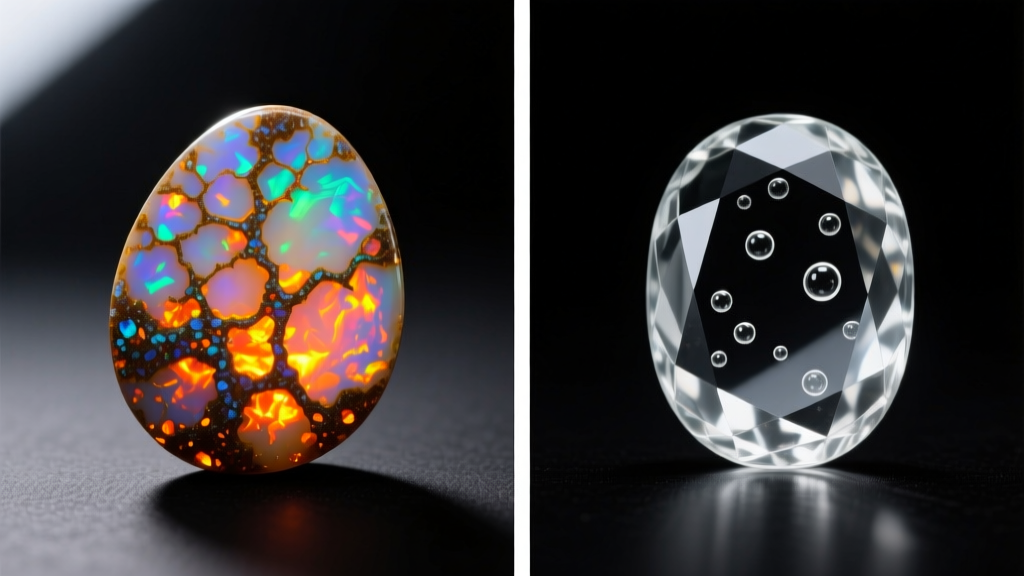
- Reconstituted Moldavite: Due to a massive spike in demand, the market is flooded with melted green bottle glass sold as moldavite. Genuine moldavite, verified via Mindat.org mineralogical databases, will feature distinct, elongated gas bubbles and flow lines (schlieren) visible under a 10x loupe.
Final Verdict: Engineering Your Augmentation Pendant
Crafting a real-world bg3 necklace of elemental augmentation is an exercise in applied gemology and metallurgy. To ensure the piece survives beyond a single cosplay convention, prioritize full bezel settings for the fragile fire opal and earthy moldavite to protect their girdles from impact. Utilize Grade 5 titanium for the chain to eliminate tensile failure, and opt for Argentium silver for the main chassis to resist tarnish without relying on rhodium plating that eventually wears away.
By respecting the specific gravity, cleavage planes, and electrochemical properties of these elemental materials, you can forge a pendant that not only channels the aesthetic of the Forgotten Realms but also stands up to the rigorous physical demands of the real world.


