Summary: The Necklace by Guy de Maupassant & 2026 Diamond Trends
Explore our summary of The Necklace by Guy de Maupassant through a gemological lens, comparing 19th-century paste jewelry to 2026 lab diamonds.

The Intersection of Classic Literature and Modern Gemology
Few works of classic literature have captured the devastating psychological weight of jewelry status signaling quite like Guy de Maupassant’s 1884 short story, La Parure. For students and jewelry enthusiasts alike seeking a comprehensive summary: The Necklace by Guy de Maupassant, the narrative offers more than just a tragic tale of vanity. It serves as a historical masterclass in the illusion of value, the dangers of material misidentification, and the stark contrast between natural gemstones and simulants. As we navigate the jewelry landscape of 2026—an era dominated by lab-grown diamonds, advanced moissanite, and high-end cubic zirconia—the lessons from Mathilde Loisel’s catastrophic borrowing are more relevant than ever. This analysis bridges literary summary with hard gemological data, exploring how the ‘paste’ jewelry of the 19th century has evolved into today’s sophisticated simulant market.
A Plot Summary: The Necklace by Guy de Maupassant
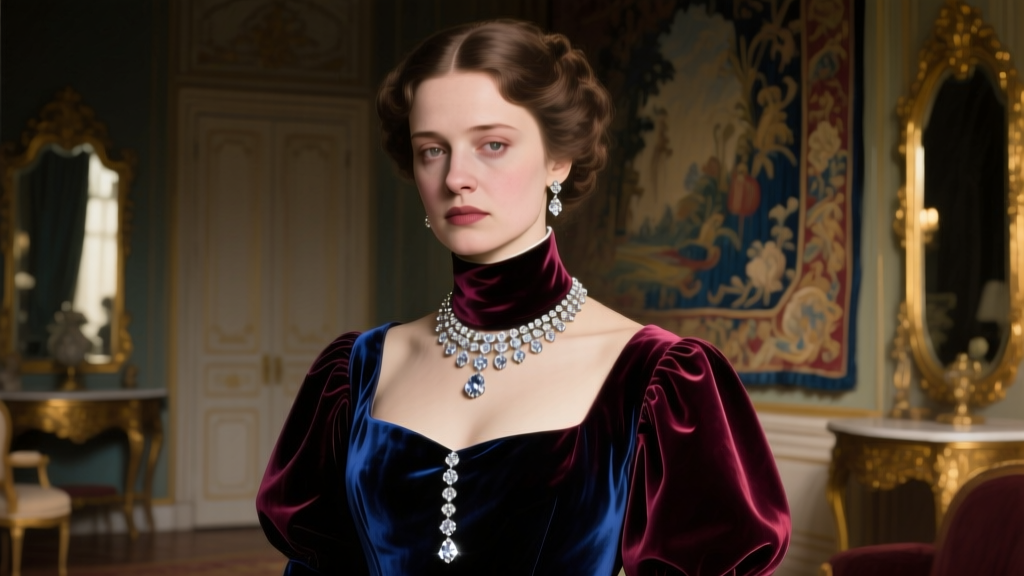
At its core, the story follows Mathilde Loisel, a woman born into a family of clerks but burdened by a deep desire for luxury and high society. When her husband secures an invitation to a prestigious ball at the Ministry of Education, Mathilde is distraught over her lack of fine attire and jewelry. To solve the latter, she borrows what she believes to be a breathtaking diamond riviere necklace from her wealthy friend, Jeanne Forestier.
The Financial Ruin of an Illusion
After the ball, Mathilde discovers the necklace is missing. Rather than confessing the loss, she and her husband secretly purchase a replacement from a jeweler in the Palais-Royal for 36,000 francs—a sum that plunges them into a decade of grueling, soul-crushing poverty. The story’s infamous twist arrives in the final lines: after ten years of debt repayment, Mathilde encounters Jeanne and confesses the truth. Jeanne, horrified, reveals that the original necklace was made of ‘paste’ (glass simulants) and was worth at most 500 francs. According to the Project Gutenberg archives, this 72-fold discrepancy in perceived versus actual material value remains one of the most brutal irony-driven endings in literary history.
Gemological Breakdown: 1884 Paste vs. 2026 Simulants
To understand the tragedy through a modern jeweler’s loupe, we must examine what ‘paste’ actually was in 1884. Unlike today’s precision-cut simulants, 19th-century paste was typically a high-lead glass (often called strass, named after Georges Frédéric Strass). While it offered a high refractive index (RI) for its time, it lacked the durability and optical physics of true carbon crystals.
Refractive Index and Dispersion Rates
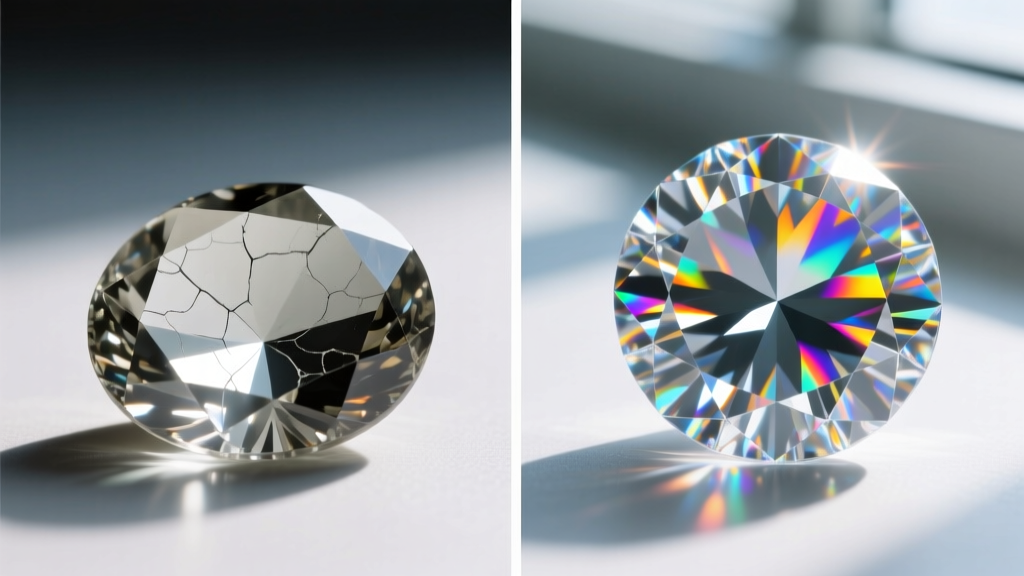
The brilliance of a gemstone is dictated by its Refractive Index (how much it bends light) and its dispersion (how it splits white light into spectral colors, or ‘fire’). Natural and lab-grown diamonds share an RI of 2.42. In contrast, 19th-century lead glass hovered around an RI of 1.7. Today’s premium moissanite boasts an RI of 2.65, actually exceeding diamond in sheer brilliance and displaying 2.4 times the fire. If Mathilde had lost a modern moissanite necklace in 2026, the visual deception would have easily fooled even seasoned socialites, though modern testing would quickly reveal its identity.
- Natural Diamond: RI 2.42 | Mohs Hardness 10 | Specific Gravity 3.52
- 1884 Lead-Glass Paste: RI ~1.70 | Mohs Hardness 5.5 | Specific Gravity ~3.20
- 2026 Moissanite: RI 2.65 | Mohs Hardness 9.25 | Specific Gravity 3.22
- High-Grade CZ: RI 2.15 | Mohs Hardness 8.5 | Specific Gravity 5.60
2026 Pricing Matrix: The Cost of Authenticity
The economic tragedy of Maupassant’s characters hinges on the massive price gap between natural diamonds and simulants. In 2026, the market has shifted dramatically. Lab-grown diamonds, which possess the exact chemical and physical properties of mined diamonds, have disrupted the traditional pricing models, making the ‘diamond look’ accessible without the generational debt that ruined the Loisels.
| Material (1.00 Carat Equivalent) | Estimated 2026 Retail Price (USD) | Resale Value Retention | Visual Authenticity to Naked Eye |
|---|---|---|---|
| Natural Mined Diamond (VS1, F Color) | $4,200 - $5,500 | 20% - 35% | 100% (Baseline) |
| Lab-Grown Diamond (VVS1, D Color) | $600 - $900 | 5% - 10% | 100% (Identical) |
| Premium Moissanite (Colorless) | $250 - $400 | 10% - 15% | 95% (Excess fire) |
| High-End Cubic Zirconia | $20 - $50 | 0% | 85% (Glassy depth) |
As noted by the Gemological Institute of America (GIA), lab-grown diamonds are not simulants; they are genuine diamonds created in a controlled plasma or high-pressure, high-temperature (HPHT) environment. Had the Loisels purchased a lab-grown equivalent in today’s market, their financial ruin would have been mitigated by a fraction of the cost, though the ethical and resale implications remain a hot topic in modern gemology.
Modern Styling: How to Wear Simulants with Intention
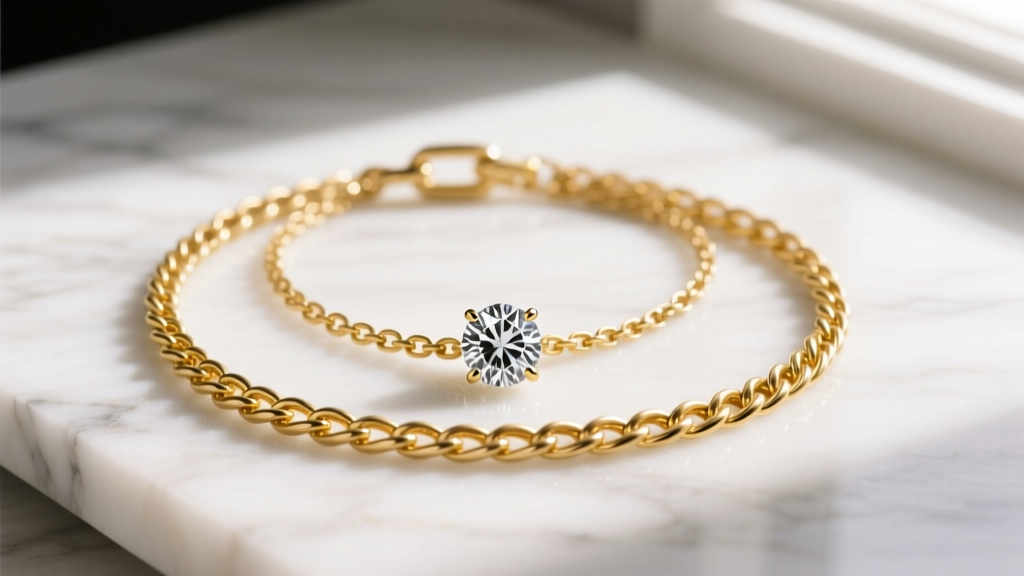
In 2026, wearing non-natural stones is no longer a source of shame or a desperate attempt to project false wealth; it is a calculated, sustainable style choice. The key to styling high-end simulants like moissanite or lab-grown diamonds lies in the metalwork and chain architecture. A simulant set in cheap, hollow brass will immediately betray its origins. Conversely, a lab-grown diamond set in solid 14k gold or heavy gold vermeil elevates the entire piece.
Chain Selection and Clasp Mechanics
When layering necklaces to achieve a luxurious aesthetic without the exorbitant price tag of natural stones, focus on chain integrity. For a pendant holding a 1-carat simulant, avoid delicate 0.8mm chains. Instead, opt for a 1.5mm to 2.0mm cable or rope chain. Ensure the clasp is a solid lobster claw or a secure fold-over box clasp, rather than a flimsy spring ring which is prone to failure and signals mass-market costume jewelry.
“True elegance in modern jewelry styling is not about the geological origin of the stone, but the precision of the cut, the quality of the setting, and the confidence of the wearer.”
For a sophisticated 2026 layering technique, pair a 16-inch 14k yellow gold vermeil choker featuring a bezel-set moissanite solitaire with a 22-inch opera-length paperclip chain. The contrast in chain textures and lengths draws the eye vertically, creating an illusion of bespoke, high-end curation that Mathilde Loisel desperately craved, but achieved only through fatal deception.
The Appraisal Reality: Why the Deception Would Fail Today
Could a modern Mathilde Loisel be fooled by a paste necklace in 2026? The short answer is no. The gemological testing equipment available today makes the visual deception of the 19th century obsolete. While the naked eye might struggle to differentiate a premium moissanite from a natural diamond, thermal and electrical conductivity testers provide instant, definitive answers.
Thermal and Electrical Conductivity Testing
Diamonds are exceptional conductors of heat but poor conductors of electricity (with the rare exception of Type IIb boron-doped blue diamonds). Standard diamond testers use a heated probe to measure how quickly heat dissipates through the stone. Glass paste and CZ fail this test immediately. However, moissanite shares a similar thermal conductivity to diamond, which used to fool early testers. Today, dual-testers measure electrical conductivity simultaneously; because moissanite is slightly electrically conductive and diamond is not, the device instantly flags the simulant. If Jeanne Forestier’s necklace had been appraised by a modern jeweler using a Presidium Duo Tester, the 500-franc truth would have been revealed in less than three seconds, saving the Loisels a decade of misery.
Conclusion: The Timeless Weight of Authenticity
A literary summary of The Necklace by Guy de Maupassant ultimately reveals a cautionary tale about the perilous gap between perceived status and material reality. As we analyze jewelry trends in 2026, the rise of lab-grown diamonds and advanced simulants has democratized luxury, allowing consumers to prioritize cut quality, metal purity, and personal style over geological rarity. By understanding the gemological science and market economics that dictate jewelry value, modern enthusiasts can appreciate the brilliance of a well-crafted stone without falling victim to the devastating illusions that doomed Maupassant’s most famous protagonist.