Black Onyx Pendant Necklace: A Gemological & Technical Guide
Discover the gemological secrets of a black onyx pendant necklace. Learn to identify dyed stones, choose the right chain gauge, and evaluate pricing.

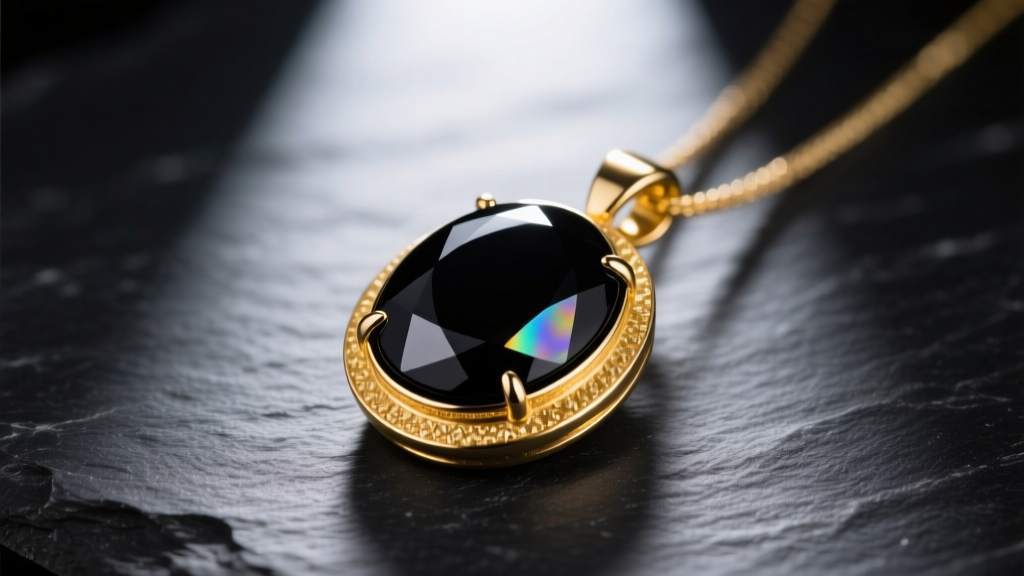
When evaluating a black onyx pendant necklace, most consumers focus solely on the aesthetic contrast between the deep, opaque stone and its metallic setting. However, as a gemological and metallurgical artifact, this piece of jewelry requires a rigorous technical assessment. True black onyx is a fascinating study in mineralogy, lapidary science, and structural engineering. Whether you are a collector, a jeweler, or an informed buyer, understanding the underlying mechanics of these pendants is crucial for making a sound investment and ensuring the longevity of the piece.
The Gemological Reality: Natural vs. Treated Onyx
Onyx is a banded variety of chalcedony, which is a cryptocrystalline form of silica (quartz). According to the Gemological Institute of America (GIA), natural black onyx with a uniform, pure black color is exceedingly rare in nature. Most naturally occurring onyx features distinct parallel bands of white, gray, or brown. Consequently, the vast majority of commercial black onyx pendant necklaces on the market feature stones that have undergone a permanent carbonization treatment.
This treatment, often referred to as the 'sugar process,' involves soaking gray or white porous chalcedony in a concentrated sugar solution for several weeks, followed by immersion in hot, concentrated sulfuric acid. The acid carbonizes the sugar molecules trapped within the microscopic pores of the stone, resulting in a permanent, uniform black color. While this is an accepted industry practice, it fundamentally alters the stone's chemical stability compared to untreated natural quartz.
True untreated black onyx exhibits a specific gravity of 2.58 to 2.64 and a refractive index of 1.530 to 1.540. Treated stones may show slightly altered optical properties due to carbon inclusions.
For the purist, sourcing an untreated, naturally black onyx cabochon requires specialized gem dealers and often commands a 400% to 600% premium over standard treated stones. For everyday wear, however, the carbonized treatment is stable, provided the stone is not exposed to extreme thermal shock or harsh chemical solvents that could degrade the carbon matrix over decades of wear.
Lapidary Specifications and Bezel Mechanics
The physical cutting and setting of the onyx cabochon dictate the structural integrity of the pendant. Because onyx ranks at 6.5 to 7 on the Mohs hardness scale, it is relatively durable but possesses a conchoidal fracture, meaning it can chip or crack if subjected to sharp, localized impacts.
Calibration and Tolerances
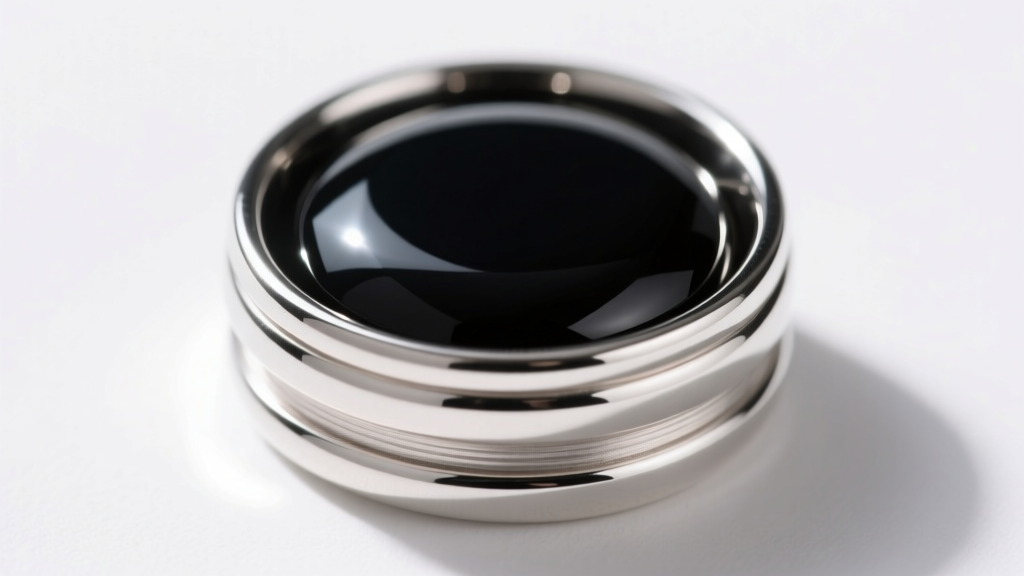
High-quality black onyx pendants utilize calibrated cabochons. A standard 20x15mm oval or 18mm round cabochon should have a precise tolerance of +/- 0.1mm. If a stone is cut even slightly out of round, the jeweler must over-file the bezel seat or apply excessive pressure with the bezel pusher, creating internal tension that can lead to spontaneous fracturing months later.
Bezel Wall Thickness and Seat Depth
For a standard 5mm thick onyx cabochon, the optimal bezel wall thickness in 14k gold or sterling silver is between 0.4mm and 0.6mm. Thinner walls (0.2mm) are prone to warping during the setting process and offer inadequate protection against lateral impacts. The bearing (the interior ledge that supports the stone) must be cut at a precise 90-degree angle to the gallery wall to ensure the flat base of the onyx sits flush, preventing a 'rocking' effect that concentrates stress on a single microscopic point.
Chain Metallurgy and Load-Bearing Considerations
A frequent failure mode in heavy gemstone jewelry is the mismatch between the pendant's mass and the chain's tensile strength. A substantial 25x18mm black onyx cabochon set in a solid gold bezel can easily weigh between 18 and 28 grams. When subjected to the pendulum effect of daily movement, the dynamic load on the chain links and clasp can exceed 50 pounds of momentary tensile force.
| Chain Weave | Gauge / Width | Approx. Tensile Yield | Ideal Pendant Weight |
|---|---|---|---|
| Cable / Link | 1.0mm - 1.2mm | 8 - 12 lbs | Under 5 grams |
| Rolo / Belcher | 1.5mm - 2.0mm | 15 - 20 lbs | 5 - 12 grams |
| Wheat / Spiga | 2.0mm - 2.5mm | 25 - 35 lbs | 12 - 25 grams |
| Curb / Figaro | 3.0mm+ | 45+ lbs | 25+ grams |
Furthermore, the bail—the loop connecting the pendant to the chain—must be mechanically sound. Avoid pendants where the bail is adhered with epoxy or simply pinched onto the bezel. A heavy black onyx pendant requires a fully soldered, structurally reinforced bail to withstand the continuous friction and dynamic loading of a heavy chain.
Market Pricing and Authentication Framework
Pricing a black onyx pendant necklace requires dissecting the cost of the metal, the labor, and the provenance of the stone. According to mineralogical databases like Mindat.org, the raw material cost of commercial-grade chalcedony is negligible; therefore, you are primarily paying for the lapidary precision, the precious metal weight, and the brand's craftsmanship.
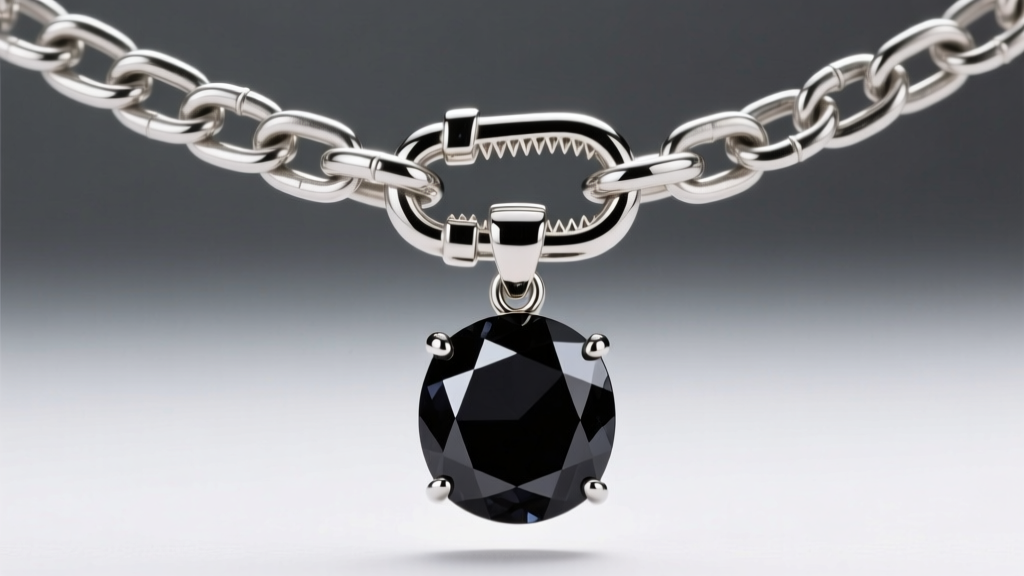
- Tier 1: Commercial Fashion ($40 - $120) Features mass-produced, heavily dyed onyx set in thin 925 sterling silver (often rhodium-plated). Bezels are usually cast rather than fabricated, resulting in porosity and weaker structural integrity. Chains are typically lightweight 1.0mm cable links.
- Tier 2: Fine Jewelry ($350 - $900) Utilizes calibrated, well-polished treated onyx set in solid 14k gold or heavy-gauge sterling silver. Features hand-cut bezel seats, soldered bails, and robust 2.0mm+ chains with secure lobster or box clasps.
- Tier 3: Collector / Natural ($1,500 - $4,000+) Showcases certified, untreated natural black onyx. Set in 18k gold or platinum with artisan-level fabrication. Often accompanied by custom lapidary work, such as concave backs to reduce weight while maintaining optical depth, and heavy, custom-forged chains.
Care, Maintenance, and Failure Modes
Despite its glass-like polish, a black onyx pendant necklace requires specific care protocols to avoid catastrophic failure. The most common mistake owners make is using ultrasonic jewelry cleaners. The high-frequency acoustic cavitation, combined with the heat generated in the fluid bath, can induce thermal shock. Because treated onyx contains microscopic carbon deposits and potential residual acid pockets from the dyeing process, ultrasonic vibrations can cause internal micro-fractures that eventually lead to the stone crumbling or splitting.
Additionally, avoid steam cleaners. The sudden temperature change is highly detrimental to cryptocrystalline quartz structures. For routine maintenance, use a soft, lint-free microfiber cloth and a mild solution of distilled water and pH-neutral dish soap. Dry the stone thoroughly to prevent water spots, which can become etched into the polish over time if the water contains high mineral content. Finally, inspect the bezel wall every 12 months; if the metal has worn thin from friction against the chain bail, the stone is at risk of dislodging and shattering upon impact with a hard surface.


