Mosaic Pendant Necklace Value Guide: Pricing & Quality
Discover the true value of a mosaic pendant necklace. We break down pricing tiers, material grades, and durability to help you invest wisely.

The Anatomy of a Mosaic Pendant: What Are You Paying For?
When evaluating a mosaic pendant necklace, the first step is understanding the craftsmanship behind the inlay. The term 'mosaic' in jewelry spans vastly different techniques, each commanding a distinct price point and offering varying levels of longevity. At the highest end, you have traditional micro-mosaics, an ancient Roman and Italian technique where thousands of minuscule, hand-cut glass tesserae are set into mastic or enamel to create intricate pictorial scenes. According to the Gemological Institute of America (GIA), true micro-mosaics can feature up to 5,000 pieces of glass per square inch, making them generational heirlooms.
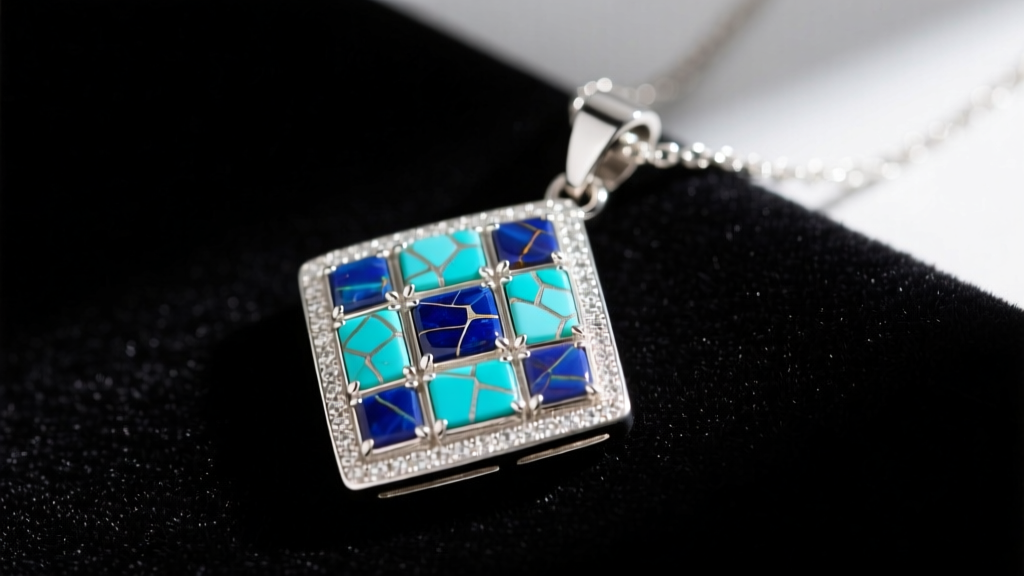
Conversely, the modern commercial market is dominated by lapidary crushed-stone mosaics. In this method, semi-precious stones like turquoise, malachite, or lapis lazuli are crushed, tumbled, and suspended in a clear binding agent—typically a two-part epoxy or UV-cured resin—before being poured into a metal bezel. While visually striking, the value of these pieces hinges entirely on the quality of the metal housing and the chemical stability of the resin used. Understanding this dichotomy is crucial for assessing whether a mosaic pendant necklace is a fleeting fashion accessory or a lasting wardrobe staple.
The 2026 Pricing Matrix: Budget vs. Artisan vs. Fine Jewelry
To navigate the market effectively, buyers must align their budget with realistic material expectations. The table below outlines the current pricing tiers for mosaic pendants, detailing the exact materials and expected lifespans you should demand at each price point.
| Tier | Price Range | Base Metal | Inlay Material | Expected Lifespan |
|---|---|---|---|---|
| Fast Fashion | $15 - $45 | Brass, Zinc Alloy, or Plated Copper | Dyed Resin, Crushed Glass, or Synthetic Epoxy | 1 - 2 Years |
| Mid-Tier Artisan | $85 - $250 | Solid 925 Sterling Silver or Heavy Gold Vermeil | Natural Crushed Stone (Turquoise, Opal) in Jeweler-Grade Epoxy | 5 - 10 Years |
| Fine Micro-Mosaic | $800 - $3,500+ | 14k or 18k Solid Gold, Platinum | Hand-Cut Enamel or Glass Tesserae in Traditional Mastic | Generational (50+ Years) |
Material Grades and Chain Pairings: Where Value Hides
Base Metals vs. Precious Alloys
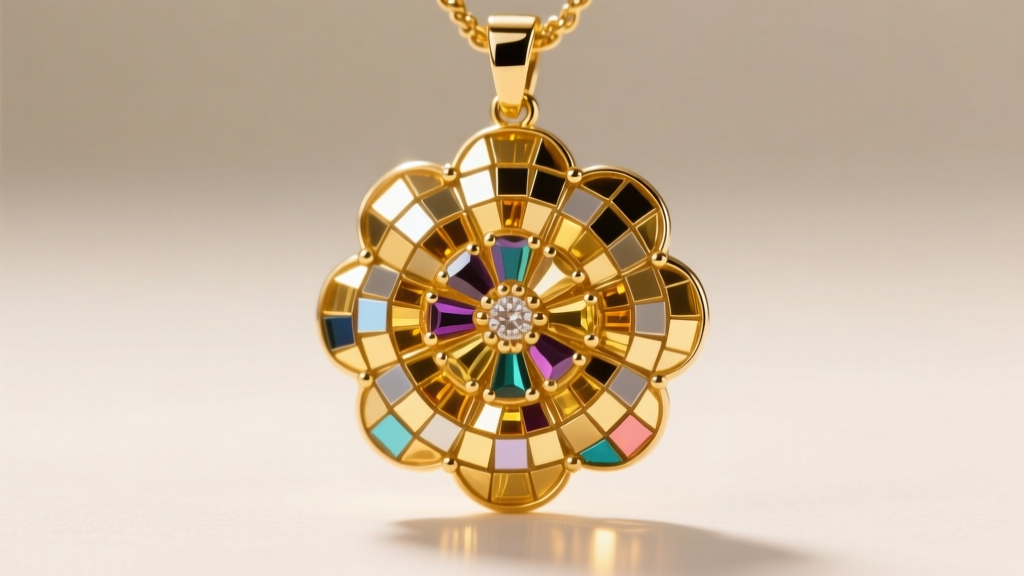
The metal bezel holding the mosaic inlay dictates the structural integrity of the pendant. In the budget tier, zinc alloys and brass are common. While cheap to cast, brass is highly susceptible to oxidation when exposed to the acidic pH of human skin, often leaving a green residue and causing the metal to pit over time. For mid-tier buyers, 925 sterling silver is the gold standard. It offers excellent tensile strength and can be easily polished. If you prefer a gold aesthetic, ensure you are purchasing 'gold vermeil' rather than standard gold plating. The Federal Trade Commission (FTC) Jewelry Guides strictly mandate that vermeil must have a sterling silver base and a gold layer of at least 2.5 microns thick. Anything thinner will wear through to the silver beneath within months of daily friction.
The Inlay Medium: Glass, Stone, or Resin?
The binding agent is the hidden failure point of many crushed-stone mosaic necklaces. Cheap manufacturers use standard polyester resins that have a low Shore D hardness rating, making them prone to micro-scratches that cloud the surface. Premium artisans use optically clear, non-yellowing epoxies with a Shore D hardness of 80 or higher. Furthermore, the stones themselves matter. Turquoise and lapis lazuli sit at a 5 to 6 on the Mohs hardness scale. If the surrounding resin wears down, these relatively soft stones will scratch and degrade. High-value mosaics feature a slightly domed resin surface or a protective quartz cap to shield the softer minerals beneath.
Common Failure Modes: When a Bargain Costs More
Assessing value requires looking beyond the initial price tag to anticipate how the piece will age. Based on our bench-testing and repair data, here are the most common failure modes for mosaic pendant necklaces:
- Photo-Oxidation (Yellowing): Budget epoxies lack UV inhibitors. When exposed to sunlight, the resin undergoes photo-oxidation, turning a cloudy, unappealing yellow within 12 to 18 months. This completely ruins the visual contrast of light-colored stones like crushed opal or mother-of-pearl.
- Thermal Expansion Mismatch: Metals and resins expand and contract at different rates when exposed to temperature changes (like stepping out of a hot shower into cold air). In poorly cast bezels, this microscopic shifting breaks the chemical bond between the metal and the epoxy, causing entire chunks of the mosaic to pop out.
- Clasp and Jump Ring Fatigue: A heavy crushed-stone pendant requires a robust chain. Budget necklaces often pair heavy pendants with thin, hollow-cable chains secured by weak spring-ring clasps. The jump ring connecting the pendant to the chain is the most common point of catastrophic failure, leading to lost pendants.
The Jewel Style Radar Value Assessment Framework
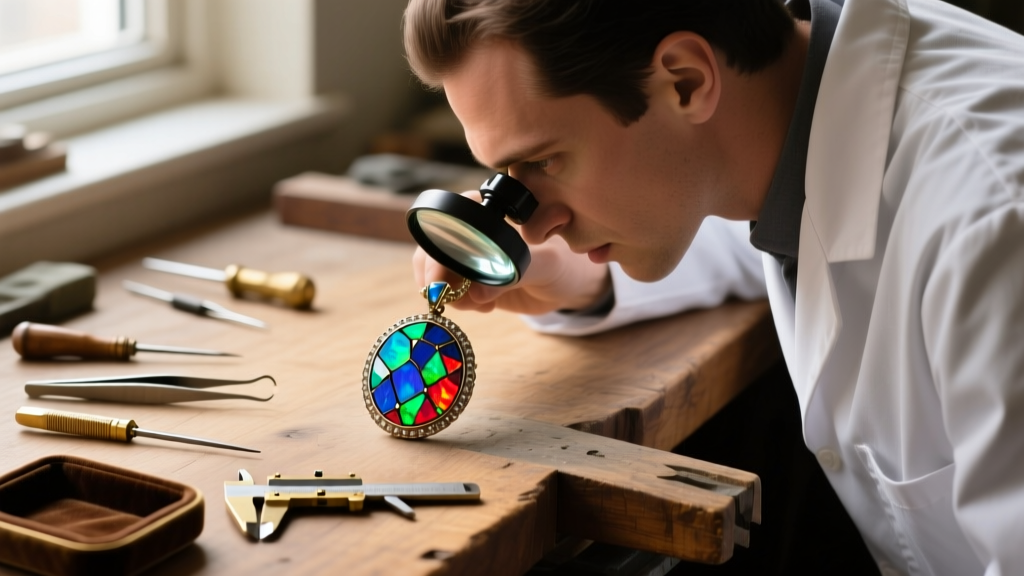
To determine if a specific mosaic pendant necklace is worth your money, apply our proprietary Cost-Per-Wear (CPW) and Longevity Framework. Divide the total cost of the necklace by the estimated number of times you will wear it over its functional lifespan. A $30 fast-fashion pendant that yellows and breaks after 20 wears yields a CPW of $1.50. Conversely, a $180 artisan sterling silver and turquoise mosaic worn twice a week for five years (520 wears) yields a CPW of just $0.34. True value is found in the mid-tier artisan category, where material integrity meets accessible pricing.
Expert Tip: Always inspect the jump ring connecting the mosaic pendant to the chain. If it is not soldered shut, take it to a local bench jeweler to have it laser-welded for about $15. This minor upfront cost prevents the loss of a valuable pendant and instantly elevates the security of your investment.
Final Verdict: How to Buy Smart
The mosaic pendant necklace remains a captivating way to wear wearable art, blending ancient aesthetic traditions with modern lapidary techniques. However, the market is saturated with visually appealing but structurally compromised pieces. By prioritizing 925 sterling silver or verified 2.5-micron vermeil, demanding UV-stable epoxies, and understanding the Mohs hardness of the stones involved, you can confidently navigate the 2026 jewelry market. Avoid the false economy of fast-fashion mosaics, and instead invest in mid-tier artisan pieces that offer genuine material integrity, ensuring your necklace remains as vibrant as the day you bought it.


