Troubleshooting a Weak Necklace Magnetic Clasp: Fixes & Upgrades
Is your necklace magnetic clasp popping open? Learn the physics of magnetic failure, DIY fixes, and how to upgrade to stronger N52 magnets.

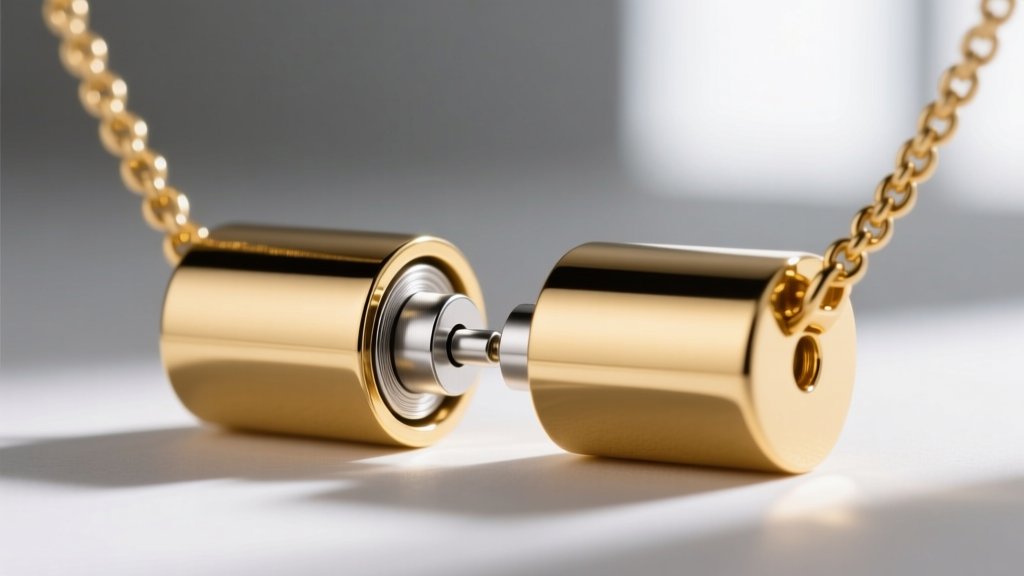
There are few things more frustrating in jewelry wear than reaching for your neck and realizing your chain has slipped away. The necklace magnetic clasp was introduced as a revolutionary accessibility tool, particularly for those with limited dexterity or arthritis. However, as these clasps age, or as you pair them with heavier pendants, they frequently fail. If your favorite necklace keeps popping open, the issue rarely lies in the chain itself, but rather in the hidden physics of the clasp's internal magnet and its mechanical housing.
In this comprehensive troubleshooting guide, we will dissect exactly why magnetic clasps fail, how to calculate the necessary pull-force for your specific jewelry, and the precise DIY methods to repair, reinforce, or upgrade your findings. As of 2026, advancements in rare-earth magnet availability mean you no longer have to settle for weak, unreliable closures.
The Physics of Magnetic Clasps: Why They Fail
To troubleshoot a failing clasp, you must first understand what powers it. The vast majority of modern jewelry magnetic clasps utilize Neodymium-Iron-Boron (NdFeB) magnets. These are graded by their maximum energy product, ranging from N35 (standard commercial grade) up to N52 (the strongest commercially available neodymium grade). According to K&J Magnetics, an N35 magnet loses its efficacy much faster under thermal stress and physical shock than an N52 variant.
Failure typically occurs due to three distinct phenomena:
- Demagnetization from Shock: Dropping your necklace on a hard tile floor can physically fracture the microscopic grain structure of the neodymium magnet inside the barrel, permanently reducing its Gauss rating.
- Thermal Degradation: Leaving your jewelry on a car dashboard in direct sunlight can expose the magnet to temperatures approaching its Curie point, causing irreversible magnetic loss.
- The Inertial Pop: This is a physics failure, not a magnet failure. When you bend over quickly, the pendant acts as a pendulum. The kinetic energy generated by a swinging 20-gram pendant can easily overcome the 3-pound static pull force of a standard N35 magnetic clasp, causing it to snap open.
Troubleshooting Common Magnetic Clasp Failures
Before throwing away a broken necklace, diagnose the specific failure mode. Here are the three most common issues and their immediate solutions.
1. The Swivel and Slip (Mechanical Failure)
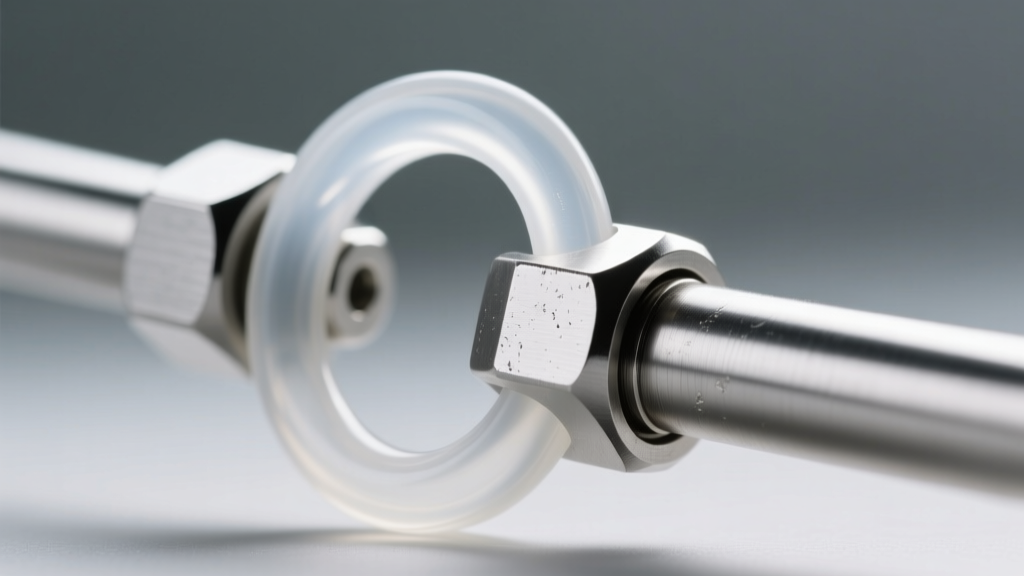
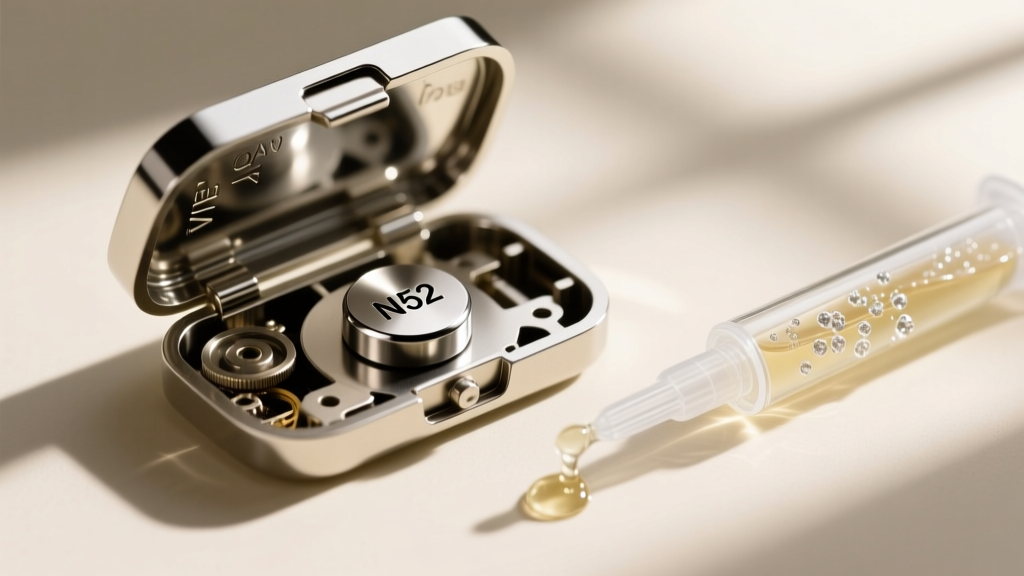
Symptoms: The magnets are strong, but the clasp twists and slides off the neck, or the two halves rotate out of alignment, breaking the magnetic seal. Diagnosis: The internal O-ring or friction washer inside the clasp housing has degraded or dried out. Fix: Apply a microscopic drop of synthetic watch oil to the swivel joint. If the slip is occurring between the two magnetic halves, wrap a single layer of clear jewelry silicone tape around the male end of the clasp to increase friction without compromising the magnetic snap.
2. The Internal Rattle (Housing Failure)
Symptoms: You can hear a clicking sound when you shake the clasp, and the magnetic pull feels significantly weaker or misaligned. Diagnosis: The neodymium magnet has broken free from the epoxy inside the metal barrel housing. Because neodymium repels itself if poles are misaligned, a loose magnet inside the housing will actively fight the connection. Fix: This requires careful extraction. Use a jewelry prying tool to pop the cap off the housing, remove the magnet, clean the old adhesive with isopropyl alcohol, and re-seat it using E6000 Jewelry Adhesive (curing time: 24 hours).
3. The Inertial Pop (Weight Ratio Failure)
Symptoms: The necklace stays on when you are sitting still but falls off when you walk, bend, or take off a sweater. Diagnosis: The pendant-to-clasp weight ratio is unbalanced. The static pull force of the magnet is insufficient to handle the dynamic kinetic load of the pendant. Fix: You must either reduce the pendant weight, add a mechanical safety backup, or upgrade the magnet to an N52 grade.
The Weight-to-Magnetism Ratio Chart
A common mistake in jewelry design and repair is matching a heavy pendant with a standard clasp. The Gemological Institute of America (GIA) recommends a safety margin of at least 5:1 for static jewelry, but for magnetic clasps subject to inertial swinging, a 10:1 pull-force ratio is the industry standard for reliability.
| Total Necklace Weight | Pendant Weight | Minimum Required Pull Force | Recommended Magnet Grade | Clasp Style Recommendation |
|---|---|---|---|---|
| Under 5 grams | None / Micro | 2.5 lbs | N35 or N42 | Standard 5mm Barrel |
| 5 - 15 grams | Light (e.g., Small Solitaire) | 5.0 lbs | N42 | Standard 6mm Barrel |
| 15 - 30 grams | Medium (e.g., Gold Cross) | 10.0 lbs | N50 or N52 | Wide 8mm Tube with Safety |
| Over 30 grams | Heavy (e.g., Statement Piece) | 15.0+ lbs | N52 (Dual Magnet) | Box Clasp w/ Figure-8 Safety |
DIY Fixes and Upgrades for Your Necklace Magnetic Clasp
If your current clasp is failing the weight-to-magnetism ratio, you have several actionable pathways to secure your jewelry without sacrificing the ease of use that magnetic clasps provide.
Upgrade to N52 Neodymium Findings
If you are restringing a beaded necklace or replacing a chain finding, specifically source clasps that advertise "N52" or "Ultra-Strong" rare-earth magnets. Standard craft store clasps are almost universally N35. Upgrading to an N52 magnet of the exact same physical dimensions (e.g., a 6mm x 3mm cylinder) will increase your pull force by nearly 45%, instantly solving most inertial pop issues.
Install a Figure-8 Safety Chain
For high-value gold or platinum chains, relying solely on magnetism is a risk. You can solder or attach a "figure-8" safety wire. This is a tiny secondary loop of wire that connects the jump ring on the left side of the clasp to the jump ring on the right side. If the magnets separate, the chain drops only one inch, allowing you to catch it before it hits the floor. Suppliers like Rio Grande sell pre-assembled magnetic clasps with integrated figure-8 safeties, which are highly recommended for chains valued over $500.
The Silicone O-Ring Trick
If your clasp is strong enough but the smooth metal barrel slides against your skin or clothing, causing it to twist open, visit a hardware store and purchase a 1/4 inch clear silicone O-ring. Stretch the O-ring over the center seam of the connected magnetic clasp. The high-friction silicone locks the two halves together against rotational forces while remaining virtually invisible against the skin.
When to Abandon the Magnetic Clasp Entirely
While magnetic clasps are exceptional for accessibility, they are not universally appropriate. You should permanently retire a magnetic clasp and switch to a mechanical alternative if:
- You wear the necklace during physical activity: Sweat, friction, and rapid body movements create unpredictable kinetic forces that will eventually defeat any magnet.
- The chain is a snake or herringbone style: These chains are highly fluid and prone to tangling. When they tangle, the tension placed on the clasp pulls it apart laterally—a direction where magnets have almost zero holding strength.
- You live in a highly humid environment without proper jewelry care: Neodymium magnets are incredibly susceptible to oxidation. If the nickel-copper-nickel plating on the internal magnet chips, the magnet will rust from the inside out, expanding and cracking the metal housing.
In these scenarios, transition to a Box Clasp with a double safety latch or a Lobster Claw clasp with an extended pull-tab for easier manipulation.
Final Thoughts
A failing necklace magnetic clasp is rarely a sign that you must stop wearing your favorite piece. By understanding the hidden variables of magnet grades, weight ratios, and mechanical housing integrity, you can diagnose the exact point of failure. Whether you are re-gluing a loose N35 core, upgrading to a high-tensile N52 barrel, or adding a simple silicone O-ring for rotational friction, these troubleshooting steps will restore both the security and the accessibility of your jewelry.


