The 20 Inch Necklace Chain: 2026 Style & Layering Trends
Discover why the 20 inch necklace chain is dominating 2026 jewelry trends. Expert guide on layering, material grades, and neckline pairing.

The Resurgence of the 20-Inch Drop: Why It Anchors 2026 Style
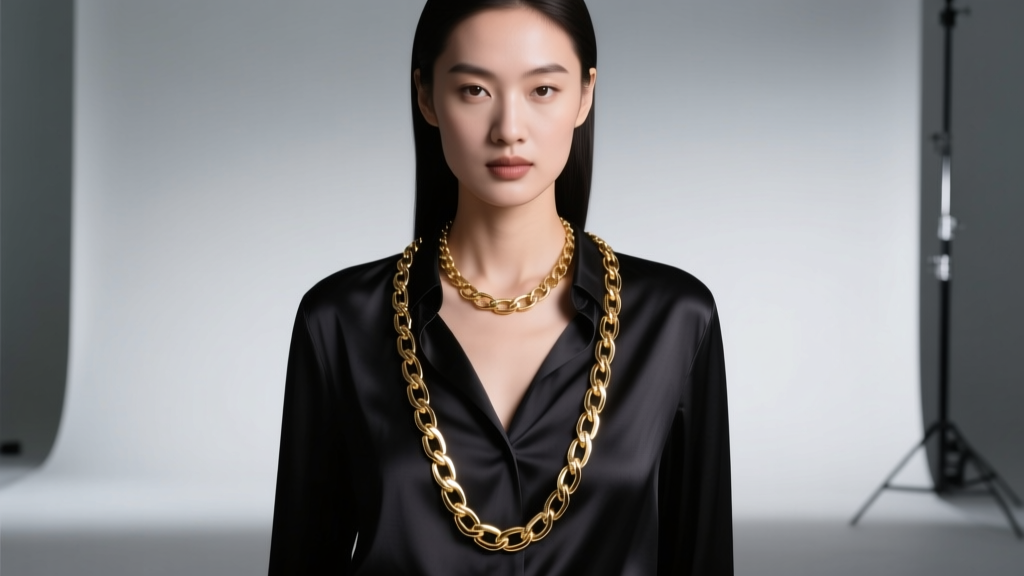
In the evolving landscape of fine jewelry, the 20 inch necklace chain has emerged as the undisputed cornerstone of 2026 styling. Measuring exactly 50.8 centimeters, this specific length bridges the gap between the traditional 18-inch princess drop and the 24-inch matinee length. While the early 2020s were dominated by tight, choker-heavy silhouettes, the current fashion zeitgeist has pivoted toward relaxed tailoring, deep plunge necklines, and fluid fabrics. The 20-inch chain sits perfectly at or just below the sternal notch, providing a visual anchor that elongates the neck without disappearing into the collarbone.
According to recent market analyses featured in National Jeweler, consumer demand for mid-length chains has surged by 34% over the past eighteen months. This is not merely a fleeting trend; it represents a fundamental shift in how collectors build their permanent jewelry wardrobes. The 20-inch length is the ultimate utilitarian canvas—it is long enough to comfortably house a substantial pendant without choking the wearer, yet short enough to serve as the middle anchor in a complex, multi-strand layering stack.
Material Grades and Gauge Specifications for Daily Wear
Selecting a 20 inch necklace chain requires a rigorous understanding of metallurgy and structural integrity. A chain of this length possesses more leverage and swing than a shorter choker, meaning it is subjected to higher tensile stress when snagged or when bearing a heavy pendant. For daily wear, 14k gold (58.5% pure gold alloyed with copper and silver for a Vickers hardness of roughly 140-160 HV) remains the industry gold standard, offering the perfect equilibrium between luxurious luster and structural resilience. For those preferring hypoallergenic, high-tensile alternatives, 316L surgical stainless steel provides exceptional durability at a fraction of the cost, though it lacks the intrinsic value and warm undertone of precious metals.
Gauge thickness is where most consumers make critical errors. A 1.2mm cable chain might look delicate and refined, but it is highly susceptible to kinking and work-hardening, eventually leading to microscopic fractures. For a 20-inch chain intended to hold a pendant weighing between 5 and 12 grams, a 1.5mm to 2.0mm gauge is non-negotiable.
| Chain Style | Ideal Gauge | Tensile Yield Point | Best Pendant Weight | 14k Gold Price Range (20") |
|---|---|---|---|---|
| Standard Cable | 1.5mm | ~15 lbs | 3g - 8g | $450 - $600 |
| Flat Curb | 2.0mm | ~25 lbs | 5g - 15g | $800 - $1,200 |
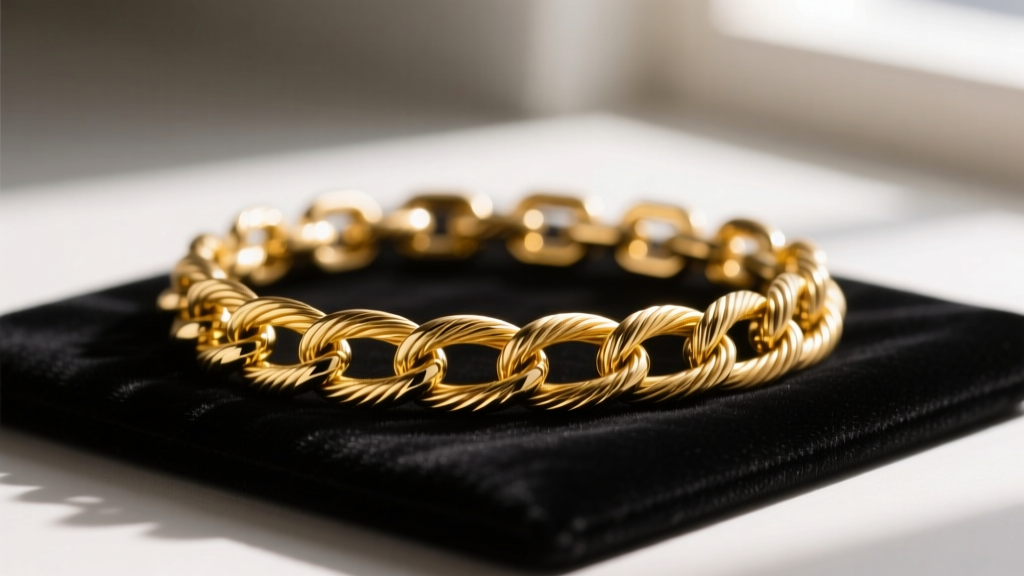
| Twisted Rope | 1.8mm | ~20 lbs | 4g - 12g | $700 - $950 |
| Square Box | 1.2mm | ~8 lbs | 1g - 4g | $350 - $500 |
The 2026 Layering Matrix: Anchoring Your Stack
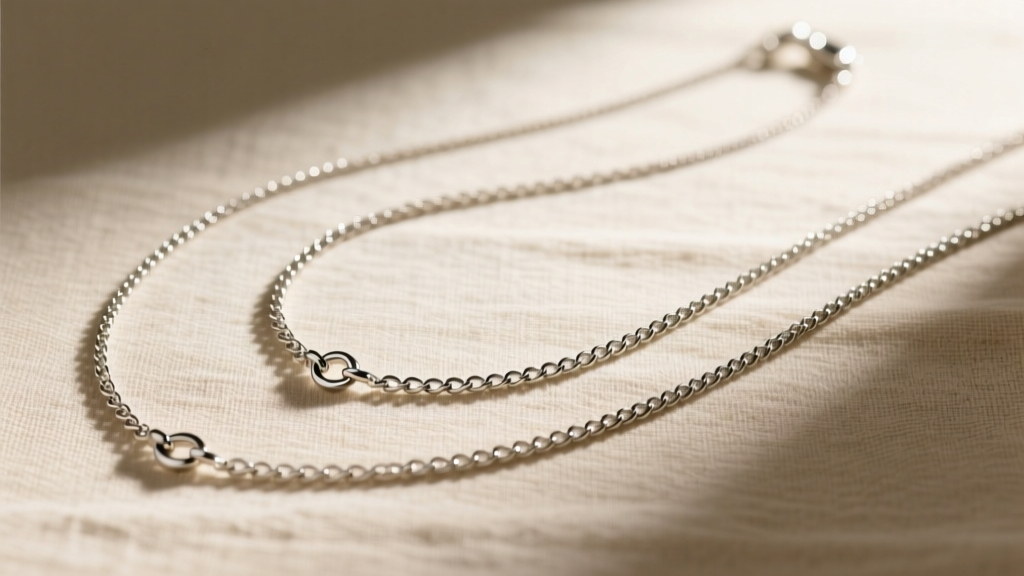
Layering in 2026 has moved beyond haphazardly tossing chains of varying lengths around the neck. Modern styling relies on the 'Rule of Thirds' for spatial dynamics, and the 20 inch necklace chain serves as the vital middle tier. The optimal stacking formula begins with a 14-inch or 16-inch choker sitting tightly on the collarbone, followed by the 20-inch chain acting as the primary pendant bearer, and finished with a 24-inch or 28-inch rope chain that rests on the sternum.
When executing this matrix, texture contrast is paramount. If your 16-inch base is a smooth, high-polish snake chain, your 20-inch anchor should introduce visual complexity—such as a twisted rope or a diamond-cut curb. This prevents the chains from tangling, as identical link structures tend to interlock and knot when worn together. Furthermore, maintaining a minimum 4-inch gap between layers ensures that each piece catches the light independently, creating a cascading waterfall effect that draws the eye downward and flatters the décolletage.
Clasp Mechanics and Failure Modes
The structural failure of a necklace rarely occurs in the middle of the chain; it almost exclusively happens at the clasp connection point. For a 20-inch chain, the weight distribution places significant lateral stress on the jump ring connecting the clasp to the final link. Standard spring-ring clasps are notoriously unreliable for chains exceeding 18 inches, as their internal tension springs frequently fail, and their small, hollow jump rings are prone to pulling apart under a mere 3 pounds of snag-force.
Always inspect the jump ring with a 10x jeweler's loupe. If you see a visible dark line or gap in the metal, it was soldered using traditional torch methods and will eventually pull apart. Demand laser-welded jump rings, which fuse the metal seamlessly at a microscopic level, increasing the tensile strength of the connection point by over 40%.
For the 20-inch drop, a medium-sized swivel lobster claw is the superior choice. The swivel mechanism allows the clasp to rotate 360 degrees independently of the chain, preventing the torsion and twisting that leads to link deformation over time.
Neckline Pairings and Spatial Dynamics
The versatility of the 20 inch necklace chain lies in its ability to interact dynamically with various garment necklines. Here is how to leverage this length across your wardrobe:
- The Crew Neck: A 20-inch chain sits just below the tight collar of a standard crew neck t-shirt or sweater, breaking up the expanse of fabric and providing a necessary focal point without competing with the garment's structure.
- The Deep V-Neck: This is where the 20-inch length truly excels. It traces the inner geometry of the V-neckline, elongating the torso and drawing attention to the sternum. Pair it with a teardrop or marquise-shaped pendant to amplify the vertical line.
- The Button-Down Shirt: Worn over an unbuttoned silk or linen shirt, a 20-inch flat curb chain introduces a touch of industrial edge to soft, relaxed tailoring. It rests perfectly against the skin, visible through the open placket.
- The Square Neck: The horizontal line of a square neck contrasts beautifully with the curved drape of a 20-inch chain, creating a balanced, geometric interplay that frames the face.
Sourcing, Hallmarks, and Authenticity
As the demand for mid-length chains increases, so does the proliferation of substandard alloys masquerading as solid gold. When sourcing a 20 inch necklace chain, always verify the hallmark. According to guidelines established by Jewelers of America, legitimate pieces must bear a clear stamp indicating purity, such as '585' or '14k' for 14-karat gold, and '750' for 18-karat. However, a hallmark alone is not proof of authenticity; it must be accompanied by a manufacturer's trademark stamp, which holds the maker legally accountable for the metal's purity.
For high-value purchases, insist on XRF (X-ray fluorescence) testing verification from the retailer. This non-destructive testing method provides an exact elemental breakdown of the alloy, ensuring that the copper and zinc ratios are correct and that the piece is not merely heavy gold-plated brass. The Gemological Institute of America (GIA) frequently publishes resources on metal alloy durability and testing, emphasizing that true longevity in fine jewelry relies on precise metallurgical formulas. By prioritizing structural gauge, laser-welded mechanics, and verified alloy purity, your 20-inch chain will transition from a seasonal trend piece to a permanent, multi-generational staple in your jewelry archive.


