Purple Flower Necklace Troubleshooting: Fix Enamel & Stones
Is your purple flower necklace damaged? Learn expert troubleshooting for chipped enamel, cloudy amethyst, yellowed resin, and tangled floral chains.

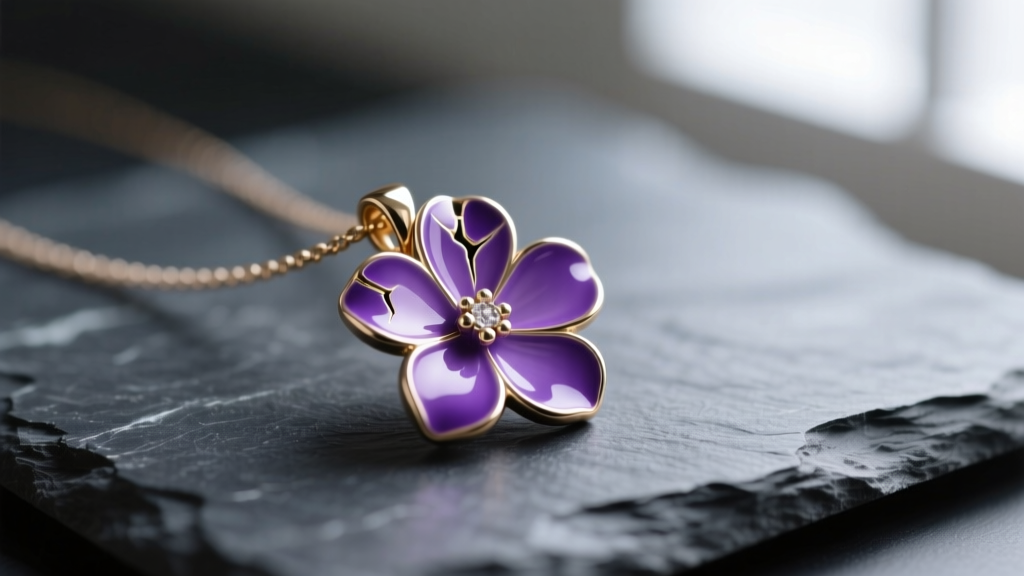
Floral jewelry motifs have remained a staple in accessory design for centuries, but the intricate geometry of petals and stems introduces unique structural vulnerabilities. When it comes to a purple flower necklace, the combination of delicate metalwork, vibrant colorants, and organic shapes creates a specific set of maintenance challenges. Whether your pendant features deep violet amethyst, hand-painted guilloché enamel, or cast purple resin, daily wear exposes these pieces to friction, thermal shock, and UV degradation.
Instead of discarding a damaged piece or paying exorbitant jeweler fees for minor issues, this comprehensive troubleshooting guide will help you diagnose material failures, execute safe at-home repairs, and optimize your storage strategy to preserve the structural integrity and color fidelity of your floral pendants.
Material Diagnostics: Identifying Your Purple Floral Pendant
Before attempting any repair, you must accurately identify the material composition of your purple flower necklace. The Mohs hardness scale and chemical makeup dictate which solvents, polishes, and mechanical forces are safe to use.
- Natural Amethyst (Mohs 7): A purple variety of quartz. Highly durable but susceptible to thermal shock and prolonged UV fading. Often set in sterling silver or gold prongs.
- Vitreous Enamel on Metal: Fused glass powder on a copper or silver base. Extremely hard but highly brittle. Prone to chipping upon impact.
- Epoxy or UV Resin: A synthetic polymer poured into metal bezels. Soft (Mohs 2-3), highly susceptible to scratching, chemical degradation from perfumes, and UV yellowing.
- Anodized Titanium: Titanium treated with an electrical current to create a purple oxide layer. The color is surface-level and can be scratched off, revealing raw grey titanium beneath.
Troubleshooting Enamel Chipping and Micro-Fractures
Enamel work, particularly in intricate floral designs where petals taper to sharp points, is notoriously fragile. If your purple enamel flower necklace has suffered a chip, the exposed metal base will quickly oxidize and spread the fracture.
At-Home Stabilization for Minor Chips
For chips smaller than 2mm, you can stabilize the area to prevent further glass flaking. Do not use standard super glue (cyanoacrylate), as it dries cloudy and yellows over time. Instead, use a high-quality, optically clear UV-curing resin. Apply a microscopic drop using a toothpick, ensuring it fills the void and slightly domes over the edge to seal the enamel boundary. Cure it under a 36W UV lamp for 60 seconds. According to the Enamel Arts Foundation, while this does not replace lost glass, it creates a protective polymer cap that halts structural degradation.
Professional Re-Enameling
If the chip exposes the underlying copper or silver and spans a large petal area, the piece requires kiln-fired re-enameling. This must be done by a specialist who can match the specific cobalt and manganese ratios used to create the original purple hue, as enamel colors change drastically based on firing temperatures (typically between 1,380°F and 1,560°F).
Fixing Cloudy Amethyst and Fading Purple Stones
Amethyst is the most common gemstone used in purple flower necklaces. However, wearers frequently report two major issues: surface clouding and color fading.
Removing Surface Clouding and Lotion Buildup
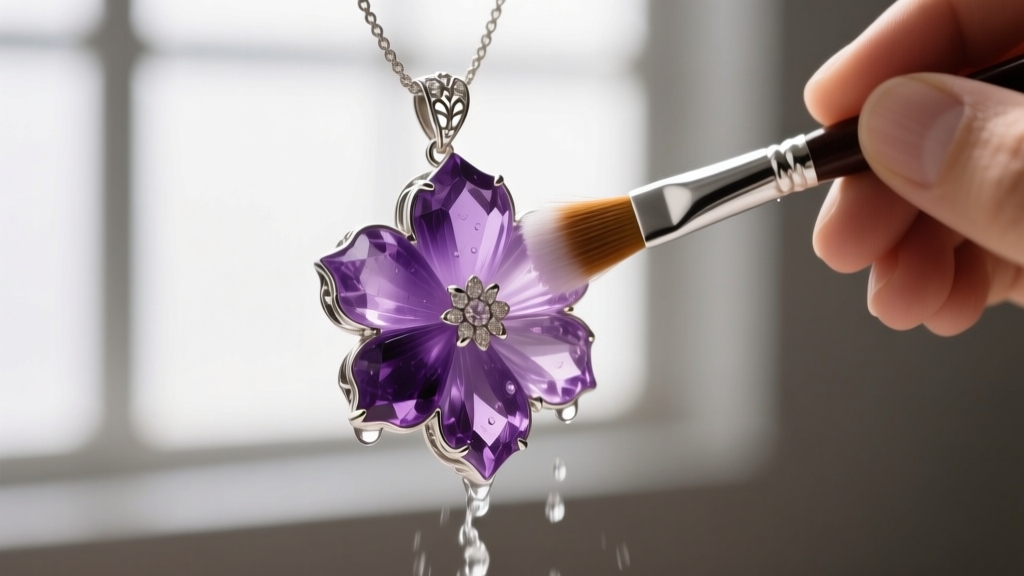
Amethyst is porous enough to trap microscopic particles of skin oils, lotions, and hard water minerals, which create a cloudy film that dulls the stone's light return. The Fix: Create a solution of lukewarm distilled water and a few drops of ammonia-free dish soap. Use a baby-soft toothbrush to gently agitate the surface, paying special attention to the culet (the bottom point of the stone) where grime accumulates. Warning: Never use ultrasonic cleaners on amethyst floral pendants. As noted by the Gemological Institute of America (GIA), amethyst often contains natural liquid inclusions and micro-fractures; the high-frequency vibrations of an ultrasonic bath can cause the stone to shatter along these fault lines.
Addressing UV-Induced Fading
If your amethyst has shifted from a vibrant purple to a washed-out brownish-yellow, it has suffered UV degradation. Unfortunately, this is a permanent alteration of the stone's iron-impurity crystal lattice. No amount of polishing will restore the purple color. The only professional recourse is to have the stone removed and re-heat-treated by a lapidary, though this is rarely cost-effective for commercial-grade amethyst.
Resolving Chain Tangling in Intricate Floral Prongs
A persistent mechanical failure in floral necklaces is the chain snagging on the pendant's prongs or petal edges. This occurs due to a mismatch between the chain gauge and the pendant's bail or negative space.
The Gauge-to-Gap Ratio
If your purple flower pendant features openwork petals (negative space between the metal vines), a thin chain (like a 0.7mm snake chain) will easily slip into these gaps, knotting the necklace and bending the delicate silver or gold wires. The Fix: Upgrade your chain to a thicker gauge that physically cannot pass through the smallest negative space in the floral design. For most standard floral pendants, a 1.5mm to 2.0mm box chain or a 2.5mm rope chain provides enough structural width to prevent slipping, while remaining flexible enough to drape elegantly. Suppliers like Rio Grande offer precision-milled chains that ensure consistent link sizing to prevent micro-snags.
Filing Snag-Prone Prongs
If the chain is catching on the stone-holding prongs, the prongs may have been left too sharp or lifted due to impact. Using a fine-grit (600) diamond needle file, gently round the tops of the prongs, then polish with a rouge cloth to restore the mirror finish and eliminate the catching point.
Reversing Resin Yellowing and UV Damage
Many affordable purple flower necklaces utilize dyed epoxy resin to achieve a translucent, stained-glass effect. Over time, exposure to sunlight and skin acids causes the resin to yellow, turning a vibrant violet into a muddy brown.
The Wet-Sanding and Polishing Protocol
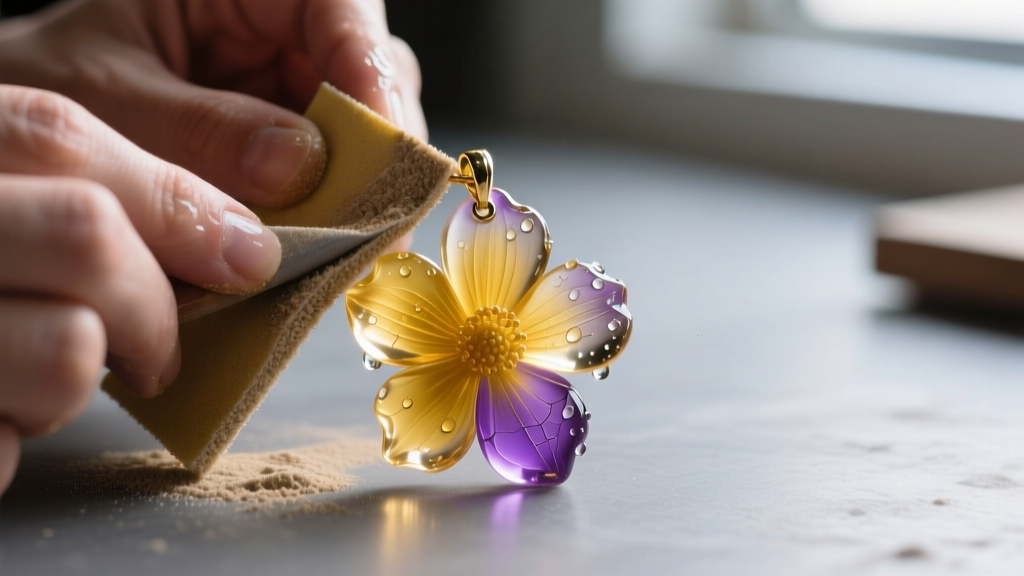
If the yellowing is superficial (oxidation on the top 0.1mm), you can restore the purple clarity through progressive wet-sanding.
- Submerge the resin pendant in water and sand gently with 800-grit wet/dry sandpaper to remove the oxidized yellow layer.
- Progress to 1500-grit, then 3000-grit to eliminate the scratches left by the previous stage.
- Apply a specialized plastic polish, such as the Novus Plastic Polish Kit (specifically Novus #2 for fine scratches and #1 for cleaning), using a microfiber cloth in circular motions.
- Seal the restored resin with a clear, UV-inhibiting acrylic spray to delay future yellowing.
Preventative Care and Storage Framework
Proper storage is the most effective troubleshooting method, as it prevents 90% of the mechanical and chemical failures associated with floral jewelry. Use the matrix below to tailor your storage environment to your specific necklace material.
| Material Type | Primary Threat | Ideal Storage Environment | What to Avoid |
|---|---|---|---|
| Amethyst / Quartz | UV Fading, Scratches | Dark, lined jewelry box, separate compartment | Direct sunlight, diamond storage (diamonds will scratch amethyst) |
| Vitreous Enamel | Impact Chipping, Thermal Shock | Padded pouch, rigid box to prevent crushing | Extreme temperature changes, dropping on tile/stone |
| Epoxy Resin | UV Yellowing, Chemical Melting | Airtight bag with anti-tarnish strip, away from light | Perfume contact, alcohol-based cleaners, prolonged heat |
| Anodized Titanium | Color Scrubbing, Friction | Soft cloth wrap, minimal friction movement | Ultrasonic cleaners, abrasive polishing cloths |
By understanding the specific material science behind your purple flower necklace, you can transition from reactive repairs to proactive preservation. Whether you are stabilizing a chipped enamel petal, upgrading your chain gauge to prevent tangles, or wet-sanding oxidized resin, applying these targeted troubleshooting techniques will ensure your floral jewelry remains vibrant and structurally sound for years to come.


