Garnet and Pearl Necklace Guide: Material Properties & Care
Discover how to balance the organic softness of pearls with the crystalline hardness of garnets in a garnet and pearl necklace design and care guide.

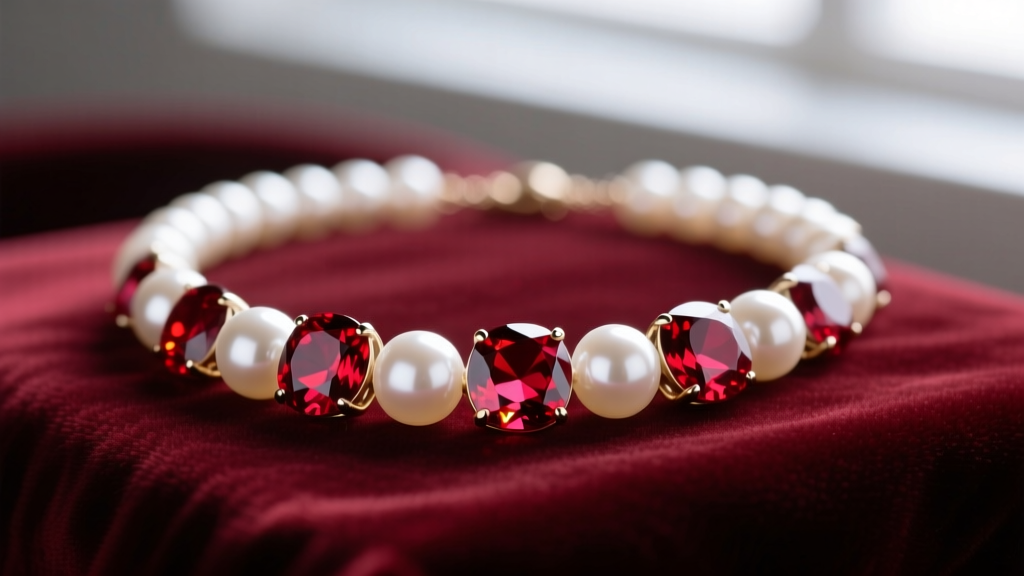
The juxtaposition of organic and mineral elements in fine jewelry creates pieces of profound visual and tactile contrast. A garnet and pearl necklace represents one of the most striking combinations in gemology, pairing the deep, vitreous luster of crystalline silicates with the soft, iridescent glow of biogenic nacre. However, combining these two vastly different materials requires a sophisticated understanding of their physical properties, structural vulnerabilities, and long-term care requirements. As we navigate jewelry design and material science in 2026, mastering the interplay between these gems is essential for both creators and collectors.
The Mineral vs. The Organic: Understanding the Core Conflict
To successfully design, wear, or maintain a garnet and pearl necklace, one must first recognize that these materials exist on opposite ends of the gemological spectrum. Garnet is a durable, earth-mined mineral, while the pearl is a delicate, biologically generated organic gem. According to the Gemological Institute of America (GIA), garnet is a nesosilicate with a complex chemical composition that varies by species, whereas pearls are primarily composed of calcium carbonate (aragonite) bound by an organic protein called conchiolin.
Garnet: Crystalline Hardness and Varieties
When jewelers refer to 'garnet' in modern necklace designs, they are most frequently utilizing Rhodolite (a pyrope-almandine solid solution) or Pyrope. These varieties exhibit a Mohs hardness of 7.0 to 7.5. While garnet lacks true cleavage—meaning it does not split along defined crystallographic planes like diamond or topaz—it is still somewhat brittle and exhibits a conchoidal fracture. This means that while it resists scratching exceptionally well, a sharp impact to the girdle or culet of a faceted garnet can cause chipping.
Pearl: Organic Porosity and Nacre Thickness
Pearls, conversely, are remarkably soft. The GIA Pearl Guide notes that pearls rank between 2.5 and 4.5 on the Mohs scale. Their beauty relies entirely on the thickness and quality of the nacre, which is composed of microscopic aragonite platelets stacked like bricks, cemented together by conchiolin. Because of this organic matrix, pearls are highly porous, sensitive to acids, and vulnerable to rapid dehydration. Hanadama-grade Akoya pearls or high-end freshwater pearls with thick nacre are typically selected for premium necklaces, but their softness remains their Achilles' heel when paired with harder minerals.
Structural Integrity: Designing the Garnet and Pearl Necklace
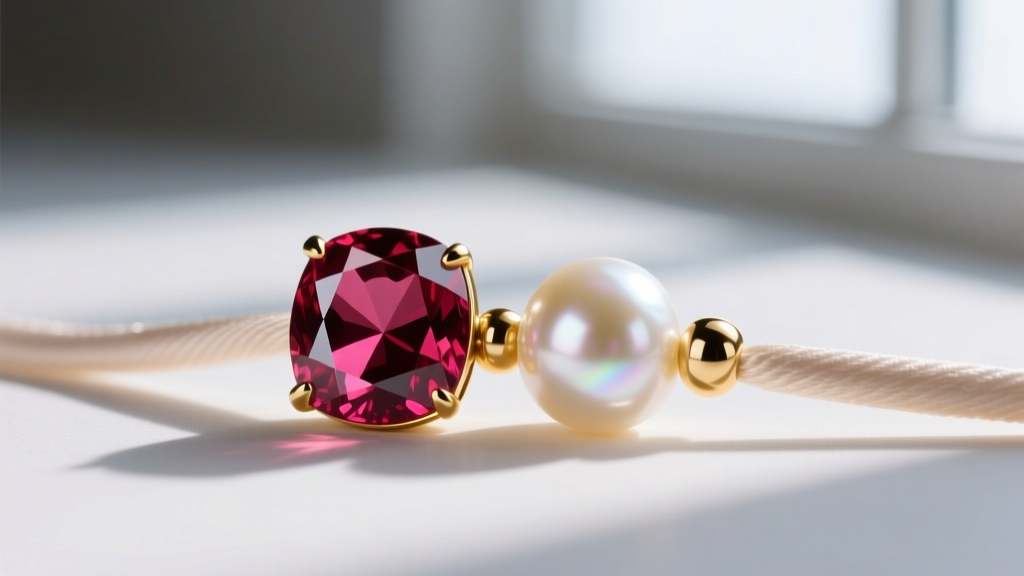
The most critical failure mode in a mixed-material necklace is asymmetric abrasion. If a faceted garnet is allowed to rest directly against a pearl, the garnet will act as a lapidary sandpaper. Over months of wear, the sharp facet junctions of the garnet will literally grind away the pearl's nacre, exposing the dull bead nucleus beneath and permanently destroying the pearl's value and luster.
To prevent this, master jewelers employ specific structural barriers and stringing techniques:
- Metal Spacer Beads: Using 14k or 18k gold, platinum, or sterling silver spacer beads between the garnet and pearl creates a physical buffer. The metal (Mohs 2.5-4 for gold, but highly malleable) will absorb the friction without damaging the pearl's aragonite layers.
- Bezel and Semi-Bezel Settings: Rather than drilling pearls and stringing them alongside loose garnet beads, high-end designs often feature garnets set in bezel mountings. This secures the sharp edges of the garnet and allows the pearl to be suspended safely via a jump ring or bail.
- Silk Knotting Protocols: When stringing both materials on a continuous strand, 100% natural silk cord (such as Griffin size #2 or #3, measuring 0.45mm to 0.50mm) is mandatory. Every single pearl must be hand-knotted. Garnets, which have smaller drill holes and sharper edges, should be wire-wrapped or separated by French wire (gimp) to prevent them from fraying the silk cord from the inside out.
- Clasp Engineering: A standard spring-ring clasp is insufficient for the weight of garnets. A secure lobster clasp or a custom box clasp with a figure-eight safety catch is required, always finished with French wire at the cord ends to prevent metal-on-silk abrasion.
Material Comparison Data Matrix
Understanding the empirical data behind these gemstones is crucial for proper handling, cleaning, and setting. The table below outlines the critical physical and chemical properties of the primary materials used in these necklaces.
| Property | Rhodolite / Pyrope Garnet | Akoya / Freshwater Pearl | 14k Yellow Gold (Spacers) |
|---|---|---|---|
| Mohs Hardness | 7.0 - 7.5 | 2.5 - 4.5 | 2.5 - 3.0 (Highly Malleable) |
| Toughness | Good (Brittle on edges) | Fair to Poor (Prone to chipping) | Excellent |
| Specific Gravity | 3.70 - 4.10 | 2.60 - 2.85 | 12.9 - 14.6 |
| Chemical Sensitivity | Hydrofluoric acid only | Acids, perfumes, cosmetics, sweat | Halogens, aqua regia, mercury |
| Ultrasonic Cleaning | Generally Safe | NEVER (Causes nacre delamination) | Safe (if no porous gems attached) |
| Steam Cleaning | Generally Safe | NEVER (Causes thermal shock) | Safe |
Long-Term Maintenance and Chemical Sensitivities
The care regimen for a garnet and pearl necklace is entirely dictated by the most vulnerable component: the pearl. While garnets can withstand rigorous ultrasonic and steam cleaning, subjecting a pearl to these processes will cause catastrophic failure. The high-frequency vibrations of an ultrasonic cleaner will shatter the conchiolin bonds, causing the nacre to peel or 'craze' in a matter of minutes.
Expert Rule of Thumb: Always adopt the 'Last On, First Off' protocol. Pearls are highly susceptible to the organic acids found in human perspiration and the alcohols in cosmetics. Apply all perfumes, hairsprays, and lotions at least 15 minutes before donning your necklace to allow the volatile compounds to evaporate.
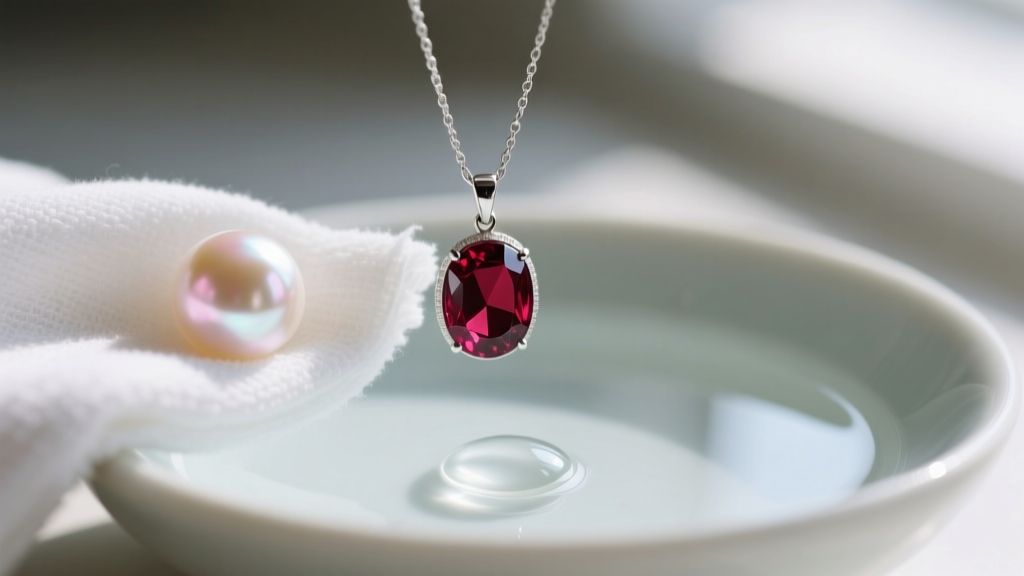
For routine cleaning, use only a damp, lint-free microfiber cloth with a drop of pH-neutral, phosphate-free soap. Wipe the pearls gently, avoiding the drill holes where moisture can become trapped and rot the internal silk thread. The garnets can be gently brushed with a soft baby toothbrush to remove sebum buildup from behind the pavilion facets, which restores their vitreous brilliance.
Pricing, Sourcing, and Market Trends in 2026
Constructing a bespoke garnet and pearl necklace involves navigating distinct supply chains. High-quality, eye-clean Rhodolite garnets (typically sourced from Madagascar or Tanzania) currently trade between $50 and $150 per carat for calibrated 4mm to 6mm faceted rounds suitable for necklace strands. Conversely, premium Hanadama-certified Akoya pearls with thick nacre (0.4mm+) and sharp luster command between $300 and $800 for a matched 16-inch strand.
When factoring in the labor-intensive hand-knotting process, precious metal spacers, and custom clasp fabrication, a well-constructed, heirloom-quality garnet and pearl necklace generally retails between $1,200 and $3,500. For consumers seeking authenticity and durability, sourcing from reputable dealers who provide certified stringing materials and verifiable gemological reports is paramount. Avoid mass-market strands where pearls and garnets are strung tightly together on synthetic monofilament without knotting or spacers, as these pieces are structurally compromised from the moment they are worn.
Ultimately, the garnet and pearl necklace is a triumph of contrast. By respecting the mineral hardness of the garnet and the organic fragility of the pearl, jewelers and collectors can preserve these breathtaking pieces for generations, ensuring that the deep crimson fire and the soft, lunar glow continue to complement one another flawlessly.


