The Ultimate Mannequin Necklace Holder Buying Guide
Discover how to choose the best mannequin necklace holder. Learn about bust geometry, archival-safe materials, and weight distribution for fine jewelry.

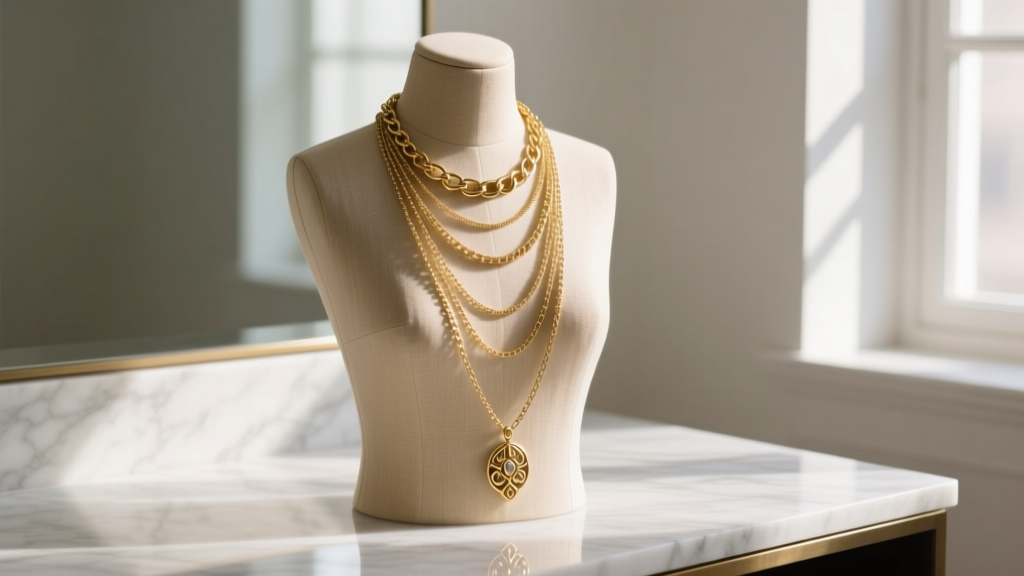
Storing fine jewelry is an exercise in material science and spatial geometry. While flat drawer inserts and basic hooks work for simple studs, they are notoriously destructive to complex chainmaille, delicate pendants, and layered necklace sets. Enter the mannequin necklace holder: a three-dimensional display and storage solution designed to mimic the human neckline. By utilizing gravity and anatomical curvature, a high-quality bust prevents the micro-kinks, clasp fatigue, and metal oxidation that plague traditional flat storage methods.
However, not all display busts are created equal. The market is flooded with cheap, off-gassing plastics that can permanently damage your most prized pieces. This comprehensive buying guide breaks down the exact specifications, material grades, and structural requirements you need to evaluate before investing in a mannequin necklace holder for your collection in 2026.
Why Neckline Geometry Matters for Jewelry Storage
The human neck is not a perfect cylinder; it features a distinct slope from the jawline to the clavicle, and a broader expansion across the shoulders. A properly engineered mannequin necklace holder replicates this topography. Why is this critical for your jewelry? Gravity distribution.
When a delicate 20-gauge serpentine or box chain is stored flat in a drawer, the links are forced into unnatural folds, leading to permanent structural kinking. When hung on a standard flat hook, the entire weight of the pendant pulls downward, causing severe stress on the single jump ring and the lobster clasp's internal spring mechanism. Over time, this leads to clasp failure and stretched links.
A contoured bust allows the chain to drape naturally. The friction against the fabric of the bust, combined with the anatomical slope, distributes the weight of heavy pendants across a wider surface area. For layering enthusiasts, a bust with a pronounced shoulder slope is mandatory. It provides the necessary physical separation to prevent a 14-inch choker from tangling with an 18-inch princess-length chain and a 24-inch opera-length piece.
Material Breakdown: What Safeguards Your Metals?
The exterior fabric and interior core of your mannequin necklace holder dictate the chemical safety of your jewelry. According to the Gemological Institute of America (GIA), improper storage materials are a leading cause of premature tarnishing and alloy degradation. You must avoid materials that off-gas volatile organic compounds (VOCs) or contain acidic dyes.
The Hidden Dangers of Polyurethane (PU) Leather
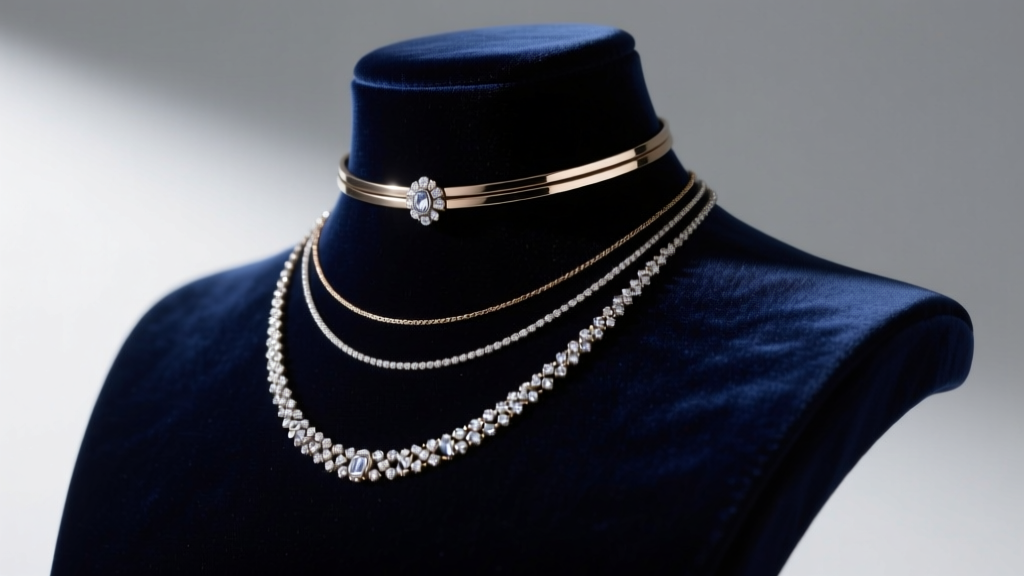
Many budget-friendly mannequins are wrapped in PU (polyurethane) leather. While aesthetically pleasing and easy to wipe clean, PU often contains chemical plasticizers and sulfur compounds. When confined in a closed drawer or display case, these compounds off-gas and react aggressively with copper-rich alloys. If you store 14k rose gold or standard brass fashion jewelry on PU leather, you will notice rapid, localized oxidation and dark spotting that requires professional polishing to remove.
Archival-Safe Alternatives
For fine jewelry, particularly 925 sterling silver which is highly susceptible to sulfur-induced tarnish, you must seek out archival-grade materials. Look for holders wrapped in unbleached, acid-free cotton, pure linen, or specialized non-tarnish fabrics like Pacific Silvercloth. These materials are chemically inert and will not trigger galvanic corrosion or chemical oxidation.
| Material | Tarnish Risk | Durability | Best Used For |
|---|---|---|---|
| PU Leather | High (Off-gassing) | High | Costume jewelry, short-term retail display |
| Standard Velvet | Medium (Acidic dyes) | Medium | Gold-plated pieces, occasional wear items |
| Pure Linen / Cotton | Very Low (Inert) | High | Sterling silver, pearls, everyday fine jewelry |
| Pacific Silvercloth | Zero (Tarnish-absorbing) | Medium | Heirloom silver, high-carat gold, investment pieces |
Sizing & Proportions: Matching the Bust to Your Collection
A mannequin necklace holder must be proportionally scaled to both your jewelry and your physical space. The two most critical metrics are the neck circumference and the base footprint.
Standard Dimensions to Look For
- Neck Circumference: The ideal neck circumference for a display bust is between 11.5 and 12.5 inches. This closely mirrors the average human neck, ensuring that chokers (typically 14 to 16 inches in total length, including the clasp) drape with the correct amount of negative space rather than sitting choked against the top of the bust.
- Shoulder Width: Look for a shoulder span of at least 10 inches. This provides ample room for wide, dramatic collar necklaces and bib-style statement pieces to lay flat without overlapping the edges of the bust, which can cause the wire armatures inside the jewelry to bend.
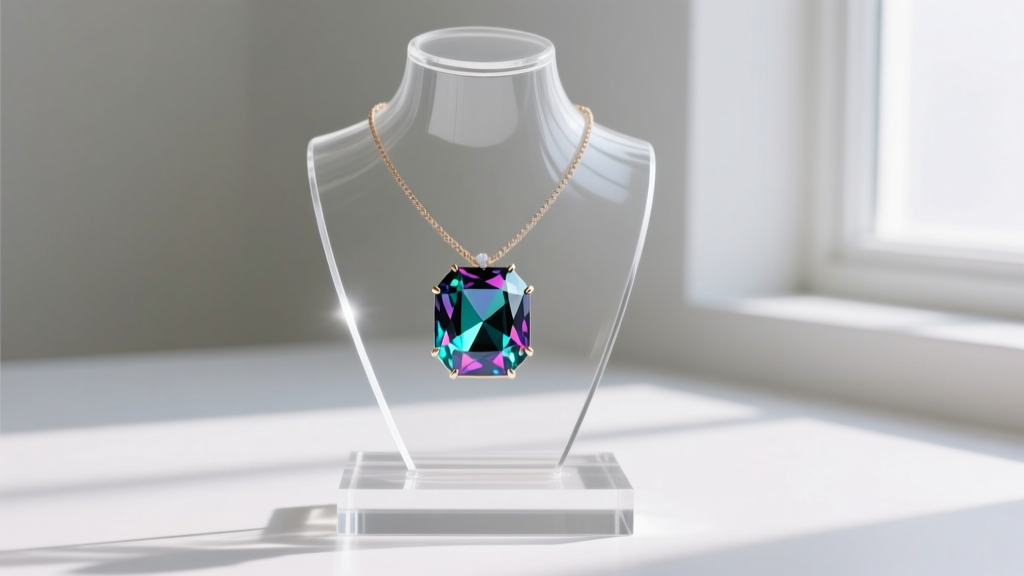
- Base Footprint & Weight: A top-heavy bust will tip over if draped with a 150-gram gemstone statement necklace. Ensure the base has a footprint of at least 6x6 inches. For heavy pieces, the base must be weighted—either sand-filled, solid wood, or featuring a metal core.
Specialized Features for Advanced Collectors
As your collection evolves, your storage solutions must adapt. When evaluating premium mannequin necklace holders, consider these advanced structural features that elevate a simple display into a functional jewelry management system.
'Proper jewelry storage is not just about organization; it is about preserving the structural integrity of the metal and the security of the gemstone settings. A 3D display minimizes the mechanical stress on clasps and prongs that occurs during the constant folding and unfolding of flat storage.' — Jewelers Mutual Insurance Group
Detachable and Adjustable Bases
High-end mannequins often feature a threaded, detachable base. This is crucial for traveling collectors or those who frequently rotate their displays between a vanity and a secure safe. Furthermore, adjustable-height necks allow you to raise the bust to accommodate exceptionally long opera or rope-length chains (30+ inches) so they do not pool awkwardly on the table surface.
Integrated Earring and Ring Add-Ons
Some modern 2026 designs incorporate subtle, flush-mounted brass pegs on the sides of the bust or within the base plate. These allow you to display matching earring suites or coordinating rings directly alongside the necklace, creating a cohesive, ready-to-wear visual set without requiring separate acrylic trays.
Pricing Tiers & Brand Expectations
When shopping for a mannequin necklace holder, pricing generally correlates with the archival safety of the materials and the weight of the base. Here is what you can expect in the current market:
- Entry-Level ($15 - $30): Typically made of hollow plastic wrapped in PU leather or thin polyester. The bases are lightweight and prone to tipping. Suitable only for lightweight, non-precious fashion jewelry.
- Mid-Tier Archival ($45 - $85): Features solid wood or dense foam cores wrapped in acid-free linen or high-grade cotton. Bases are properly weighted. Brands like Stackers and Wolf often offer options in this tier that balance aesthetic appeal with chemical safety.
- Luxury & Custom ($120 - $250+): Handcrafted from solid hardwoods, wrapped in Pacific Silvercloth or museum-grade velvet. These often include customizable height adjustments, brass hardware, and specialized internal compartments in the base for loose pendants or brooches.
Maintenance & Tarnish Prevention Protocols
Even the most expensive, archival-safe mannequin necklace holder requires basic maintenance to ensure it continues to protect your jewelry. Dust accumulation on the fabric can act as a micro-abrasive, slowly wearing down high-polish gold finishes over time.
To maintain your holder, use a soft-bristled, clean makeup brush to gently sweep dust from the fabric crevices weekly. If your holder is wrapped in linen or cotton, avoid using liquid fabric fresheners or aerosol sprays, as the alcohol and chemical propellants can degrade the fibers and leave a residue that transfers to your jewelry. Instead, place a few 3M Anti-Tarnish Strips inside the hollow base (if applicable) or tuck them discreetly behind the neck of the bust if it is stored inside a closed armoire. This creates a localized scavenger environment that neutralizes airborne sulfur before it can reach your sterling silver chains.
Final Verdict: Investing in Your Collection
A mannequin necklace holder is more than a decorative vanity accessory; it is a vital preservation tool for any serious jewelry enthusiast. By prioritizing anatomical geometry, demanding archival-safe fabrics, and ensuring a properly weighted base, you protect your investments from mechanical stress and chemical degradation. Whether you are displaying a delicate 18-gauge gold cable chain or a heavy, multi-strand turquoise statement piece, the right bust ensures your collection remains pristine, untangled, and ready to wear at a moment's notice.


