Custom Heart Necklace Name Guide: Fonts, Metals & Engraving Tips
Discover how to choose the perfect custom heart necklace name design. Compare metals, engraving fonts, chain lengths, and pricing for pendants.

Finding the perfect personalized jewelry piece requires balancing sentimental value with structural integrity. When you begin your search for a custom heart necklace name pendant, you are not just looking for a pretty shape; you are investing in a wearable archive of a relationship, a child, or a personal mantra. As we navigate the jewelry market in 2026, consumers are increasingly prioritizing heirloom-quality materials over fast-fashion alternatives. This comprehensive buying guide will walk you through the exact metallurgical standards, typography choices, and structural considerations you need to make before purchasing a personalized heart pendant.
The Anatomy of a Custom Heart Name Pendant
A well-crafted name heart pendant consists of three critical components: the faceplate, the bail, and the jump ring. The faceplate is the canvas for your chosen name or initials. For a standard heart shape, the lower point of the heart is a structural vulnerability. If the metal is too thin, the point can easily bend or snap off during daily wear. We recommend a minimum metal thickness of 1.2 millimeters (approximately 18-gauge) for the bottom tip of the heart. The bail—the loop that connects the pendant to the chain—should be soldered rather than simply bent, ensuring it won't pry open under the weight of the pendant.
Metal Grades and Durability Standards
The longevity of your necklace depends entirely on the base metal and any surface treatments. According to the Gemological Institute of America (GIA), understanding gold purity is essential for predicting how a piece will wear over time. Here is a breakdown of the most common metals used for custom name necklaces:
Sterling Silver (925): Composed of 92.5% pure silver and 7.5% copper or other alloys. It is an excellent, affordable choice, but it will oxidize and tarnish when exposed to sulfur in the air and skin oils. Look for pieces that are rhodium-plated to delay tarnishing.
Gold Vermeil: This is not standard gold plating. The Federal Trade Commission (FTC) strictly defines vermeil as a sterling silver base coated with at least 2.5 microns of 10k, 14k, or 18k gold. If a retailer sells gold plated jewelry without specifying the micron thickness and silver base, it is likely brass with a thin gold wash that will wear off in months.
Solid 14k and 18k Gold: The ultimate choice for a piece meant to be worn in the shower and slept in. 14k gold (58.5% pure gold) offers the best balance of rich color and scratch resistance due to its higher alloy content, while 18k gold (75% pure) is softer, richer in color, but more prone to surface marring.
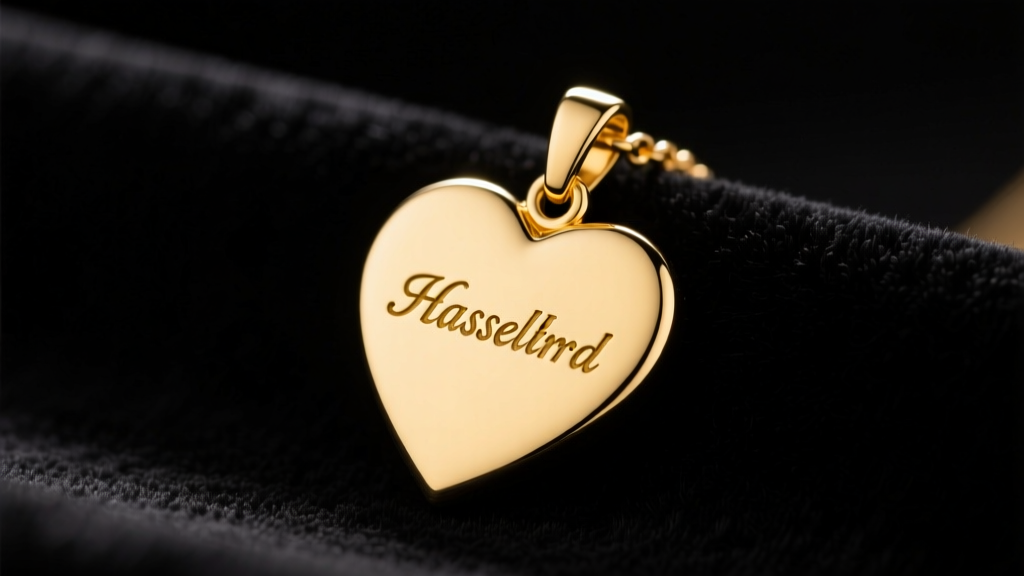
Engraving vs. Cut-Out: Which Style Wins?
When designing a heart necklace name piece, you must choose between two primary manufacturing techniques: laser engraving and precision die-cutting (cut-out). Both have distinct advantages and failure modes.
Laser engraving involves using a high-powered laser to vaporize the top layer of metal, creating a permanent, dark, or textured contrast. This method allows for incredibly detailed typography and even micro-text. However, if the pendant is made of gold vermeil, deep laser engraving can penetrate through the gold layer and expose the silver underneath, leading to localized tarnishing.
Cut-out nameplates are created using CNC milling or laser cutting to physically remove the negative space around the letters. This creates a bold, modern silhouette. The critical flaw to watch for in cut-out designs is floating elements. Letters like O, A, D, or P have enclosed centers. In a poorly designed cut-out pendant, the inner circle of the O must be connected to the outer frame via a tiny, fragile bridge of metal. If this bridge is less than 0.5mm thick, it will inevitably snap.
| Feature | Laser Engraved Heart | Cut-Out Nameplate Heart |
|---|---|---|
| Durability | High (Solid surface) | Moderate (Fragile letter bridges) |
| Weight | Heavier (More metal retained) | Lighter (Negative space removed) |
| Design Flexibility | Unlimited (Can include dates, fingerprints) | Limited to connected, bold fonts |
| Best Metal | Sterling Silver, Solid Gold | Solid Gold (for bridge strength) |
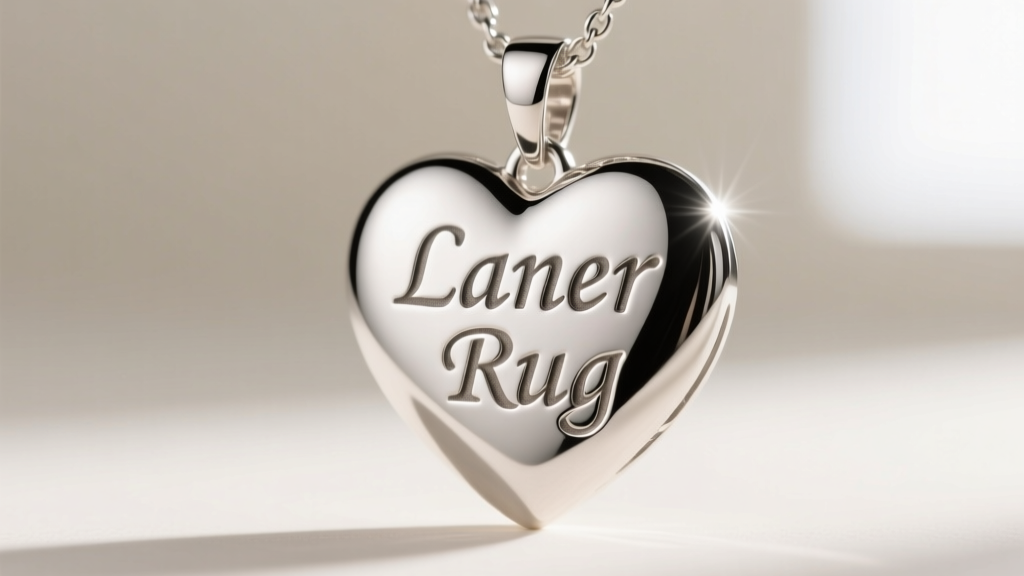
Typography and Font Selection
The font you choose dictates the structural integrity of the pendant just as much as the metal does. Script and cursive fonts are the most popular choices for a romantic heart necklace name design, but they present engineering challenges. In a cursive font, the loops and connecting lines between letters can become dangerously thin when scaled down to fit a 15-millimeter heart pendant. If the connecting line between a lowercase h and e is only 0.3mm thick, it will bend with minimal pressure.
To mitigate this, expert jewelers use hidden bridges—thickening the connections slightly and polishing them to blend into the script flow. If you prefer a modern aesthetic, opt for a bold sans-serif or block serif font. These fonts feature uniform stroke widths, meaning there are no fragile hairline connections. A block font also maximizes readability from a distance, making it ideal for layering over thick fabrics or wearing as a standalone statement piece.
Chain Pairing and Bail Mechanics
A custom heart pendant is only as secure as the chain it hangs from. The most common mistake buyers make is pairing a heavy, solid gold heart pendant with a delicate 0.8mm or 1.0mm chain. The friction from the bail sliding back and forth across a thin chain will act like a saw, eventually cutting through the chain links.
For pendants weighing between 3 and 6 grams, you need a chain with a minimum width of 1.5mm. A box chain or a wheat chain is highly recommended because their interlocking geometric links distribute tension evenly and resist kinking. Avoid snake chains entirely; they are notoriously prone to kinking and trapping hair, which can pull the bail apart. Additionally, ensure the bail is a soldered ring rather than a pinch bail. Pinch bail clasps rely on tension to stay closed and frequently snap open when caught on a sweater.
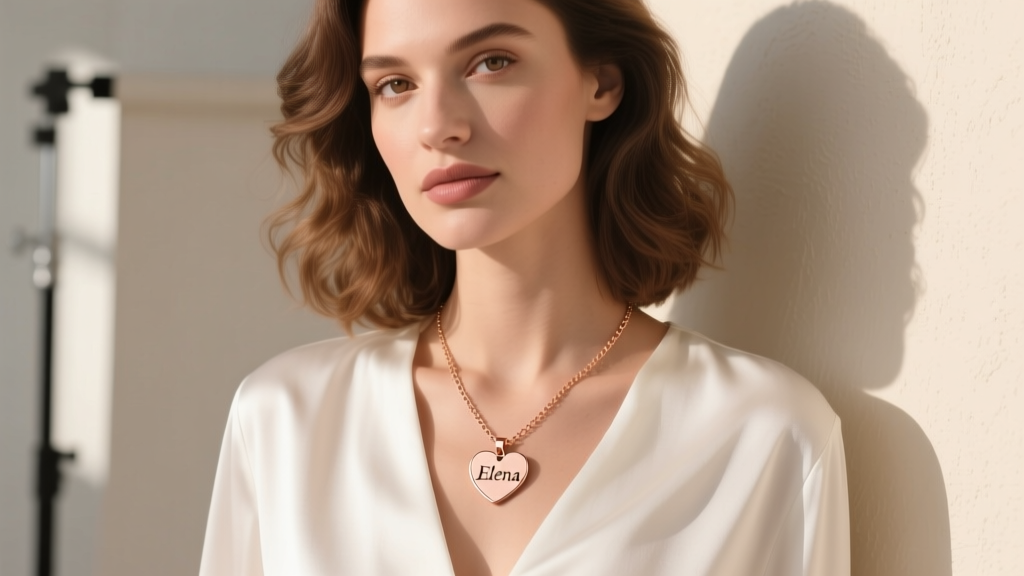
Real-World Pricing Tiers in 2026
Understanding what you should pay prevents you from overpaying for inferior materials. Based on current precious metal markets and custom manufacturing labor, here is what you can expect to pay for a high-quality custom heart necklace name pendant (including a standard 18-inch chain):
- Sterling Silver (Engraved): $45 to $85. Anything less likely indicates poor polishing and shallow engraving that will fade.
- 14k Gold Vermeil (Cut-out): $95 to $160. Ensure the retailer guarantees the 2.5-micron thickness.
- Solid 10k Gold: $220 to $350. A budget-friendly solid gold option, though the color is slightly paler.
- Solid 14k Gold (Engraved or Cut-out): $450 to $850+. The price scales directly with the gram weight of the gold used and the complexity of the custom typography.
When shopping, always ask the jeweler for the exact gram weight of the pendant. A reputable custom jeweler will readily provide this metric, allowing you to compare the actual gold value between different retailers.
Care and Maintenance for Personalized Pendants
To preserve the crisp edges of your engraved or cut-out letters, avoid ultrasonic cleaners. The high-frequency vibrations can loosen small stones if your heart features accent diamonds, and the harsh chemical solutions used in ultrasonic baths can strip the dark antiquing polish often rubbed into laser engravings to make the text pop. Instead, clean your necklace weekly using a few drops of mild dish soap, warm water, and a soft-bristled baby toothbrush to gently dislodge skin oils and lotion from the crevices of the letters. Dry thoroughly with a microfiber cloth to prevent water spots on high-polish surfaces.


