2026 Guide: Dropship Bracelet Bundles and Layered Necklace Sets
Learn how to source high-quality dropship bracelet bundles and layered necklace sets in 2026. Expert guide on metals, clasps, and supplier red flags.

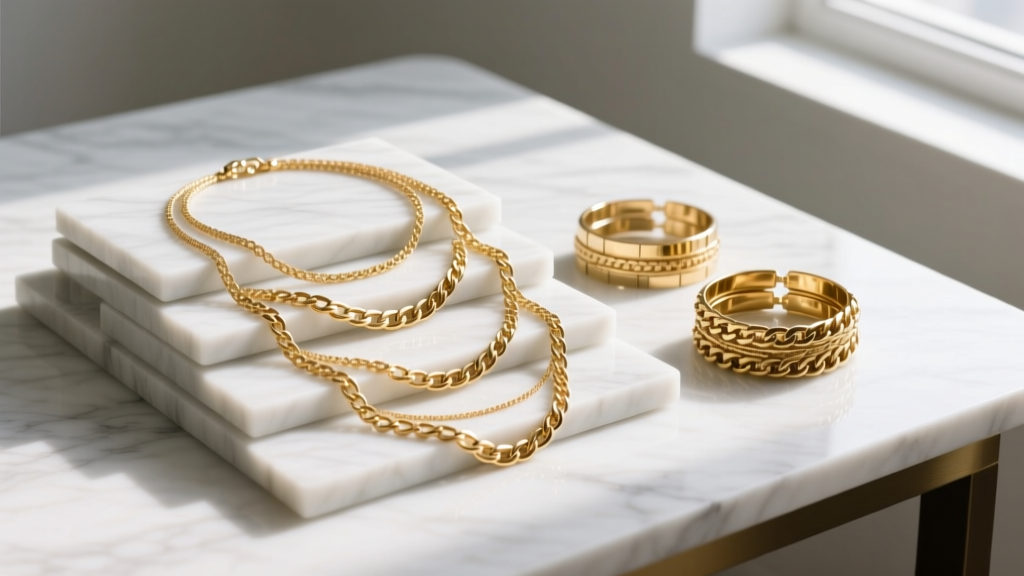
The e-commerce jewelry landscape in 2026 has undergone a massive shift. Consumers are no longer satisfied with cheap, fast-fashion accessories that tarnish after a single wear. For boutique owners and e-commerce entrepreneurs, the ability to successfully source and dropship bracelet bundles and layered necklace sets hinges entirely on understanding material science, hardware durability, and supplier transparency. If you are still sourcing electroplated brass or zinc alloys, your return rates and negative reviews will skyrocket. This comprehensive buying guide breaks down exactly what to look for when curating a high-converting, premium-feel jewelry catalog without holding physical inventory.
The Shift Toward Demi-Fine Dropshipping
In the past, dropshipping jewelry meant competing in a race to the bottom on price, often resulting in $4 retail items made from mystery metals. Today, the most profitable Shopify and WooCommerce stores operate in the 'demi-fine' space. By sourcing high-quality layered necklace sets and coordinating bracelet bundles, store owners can command $35 to $65 retail price points while maintaining healthy 4x to 6x profit margins. The key is vetting suppliers who utilize 316L surgical stainless steel or recycled 925 sterling silver as base metals, rather than relying on outdated brass casting methods that are prone to oxidation and skin discoloration.
Decoding Material Grades and Plating Technologies
When evaluating a supplier's catalog for layered sets, the base metal and plating method are the most critical factors determining your brand's reputation. According to the Federal Trade Commission Jewelry Guides, sellers must accurately disclose base metals and plating thickness. Here is what you must demand from your manufacturing partners:
1. Physical Vapor Deposition (PVD) vs. Electroplating
Traditional electroplating involves dipping a base metal into a chemical bath containing gold ions. While cheap, it results in a microscopic layer (often less than 0.1 microns) that wears off in weeks, exposing the brass underneath and turning the wearer's skin green. In contrast, PVD (Physical Vapor Deposition) coating is a vacuum-chamber process that binds titanium nitride and 14K/18K gold to the base metal at a molecular level. PVD-coated 316L stainless steel is completely waterproof, sweat-proof, and lasts 5 to 10 times longer than electroplated alternatives. If a supplier cannot explicitly verify PVD coating for their stainless steel layered sets, walk away.
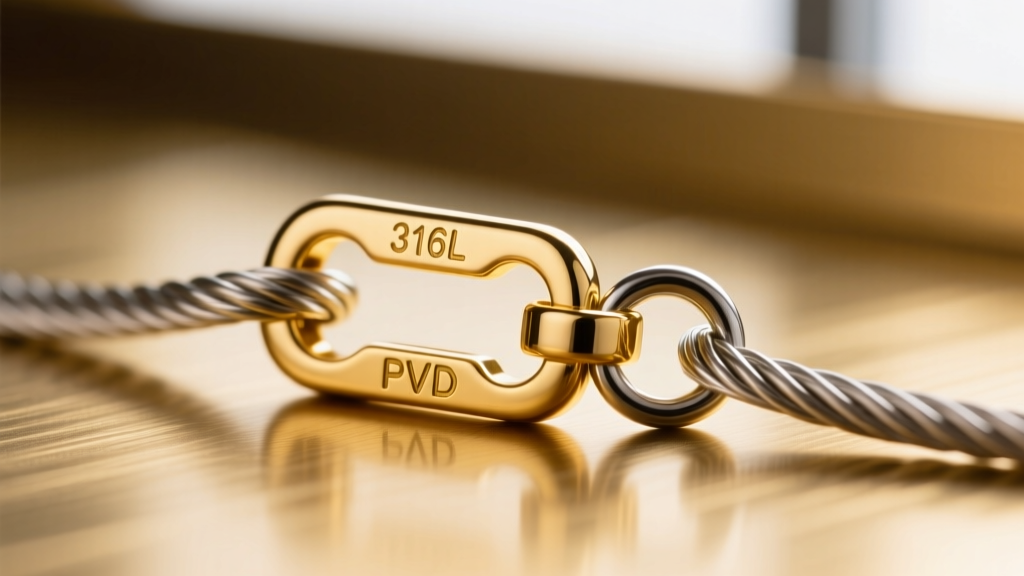
2. Vermeil Standards for Sterling Silver
If you are sourcing higher-tier sterling silver layered sets, you must look for 'Gold Vermeil' rather than standard gold-plated silver. The Gemological Institute of America (GIA) and industry standards dictate that vermeil must feature a sterling silver base with a gold plating of at least 2.5 microns thick and a minimum karatage of 10K (though 14K or 18K is preferred for premium boutiques). Anything less than 2.5 microns is simply 'gold-plated' and will require frequent re-plating by the end consumer.
Evaluating Chain Styles, Gauges, and Hardware
A layered necklace set is only as good as its weakest link—literally. The hardware and chain gauge dictate whether a customer can put the necklace on without breaking it. Many mass-market dropship suppliers use 0.5mm or 0.6mm chains to save on gold weight. These ultra-thin chains are highly prone to tangling, knotting, and snapping under the weight of a simple pendant.
For a premium feel, insist on chain gauges between 1.0mm and 1.5mm for the base layers, and up to 2.0mm for statement pieces. Furthermore, the clasp hardware must be upgraded. Spring-ring clasps are notoriously difficult to fasten and feature thin wire levers that snap. Mandate 10mm or 12mm lobster clasps with reinforced jump rings (minimum 0.8mm wire thickness) that are soldered shut or tightly closed to prevent the chain from slipping through.
| Chain Style | Ideal Gauge (mm) | Tangle Resistance | Best Use in Layered Sets |
|---|---|---|---|
| Cable Chain | 1.0mm - 1.2mm | Moderate | Top layer (14-16 inches) for small pendants |
| Curb Chain | 1.5mm - 2.5mm | High | Base layer (18-20 inches) for durability |
| Figaro Chain | 1.2mm - 2.0mm | High | Mid layer (16-18 inches) for visual texture |
| Box Chain | 0.8mm - 1.2mm | Low | Avoid in multi-layer sets; high knotting risk |
| Snake Chain | 1.0mm - 1.5mm | Very High | Solo statement pieces or bottom-heavy layers |
Integrating Bracelet Bundles for Higher AOV
When building your catalog, learning how to effectively dropship bracelet bundles and layered necklace sets as coordinated collections is a proven strategy to increase Average Order Value (AOV). Customers love 'stacking' but often lack the design eye to mix metals and textures correctly. By offering pre-designed bundles—such as a three-tier gold PVD necklace set paired with a bundle of one curb chain bracelet, two wire bangles, and one beaded strand—you solve a styling problem for the consumer.
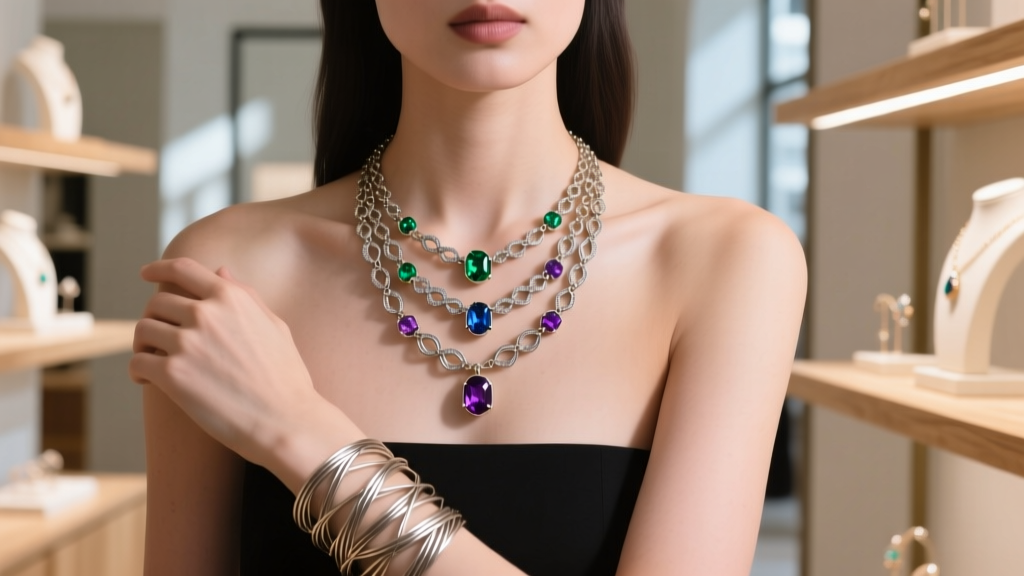
However, sizing is the biggest hurdle in dropshipping bracelets. Unlike necklaces, which have a universal fit, wrist sizes vary drastically. To minimize your return rate, every bracelet bundle you source must include a 2-inch extender chain. The standard women's wrist size is 6 to 6.5 inches; a 6-inch bracelet with a 2-inch extender accommodates up to 95% of your customer base without requiring custom sizing or generating 'too tight' complaints.
Red Flags When Vetting Wholesale Suppliers
Whether you are using platforms like CJ Dropshipping, Spocket, or negotiating directly with manufacturers in Guangzhou or Istanbul, you must watch out for deceptive listing practices. According to comprehensive Shopify dropshipping guidelines, vetting your supplier's claims is essential for long-term brand survival. Avoid suppliers who exhibit the following red flags:
- The '18K Gold' Mirage: If a listing says '18K Gold' but costs $2.50 wholesale and does not list a base metal, it is likely zinc alloy painted with gold-tinted lacquer. Always look for '18K Gold PVD over 316L Stainless Steel'.
- Missing Extender Chains: Necklaces without 2-inch extenders force the layered set to sit awkwardly on different necklines, ruining the intended cascading effect.
- Unsealed Jump Rings: Request macro photos of the clasp connection. If the jump ring has a visible gap and is not soldered, the chain will separate within a month of wear.
- Vague 'Anti-Tarnish' Guarantees: 'Anti-tarnish' is a marketing buzzword. Demand to know the exact plating thickness (in microns) or the coating method (PVD/E-coat). If they cannot answer, they are a middleman, not a manufacturer.
Final Sourcing Checklist for Boutique Owners
Before importing a new layered necklace set or bracelet bundle into your Shopify store, run the product through this final checklist:
- Is the base metal explicitly listed as 316L Stainless Steel or 925 Sterling Silver?
- Is the gold finish applied via PVD (for steel) or Vermeil (for silver, 2.5+ microns)?
- Are the chains at least 1.0mm in gauge to prevent tangling and snapping?
- Do all necklaces and bracelets include a 2-inch adjustable extender chain?
- Are the clasps 10mm+ lobsters with tightly closed or soldered jump rings?
By prioritizing structural integrity and advanced plating technologies over rock-bottom wholesale prices, you can build a sustainable, high-retention jewelry brand. Sourcing the right dropship bracelet bundles and layered necklace sets is an exercise in material science as much as it is in fashion curation. Demand better from your suppliers, and your customers will reward you with loyalty and glowing reviews.


