Ultimate Care Guide for Your Statement Gorget Necklace
Learn expert cleaning and maintenance tips for your gorget necklace. Discover how to polish wide metal collars and protect intricate clasps.

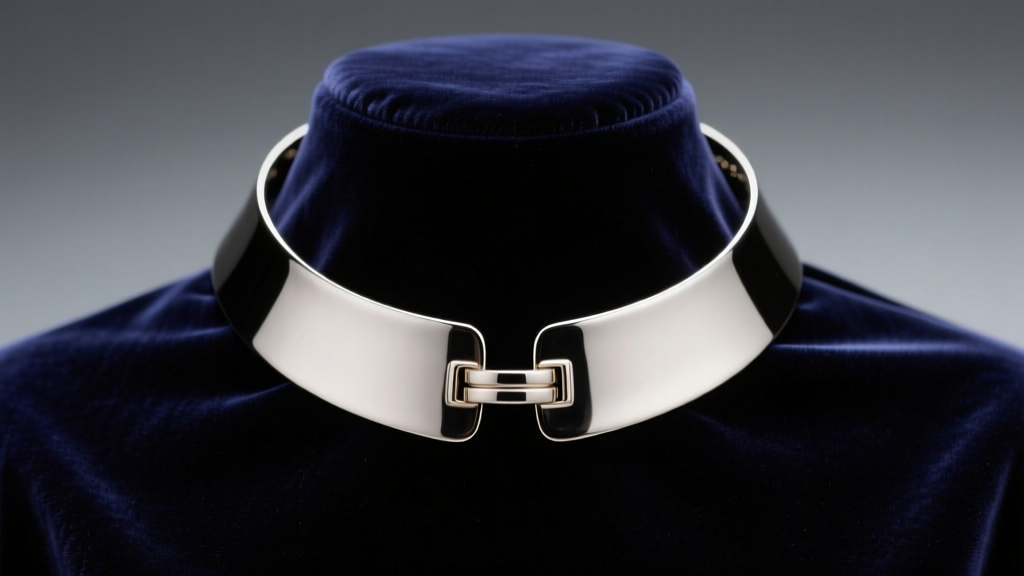
The Anatomy of a Gorget Necklace: Why Care is Different
Unlike delicate chain necklaces or lightweight pendants, a gorget necklace is defined by its structural rigidity, wide surface area, and armor-inspired silhouette. Historically designed to protect the throat, the modern fashion gorget is a bold statement piece typically crafted from 925 sterling silver, 316L stainless steel, solid brass, or gold vermeil. Because it sits flush against the collarbone and wraps around the neck, it presents unique maintenance challenges that standard jewelry care routines simply cannot address.
The wide metallic canvas of a gorget acts as a magnet for skin oils, cosmetics, and environmental humidity. Furthermore, the structural integrity of the piece relies heavily on soldered joints, tension-fit mechanics, or intricate hinges. Applying standard cleaning methods—such as tossing a hinged metal collar into an ultrasonic cleaner—can result in catastrophic failure, including loosened pins and warped frames. This comprehensive guide will walk you through the exact metallurgical considerations, cleaning protocols, and storage mechanics required to keep your gorget necklace in pristine condition.
Daily Wear Protocols: Preventing Tarnish and Warping
Preventative maintenance is the cornerstone of caring for wide metal collars. The human skin's pH typically ranges from 4.5 to 5.5, but this can fluctuate based on diet, stress, and the use of topical products. When a wide metal surface rests directly against the skin for hours, it traps heat and moisture, creating an incubator for rapid oxidation, particularly in copper alloys like brass and sterling silver.
The pH and Friction Factor
To minimize daily tarnish and structural stress, adhere to the following wear protocols:
- The Cosmetic Rule: Always apply perfumes, hairsprays, and lotions at least 15 minutes before putting on your gorget. Alcohol and volatile organic compounds (VOCs) in cosmetics can degrade protective rhodium plating and accelerate the tarnishing of raw brass.
- The Friction Check: Avoid wearing heavy wool or rough synthetic turtlenecks with soft metal gorgets (like high-karat gold or pure silver). The micro-abrasion from rough fibers will create a matte, scratched finish on the inner curve of the collar over time.
- Temperature Shock: Do not wear your gorget into saunas or hot tubs. Rapid thermal expansion and contraction can weaken the solder joints at the clasp mechanism, especially in rigid, non-flexible designs.
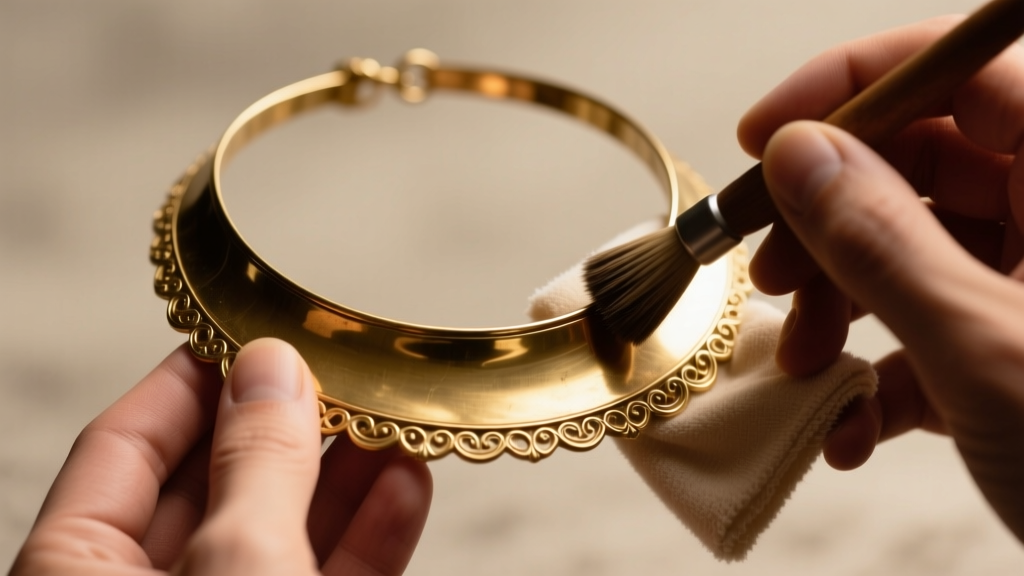
Step-by-Step Deep Cleaning for Wide Metal Collars
When your gorget necklace accumulates sebum, dead skin cells, and environmental tarnish, a deep clean is necessary. Because of the wide surface area, you must use broad, overlapping strokes to avoid creating uneven shine patterns. According to the Gemological Institute of America (GIA), matching the cleaning agent to the specific metal grade is critical to avoid irreversible chemical damage.
Cleaning Solutions by Material Grade
Never use a one-size-fits-all approach. Refer to the table below to select the correct chemical and mechanical cleaning method for your specific gorget.
| Material Grade | Recommended Cleaning Agent | Mechanical Action | Agents to Strictly Avoid |
|---|---|---|---|
| 925 Sterling Silver | pH-neutral dish soap & warm water | Impregnated silver polishing cloth (straight lines) | Chlorine, bleach, toothpaste |
| 316L Stainless Steel | Isopropyl alcohol or glass cleaner | Microfiber cloth (circular motions) | Abrasive scouring pads |
| Solid Brass / Bronze | Lemon juice & baking soda paste | Soft-bristle brush, rinse immediately | Ammonia-based cleaners |
| Gold Vermeil (over Silver) | Mild baby shampoo & distilled water | Lint-free cotton pad (gentle dabbing) | Silver dip, polishing cloths, ultrasonic |
| Oxidized / Antiqued | Dry microfiber cloth only | Buff only high-relief areas | Liquid silver dips, ultrasonic cleaners |
Expert Note on Gold Vermeil: A true gold vermeil gorget features a base of 925 sterling silver plated with at least 2.5 microns of gold. Using a standard silver polishing cloth on vermeil will instantly strip the gold layer due to the embedded jeweler's rouge and mild abrasives. Stick to mild soap and gentle dabbing.
Hinge, Clasp, and Structural Maintenance
The most common failure point of a rigid gorget necklace is the articulation hardware. Unlike a simple lobster clasp on a chain, a gorget often relies on a hidden hinge at the nape of the neck and a tension-fit or magnetic clasp at the sternum. These mechanical joints require specialized lubrication and inspection.
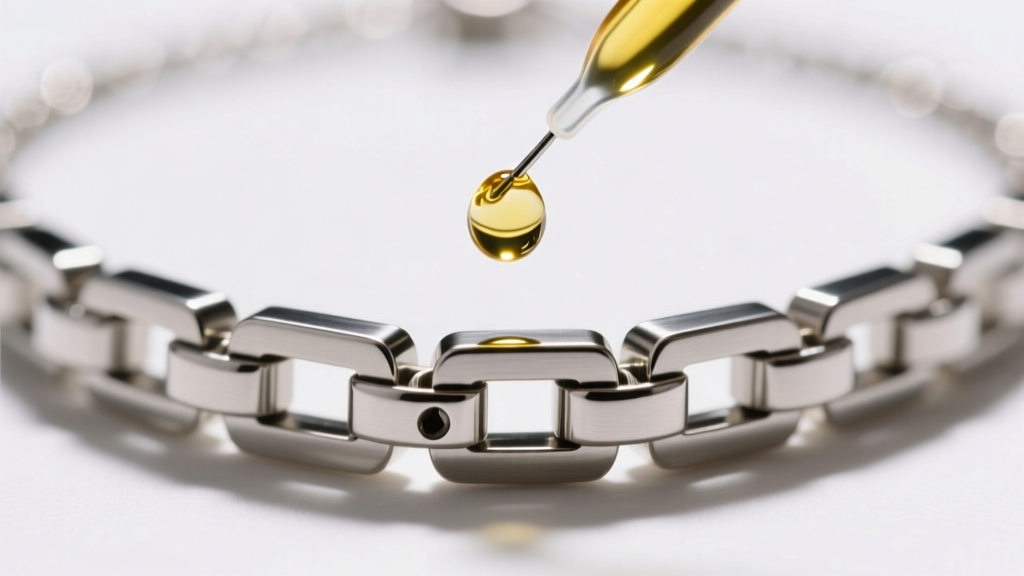
Lubricating Articulated Joints
If your hinged gorget begins to squeak, resist the urge to pull it apart, or feels stiff when opening, the hinge pin is experiencing dry friction. Over time, this friction will sheer the microscopic metal burrs inside the hinge barrel, leading to a permanent wobble.
- Secure the gorget on a flat, padded surface.
- Using a precision needle oiler, apply a micro-drop of synthetic watch oil (such as Moebius 9010) directly to the seam of the hinge pin.
- Gently articulate the hinge back and forth to work the oil into the barrel.
- Wipe away any excess oil immediately with a lint-free swab to prevent it from attracting dust and turning into a grinding paste.
Warning: Never use WD-40 or standard household lubricants on jewelry hinges. These petroleum-based products contain solvents that will degrade skin-safe patinas, attract heavy grime, and eventually gum up the microscopic tolerances of the hinge pin.
Proper Storage to Prevent Scratches and Bending
How you store your gorget necklace when not in use is just as critical as how you clean it. The Jewelers of America emphasizes that structural jewelry requires specialized storage to maintain its geometric integrity.
The Danger of Hanging
Never hang a heavy metal gorget on a standard jewelry hook or peg. The lateral gravitational pull places immense, continuous stress on the front clasp and the rear hinge. Over a period of months, this static load will cause metal fatigue, warping the collar so it no longer sits flush against the collarbone.
Ideal Storage Configurations
- Contoured Neck Busts: The absolute best storage method is a velvet-lined, rigid neck mandrel that matches the exact circumference of the gorget. This supports the entire weight of the metal evenly.
- Flat Padded Boxes: If a bust is unavailable, store the gorget completely flat in a wide, shallow jewelry drawer lined with anti-tarnish treated flannel. Ensure it is not stacked beneath other heavy items.
- Silica Gel Packs: When storing flat in a drawer or box, include a fresh 5-gram silica gel desiccant packet to absorb ambient humidity and prevent micro-corrosion on raw brass or silver surfaces.
When to Seek Professional Jeweler Intervention
While daily polishing and hinge oiling can be done at home, certain issues require the hands of a master jeweler. Attempting DIY repairs on a rigid collar often results in permanent disfigurement of the piece.
Schedule an appointment with a professional bench jeweler if you notice:
- Clasp Slippage: If the tension-fit clasp no longer 'clicks' securely, the internal spring mechanism or the tension tab has fatigued and requires precision re-bending or soldering.
- Deep Gouges: Surface scratches can be buffed out, but deep gouges require lapidary sanding and re-polishing to restore the mirror finish without altering the structural thickness of the metal.
- Vermeil Wear-Through: If the gold plating has worn away at the friction points (the back of the neck), a jeweler can professionally strip the remaining plating and re-electroplate the gorget to factory specifications.
By respecting the unique structural demands of a gorget necklace and adhering to these precise maintenance protocols, you ensure that this bold, armor-inspired piece remains a flawless, structural masterpiece in your collection for decades to come.


