How to Clean & Care for Your Pink Tennis Necklace
Learn expert cleaning, prong maintenance, and storage tips for your pink tennis necklace. Protect your sapphires, morganite, and pink diamonds.

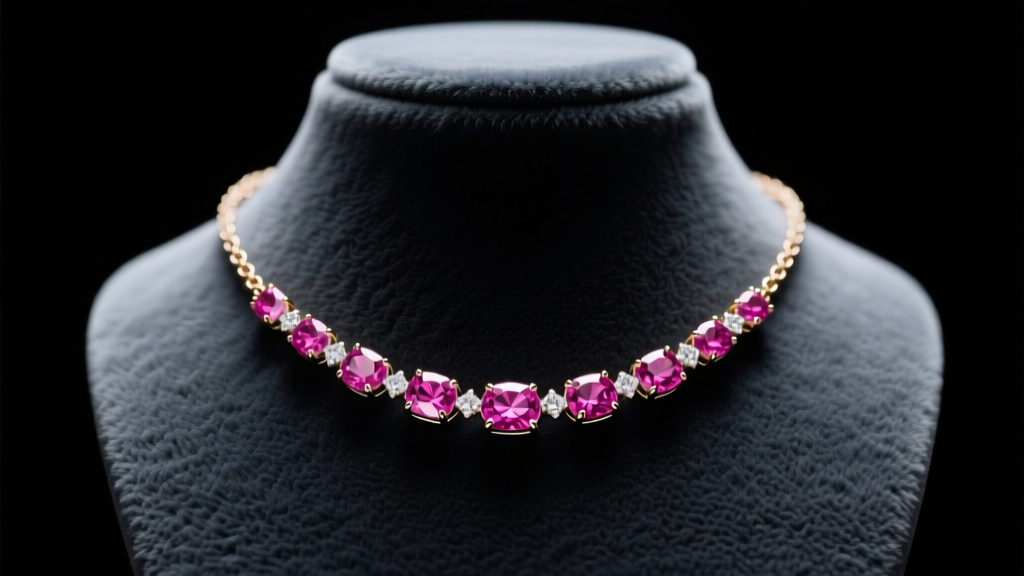
The Allure and Vulnerability of the Pink Tennis Necklace
The pink tennis necklace has cemented its status as a modern heirloom, offering a vibrant, romantic alternative to traditional white diamond strands. Whether your piece features natural pink sapphires, peachy-pink morganite, vivid pink tourmaline, or lab-grown pink diamonds, the continuous line of gemstones creates a breathtaking cascade of color. However, the very design that makes a tennis necklace so stunning—dozens of individually set stones linked together—also makes it highly susceptible to damage, stone loss, and grime buildup.
A standard 16-inch tennis necklace contains between 45 and 65 individual gemstones. This means your piece relies on 180 to 260 microscopic prongs to keep your investment secure. Furthermore, the specific mineral composition of pink gemstones dictates entirely different cleaning protocols. What safely restores the brilliance of a pink diamond could permanently fracture a pink tourmaline. In this comprehensive 2026 care guide, we break down the exact maintenance, cleaning, and storage protocols required to keep your pink tennis necklace in pristine condition.
Identify Your Pink Gemstone: Hardness and Cleaning Rules
Before applying any cleaning solution, you must identify the exact gemstone in your tennis necklace. The Mohs scale of mineral hardness determines how easily your stones will scratch, while their internal crystal structure determines their reaction to heat and ultrasonic vibrations. According to the Gemological Institute of America (GIA), understanding these gemological properties is the first line of defense against accidental damage.
| Gemstone | Mohs Hardness | Ultrasonic Safe? | Steam Safe? | Primary Vulnerability |
|---|---|---|---|---|
| Pink Sapphire | 9 | Usually Yes* | Yes | Fracture-filled stones can leak/cloud |
| Morganite | 7.5 - 8 | No | No | Attracts grease; prone to clouding |
| Pink Tourmaline | 7 - 7.5 | No | No | Thermal shock; internal inclusions |
| Pink Diamond (Lab/Natural) | 10 | Yes | Yes | Chipping at the girdle edge |
*Note: Many natural pink sapphires on the market are heat-treated and fracture-filled with lead glass to improve clarity. If your sapphire is fracture-filled, ultrasonic and steam cleaners will dissolve the filler, ruining the stone. Always verify your gemstone's treatment report before using mechanical cleaners.
The Safe Manual Cleaning Protocol
For routine maintenance, manual cleaning is the only universally safe method for all pink gemstones. Morganite, in particular, is notoriously oleophilic (oil-attracting), meaning it will quickly gather sebum, lotions, and makeup, dulling its signature pastel pink hue. Follow this exact protocol every two to three weeks to maintain maximum light return.
Step 1: Prepare the Solution
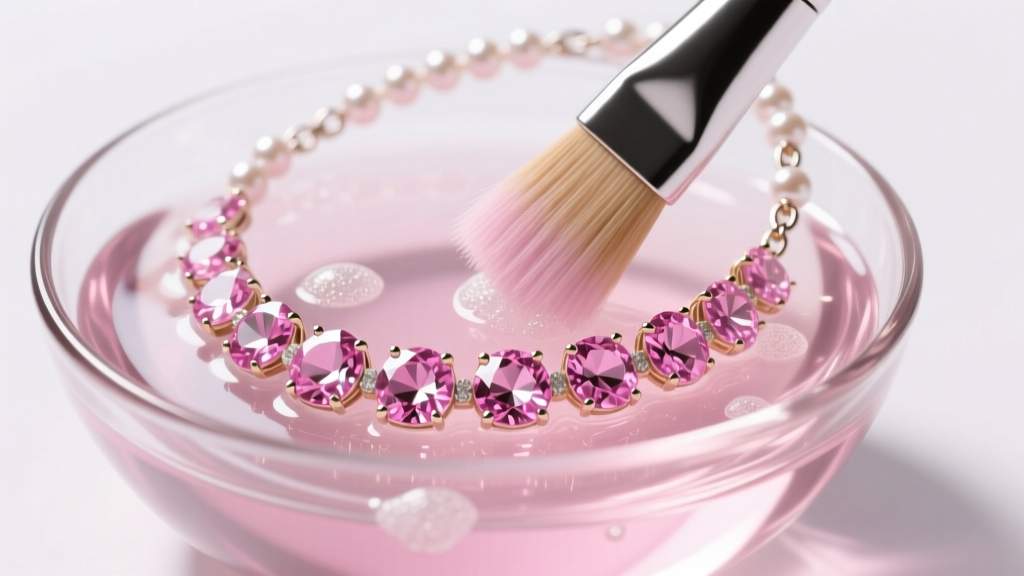
Fill a small glass bowl with lukewarm distilled water. Avoid tap water, as the chlorine and heavy minerals can leave a microscopic film on your gemstones and degrade white gold settings over time. Add three drops of a mild, phosphate-free dish detergent (original blue Dawn is the industry standard among jewelers). Swirl gently to create suds.
Step 2: The Soak and Agitation
Submerge your pink tennis necklace in the solution for exactly 10 to 15 minutes. This loosens hardened cosmetics and dead skin cells trapped beneath the gallery wire. After soaking, use a brand-new, extra-soft baby toothbrush to gently agitate the backs of the stones. Brush in small circular motions, paying special attention to the culet (the bottom point of the stone) where grease accumulates.
Step 3: The Distilled Rinse and Dry
Rinse the necklace thoroughly under a gentle stream of lukewarm distilled water. Never plug the sink drain when cleaning fine jewelry; always use a strainer or a closed basin. Pat the necklace dry with a lint-free microfiber cloth. Avoid paper towels or tissues, as the wood pulp fibers can micro-scratch softer stones like tourmaline and leave dust trapped in the prongs.
The Dangers of Ultrasonic and Steam Cleaners
While commercial jewelers frequently use ultrasonic and steam cleaners, these tools are incredibly dangerous for home use on colored gemstone tennis necklaces. Ultrasonic cleaners work by creating high-frequency sound waves that generate microscopic cavitation bubbles in the liquid. When these bubbles collapse, they create intense localized shockwaves.
If your pink tourmaline or morganite has internal liquid inclusions or microscopic fissures (which is very common in natural colored stones), these shockwaves will expand the fissures, causing the stone to shatter from the inside out. Furthermore, the intense heat of a steam cleaner can cause thermal shock. Tourmaline is highly sensitive to sudden temperature changes; blasting a room-temperature pink tourmaline tennis necklace with 200°F steam can instantly fracture the crystal lattice. Stick to the manual soak-and-brush method to guarantee the structural integrity of your gems.
Prong Integrity and the "Silk Test"
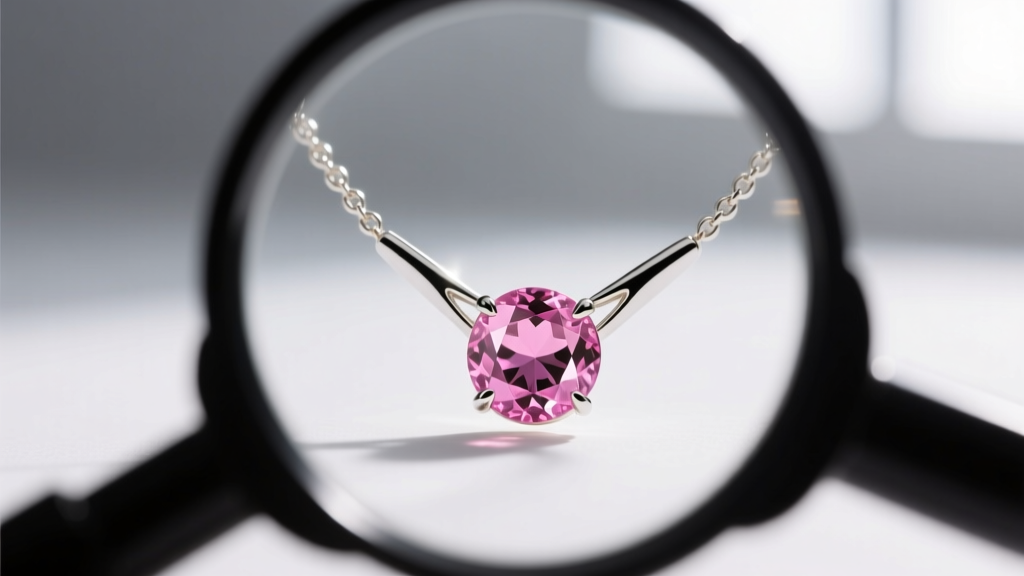
The most common cause of catastrophic stone loss in tennis necklaces is prong wear. Because a tennis necklace bends and flexes continuously against your collarbone, the metal prongs endure constant friction. Over time, 14k and 18k gold prongs can thin, lift, or catch on clothing, pulling the metal away from the gemstone's girdle.
To check your prongs at home, perform the Silk Test. Lay a delicate silk scarf or a piece of sheer hosiery flat on a table. Slowly drag the underside and topside of your tennis necklace across the fabric. If the metal glides smoothly, your prongs are secure. If the fabric snags, catches, or pulls a thread, you have a lifted prong that requires immediate professional burnishing. Do not wear the necklace again until a jeweler has pushed the prong back flush against the stone.
Clasp Maintenance and Rhodium Replating
The clasp is the unsung hero of your tennis necklace. Most high-end pieces utilize a concealed box clasp with a secondary figure-eight safety latch. Once a month, inspect the safety latch hinge. If it feels loose or fails to snap shut with a definitive click, the tension spring is failing. A jeweler can tighten this in minutes, preventing a devastating drop.
If your pink tennis necklace is set in white gold, you must also monitor the rhodium plating. White gold is naturally a faint yellowish-gray alloy; it is plated with rhodium to achieve a bright, reflective white finish. The friction against your neck will eventually wear this plating away, usually around the clasp and the center stones. Plan to have your necklace professionally polished and rhodium-replated every 18 to 24 months to maintain the stark contrast between the bright white metal and the vibrant pink gemstones.
Environmental Hazards and Proper Storage
How you store and wear your necklace is just as critical as how you clean it. Never wear your pink tennis necklace while swimming in chlorinated pools or soaking in hot tubs. Chlorine reacts violently with the copper and zinc alloys present in 14k and 18k gold, causing a phenomenon known as "stress corrosion cracking," which can cause the links between your stones to snap without warning.
When storing the piece, never toss it into a communal jewelry box. The diamonds or sapphires in your tennis necklace can easily scratch softer gold chains or pearl necklaces they come into contact with. Store the necklace flat in its original anti-tarnish flannel pouch. If you must hang it, ensure the clasp is fastened to prevent the chain from slipping through and knotting, which can stretch the delicate jump rings connecting the gemstone settings.
When to See a Professional Jeweler
Home care is essential, but it does not replace professional oversight. The American Gem Society recommends bringing fine jewelry in for an annual inspection. A professional jeweler will use a 10x triplet loupe to inspect every single prong, check the structural integrity of the solder joints linking the stones, and perform a professional ultrasonic clean (only if the gemstones are verified as safe for such treatment). By combining meticulous home care with annual professional audits, your pink tennis necklace will remain a brilliant, secure, and breathtaking staple of your jewelry collection for decades to come.