How to Clean, Untangle, and Repair a Silver Mesh Necklace
Learn how to safely clean, untangle, and repair a silver mesh necklace. Expert troubleshooting for tarnish, snags, and kinks without damaging the weave.

The Unique Vulnerabilities of Silver Mesh Jewelry
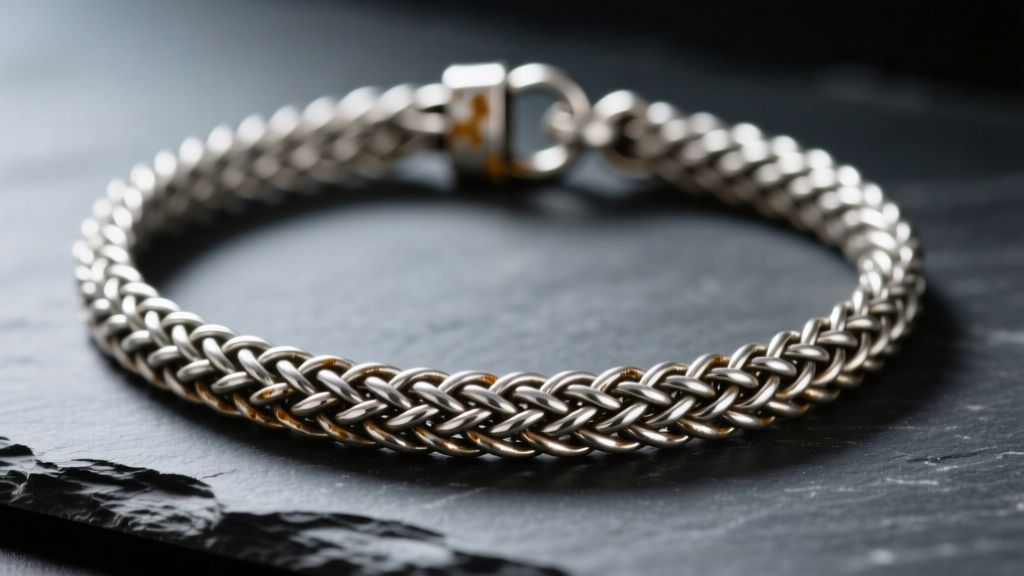
A silver mesh necklace offers an unparalleled liquid-metal drape that solid chains simply cannot replicate. However, the very engineering that gives mesh its fluid, fabric-like movement also makes it a magnet for jewelry bench nightmares. Whether you own a vintage 1980s Italian herringbone, a modern Milanese weave, or a rigid Omega-style mesh, the high surface area and micro-crevices of the wire weave present unique troubleshooting challenges.
According to the Gemological Institute of America (GIA), sterling silver (92.5% silver, 7.5% copper) is inherently prone to tarnishing due to the copper alloy. In a mesh necklace, this tarnish doesn't just sit on the surface; it embeds itself deep within the overlapping wire joints. Furthermore, the mechanical stress of daily wear can lead to catastrophic kinking and snagging. In this 2026 comprehensive troubleshooting guide, we will bypass generic jewelry advice and dive into the metallurgical and mechanical realities of restoring a damaged silver mesh necklace.
Identifying Your Mesh Weave and Its Failure Points
Before applying any chemical or mechanical fix, you must identify the specific weave of your silver mesh necklace. The structural integrity of the chain dictates which troubleshooting methods are safe and which will cause irreversible damage.
| Mesh Weave | Wire Structure | Primary Vulnerability | Recommended Troubleshooting |
|---|---|---|---|
| Milanese | Interlocking round wires | Traps skin oils, lotion buildup, and micro-dust | Electrochemical foil bath, soft brass brushing |
| Herringbone | Flat, parallel linked wires | Severe kinking, permanent creasing, bending | Mechanical flattening, strict chemical dips only |
| Foxtail | V-shaped woven links | Snagging on fabrics, stretching, hair pulling | Seam ripper extraction, gentle rolling |
| Snake | Tightly wound round wire | Stiff kinks, joint separation when pulled | Manual manipulation, NO ultrasonic cleaning |
Why You Must Avoid Ultrasonic Cleaners
A common mistake in modern jewelry care is tossing mesh into a 40kHz ultrasonic cleaner. While ultrasonic cavitation is excellent for dislodging dirt from diamond prongs, the high-frequency shockwaves can easily fracture the micro-solder points where the mesh connects to the end caps and clasp. The Silver Institute consistently advises against aggressive mechanical vibrations for delicate, multi-jointed silver weaves.
Troubleshooting Tarnish: The Electrochemical Reduction Method
Abrasive silver polishes (like pastes or creams containing silica) are the enemy of silver mesh. The abrasive particles become trapped in the micro-crevices of the weave, drying into a gray, cement-like sludge that is nearly impossible to rinse out. Instead, you must use a chemical reaction that converts silver sulfide (tarnish) back into elemental silver without physical scrubbing.
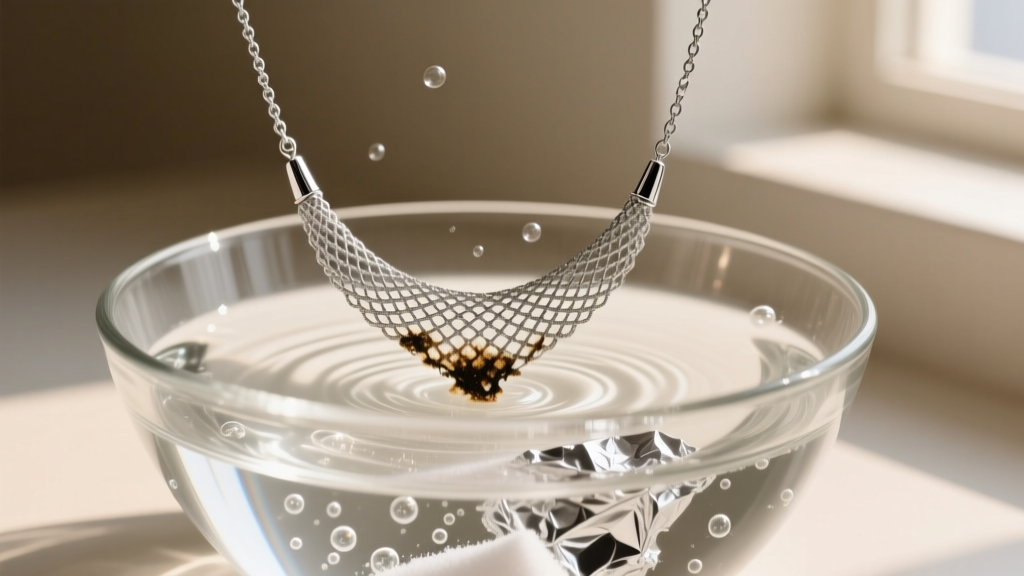
The Aluminum Foil Bath Protocol
This method leverages basic electrochemistry. Aluminum acts as the anode, giving up its electrons to the silver sulfide (the cathode), reducing it back to pure silver while releasing hydrogen sulfide gas (which smells like rotten eggs).
- Prepare the Vessel: Line a glass or ceramic bowl with heavy-duty aluminum foil, shiny side up.
- The Catalyst Mix: Add 1 tablespoon of baking soda (sodium bicarbonate) and 1 tablespoon of non-iodized salt per cup of boiling water. Stir until dissolved.
- The Submersion: Pour the boiling solution into the foil-lined bowl. Immediately submerge your silver mesh necklace, ensuring the silver physically touches the aluminum foil.
- The Reaction: Let it soak for 3 to 5 minutes. You will see bubbling and smell sulfur. For heavy, black tarnish, you may need to repeat the process with fresh solution.
- The Rinse: Remove with plastic tongs (never metal, which can scratch or cause galvanic reactions) and rinse thoroughly under warm distilled water.
- Drying: Lay flat on a microfiber towel and use a hair dryer on a cool setting to blow water out of the mesh joints. Trapped moisture leads to rapid re-tarnishing.
Fixing Snags, Kinks, and Stretching
Mechanical damage to a silver mesh necklace usually manifests in two ways: hair/fabric snags (common in Foxtail and Milanese) and permanent kinks (common in Herringbone and Snake weaves).
Extracting Snagged Hair and Threads
When a mesh necklace pulls hair or catches on a silk blouse, the delicate wires can lift and create a sharp burr. Never pull the fabric or hair. Instead, use a jeweler's seam ripper or a specialized jewelry snag comb to carefully slice the thread or hair flush against the chain. If the wire itself has been lifted, place the necklace on a steel bench block and gently tap the raised wire back into alignment using a rawhide or nylon mallet. Never use a steel hammer, as it will mar the silver and flatten the round wires, destroying the mesh's flexibility.
Flattening Herringbone Kinks
Herringbone mesh is notorious for developing sharp, permanent-looking creases when folded or slept in. To troubleshoot this:
- Lay the necklace perfectly flat on a soft, lint-free surface.
- Take a smooth, cylindrical glass bottle (like a wine bottle) or a specialized acrylic jewelry roller.
- Apply very light, even pressure and roll the cylinder back and forth over the kinked area.
- The goal is to gently coax the flat parallel wires back into their horizontal plane without stretching the chain. If the kink has caused a sharp, whitish stress mark, the silver's crystalline structure has been compromised, and it will require professional soldering or laser welding by a bench jeweler.
Clasp and Solder Point Failures
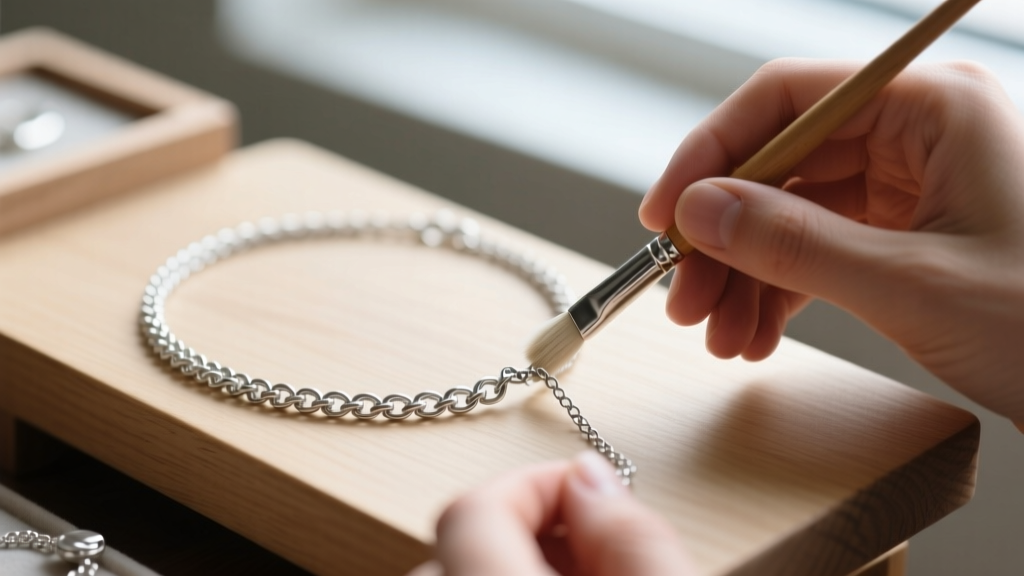
The weakest point of any silver mesh necklace is not the mesh itself, but the end caps where the mesh is soldered to the clasp mechanism. Because mesh cannot be easily looped through a jump ring like a standard cable chain, the ends are typically bound with a thin wire wrapping and flooded with solder.
Diagnosing End-Cap Separation
If you notice the mesh 'fraying' or pulling away from the metal end cap, stop wearing the necklace immediately. The tension of the heavy silver drape will cause the remaining solder to fail, resulting in total loss. A professional jeweler will need to trim the frayed mesh back to a clean line, re-bind the wires with silver binding wire, and use a laser welder to fuse the cap without melting the delicate surrounding mesh.
Pro-Tip for 2026 Buyers: When purchasing a new silver mesh necklace, inspect the end caps. Look for a small 'safety chain' or a secondary wire loop connecting the end cap to the main body of the chain. This redundancy prevents total loss if the primary solder joint fails.
Preventative Storage and Daily Wear Rules
Troubleshooting is reactive; prevention is proactive. Silver mesh requires strict environmental control when not being worn.
- Anti-Tarnish Technology: Store the necklace in a treated Pacific Silvercloth pouch. These fabrics are embedded with microscopic silver particles that act as a sacrificial anode, absorbing sulfur and halogens from the air before they can reach your necklace.
- Avoid Sulfur Sources: Never store silver mesh in a drawer lined with felt (which often contains sulfur-based dyes) or secured with rubber bands (vulcanized rubber is pure sulfur and will turn silver black in hours).
- The 'Last On, First Off' Rule: Hairsprays, perfumes, and lotions contain alcohols and aerosolized chemicals that coat the mesh and accelerate copper oxidation. Always put your mesh necklace on after your beauty routine, and take it off before showering or swimming.
By understanding the metallurgical quirks of your silver mesh necklace and employing these targeted troubleshooting techniques, you can preserve its liquid drape and brilliant luster for decades, avoiding the common pitfalls that ruin lesser-maintained pieces.


