Peacock Feather Necklace Guide: Materials, Craft & Preservation
Explore the technical anatomy of a peacock feather necklace, from ethical sourcing and real feather preservation to enamel and metalwork alternatives.

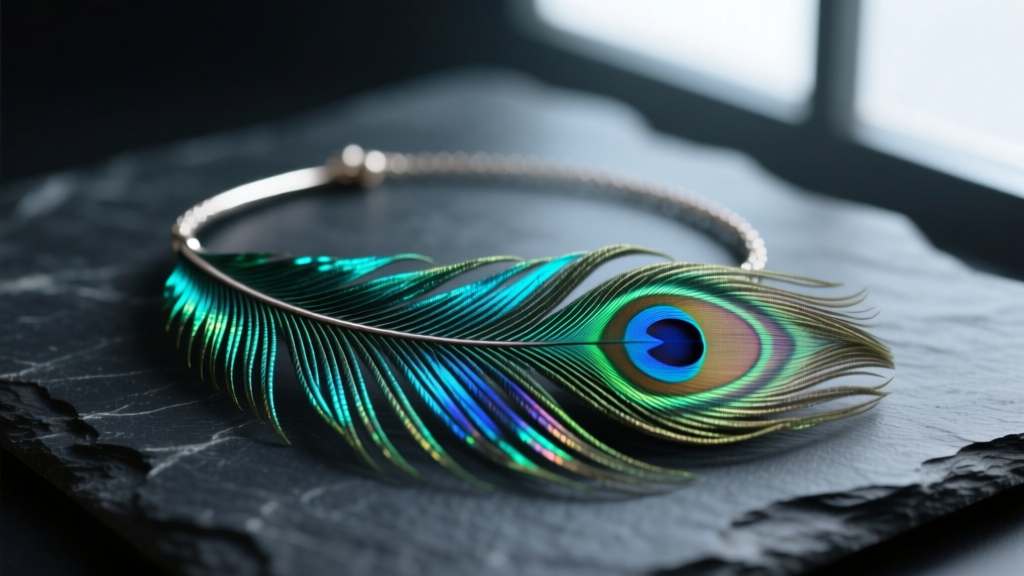
The Physics of Iridescence: Structural Color vs. Pigment
To truly understand the craftsmanship behind a high-quality peacock feather necklace, one must first understand the physics of the material itself. Unlike dyed gemstones or painted enamel, the iridescent "eye" (ocellus) of the Indian Peafowl (Pavo cristatus) relies entirely on structural coloration. The barbules of the feather contain a spongy keratin matrix embedded with melanin rods. These nanostructures act as photonic crystals, interfering with light waves to reflect specific wavelengths—primarily brilliant blues and greens—while absorbing others.
From a jewelry design perspective, this means the color is inherently fragile. Crushing the barbules, exposing them to high heat, or coating them in thick, non-UV-stabilized resins will collapse the photonic matrix, resulting in a dull, brownish-grey appearance. Master jewelers and artisans approach the peacock feather not merely as an organic embellishment, but as a delicate optical instrument that requires specialized preservation and mounting techniques.
Material Matrix: Organic vs. Synthetic Alternatives
While organic feathers are prized for their unmatched optical depth, they are not suited for every wearer. Daily exposure to friction, humidity, and ultraviolet radiation will degrade keratin over time. For clients seeking the peacock aesthetic with heirloom durability, jewelers turn to advanced metallurgical and vitreous alternatives. Below is a technical comparison of the primary materials used in modern peacock pendant fabrication.
| Material Type | Avg. Weight | UV & Friction Resistance | Optimal Use Case |
|---|---|---|---|
| Organic Feather (Stabilized) | 0.2g - 0.5g | Poor (Requires nano-ceramic UV coating) | Statement pieces, occasional wear, bohemian layering |
| Vitreous Enamel (Plique-à-jour) | 3.5g - 6.0g | Excellent (Fused glass, impervious to UV) | Fine jewelry, daily wear, heirloom investment pieces |
| Cold Enamel (Epoxy Resin) | 1.0g - 2.5g | Moderate (Prone to yellowing and scratching) | Mass-market fashion jewelry, budget-friendly alternatives |
| Stamped Brass with Patina | 8.0g - 15.0g | Excellent (Metal oxidation is permanent) | Heavy layering, rugged wear, oxidized metalwork styles |
For those opting for vitreous enamel, the Gemological Institute of America (GIA) notes that achieving the exact iridescent shift of a peacock feather requires complex layering of metal oxides—specifically cobalt for the deep blues and copper for the vibrant greens—fired at precise temperatures exceeding 1,400°F. This creates a permanent, glass-like finish that mimics the structural color without the biological vulnerabilities.
Ethical Sourcing and CITES Compliance
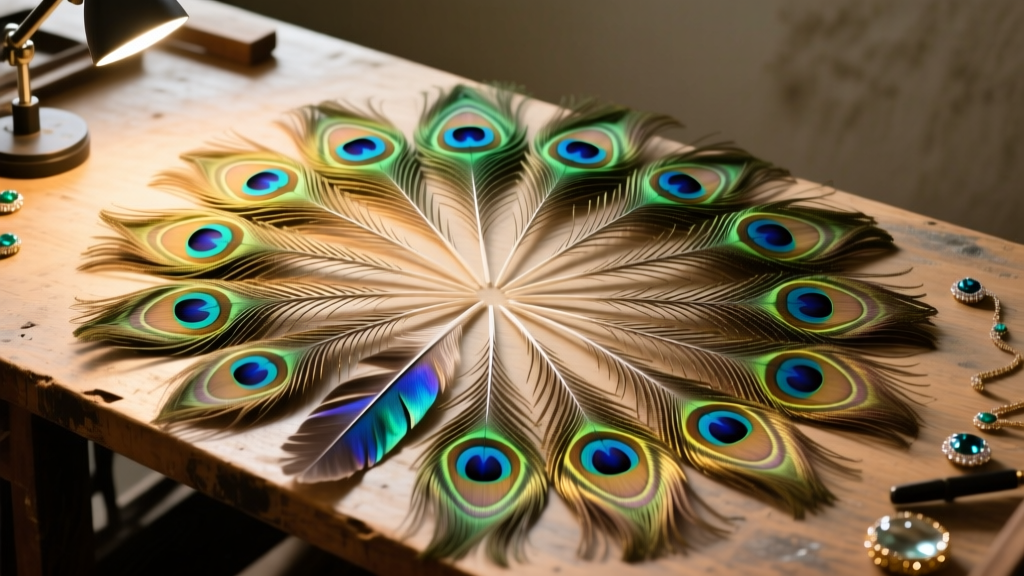
When working with organic peacock feathers, provenance is non-negotiable. The Indian Peafowl is a protected species in its native habitat, and international trade is monitored. However, naturally molted feathers—shed annually by male peacocks during the late summer months post-mating season—are generally exempt from strict CITES (Convention on International Trade in Endangered Species) restrictions, provided they are accompanied by proper veterinary or wildlife documentation proving they were not plucked.
Expert artisans source exclusively from certified cruelty-free aviaries and sanctuaries. Plucked feathers exhibit a distinct stress mark or blood residue at the base of the calamus (the quill), whereas naturally molted feathers feature a clean, dry, and hollow termination. When purchasing a premium organic peacock feather necklace, always request a certificate of natural molt from the jeweler to ensure ethical compliance and avoid supporting illegal wildlife trade.
Conservation and Keratin Stabilization
Organic keratin is highly susceptible to environmental degradation. According to conservation guidelines published by the Canadian Conservation Institute (CCI), feathers are particularly vulnerable to fluctuations in relative humidity (RH) and ultraviolet radiation. High humidity can cause the barbs to clump and separate, while extreme dryness makes the keratin brittle and prone to snapping.
Modern Stabilization Protocols
To prepare a peacock feather for permanent jewelry mounting, contemporary artisans utilize a multi-step stabilization process:
- Vapor Degreasing: The feather is gently cleansed using specialized, non-polar solvents to remove natural oils and environmental dust without disturbing the delicate barb hooks.
- UV Stabilization: Instead of thick epoxy resins that alter the refractive index, modern jewelers use nano-ceramic UV-blocking sprays. These microscopic coatings absorb harmful UV rays while allowing the photonic crystals to reflect visible light unimpeded.
- Micro-Crystalline Wax Sealing: A highly refined conservation wax, such as Renaissance Wax, is lightly applied to the central rachis (the spine of the feather) to prevent moisture ingress and provide a flexible, protective barrier against skin oils.
The Calamus Problem: Findings and Metallurgy
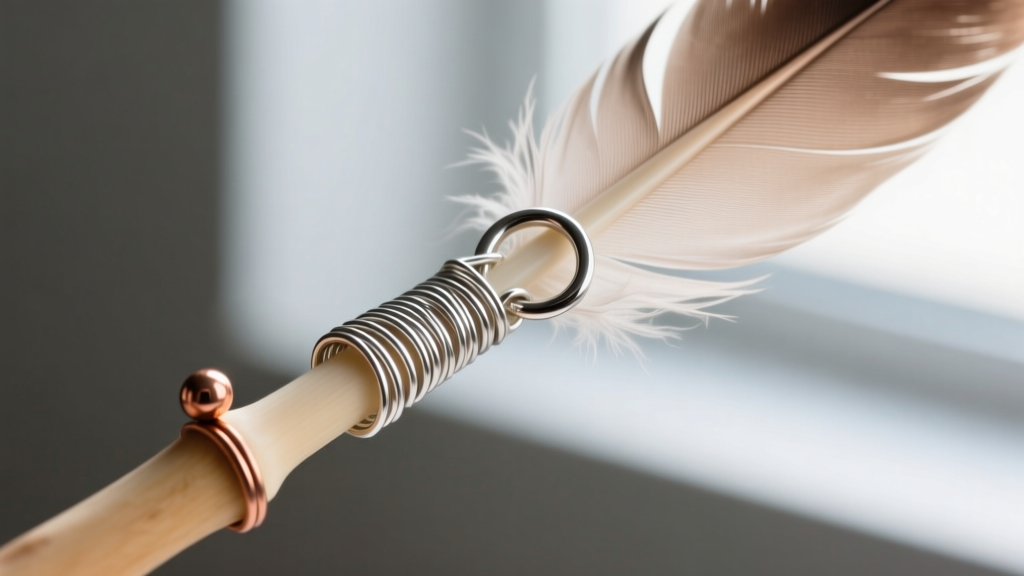
The most common point of failure in a peacock feather necklace is the connection between the organic pendant and the metal chain. The calamus (the hollow, tubular base of the quill) is incredibly fragile. Standard jewelry manufacturing techniques, such as using adhesive glue bails or drilling a hole through the quill to insert a jump ring, almost always result in structural collapse or the feather slipping out over time.
The Wire-Wrap and Bead Cap Solution
Master wire-wrappers solve the calamus problem through tension and encapsulation rather than adhesion or piercing. The preferred method involves the following technical steps:
- Insertion: A piece of 24-gauge dead-soft Argentium silver wire is threaded into the hollow calamus to a depth of approximately 4mm.
- Encapsulation: A micro-bead cap (typically 3mm to 4mm in diameter, made of copper or sterling silver) is threaded onto the wire and seated flush against the base of the feather. This distributes the mechanical stress across a wider surface area, preventing the hollow quill from cracking.
- Loop Formation: The wire is then bent at a 90-degree angle and wrapped into a tight, soldered or mechanically locked bail loop. Argentium silver is preferred over standard sterling silver due to its superior tarnish resistance and higher malleability, which reduces the risk of work-hardening and snapping during the wrapping process.
Never use cyanoacrylate (Super Glue) to secure a feather to a metal bail. The exothermic reaction of the glue curing can generate enough heat to warp the keratin, and the resulting brittle bond will inevitably fail when exposed to the natural flexing of a necklace during wear.
Chain Pairing and Friction Management
The final consideration in the anatomy of a peacock feather necklace is the chain. Because the organic pendant is exceptionally lightweight (often under 1 gram), heavy chains will cause the pendant to flip upside down or slide awkwardly to the side. Furthermore, the chain must not create friction against the delicate lower barbs of the feather.
For optimal balance and preservation, a 1.2mm to 1.5mm rope chain or a lightweight box chain in 18-inch or 20-inch lengths is recommended. These chains provide enough structural integrity to support a secure lobster clasp while remaining light enough to allow the pendant to hang perfectly plumb. Avoid snake chains or herringbone chains, as their smooth, continuous surfaces can generate static electricity, which attracts dust and causes the feather barbs to cling unnaturally to the metal.


