How to Safely Clean and Restore a Black Gold Necklace
Learn how to safely clean, maintain, and restore your black gold necklace. Step-by-step guide to protecting ruthenium and black rhodium plating.

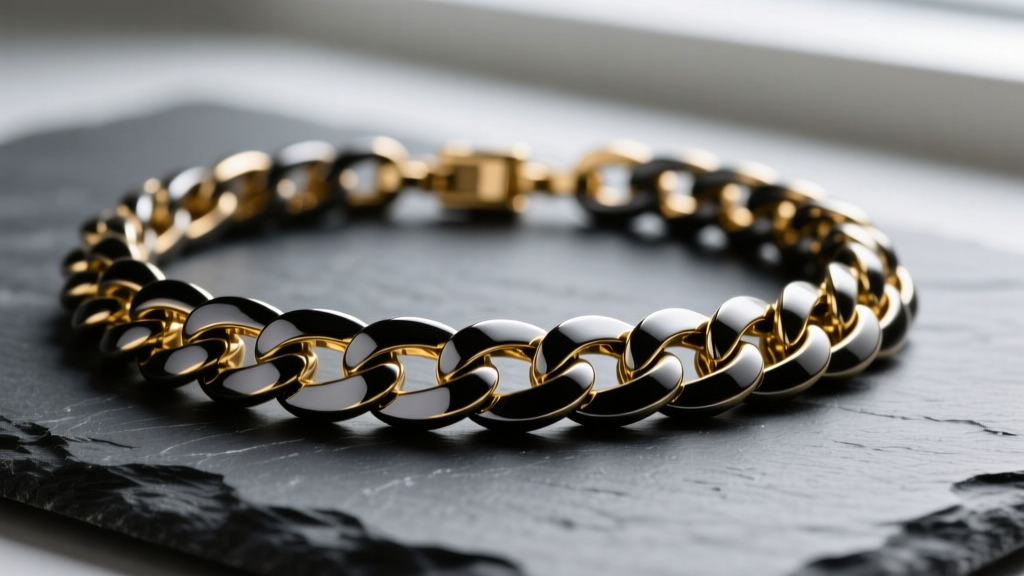
A black gold necklace is a striking, modern statement piece, but it requires a fundamentally different care regimen than traditional yellow or white gold. Because 'black gold' is not a naturally occurring metal, but rather a surface treatment applied to a gold alloy, improper cleaning can strip the finish, expose the underlying metal, and ruin the piece. In this comprehensive 2026 guide, we break down the exact metallurgy of black gold, provide a meticulous step-by-step cleaning protocol, and explain how to restore your necklace when the plating inevitably begins to wear.
The Metallurgy: What Are You Actually Cleaning?
Before applying any liquid to your jewelry, you must understand what creates the black hue. According to the GIA Gem Encyclopedia, black gold is typically achieved through one of three methods:
- Ruthenium Plating: A platinum-group metal that provides a hard, dark grey-to-black finish. It is usually plated at a thickness of 0.75 to 1.5 microns.
- Black Rhodium Plating: Offers a richer, deeper black than ruthenium but is slightly softer and more prone to micro-scratches.
- Diamond-Like Carbon (DLC) Coating: An advanced 2026 standard for high-end jewelry. DLC bonds at the molecular level, offering superior scratch resistance and a permanent black finish that rarely requires replating.
If your necklace is plated with ruthenium or black rhodium, you are cleaning a microscopic layer of metal that is highly susceptible to chemical corrosion and physical abrasion. The goal of cleaning is to remove sebum, dead skin cells, and environmental pollutants without compromising this delicate micron-thick layer.
Step-by-Step Cleaning Protocol for Plated Black Gold
Forget commercial jewelry dips and ultrasonic machines. To safely clean a black gold necklace, you need a gentle, chemically neutral approach. Gather the following supplies: phosphate-free, pH-neutral dish soap (such as Dawn Free & Clear), distilled water, a baby toothbrush with ultra-soft bristles (0.1mm or less), and a lint-free microfiber cloth.
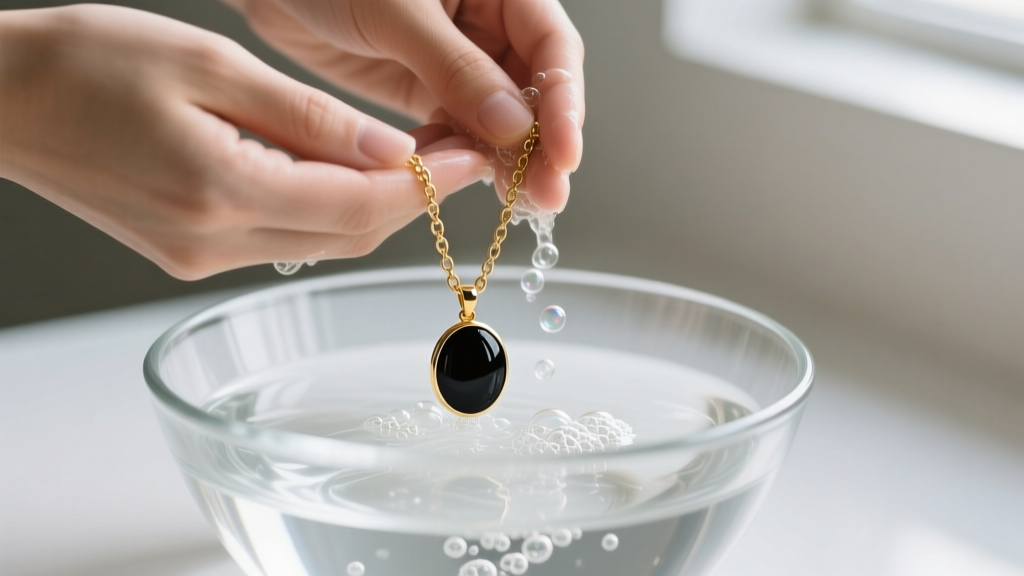
Step 1: Prepare the Cleaning Solution
Fill a small glass bowl with lukewarm distilled water. Do not use tap water, as the dissolved minerals and chlorine can leave micro-deposits on the dark surface, creating a cloudy film. Add exactly two drops of pH-neutral dish soap. Swirl gently to create a mild lather. Avoid soaps with added moisturizers, citrus extracts, or exfoliating beads, as these contain compounds that can degrade rhodium.
Step 2: The Short Soak
Submerge your black gold necklace in the solution for no more than three minutes. Prolonged exposure to water, even when distilled, can seep into the microscopic pores of the plating and weaken the bond between the black rhodium and the gold alloy base.
Step 3: Gentle Agitation
Remove the necklace and use the baby toothbrush to gently sweep away debris from the chain links and pendant settings. Always brush in the direction of the metal grain or chain links. Apply zero downward pressure; let the bristles do the work. Pay special attention to the clasp and jump rings, where skin oils and lotions accumulate most heavily.
Step 4: The Distilled Rinse
Rinse the necklace thoroughly under a gentle stream of lukewarm distilled water. Ensure all soap residue is completely washed away, as dried soap will leave a highly visible white film against the black metal.
Step 5: Immediate Microfiber Drying
Never let a black gold necklace air dry. Lay it flat on a clean, dry microfiber cloth and gently pat it dry. Use a dry section of the cloth to lightly buff the surface. This restores the subtle metallic luster without generating the friction heat that can cause micro-fractures in ruthenium plating.
What to Avoid: The Fastest Ways to Ruin Black Gold
The FTC Jewelry Guides warn consumers about the misrepresentation and care of plated metals. To protect your investment, strictly avoid the following hazards:
Ultrasonic Cleaners
Ultrasonic machines use high-frequency sound waves to create microscopic cavitation bubbles that implode against the jewelry. While excellent for solid gold and diamonds, this violent microscopic action will literally blast the black rhodium or ruthenium plating off your necklace, leaving it patchy and ruined.
Harsh Chemical Exposures
Chlorine (in swimming pools), bleach, and ammonia are catastrophic for black gold. They cause immediate oxidation and discoloration of the underlying alloy, which bleeds through the plating and creates a permanent brassy or greenish tint. Always remove your necklace before swimming, cleaning the house, or applying hairspray and perfumes.
Restoration: When and How to Replate
Even with meticulous care, friction from clothing and skin will eventually wear down traditional black gold plating, particularly at the back of the pendant and the clasp. When the underlying yellow or white gold begins to show through, it is time for restoration.
Take the piece to a specialized bench jeweler who offers electroplating services. They will first polish away the remaining black finish, prepare the surface with a nickel or palladium strike layer to ensure adhesion, and then submerge the necklace in a black rhodium or ruthenium bath. Expect to pay between $60 and $140 for a professional replating job, depending on the chain's complexity and surface area. If your piece is a high-end luxury brand, consider sending it back to the manufacturer to ensure the exact proprietary blackening formula is used.
Comparing Black Gold Finishes
Understanding your necklace's specific finish helps dictate its long-term maintenance needs.
| Finish Type | Durability | Color Depth | Replating Required? |
|---|---|---|---|
| Black Rhodium | Low to Medium | Deep, rich black | Yes (Every 1-2 years) |
| Ruthenium | Medium to High | Dark gunmetal grey | Yes (Every 2-4 years) |
| DLC Coating | Extremely High | Matte or glossy black | Rarely / Never |
| Laser Oxidation | Medium | Varies by alloy | No (Surface level) |
Daily Wear and Storage Best Practices
How you store your black gold necklace is just as critical as how you clean it. When not being worn, the necklace should be kept in an environment that minimizes friction and controls humidity.
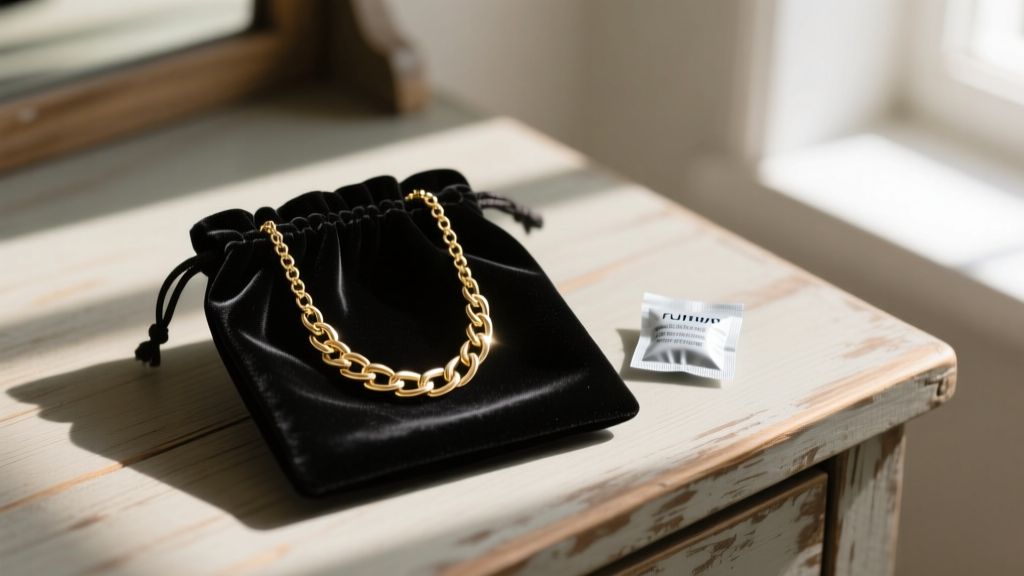
- Use Anti-Tarnish Pouches: Store the necklace in a treated anti-tarnish flannel or velvet pouch. These fabrics contain silver sulfide inhibitors that protect the metal from ambient sulfur in the air.
- Control Moisture: Drop a small silica gel packet into your jewelry box or pouch to absorb excess moisture, which can accelerate the degradation of the plating bond.
- Isolate from Harder Gems: Never store your black gold necklace in a communal jewelry box where it can be scratched by diamonds, sapphires, or even other metal chains. Micro-scratches in black rhodium are highly visible because they expose the bright metal underneath.
By treating your black gold necklace as a precision-engineered, plated accessory rather than a solid block of metal, you can preserve its dark, moody aesthetic for years. Stick to the distilled water and pH-neutral soap method, avoid ultrasonic temptation, and budget for occasional professional replating to keep your piece looking as striking as the day you bought it.


