Necklace Organizer Box Buying Guide: What to Look For
Discover how to choose the perfect necklace organizer box. Learn about anti-tarnish linings, tangle-free dimensions, and archival materials to protect jewelry.

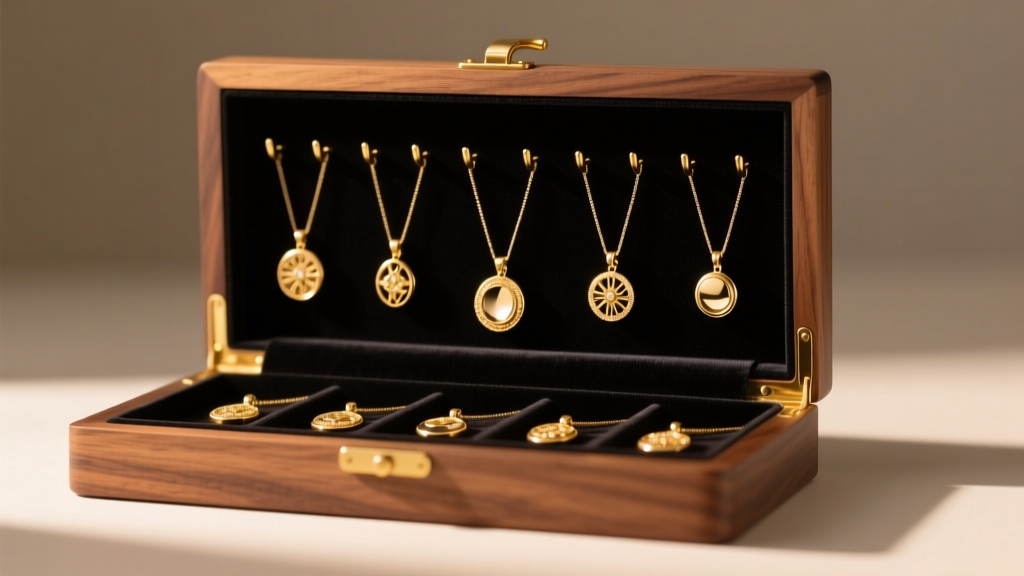
A high-quality necklace organizer box is not merely a decorative storage solution; it is a micro-climate vault designed to protect your jewelry from environmental degradation, physical tangling, and chemical tarnishing. Whether you are storing a delicate 14k gold cable chain, a heavy sterling silver statement piece, or a porous turquoise pendant, the internal architecture and material science of your storage box dictate the longevity of your collection. This comprehensive buying guide breaks down the exact specifications, dimensions, and archival materials you need to look for when investing in a necklace organizer box.
The Hidden Dangers of Poor Jewelry Storage
Many consumers unknowingly accelerate the deterioration of their jewelry by using substandard storage. The two primary enemies of necklaces are chemical tarnishing and mechanical stress. Sterling silver (92.5% silver, 7.5% copper) is highly susceptible to hydrogen sulfide in the air, which reacts with the copper alloy to form black silver sulfide. According to the Smithsonian Museum Conservation Institute, storing silver in environments with high humidity or acidic off-gassing materials drastically accelerates this reaction.
Mechanically, necklaces are prone to work-hardening and kinking. Snake chains and omega chains, which feature interlocking metallic plates or tightly wound coils, have a strict bending radius. Forcing these chains into tight, poorly designed compartments causes permanent structural kinks that cannot be repaired without professional soldering or complete replacement. Furthermore, the Gemological Institute of America (GIA) emphasizes that porous gemstones like pearls, opals, and turquoise can suffer from "crazing" (micro-cracking) when exposed to the volatile organic compounds (VOCs) emitted by cheap jewelry box adhesives and synthetic linings.
Key Dimensions & Compartment Geometry
When evaluating a necklace organizer box, ignore the exterior footprint and focus entirely on the internal geometry. A well-engineered box must accommodate the natural drape of a chain without forcing it into sharp angles.
The Drop Zone and Hook Spacing
For pendant necklaces and opera-length chains (28 to 36 inches), a shallow tray is useless. Look for a box with a dedicated "drop zone" or deep well that offers a minimum vertical clearance of 8 to 10 inches. This allows heavy pendants to hang freely without resting on the bottom of the compartment, which can cause the bail to bend over time.
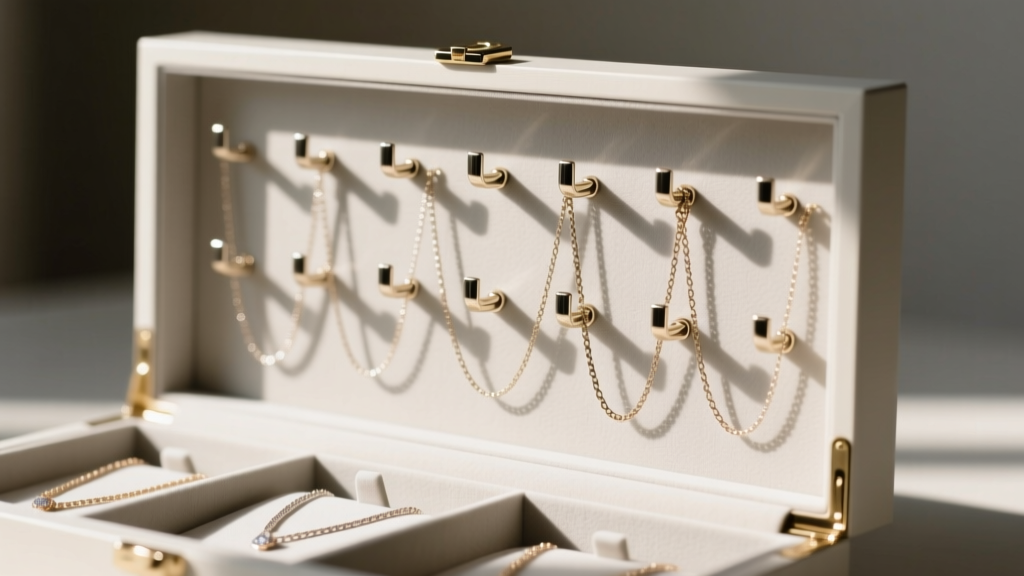
Equally critical is the horizontal spacing of the necklace hooks. To prevent clasp-to-chain tangling—a frustrating failure mode where the spring ring or lobster clasp catches on the links of an adjacent chain—hooks must be spaced at least 1.5 inches apart at the top. Some premium organizers feature staggered or tiered hook heights, ensuring that the clasps of neighboring necklaces do not occupy the same horizontal plane.
Radius Curves for Rigid Chains
If you collect rigid chains like chokers, torques, or collars, the organizer must feature wide, sweeping radius curves rather than 90-degree corners. A minimum corner radius of 3 inches is required to prevent stress fractures in rigid metallic collars and to avoid creasing delicate silk or leather cords used for pearl and jade bead necklaces.
Lining Materials: Archival vs. Acidic
The interior lining of your necklace organizer box is the material in direct, continuous contact with your metals and gemstones. This is where most mass-market organizers fail, utilizing cheap, sulfur-laden dyes that actively promote tarnish.
Pacific Cloth and Anti-Tarnish Technology
For sterling silver and white gold, the gold standard in lining is Pacific cloth (often branded as Hagerty cloth). This specialized flannel is impregnated with sacrificial metals (like silver nitrate or zinc) that intercept and absorb sulfur gases before they can reach your jewelry. If a box advertises "anti-tarnish" properties, verify that it uses Pacific cloth or incorporates replaceable 3M anti-tarnish strips in hidden reservoirs.
The Velvet Trap: Microfiber Shedding
While plush velvet looks luxurious, low-grade synthetic velvet is notorious for shedding microfibers. These microscopic threads easily wrap around the prongs of pavé diamond settings or catch inside the intricate links of a Byzantine chain. If you prefer the look of velvet, ensure the manufacturer uses ultra-suede or tightly woven micro-velvet that is certified acid-free and non-abrasive.
Exterior Materials & Hardware Durability
The structural integrity of the box itself plays a vital role in preserving the internal micro-climate. Medium-density fiberboard (MDF) and particleboard are heavily used in budget-friendly jewelry boxes. However, these engineered woods are bound together with urea-formaldehyde resins. Over time, they off-gas formaldehyde and acidic vapors, which can degrade the organic conchiolin in pearls and cause the surface of turquoise to become dull and chalky.
Solid Wood and Sealed Finishes
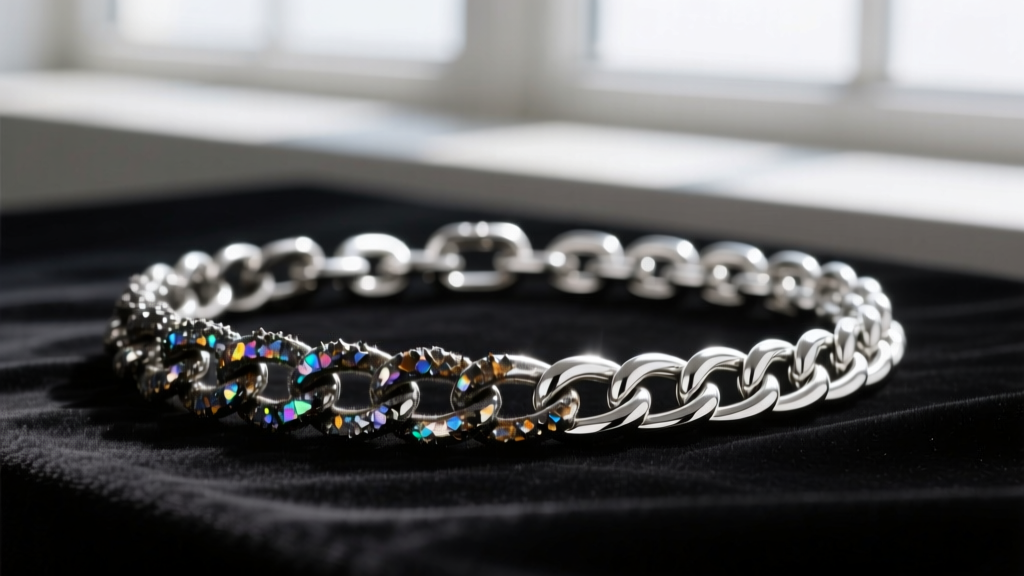
For heirloom storage, opt for solid hardwoods like walnut, mahogany, or oak. Crucially, the wood must be sealed with a water-based polyurethane or an archival-grade lacquer. Oil-based finishes and traditional waxes can trap acidic vapors inside the wood grain, which slowly release into the enclosed space.
Hinges and Closures
Do not overlook the hardware. Boxes assembled with mild steel pins inside brass hinges will inevitably develop rust spots in environments where relative humidity exceeds 60%. Demand solid brass or stainless steel hinges. Furthermore, magnetic closures should utilize encased neodymium magnets with rust-proof nickel-copper-nickel plating to prevent corrosion from transferring to the box exterior.
Comparison Table: Organizer Box Linings
| Lining Material | Chemical Properties | Best For | Price Tier |
|---|---|---|---|
| Standard Synthetic Velvet | Often contains sulfur-based dyes; prone to static and microfiber shedding. | Stainless steel or fashion jewelry only. | Budget ($) |
| Pacific Cloth | Impregnated with tarnish-inhibiting compounds; absorbs sulfur gases. | Sterling silver, white gold, and platinum. | Premium ($$$) |
| Archival Polyethylene Foam | Inert, acid-free, non-off-gassing; zero chemical reactivity. | Pearls, opals, turquoise, and antique gold. | Mid-to-High ($$) |
| Ultra-Suede | Acid-free, tightly woven, non-abrasive; no shedding. | Pavé diamonds, delicate cable chains, and mixed metals. | Premium ($$$) |
Final Checklist Before You Buy
Before adding a necklace organizer box to your cart, run it through this domain-expert checklist to ensure it meets archival and mechanical standards:
- Hook Spacing: Are the top hooks at least 1.5 inches apart to prevent clasp tangling?
- Vertical Clearance: Is there an 8-to-10-inch drop zone for heavy pendants and opera-length chains?
- Lining Certification: Is the interior fabric explicitly labeled as acid-free, sulfur-free, or archival-grade?
- Wood Off-Gassing: If made of engineered wood, is it sealed with a water-based, low-VOC finish?
- Hardware Quality: Are the hinges solid brass or stainless steel to prevent hidden rust?
- Modularity: Can the dividers be adjusted or removed to accommodate wide, rigid collar necklaces?
By prioritizing material science and spatial geometry over superficial aesthetics, you will secure a necklace organizer box that not only displays your collection beautifully but actively preserves its structural and chemical integrity for decades.


