Chain Necklace Drawing & Link Care: A Cleaning Guide
Discover how your chain necklace drawing and link structure dictate cleaning methods. Expert care tips for Cuban, Byzantine, and rope chains.

Decoding Your Chain Necklace Drawing for Proper Care
Every masterpiece of jewelry begins with a blueprint. When a master jeweler or CAD technician drafts a chain necklace drawing, they are not just designing an aesthetic; they are engineering a complex system of interlocking geometry, tension points, and solder joints. Understanding the structural intent behind your chain's original drawing is the absolute key to proper maintenance, cleaning, and long-term preservation. What works for a solid, soldered Cuban link will catastrophically damage a tension-woven Byzantine or a hollow electroformed Rope chain.
In 2026, with the rise of advanced mineral sunscreens (loaded with microscopic zinc oxide and titanium dioxide particles) and long-wear cosmetic polymers, the debris that infiltrates chain links is more abrasive and stubborn than ever. These microscopic particles act like liquid sandpaper, grinding away at the alloy's finish every time the chain moves against your skin. To combat this, we must look past generic 'jewelry cleaning' advice and analyze the specific structural blueprint—the chain necklace drawing—that defines your piece.
The Geometry of Grime: How Link Structure Traps Debris
The primary culprit in chain degradation is not just tarnish (silver sulfide or copper oxidation), but the accumulation of sebum, dead epidermal cells, and environmental pollutants. The way these materials trap themselves depends entirely on the chain's schematic.
Soldered vs. Unsoldered Tension Links
If your chain necklace drawing features individually soldered links (like a standard Cable or Box chain), the structure is highly rigid. These chains can withstand the cavitation forces of an ultrasonic cleaner. However, if the drawing relies on unsoldered, woven tension (such as a Byzantine or Foxtail chain), the links are held together purely by geometric friction and precise wire weaving. Subjecting these to high-frequency vibrations or harsh chemical dips can loosen the tension, causing the chain to 'unravel' or stretch permanently.
Hollow vs. Solid Wire Profiles
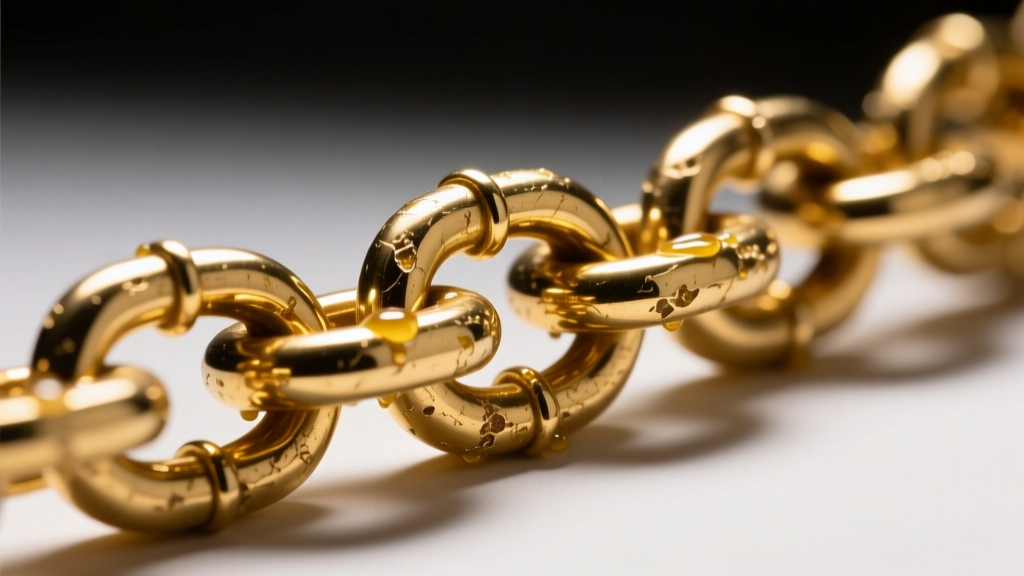
Many modern chain necklace drawings utilize hollow wire profiles to create massive, lightweight statement pieces (often seen in large-gauge Cuban or Curb links). The hidden danger here is capillary action. When submerged in liquid cleaners, moisture and chemical residues are drawn deep into the hollow cavities of the links. If not aggressively dried, this trapped moisture leads to internal oxidation, structural weakening, and the dreaded 'green skin' effect caused by copper salts leaching from the interior alloy.
Link-by-Link Cleaning Matrix (2026 Standards)
Use the following matrix to determine the safest, most effective cleaning protocol based on your chain's structural blueprint.
| Chain Type | Blueprint Complexity | Dirt Trap Rating | Ultrasonic Safe? | Recommended Protocol |
|---|---|---|---|---|
| Cuban / Curb | Low (Interlocking, flat) | 4/10 | Yes (40kHz) | Warm water, mild anionic surfactant, soft agave-bristle brush. |
| Byzantine | High (Woven, unsoldered) | 9/10 | No (Risk of unweaving) | Ionic cleaning bath; gentle manual manipulation; compressed air dry. |
| Rope (Solid) | High (Twisted, diamond-cut) | 8/10 | Yes (80kHz gentle) | Ammonia-free dip; ultrasonic with suspended basket to prevent facet scratching. |
| Rope (Hollow) | High (Electroformed) | 10/10 | No (Cavitation dents) | Surface wipe with microfiber; localized steam; immediate compressed air blowout. |
| Wheat / Spiga | Medium (Braided, woven) | 7/10 | Yes (80kHz - 120kHz) | Ultrasonic with specialized jewelry basket; mild alkaline solution. |
Advanced Ultrasonic Frequencies & Chemical Warnings
The jewelry care industry has evolved significantly. According to the Gemological Institute of America (GIA), the frequency of your ultrasonic cleaner dictates the size of the cavitation bubbles. A standard 40kHz cleaner produces larger, more aggressive bubbles ideal for solid, heavy Cuban links. However, for intricate chains like Wheat or delicate Rope chains, you must use an 80kHz to 120kHz ultrasonic cleaner. The smaller bubbles penetrate tight crevices without generating enough localized shockwave force to warp thin-gauge wire or loosen solder joints.
The Danger of Thiourea-Based Dips
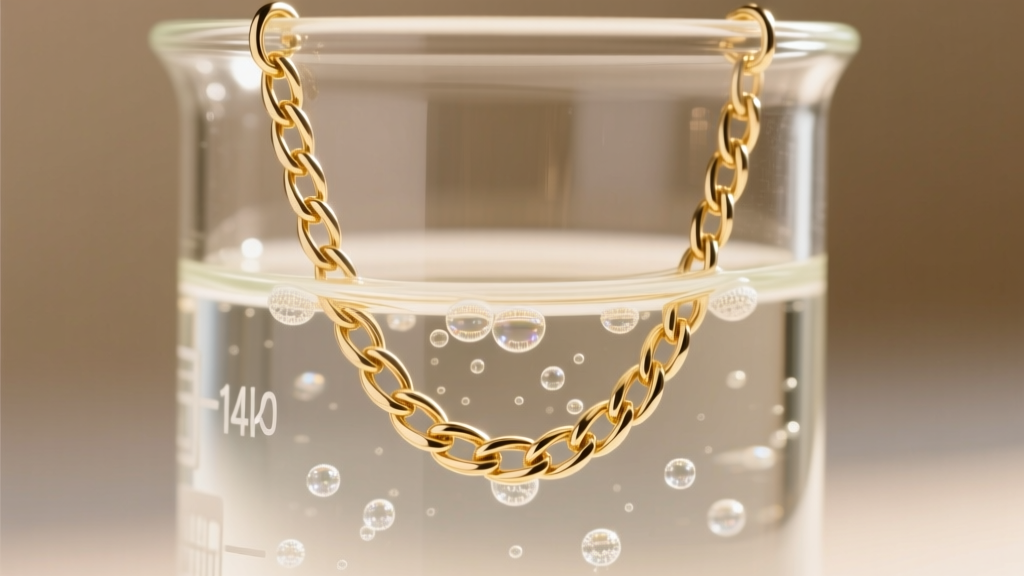
Many commercial 'instant tarnish remover' dips rely on thiourea and sulfuric acid to strip silver sulfide in seconds. While effective on solid sterling silver, these chemicals are highly toxic to complex chain structures. If your chain necklace drawing features hollow links or porous cast elements, capillary action will pull the acid inside. Even after rinsing, microscopic acid residues remain, causing delayed structural failure where the chain literally snaps weeks later due to internal hydrogen embrittlement. Always opt for mild, non-toxic surfactant baths or specialized ionic cleaners recommended by Rio Grande for complex metalwork.
Preventative Maintenance & Storage Protocols
Cleaning is only half the battle; how you store and handle the chain dictates its lifespan. The structural blueprint of a chain also reveals its weakest points regarding micro-abrasions and environmental tarnishing.
- Compressed Air Drying: For any hollow chain or tightly woven Byzantine design, towel drying is insufficient. Use a can of compressed air or a specialized jewelry micro-dryer to blow moisture out of the internal cavities. This prevents internal oxidation and water-spotting on diamond-cut facets.
- Anti-Tarnish Chemistry: Store silver and low-karat gold chains in airtight polyethylene bags alongside activated carbon or silver sulfide scavenger strips (like 3M Anti-Tarnish strips). Do not use PVC or polyurethane plastics, as they off-gas plasticizers that react with copper alloys.
- Suspension Storage: Never toss chains into a jewelry box where they can tangle. Tangling causes micro-scratches on the alloy surface, which not only ruins the polish but creates microscopic grooves that trap more dirt in the future. Hang chains vertically by their clasps to maintain the natural drape dictated by the original chain necklace drawing.
- The 'Last On, First Off' Rule: Always put your chain on after applying perfumes, hairsprays, and SPF lotions, and take it off before showering or swimming. Chlorine in tap water and pools aggressively attacks the copper and zinc alloys in 14k and 18k gold, leading to stress-corrosion cracking at the solder joints.
By respecting the engineering behind your jewelry and tailoring your maintenance to its specific geometry, you ensure that your pieces remain as flawless as the day they were drafted. For further reading on proper alloy maintenance and consumer care guidelines, consult the educational resources provided by Jewelers of America.