Vintage Silver Coin Necklace: Material Grades & Patina Guide
Discover the metallurgy behind the vintage silver coin necklace. Compare coin silver, sterling, and fine silver grades, patina aging, and authentication.

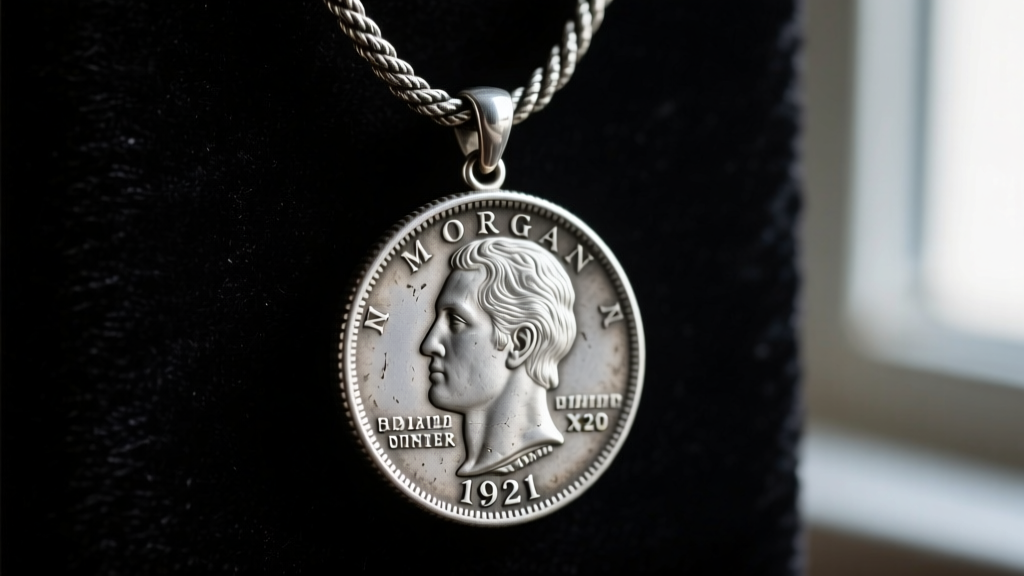
The Metallurgy of History: What Makes a Coin Silver Necklace?
The vintage silver coin necklace is far more than a passing bohemian trend; it is a wearable artifact of global economic history. When you wear a repurposed Morgan dollar, a British florin, or a French franc, you are wearing a specific metallurgical formula designed for circulation, not jewelry. Understanding the exact material properties of these coins is critical for jewelers and collectors alike. The way a coin ages, tarnishes, and interacts with modern chains depends entirely on its original minting alloy. In this comprehensive guide, we dissect the material grades, patina profiles, and preservation techniques necessary to curate and maintain a high-quality vintage silver coin necklace.
Decoding Silver Alloys: 900 vs. 925 vs. 999
Pure silver (999 fine) is exceptionally soft, registering at just 2.5 on the Mohs hardness scale. If a mint struck circulating currency in pure silver, the coins would wear flat within months. To solve this, mints alloyed silver with copper to increase tensile strength and durability. However, the exact ratios varied by country and era, resulting in distinct material grades that behave differently when converted into pendants.
| Alloy Grade | Composition | Vickers Hardness (HV) | Common Coin Examples | Patina Profile |
|---|---|---|---|---|
| Coin Silver (US) | 90% Ag / 10% Cu | ~125 HV | US Morgan/Peace Dollars, Mercury Dimes | Deep, dark sulfide layers; high contrast |
| Sterling Silver | 92.5% Ag / 7.5% Cu | ~115 HV | UK Pre-1920 Shillings, Modern Jewelry | Even, warm golden-to-brown toning |
| Britannia Silver | 95.8% Ag / 4.2% Cu | ~90 HV | UK Britannia Issues, Early Milled Coins | Slow, subtle oxidation; retains shine |
| Fine Silver | 99.9% Ag | ~65 HV | Modern Bullion (Silver Eagles, Maples) | Resists tarnish; minimal sulfide reaction |
According to data from The Silver Institute, the addition of copper not only hardens the metal but also introduces a reactive element. Copper is highly susceptible to oxidation and sulfidation, which is the primary driver of the dark, moody patina seen on vintage coin jewelry. A US 90% silver coin will inherently develop a richer, darker contrast in its crevices compared to a 925 sterling piece, making the intricate details of Lady Liberty or the heraldic eagle pop dramatically.
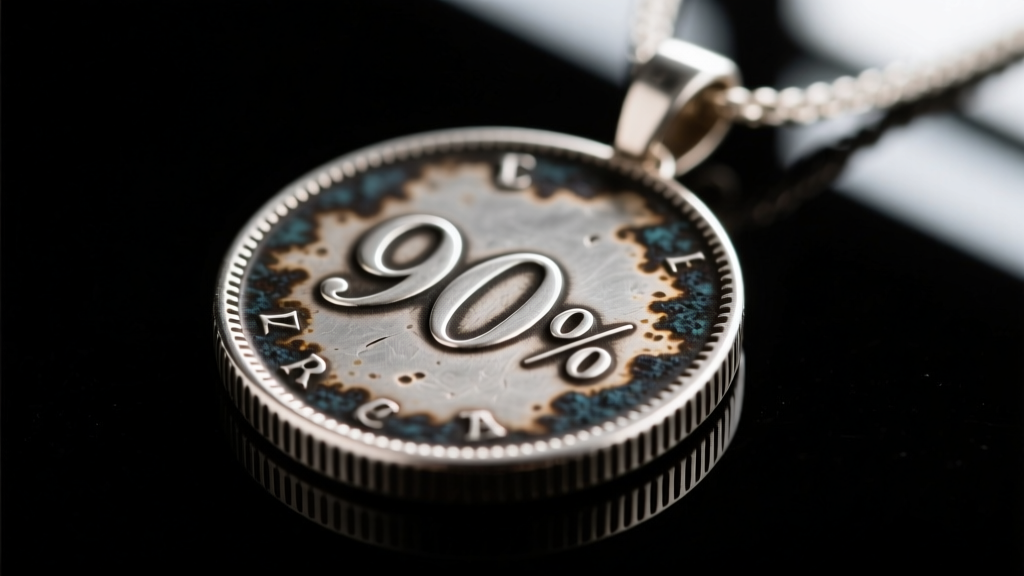
The Patina Factor: How Vintage Alloys Age Over Time
When styling a vintage silver coin necklace, the patina—or 'toning' in numismatic terms—is a defining aesthetic feature. Toning is not dirt; it is a chemical reaction between the copper in the alloy and sulfur compounds in the atmosphere, forming silver sulfide (Ag2S).
Sulfidation and Environmental Toning
Coins that have been stored in canvas bags or paper envelopes for decades often develop 'rainbow toning' due to sulfur in the storage materials. When these coins are fashioned into necklaces, they are exposed to human skin oils, cosmetics, and atmospheric humidity. The 10% copper content in a classic US coin silver pendant acts as a catalyst for this ongoing reaction. While some wearers prefer a high-polish look, stripping the patina from a vintage coin can actually destroy its numismatic value and leave the surface looking flat and lifeless.
Wear Patterns and Edge Softening
Because coin silver (900) is harder than modern sterling (925), it resists micro-scratching slightly better. However, the reeded edges of coins like the Peace Dollar are prone to mechanical wear when they rub against shirt collars or zippers. Over a decade of daily wear, a 16-gauge coin edge will naturally soften, creating a smooth, tactile bezel that cannot be replicated by modern casting techniques.
Authentication: Spotting Genuine Vintage Silver Coins
The market is flooded with counterfeit vintage coins, particularly high-value targets like the 1893-S Morgan Dollar or the 1916-D Mercury Dime. When sourcing a centerpiece for your necklace, you must verify the metallurgy before it ever touches a jeweler's saw.
- The Ping Test: Genuine 90% silver coins have a distinct, high-frequency resonance when struck lightly. Counterfeits made of lead-zinc alloys or copper-nickel produce a dull thud.
- Specific Gravity (SG):strong> Pure silver has an SG of 10.49. A 90% silver/copper alloy sits at approximately 10.31. Using a digital scale and water displacement, you can verify the density without damaging the coin.
- XRF Spectrometry: The gold standard for authentication. As noted by the Professional Coin Grading Service (PCGS), non-destructive X-Ray Fluorescence testing provides an exact elemental breakdown, instantly revealing if a coin is a modern copper-nickel clad fake plated in silver.
- Magnetic Slide Test: Silver is diamagnetic. If a strong neodymium magnet slides down a coin angled at 45 degrees, it should move slowly due to the eddy current braking effect. If it drops instantly or sticks, the core is ferromagnetic.
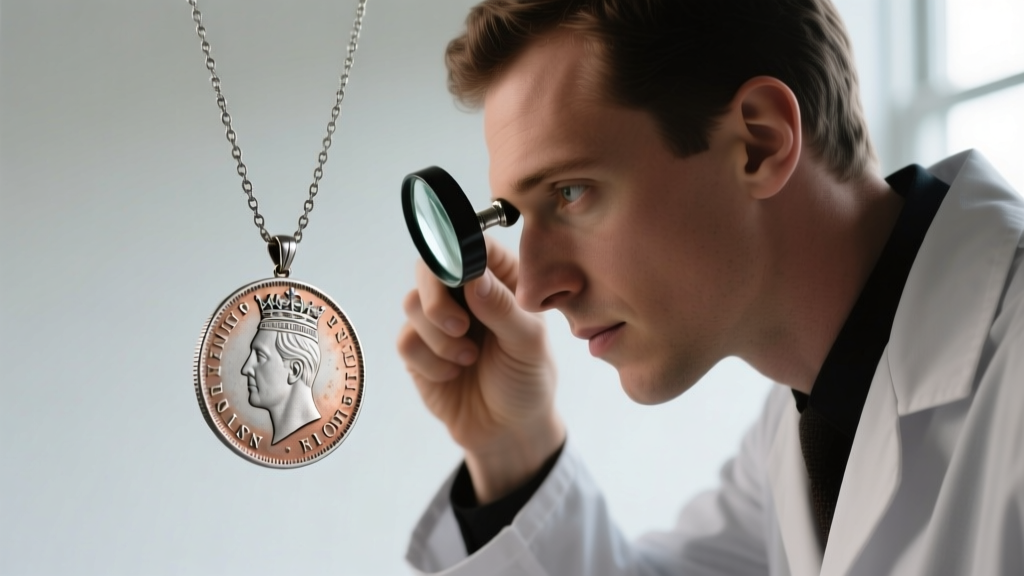
Chain Pairing: Matching Alloys for Galvanic Harmony
A critical failure mode in vintage coin jewelry is galvanic corrosion. This occurs when two dissimilar metals are in physical contact in the presence of an electrolyte (like sweat or humidity). If you hang a 900 silver coin on a cheap brass chain plated with a microscopic layer of silver, the plating will eventually wear through. Once the brass core is exposed, a galvanic cell is formed. The brass will act as an anode, corroding rapidly and leaving a permanent, crusty green/black stain on your vintage coin.
The Solution: Always pair your vintage coin pendant with a solid, unplated chain. A solid 925 sterling silver rope chain or a 900 coin-silver curb chain ensures that the electrochemical potentials are nearly identical, neutralizing the risk of galvanic corrosion. Furthermore, ensure the jump ring connecting the coin bail to the chain is at least 14-gauge or 16-gauge solid sterling silver to withstand the weight of heavy coins like the 26.73-gram Morgan Dollar.
Care and Maintenance for Numismatic Pendants
Cleaning a vintage silver coin necklace requires a paradigm shift from standard jewelry care. Standard silver dips (like Tarn-X) use thiourea to chemically strip silver sulfide. While this makes modern jewelry shine, it strips away decades of natural, protective toning from a vintage coin, leaving it with a harsh, unnatural white glow that numismatists refer to as 'dipped.' This instantly slashes the coin's collector value.
Never use abrasive pastes, ultrasonic cleaners, or chemical dips on a vintage coin pendant. You are not just cleaning jewelry; you are preserving a historical artifact.
Instead, use a museum-grade microcrystalline wax, such as Renaissance Wax. Apply a microscopic layer with a lint-free cloth, let it haze for ten minutes, and gently buff it. This seals the surface against moisture and sulfur without altering the existing patina or numismatic integrity. For daily maintenance, simply wipe the coin with a dry, soft microfiber cloth after wearing to remove acidic skin oils and cosmetic residues.
Final Verdict
A vintage silver coin necklace is a masterclass in material longevity. By understanding the 90% silver-copper alloy, respecting the natural sulfidation process, and avoiding galvanic mismatches, you can wear a piece of history that will outlast modern mass-produced jewelry. Whether you choose the deep, moody contrast of a US Morgan dollar or the subtle, elegant toning of a British florin, the metallurgy of these vintage alloys ensures they will only grow more beautiful with time.


