How to Measure, Buy, and Layer a Thin Gold Choker Necklace
Master the art of the thin gold choker necklace. Learn exact neck measuring techniques, karat durability facts, and tangle-free layering math.

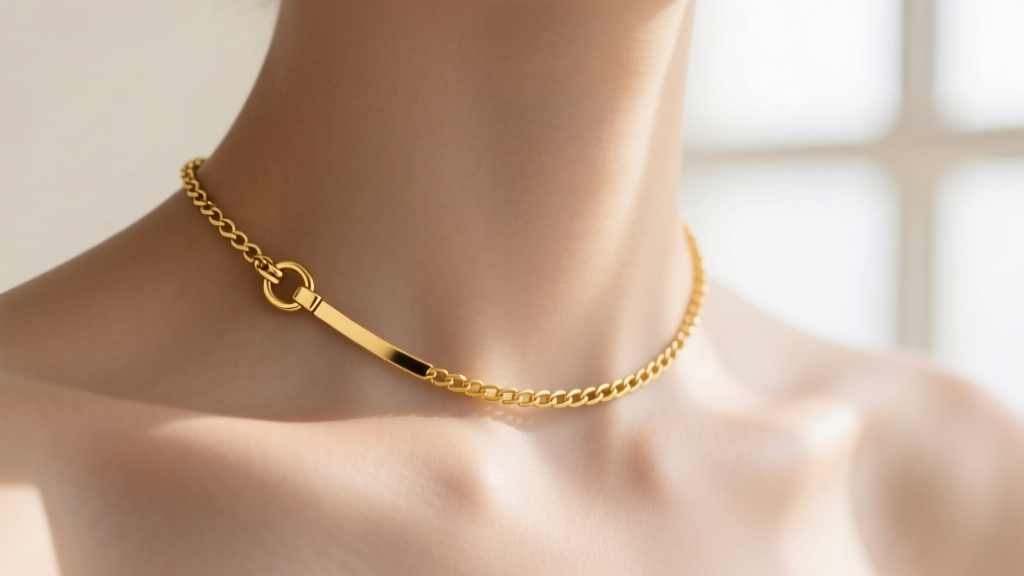
The thin gold choker necklace has evolved from a fleeting 90s trend into a permanent staple of modern quiet luxury. However, wearing a chain that sits flush against the pulse point presents unique structural and styling challenges. Because these pieces typically range from 0.8mm to 1.5mm in width, they are highly susceptible to kinking, clasp failure, and tangling when layered incorrectly. This step-by-step guide bypasses generic styling advice to give you the exact metallurgical specs, measurement formulas, and hardware requirements needed to select, fit, and layer a delicate choker that survives daily wear.
The Anatomy of a Thin Gold Choker Necklace
Before purchasing, you must understand how gold purity and chain architecture dictate the lifespan of a micro-chain. A choker endures constant friction and tension from neck movement, meaning material hardness is just as critical as color.
Karat Weight vs. Tensile Strength
According to the Gemological Institute of America (GIA), pure 24k gold is far too malleable for fine jewelry. When shopping for a thin gold choker necklace, you will primarily encounter 14k and 18k options.
- 14k Gold (58.3% pure): With a Vickers hardness rating of roughly 135-160 HV, 14k gold is alloyed with copper, silver, and zinc. This makes it the superior choice for chains under 1.2mm thick, offering high tensile strength and resistance to stretching.
- 18k Gold (75% pure): Softer (around 115-130 HV) and richer in color. While beautiful, an 18k chain at 0.9mm width will permanently stretch or snap if subjected to sudden tension (like a child pulling it or catching it on a sweater).
Chain Link Profiles and Failure Modes
Not all links are created equal. The structural integrity of your choker depends heavily on its profile:
- Box Chains: Interlocking square links. Highly durable and resistant to kinking. The best baseline for daily wear.
- Cable Chains: Classic oval links. Durable, but if a single link bends, the chain weakens at that stress point.
- Snake Chains: Tightly joined wavy rings that form a smooth tube. Warning: Snake chains under 1.5mm are notorious for irreversible kinking if bent sharply. Avoid these for active daily wear.
- Rope Chains: Twisted links that mimic rope. Excellent light refraction, but the crevices trap skin oils and lotions, requiring frequent ultrasonic cleaning.
Step 1: Measuring Your Neck for a Precision Fit

A true choker should sit snugly at the base of the neck without restricting breathing or leaving red marks. Standard jewelry store chokers are often sold at a generic 14 or 15 inches, which fails to account for individual anatomy. Follow this exact protocol to find your custom length:
- Use a Flexible Tailor’s Tape: Do not use a rigid metal construction tape. Wrap a soft cloth measuring tape around your neck exactly where you want the gold to rest (usually just above the clavicle).
- The Two-Finger Rule: Slip your index and middle fingers flat under the tape measure. This ensures you have roughly 0.75 inches of breathing room.
- Calculate the Final Length: Note the measurement. If your neck measures 13.25 inches snugly, add 0.75 inches for comfort, bringing your ideal choker length to exactly 14 inches.
- Account for the Clasp: Remember that the clasp and jump rings add roughly 0.25 to 0.5 inches to the total wearable length. A 14-inch chain will actually sit like a 14.25-inch necklace.
Step 2: Selecting the Right Clasp and Jump Rings
The most common point of failure on a thin gold choker necklace is not the chain itself, but the hardware. Micro-chains require proportionate, high-quality clasps that balance security with weight.
| Clasp Type | Best For Width | Failure Rate | Pros & Cons |
|---|---|---|---|
| Spring Ring | 0.5mm - 0.8mm | High | Lightweight, but the internal microscopic spring frequently jams or breaks under tension. |
| Lobster Claw | 0.9mm - 1.5mm | Low | Excellent security. Ensure the swivel joint is soldered and the trigger is smooth. |
| Magnetic Barrel | 1.0mm - 2.0mm | Medium | Easy to put on one-handed, but heavy neodymium magnets can unbalance a very thin chain. |
| Toggle (T-Bar) | 1.2mm+ | Very Low | Extremely secure, but the bulky hardware ruins the delicate aesthetic of a micro-choker. |
Expert Tip: Inspect the jump rings (the small circular rings connecting the clasp to the chain). On high-end chokers, these should be soldered closed or made from 18-gauge wire. If the jump ring is made of flimsy 22-gauge wire and is simply pushed together, it will eventually pull apart.
Step 3: The Mathematics of Tangle-Free Layering
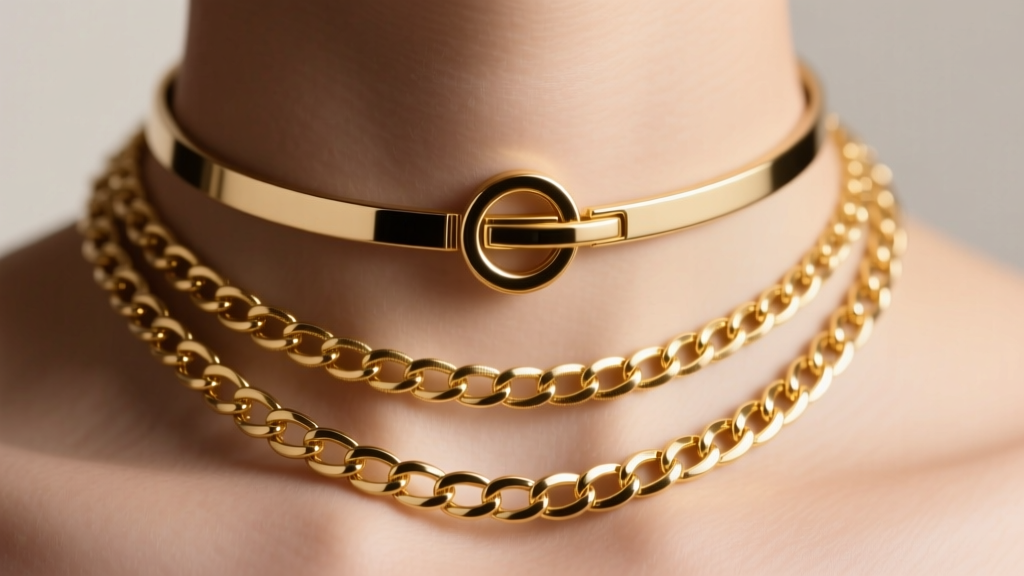
Layering a thin gold choker necklace with longer pieces is a hallmark of 2026 styling, but friction between chains causes severe tangling and micro-abrasions that wear down the gold over time. To layer successfully, you must adhere to strict mathematical spacing.
The 2-Inch Graduation Rule
Chains will tangle if their lengths are too similar, allowing the links to interlock. To prevent this, maintain a minimum 2-inch gap between each layer:
- Layer 1 (The Choker): 14 inches (Sits at the base of the neck)
- Layer 2 (The Princess): 16 to 16.5 inches (Sits on the upper chest, ideally with a small 3mm-5mm pendant to act as a weight and keep the chain straight)
- Layer 3 (The Matinee): 18 to 19 inches (Sits lower on the sternum, perfect for a larger medallion or lariat)
Using Multi-Strand Spacer Clasps
If you struggle with chains twisting at the nape of your neck, invest in a multi-strand magnetic spacer clasp. This single hardware piece features multiple loops that anchor the back of each chain independently, keeping the front layers perfectly parallel and entirely tangle-free. Alternatively, you can use a small silicone necklace separator clip hidden beneath the hair at the back of the neck.
Step 4: Maintenance, Cleaning, and Kink Prevention
Even the most durable 14k box chain requires specific maintenance to retain its structural integrity and shine. The Jewelers of America recommends gentle, non-abrasive cleaning methods for fine links.
How to Safely Clean a Micro-Chain
- The Soak: Mix warm water with two drops of mild, phosphate-free dish soap (like Dawn) in a ceramic bowl. Avoid metal bowls, which can scratch the gold.
- The Agitation: Submerge the choker for 10 minutes. Gently agitate the water with your finger. Never use a stiff toothbrush on a thin chain, as the bristles can catch and pull the delicate links apart.
- The Rinse & Dry: Rinse under lukewarm running water (ensure the drain is plugged!). Pat dry with a lint-free microfiber cloth. Allow it to air dry completely before storing to prevent water spots.
Troubleshooting Kinks and Tangles
If your thin chain develops a kink or a stubborn knot, do not pull it. Lay the necklace flat on a hard, non-porous surface. Apply a single drop of baby oil or mineral oil directly to the knot to lubricate the links. Use two fine sewing needles to gently tease the links apart from the center outward. Once untangled, wipe the chain with a jewelry polishing cloth to remove the oil residue.
Storage Rule: Never store a thin gold choker necklace in a piled jewelry box. The weight of heavier pieces will crush and kink the micro-links. Always hang the choker on a velvet-lined jewelry stand, or lay it completely flat inside a zip-top anti-tarnish bag with the clasp left unfastened to prevent accidental snagging.
By treating your thin gold choker necklace as a piece of precision engineering rather than just an accessory, you ensure it remains a flawless, untangled, and brilliant staple in your wardrobe for decades.


