24k Gold Initial Necklace: An Expert Guide to Purity and Durability
Discover the metallurgical realities of a 24k gold initial necklace. Expert insights on purity, structural failure modes, and smart buying tips.

The Metallurgical Paradox of 24k Gold Jewelry
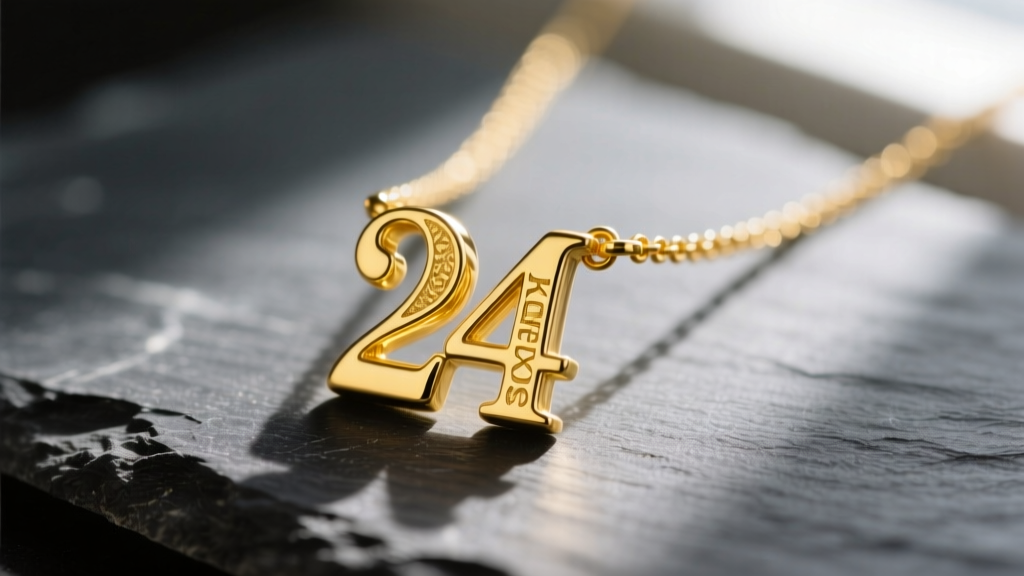
The allure of pure gold is undeniable. Its deep, warm, almost orange-yellow hue is a hallmark of luxury and historical wealth. When consumers search for a 24k gold initial necklace, they are typically drawn to the prestige of 99.9% purity. However, from a metallurgical and jewelry engineering perspective, crafting intricate letterforms out of pure gold presents a massive structural paradox. According to the Gemological Institute of America (GIA), 24k gold is entirely pure gold, meaning it lacks the alloying metals—like copper, silver, or zinc—that provide structural integrity.
Pure gold registers at a mere 2.5 on the Mohs hardness scale, roughly the same hardness as a fingernail. In industrial terms, its Vickers hardness (HV) sits between 25 and 30. Compare this to 14k gold, which boasts a Vickers hardness of 140 to 160 HV, and the vulnerability of pure gold becomes glaringly obvious. When you shape this remarkably soft metal into an initial pendant—complete with thin strokes, sharp serifs, and delicate structural bridges—you are essentially creating a beautiful but highly fragile object.
Structural Failure Modes in Letterform Pendants
Initial necklaces are uniquely susceptible to mechanical stress. Unlike a simple geometric pendant (like a solid disc or a thick heart), a letter pendant features uneven weight distribution and multiple stress concentrators. Here are the primary failure modes we observe in solid 24k gold initial pendants:
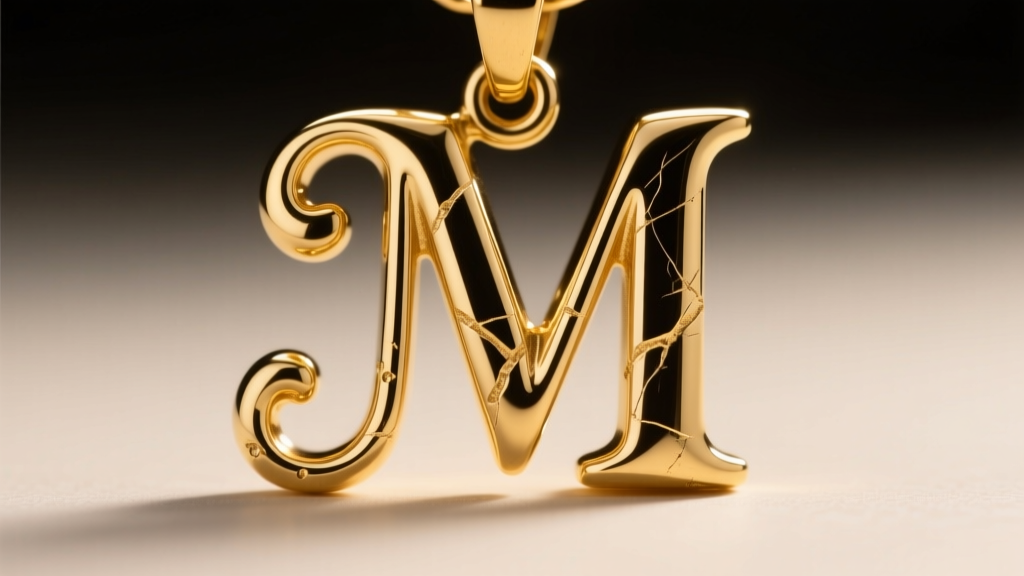
- Serif Deformation: The thin, protruding edges of serif fonts (like the feet of a letter 'T' or 'A') will bend or flatten when pressed against the skin or caught on clothing.
- Bridge Snapping: Letters with enclosed negative spaces (like 'B', 'D', 'O', or 'P') rely on thin bridges of metal. In 24k gold, a sudden tug can easily snap these bridges.
- Surface Marring: Because pure gold is so soft, daily wear will result in a network of micro-scratches. While some collectors appreciate this patina, it quickly degrades the polished finish of a delicate initial.
How Jewelers Engineer Around Pure Gold Softness
Given these mechanical limitations, how do jewelers successfully manufacture and sell 24k gold initial necklaces? The modern jewelry market relies on three distinct engineering workarounds to deliver the look and purity of 24k gold without the immediate structural failure of solid pure gold.
| Manufacturing Method | Material Composition | Vickers Hardness (HV) | Durability for Initials | Average Price Range |
|---|---|---|---|---|
| Solid 24k Cast | 99.9% Pure Gold | 25 - 30 HV | Very Low (Bends easily) | $400 - $900+ |
| 24k Electroformed | Pure gold shell over resin/wax core | N/A (Structural core) | Moderate (Dents, won't snap) | $150 - $350 |
| 24k Gold Vermeil | Sterling silver core, thick 24k plating | 60 - 70 HV (Silver core) | High (Rigid, plating can wear) | $45 - $120 |
| Solid 18k (Alternative) | 75% Gold, 25% Alloy | 120 - 140 HV | Excellent (Holds sharp edges) | $250 - $600 |
Electroforming is a particularly fascinating technique highlighted by the World Gold Council for creating lightweight, voluminous pure gold pieces. By electroplating 24k gold over a conductive mandrel (which is later removed or left as a lightweight core), jewelers can create large, rigid initial pendants that possess the exact chemical purity of 24k gold on the exterior, but resist bending due to their tubular or shell-like geometry.
Chain Selection: The Hidden Weak Point
An expert evaluation of a 24k gold initial necklace is incomplete without analyzing the chain. If a solid 24k gold pendant is hung on a solid 24k gold cable chain, the chain will inevitably fail before the pendant does. The links of a pure gold chain will stretch, warp, and eventually pull apart at the solder points (or simply tear open if unsoldered) under the pendulum-like weight of the initial.
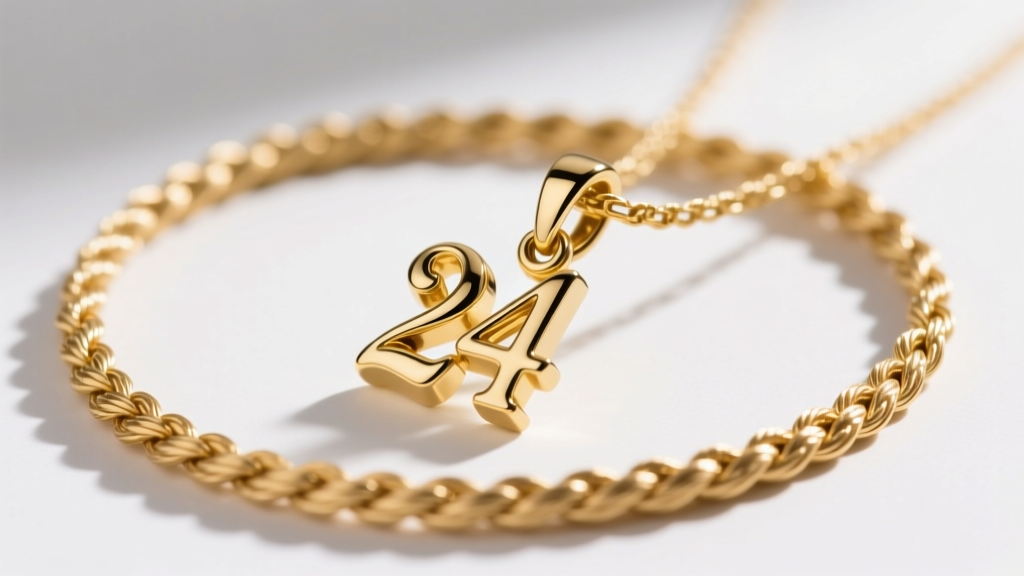
To mitigate this, expert jewelers pair 24k pendants with high-tensile chains. A 14k or 18k gold rope chain, or a stainless steel chain with PVD gold coating, provides the necessary tensile strength to support the pendant. If you are purchasing a solid 24k initial necklace, ensure the chain is at least 1.2mm in thickness and crafted from a lower-karat, higher-strength alloy. The visual difference between an 18k chain and a 24k pendant is negligible to the naked eye, but the functional difference is immense.
Authentication and Pricing Realities
The market is currently saturated with misleading listings. A common e-commerce trap is the '$39 Solid 24k Gold Initial Necklace.' From a raw materials standpoint, this is a mathematical impossibility. As of current precious metal markets, the melt value of the gold required to cast even a lightweight, 1-gram initial pendant far exceeds $40, not accounting for casting, labor, and retail margins.
Expert Tip: Always request a specific weight in grams for solid 24k pieces. If the seller cannot provide the exact gram weight, or if the piece is priced below the daily spot price of gold multiplied by its weight, you are looking at gold-plated brass, copper, or silver vermeil.
For true authentication of solid 24k pieces, standard acid testing is often insufficient because the surface is indeed pure gold. Professional jewelers utilize X-ray Fluorescence (XRF) spectrometers to penetrate the surface and verify the internal elemental composition, ensuring the piece is not merely a thick 24k plate over a tungsten or silver core.
Smart Buying Framework
When shopping for this specific type of jewelry, use this decision matrix:
- For Daily Wear & Layering: Opt for 24k Gold Vermeil over Sterling Silver. It provides the rich color of pure gold with the structural rigidity required to survive daily friction and layering with other chains.
- For Heirloom & Investment: Choose a Solid 24k Cast piece, but select a block font (sans-serif) with thick, uniform strokes. Avoid thin scripts or elaborate serifs that will deform over time.
- For Statement Pieces: Look for 24k Electroformed initials. They offer a massive visual footprint without the heavy, neck-straining weight of solid gold.
Expert Care and Maintenance Protocols
Maintaining a 24k gold initial necklace requires specific protocols to preserve its structural integrity and surface luster. Never use ultrasonic cleaners on electroformed 24k pieces, as the high-frequency vibrations can fracture the internal core or cause the pure gold shell to delaminate. For solid 24k pieces, avoid chemical dips; instead, use a mild, phosphate-free dish soap and a soft-bristled baby toothbrush to gently remove sebum and cosmetic buildup from the crevices of the letterforms.
Storage is equally critical. Because pure gold scratches so easily, a 24k initial pendant must be stored in an individual, soft flannel pouch. Tossing it into a communal jewelry box with diamond or sapphire pieces (which sit at 9 and 10 on the Mohs scale) will result in severe, irreversible gouging of the pure gold surface. Treat your 24k initial necklace not just as an accessory, but as a piece of soft, precious art that requires deliberate handling and respect for its metallurgical boundaries.


