The Ultimate Material Guide to Choosing a Goth Choker Necklace
Discover the best materials for a goth choker necklace. We compare black titanium, surgical steel, leather, and velvet for durability and skin safety.

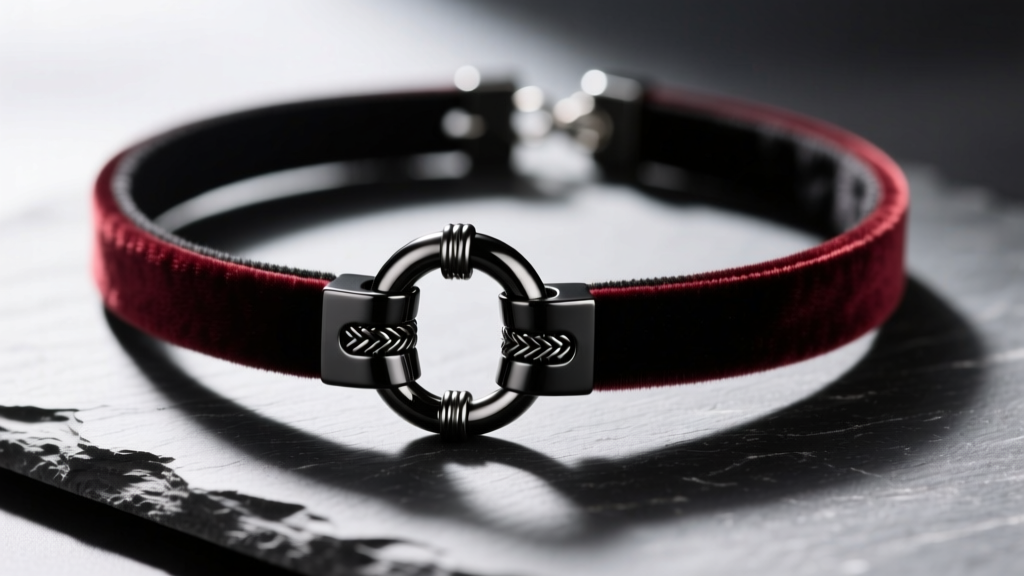
The Anatomy of a Goth Choker Necklace: Beyond the Aesthetic
When curating dark alternative fashion, the goth choker necklace stands as an undeniable cornerstone of the wardrobe. However, the visual impact of spikes, O-rings, and dark metals is only half the equation. Because chokers sit flush against the highly sensitive skin of the neck—an area prone to sweating, friction, and heat retention—the material composition dictates not only the longevity of the piece but also your dermatological health. In 2026, the alternative jewelry market has evolved far beyond cheap base metals and flaking pleather. Today, discerning collectors demand precise metallurgical standards and ethically sourced, durable textiles. This guide breaks down the exact material properties, gauge specifications, and structural mechanics you need to evaluate before investing in your next staple piece.
Metal Hardware & Chains: Tarnish, Weight, and Allergies
The hardware on a goth choker necklace—ranging from D-rings and chain links to spike accents—takes the brunt of mechanical stress and chemical exposure from skin oils. Understanding the difference between plating methods and solid alloys is critical.
316L Surgical Steel vs. Black Titanium
316L stainless steel is the industry workhorse for alternative jewelry. It contains molybdenum, which increases corrosion resistance, and its nickel release rate is generally below the European Union standard of 0.5 µg/cm²/week, making it safe for most wearers. However, for those with severe contact dermatitis, clinical dermatological studies recommend avoiding steel entirely in favor of implant-grade titanium.
Black titanium, specifically Grade 23 (Ti-6Al-4V ELI) anodized or coated via Physical Vapor Deposition (PVD), represents the pinnacle of dark metal hardware. Unlike electroplating, which lays a microscopic layer of black rhodium that eventually wears off, PVD vaporizes titanium nitride in a vacuum, bonding it at a molecular level. The result is a pitch-black, scratch-resistant surface with a Mohs hardness rating of nearly 9, completely impervious to sweat and tarnish.
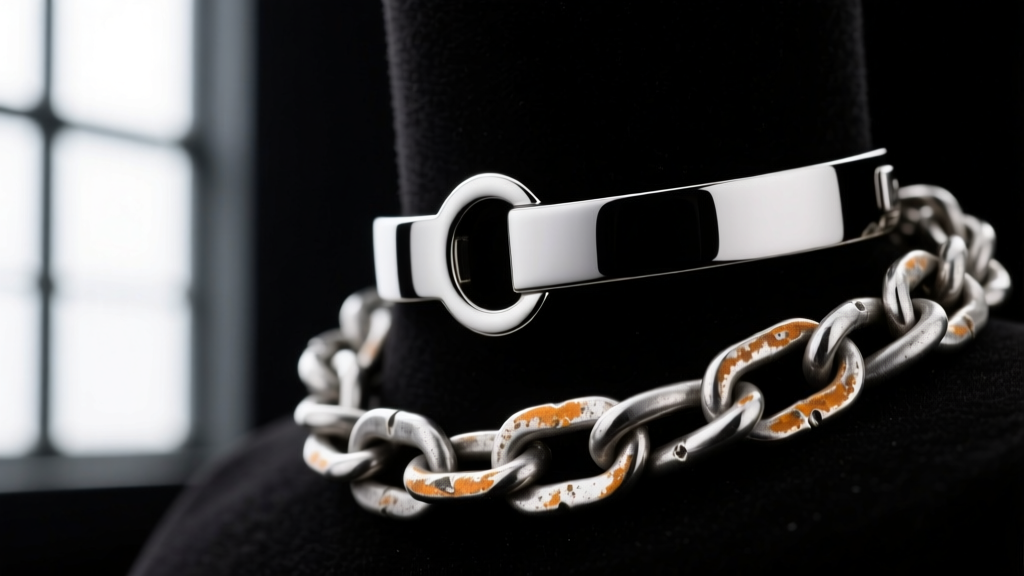
Oxidized Sterling Silver
For traditional Victorian or romantic goth aesthetics, 925 sterling silver remains a premium choice. Authentic goth jewelry often utilizes intentional oxidation (using liver of sulfur) to blacken the crevices of ornate castings, highlighting the relief work. While beautiful, silver is inherently soft. A sterling silver O-ring will warp if subjected to heavy lateral pulling, making it better suited for decorative pendants rather than load-bearing structural rings.
Material Comparison Matrix
| Material | Weight Profile | Allergy Risk | Tarnish Resistance | Avg. Price Range |
|---|---|---|---|---|
| 316L Surgical Steel | Heavy | Low-Medium | High (Polished) | $25 - $60 |
| PVD Black Titanium | Ultra-Light | None (Hypoallergenic) | Extreme | $80 - $180 |
| Oxidized 925 Silver | Medium | Low | Low (Requires Care) | $90 - $250 |
| Zinc Alloy (Brass Base) | Medium | High (Nickel/Lead risk) | Very Low | $10 - $25 |
The Band Materials: Leather, Velvet, and Synthetics
The band forms the foundation of the choker. The wrong material will degrade rapidly, crack, or cause severe chafing against the carotid area.
Full-Grain Leather vs. Vegan PU Leather
A high-quality leather goth choker necklace should utilize full-grain or top-grain leather, typically cut to a thickness of 1.5mm to 2.0mm. This thickness provides enough rigidity to support heavy steel hardware without curling at the edges. Full-grain leather requires a break-in period, eventually molding to the exact circumference of the wearer's neck. According to the Leather Working Group, properly tanned hides can last decades if conditioned.
Conversely, Polyurethane (PU) vegan leather offers an immediate, cruelty-free alternative with a flawless matte finish. However, buyers must understand the chemical reality of PU: it is susceptible to hydrolysis. When exposed to the slightly acidic pH of human sweat (typically 4.5 to 5.5) over several years, the polymer chains break down, leading to the infamous peeling and flaking seen in fast-fashion accessories. If you choose PU, expect a lifespan of 2 to 3 years with daily wear.
Velvet and Lace: The Delicate Classics
Velvet chokers evoke a nostalgic 90s goth and Victorian mourning aesthetic. Modern iterations use stretch velvet blends (typically 90% polyester, 10% elastane) to eliminate the need for bulky clasps. The critical flaw in velvet is its tendency to trap dead skin cells, sebum, and perfumes, which can degrade the elastic fibers. Lace bands, often backed with a thin satin ribbon to prevent scratching, require meticulous hand-washing to maintain their structural integrity.

Hardware Mechanics: O-Rings, D-Rings, and Clasps
The intersection of the band and the metal hardware is where most chokers fail. Pay close attention to wire gauge and clasp mechanics.
- O-Ring Gauge: For a structural O-ring meant to hold heavy chains or locks, the wire thickness should be at least 14-gauge (1.6mm) or 12-gauge (2.0mm). Anything thinner (like 18G) will bend outward under the weight of a pendant.
- Clasp Selection: Standard lobster clasps are excellent for delicate chain extensions but are a poor choice for thick, stiff leather bands. The lateral tension required to snap a lobster clasp shut on a rigid 2mm leather collar will eventually break the clasp spring. For heavy leather goth chokers, always opt for a magnetic locking clasp or a heavy-duty toggle clasp, which relies on mechanical geometry rather than a fragile spring mechanism.
- Rivets vs. Screws: Inspect how the D-rings are attached to the leather band. Chicago screws allow you to swap out hardware and tighten them over time, whereas cheap factory rivets will eventually pull through the leather if subjected to tugging.
Care and Maintenance by Material
To maximize the lifespan of your alternative jewelry, implement a strict maintenance routine tailored to the specific materials of your choker:
- PVD Titanium & Steel: Wipe down with a microfiber cloth and a mild solution of distilled water and dish soap. Avoid ultrasonic cleaners if the piece features epoxy-set stones, as the vibrations can shatter the adhesive bond.
- Full-Grain Leather: Wipe away sweat immediately after wearing. Apply a micro-thin layer of mink oil or a dedicated leather conditioner every three months to prevent the hide from desiccating and cracking around the rivet holes.
- Oxidized Silver: Never use liquid silver dips or abrasive polishing cloths on oxidized jewelry. These products will strip the intentional black patina from the recesses, ruining the contrast. Clean only with a soft, dry brush.
- Velvet & Lace: Spot clean with a damp cloth and mild baby shampoo. Lay flat to dry; never expose elastane-blended velvets to direct heat or sunlight, which will snap the stretch fibers.
Final Verdict: Building Your Wardrobe
Investing in a premium goth choker necklace requires looking past the initial visual shock and examining the metallurgical and textile foundations. For daily wearers with sensitive skin, a PVD black titanium hardware piece paired with a 1.5mm full-grain leather band offers an unbeatable combination of hypoallergenic safety, structural dominance, and lifelong durability. By understanding gauge sizes, plating methods, and polymer degradation, you can curate a dark aesthetic wardrobe that is as resilient and enduring as the subculture itself.


