How to Clean and Restore a Heart James Avery Necklace
Learn how to safely clean, polish, and restore your heart James Avery necklace. Step-by-step tarnish removal and care tips for sterling silver.

The Metallurgy of Your Heart James Avery Necklace
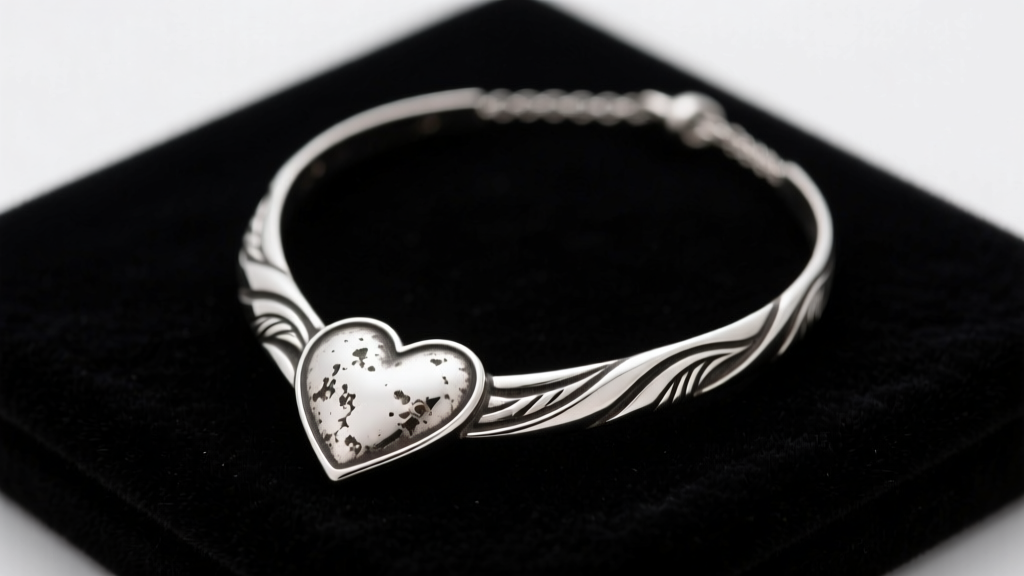
Before applying any cleaning solutions to your heart James Avery necklace, it is critical to understand the metallurgy of the piece. The vast majority of James Avery's iconic heart pendants—ranging from the classic Open Heart to the intricate Filigree Heart designs—are cast in 925 sterling silver. This stamp indicates that the alloy consists of 92.5% pure silver and 7.5% copper. Pure silver is too malleable for daily wear jewelry, so copper is added to provide structural integrity and durability. However, this copper content is precisely what makes your necklace susceptible to environmental reactions.
Unlike pure gold or platinum, the copper in sterling silver reacts readily with sulfur compounds in the atmosphere, as well as with the natural pH levels, sebum, and cosmetics found on human skin. According to the Gemological Institute of America (GIA), this chemical reaction produces silver sulfide, which manifests as the dull, yellowish, or blackish film we commonly refer to as tarnish. Understanding this chemical reality is the first step in safely restoring your necklace's original luster without compromising its structural or aesthetic integrity.
The Golden Rule: Preserving Oxidized Backgrounds
One of the most defining characteristics of James Avery jewelry is the brand's masterful use of oxidation. Many heart pendants feature deeply recessed areas that have been intentionally darkened using a chemical process involving liver of sulfur. This deliberate oxidation creates a stark, beautiful contrast that highlights the raised, high-polish elements of the heart design.
The Golden Rule: Never submerge a heart James Avery necklace in aggressive liquid silver dips, and never use abrasive pastes on the recessed areas. Liquid dips will strip the intentional oxidation from the crevices in seconds, leaving the pendant looking flat, washed-out, and stripped of its three-dimensional depth. If you accidentally remove this oxidized patina, the piece will require professional re-oxidation by a jeweler to restore its original artistic intent. For a comprehensive overview of manufacturer recommendations, you can always refer to the official James Avery jewelry care guide.
Step-by-Step Cleaning Protocol
To safely remove daily grime, cosmetic buildup, and light surface tarnish without damaging the oxidized details, follow this precise, non-abrasive cleaning protocol.
Step 1: The Gentle Wash
- Prepare the Solution: In a small glass bowl, mix lukewarm water (never hot, as extreme temperatures can stress older solder joints) with three drops of phosphate-free, mild dish soap. Avoid soaps with added moisturizers or citrus extracts, as these can leave a filmy residue or react with the copper alloy.
- Submerge and Soak: Place your heart James Avery necklace into the solution and let it soak for exactly three to five minutes. This loosens trapped sebum and dead skin cells around the bail and chain links.
- Agitate Gently: Using an extra-soft baby toothbrush, gently brush the pendant. Use circular motions on the raised, polished areas and light, sweeping motions over the oxidized crevices. Do not scrub the darkened backgrounds.
- Rinse Thoroughly: Rinse the necklace under a gentle stream of lukewarm distilled water. Tap water contains trace minerals and chlorine that can cause micro-spotting on high-polish silver.
Step 2: Proper Drying Techniques
Never allow your sterling silver necklace to air dry. Air drying leads to hard water spots and accelerates immediate re-tarnishing. Instead, lay the piece flat on a clean, lint-free microfiber towel. Gently pat the pendant and chain dry. Avoid using paper towels or tissues, as the wood pulp fibers they contain are surprisingly abrasive and will inflict microscopic scratches on the mirror-finish surfaces of your heart pendant over time.
Polishing and Restoring the Shine
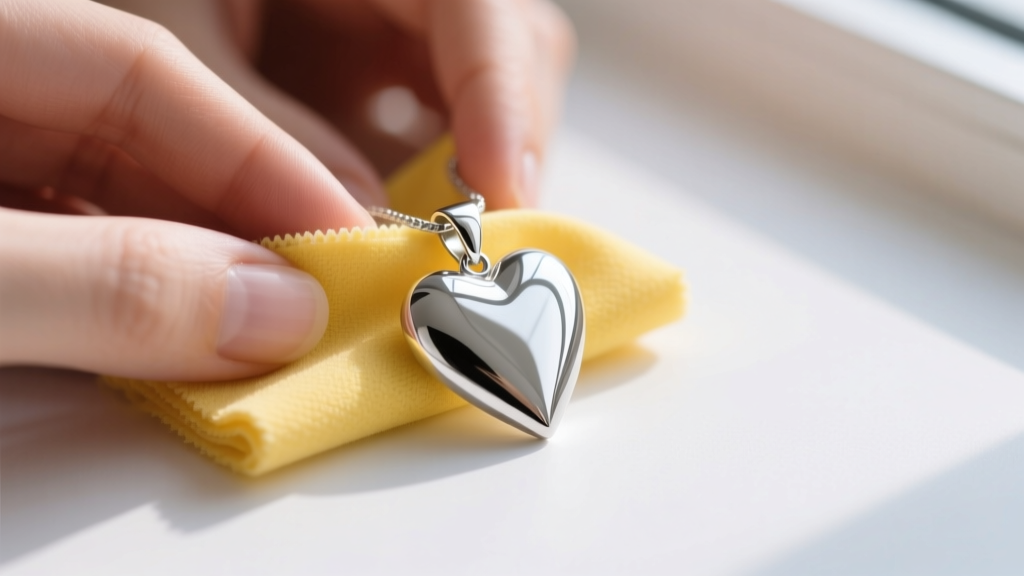
Once the necklace is clean and completely dry, you can address any remaining tarnish on the raised, high-polish surfaces. This requires a chemically treated jeweler's polishing cloth, such as a Sunshine Cloth. These cloths are impregnated with micro-abrasives and anti-tarnish agents that lift silver sulfide without scratching the metal.
Targeted Polishing Technique
Wrap the polishing cloth around your index finger and apply very light pressure to the raised, curved surfaces of the heart pendant. Polish in a back-and-forth motion that follows the natural contours of the metal. Do not polish in tight circles, as this can create visible, swirling micro-scratches that catch the light and dull the reflection. As you polish, the cloth will turn black; this is normal and indicates that the silver sulfide is being lifted. Shift to a clean section of the cloth as it becomes saturated.
Cleaning Agents Comparison Matrix
| Cleaning Method | Best Used For | Safe for Oxidized Details? | Risk Level |
|---|---|---|---|
| Mild Soap & Water | Daily grime, oils, cosmetics | Yes | Very Low |
| Treated Polishing Cloth | Light to moderate surface tarnish | Yes (if applied carefully) | Low |
| Baking Soda & Aluminum | Severe, solid tarnish (electrochemical) | No (strips oxidation) | High |
| Liquid Silver Dip | Heavy tarnish on solid silver | No (ruins patina instantly) | Extreme |
Chain Maintenance and Clasp Lubrication
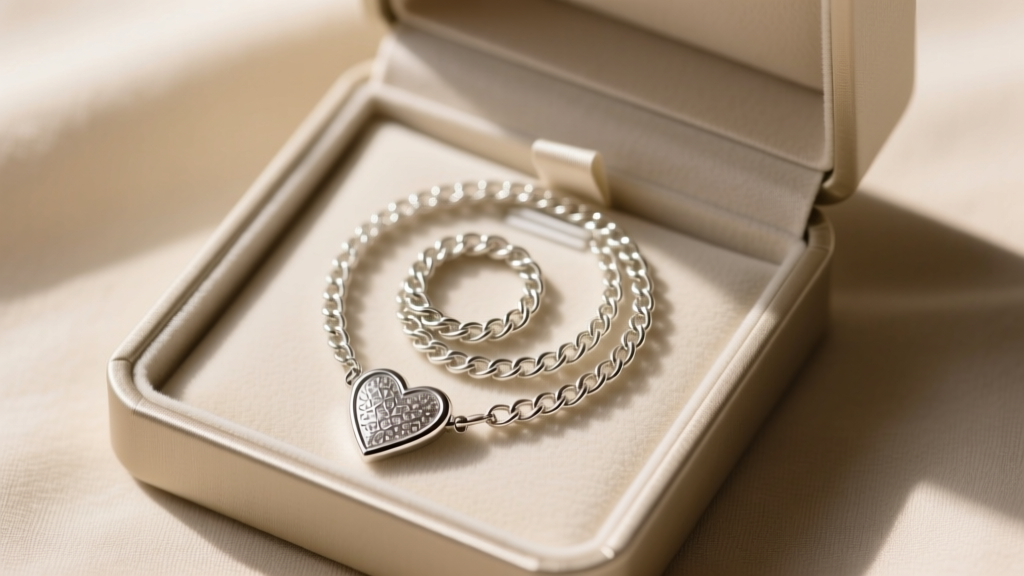
The pendant is only half the equation; the chain and clasp require equal attention. James Avery typically pairs their heart pendants with durable cable or rolo chains, secured by a lobster clasp. Over time, the micro-spring inside the lobster clasp can become gummed up by lotion, perfume, and skin oils, causing the lever to stick or fail to snap shut securely.
How to service a sticky lobster clasp:
- Dip the tip of a wooden toothpick into 90% isopropyl alcohol.
- Run the damp toothpick along the seam of the clasp lever to dissolve trapped oils.
- Use a can of compressed air to blow out the loosened debris.
- Apply a microscopic drop of mineral oil (never WD-40, which contains harsh solvents that degrade silver) to the hinge using a sewing pin.
- Work the lever back and forth a dozen times to distribute the lubricant, then wipe away any excess with a microfiber cloth.
Proper Storage to Prevent Future Tarnish
The most effective way to maintain your heart James Avery necklace is to control its environment when it is not being worn. Silver sulfide forms when silver is exposed to airborne sulfur and moisture. Therefore, your storage strategy must neutralize both threats.
Expert Insight: Store your necklace in a sealed, zip-lock plastic bag made of polyethylene (avoid PVC, which traps moisture). Squeeze out all excess air before sealing. Drop in a 3M anti-tarnish strip or a piece of Pacific Silvercloth. These materials actively absorb airborne sulfur compounds, effectively neutralizing the tarnish equation before it can begin. Keep the bag in a cool, dark drawer, far away from the humidity fluctuations of a bathroom or the direct UV exposure of a sunlit vanity.
When to Seek Professional James Avery Restoration
While diligent home care will keep your necklace beautiful for decades, certain issues require professional intervention. If your cable chain develops a kink that cannot be gently massaged out with your fingers, attempting to pull it apart will weaken the soldered links, leading to a catastrophic break. Similarly, if the bail (the loop connecting the heart pendant to the chain) shows visible thinning or friction grooves from years of metal-on-metal rubbing, it must be re-tipped or replaced by a jeweler before the pendant is lost. Finally, if your piece features gemstone accents, such as turquoise or pearls, avoid all chemical cleaners and polishing cloths, as these porous and delicate organic materials require specialized, gem-specific care protocols. In these cases, utilizing James Avery's official refurbishment services ensures your cherished piece is restored to exact factory specifications.


